
Loading, please wait...
LOT 0729
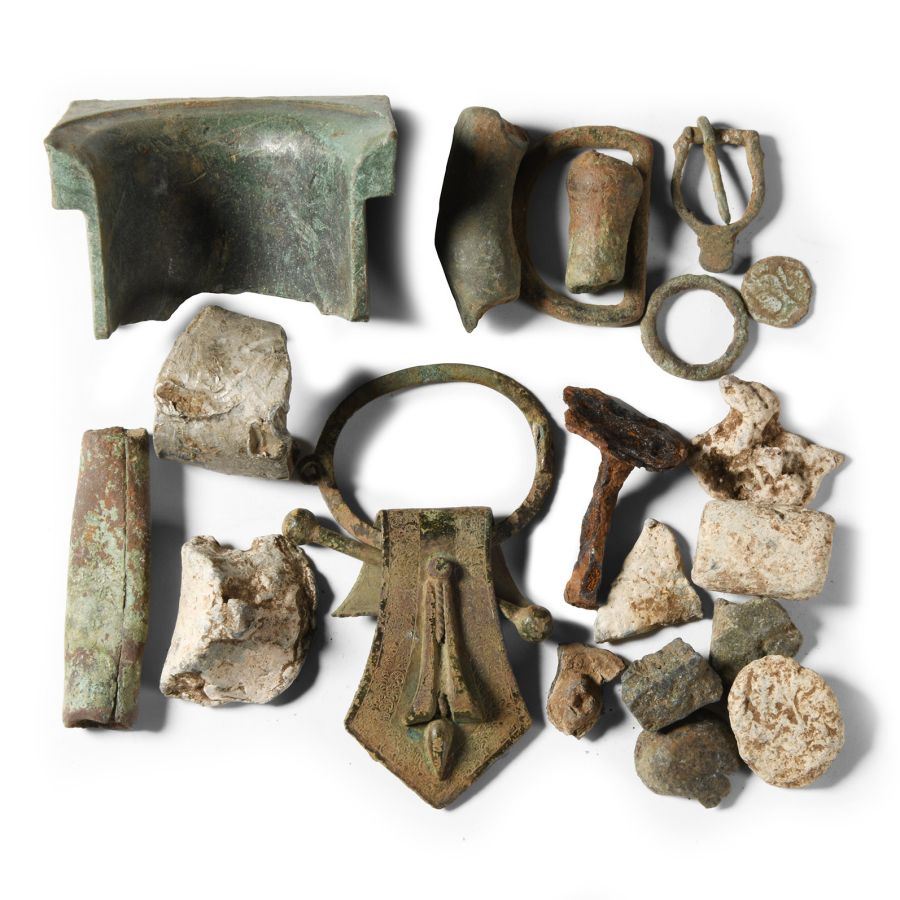
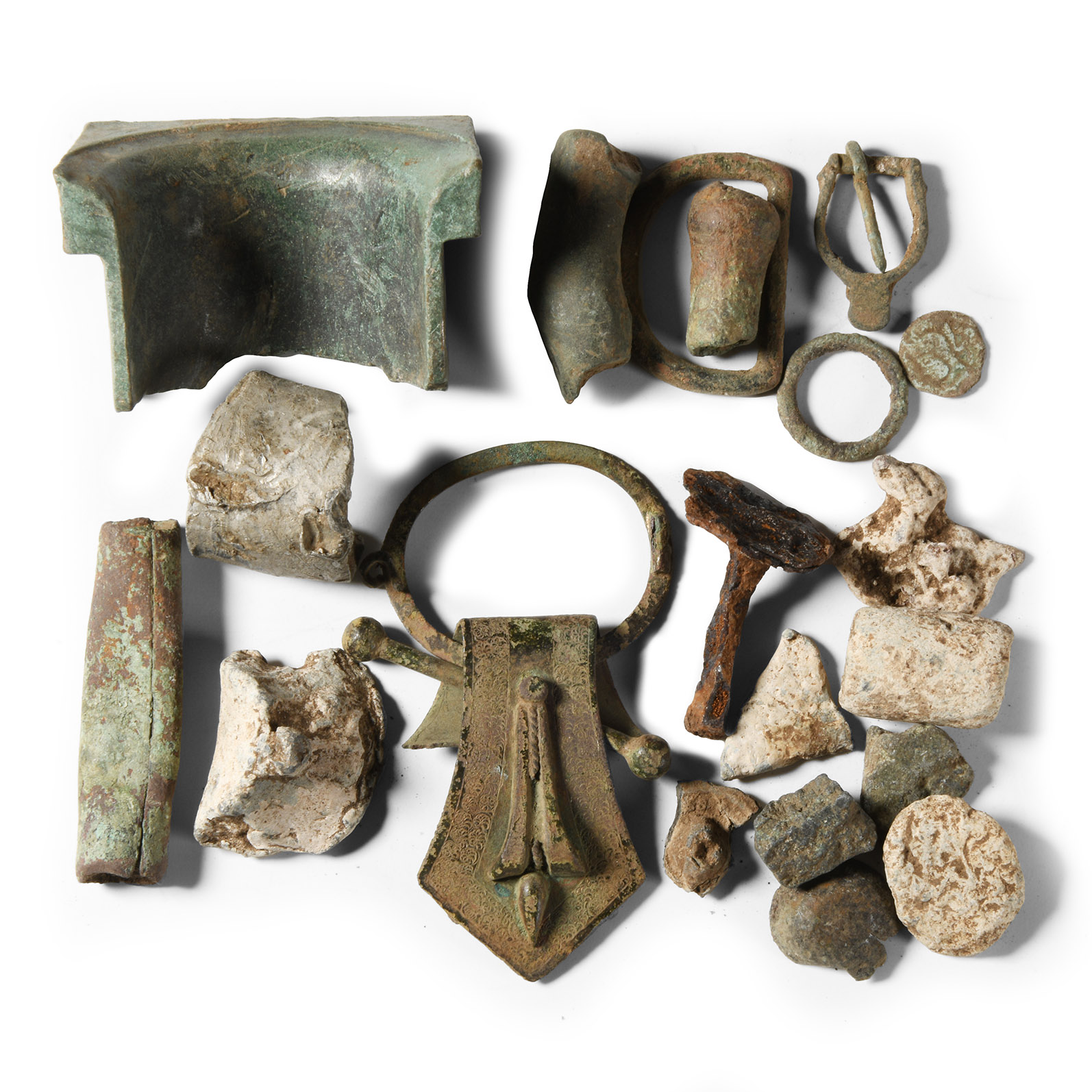
Roman and Other 'Wetwang' Artefact Collection
1ST-4TH CENTURY A.D. AND LATER
3/8 - 1 7/8 in. (282 grams total, 11-48 mm).
Including lead casting blanks, buckles, the socketted base of a figurine and other items. [20, No Reserve]
ProvenanceFound near Wetwang, East Yorkshire, UK.
Acquired 2005.
Ian Wilkinson collection, Nottinghamshire, UK.
TimeLine Auctions follows a vetting process to ensure the authenticity and legality of all items, reinforcing our commitment to integrity and responsible trading. Each antiquity, antique, and coin lot undergoes thorough examination by a vetting committee of at least ten external specialists, professional trade association members, scientists, and archaeologists: Our Vetting Process
AUCTIONS:
TimeLine is a leading auction house specialising in antiquities, ancient art, collectables, natural history, coins, medals, and books. Our auctions offer museums, collectors, historians, and enthusiasts the opportunity to acquire unique and historically significant pieces.
-
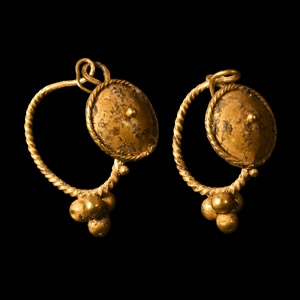
Roman Gold Earring Pair with Bosses
Circa 1st-2nd century A.D.Sold for (Inc. bp): £442
Comprising a matched pair of delicate earrings, each with a large circular boss with a central granule and fine filigree surrounding the perimeter, pyramidal cluster of granules to the base; twisted hook with a hook-and-loop closure. 1.01 grams total, 20 mm
From the collection of a London lady, UK. Accompanied by an old collection ticket. -
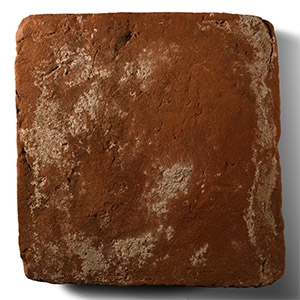
Romano-British 'Waldingham' Floor Tile
1st-4th century A.D.Sold for (Inc. bp): £78
Square terracotta tegula with accretion to underside, old collector's label 'Roman Floor Tile (with original cement) from the Bathhouse / Woldingham, Surrey'. 17.5 kg, 28 x 29 cm
Found Woldingham, Surrey, UK. From the collection of a late East Anglian teacher and antiquarian who retired to the Isle of Wight in Hampshire, UK. He amassed a large collection of objects between the 1960s-1980s. -
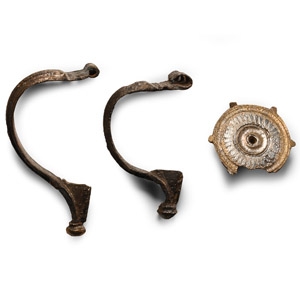
Roman Bronze Brooch Group
1st-2nd century A.D.Sold for (Inc. bp): £26
Comprising two aucissa type brooches, the pins absent; and a disc brooch with niello decoration, pin-lugs and remains of catch plate to the reverse. 17 grams total, 27-52 mm
Property of the vendor's grandfather, thence by family descent, circa 1985. From the private collection of a New York, USA gentleman.
