
Loading, please wait...
_900x900.jpg "Roman and Other Mixed Bead Group")
_200x200.jpg "Roman and Other Mixed Bead Group")
.jpg "Roman and Other Mixed Bead Group")
LOT 0722
Roman and Other Mixed Bead Group
1ST MILLENNIUM A.D. AND LATER
1/8 - 1 1/8 in. (93 grams total, 3-29 mm).
Comprising a range of bead types in different materials, including decorated examples. [No Reserve]
ProvenanceAcquired on the UK art market.
Property of a Ruislip, UK, gentleman, by inheritance.
TimeLine Auctions follows a vetting process to ensure the authenticity and legality of all items, reinforcing our commitment to integrity and responsible trading. Each antiquity, antique, and coin lot undergoes thorough examination by a vetting committee of at least ten external specialists, professional trade association members, scientists, and archaeologists: Our Vetting Process
AUCTIONS:
TimeLine is a leading auction house specialising in antiquities, ancient art, collectables, natural history, coins, medals, and books. Our auctions offer museums, collectors, historians, and enthusiasts the opportunity to acquire unique and historically significant pieces.
-
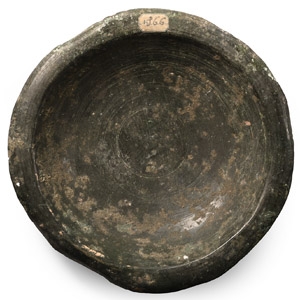
Roman Bronze Dish with Rim
1st-3rd century A.D.Sold for (Inc. bp): £234
Discoid with shallow recess and turned rim; old French collection sticker No.366'. 38 grams, 10 cm
Ex Louis-Gabriel Bellon (1819?-1899), France. Private collection, acquired on the French art market in 2009. -
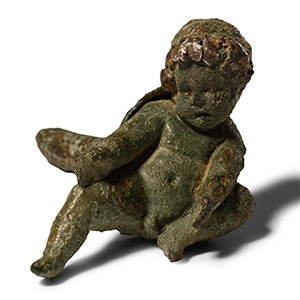
Roman Bronze Figure of Dionysus Child with Silver Inlays
1st century A.D.Estimate: £1,800 - 2,400 (‡+bp*)
Opening Bid: £900
Modelled in the round, a male infant with arms and right leg extended, left leg bent and raised; head looking downwards, with applied silver scales imitating a wreath; sturdy mounting peg to the reverse. 70.1 grams, 61 mm
Acquired on the German art market, 2002. European private collection. This lot has been checked against the Interpol Database of stolen works of art and is accompanied by search certificate no.12053-211904.
The model appears to form part of a figural group. -
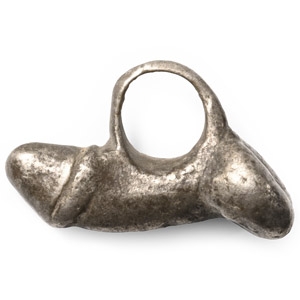
Roman Silver Phallic Pendant
1st-4th century A.D.Sold for (Inc. bp): £208
Modelled in the round with a large suspension loop. 9.3 grams, 26 mm
Ex German art market, 2000s. Acquired from an EU collector living in London. From the collection of Surrey, UK, gentleman.
