
Loading, please wait...
LOT 0924
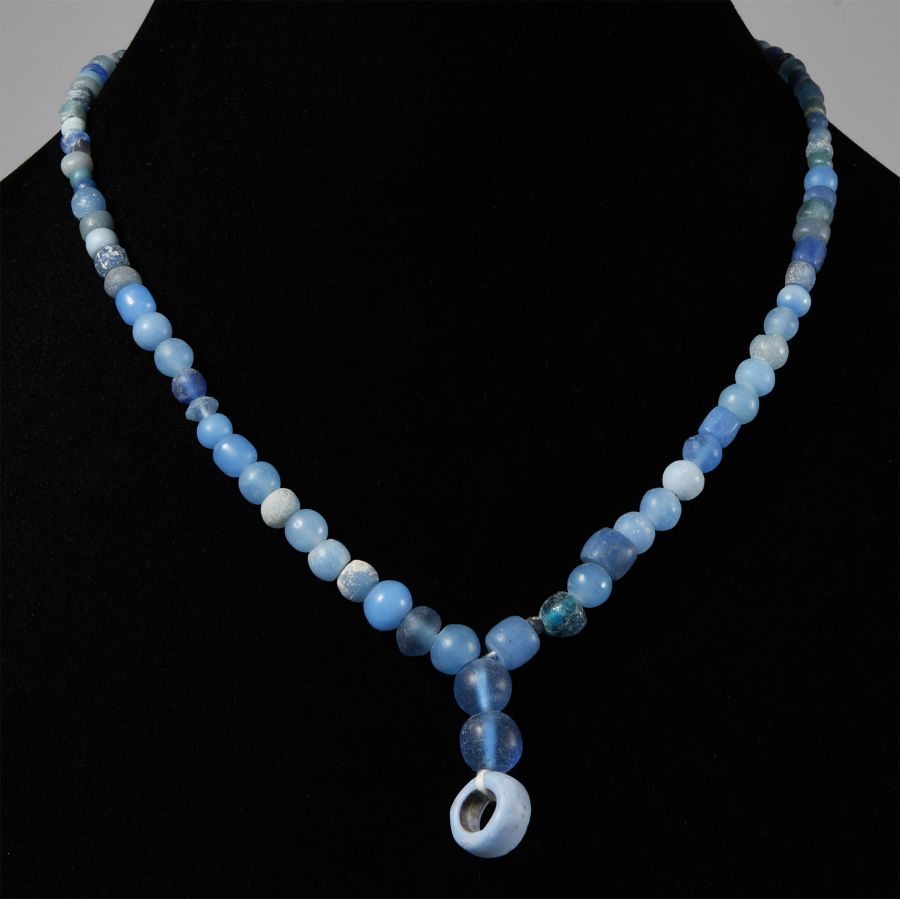
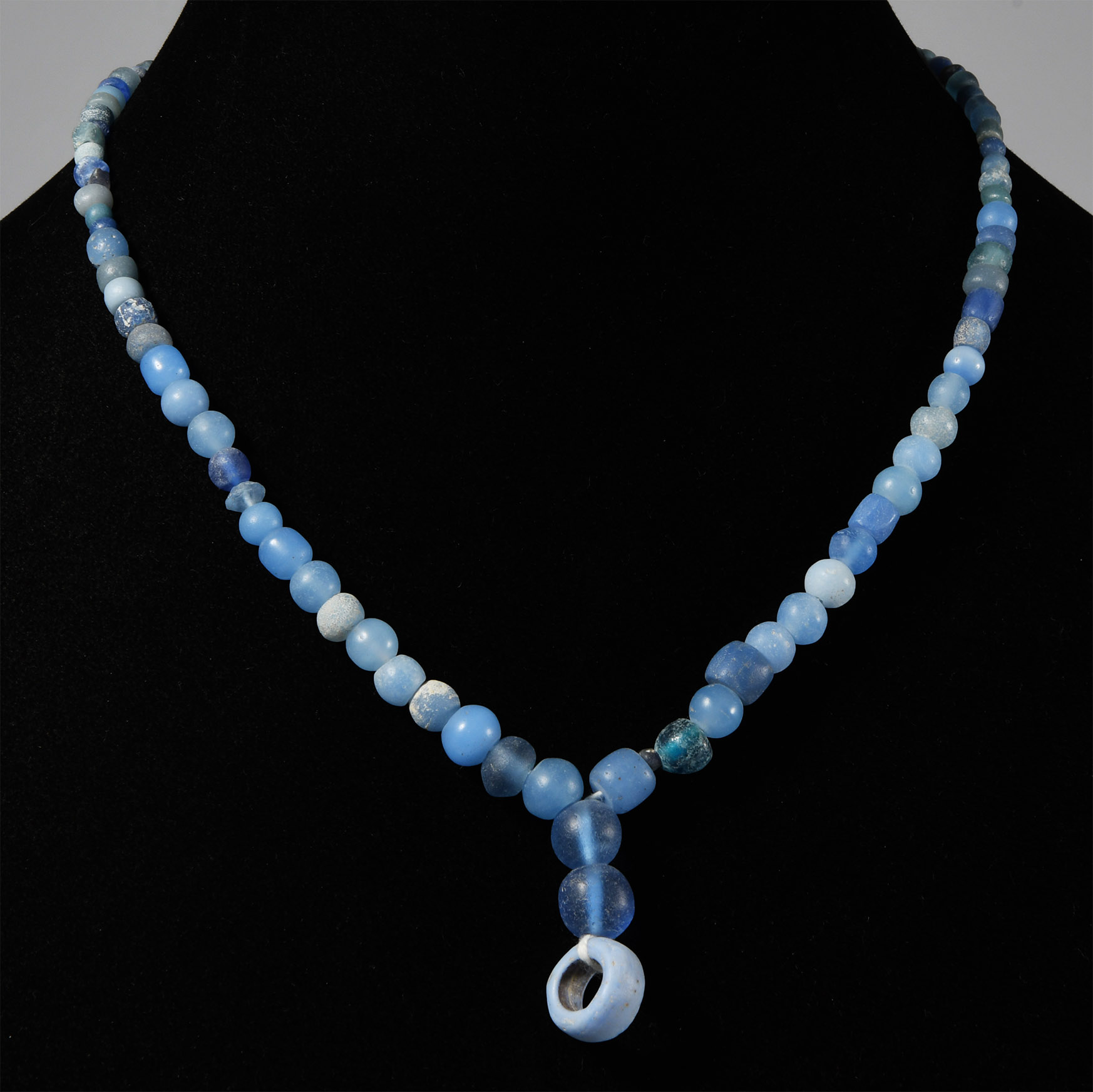
Roman and Other Bead Necklace
1ST-4TH CENTURY A.D. AND LATER
14 1/2 in. (23.4 grams, 37 cm).
Restrung designer necklace with polyhedral, oblate, tubular and other beads, centrepiece an annular bead. [No Reserve]
ProvenanceAcquired on the London, UK, art market in the 1990s.
Ex London, UK, gallery.
TimeLine Auctions follows a vetting process to ensure the authenticity and legality of all items, reinforcing our commitment to integrity and responsible trading. Each antiquity, antique, and coin lot undergoes thorough examination by a vetting committee of at least ten external specialists, professional trade association members, scientists, and archaeologists: Our Vetting Process
AUCTIONS:
TimeLine is a leading auction house specialising in antiquities, ancient art, collectables, natural history, coins, medals, and books. Our auctions offer museums, collectors, historians, and enthusiasts the opportunity to acquire unique and historically significant pieces.
-
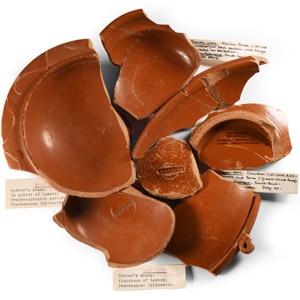
Romano-British 'Colchester' Samian Ware Sherd Group with Makers' Stamps
1st-2nd century A.D.Sold for (Inc. bp): £390
Including sherds of rim and base with inked accession numbers; some with impressed stamps; inked collector's notes including 'Base Sherd / Potter's Stamp: Patrici.M. / (Patricius of Lezoux) / Provenance: Colchester'; with three display cards. 540 grams total, 6.5-16 cm
Found Colchester, Essex, UK, and Gaul. From the collection of a late East Anglian teacher and antiquarian who retired to the Isle of Wight in Hampshire, UK. He amassed a large collection of objects between the 1960s-1980s. Accompanied by two old handwritten collection display cards noting the provenance as from 'South Gaul' and two original typed slips noting the provenance as 'Colchester'. -
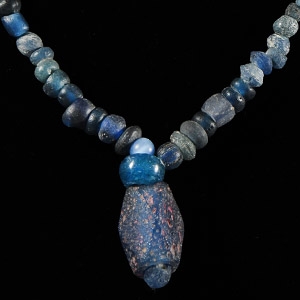
Roman and Other Glass Bead Necklace
1st-4th century A.D. and laterSold for (Inc. bp): £156
Restrung designer group of graduated seed beads, oblate, biconvex and other types, the centrepiece a polyhedral bead. 15.7 grams, 41 cm
Acquired on the London, UK, art market in the 1990s. Ex London, UK, gallery. -
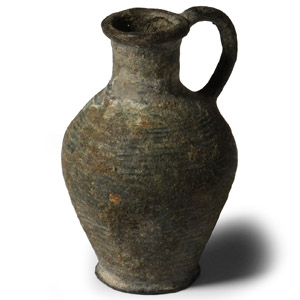
Roman Bronze Miniature Flagon
2nd-3rd century A.D.Sold for (Inc. bp): £91
With piriform body, short neck, everted rim and strap handle, circumferential bands to the body. 10.9 grams, 42 mm
Acquired from Den of Antiquity, Cambridgeshire, UK, 2010. Ian Wilkinson collection, Nottinghamshire, UK.
The small size of this bronze container suggests that it was intended as a toilette object, or as an oil vessel for athletes, generally associated with a strigil. Its could also have been used as a balsamarium.
