
Loading, please wait...
LOT 0866
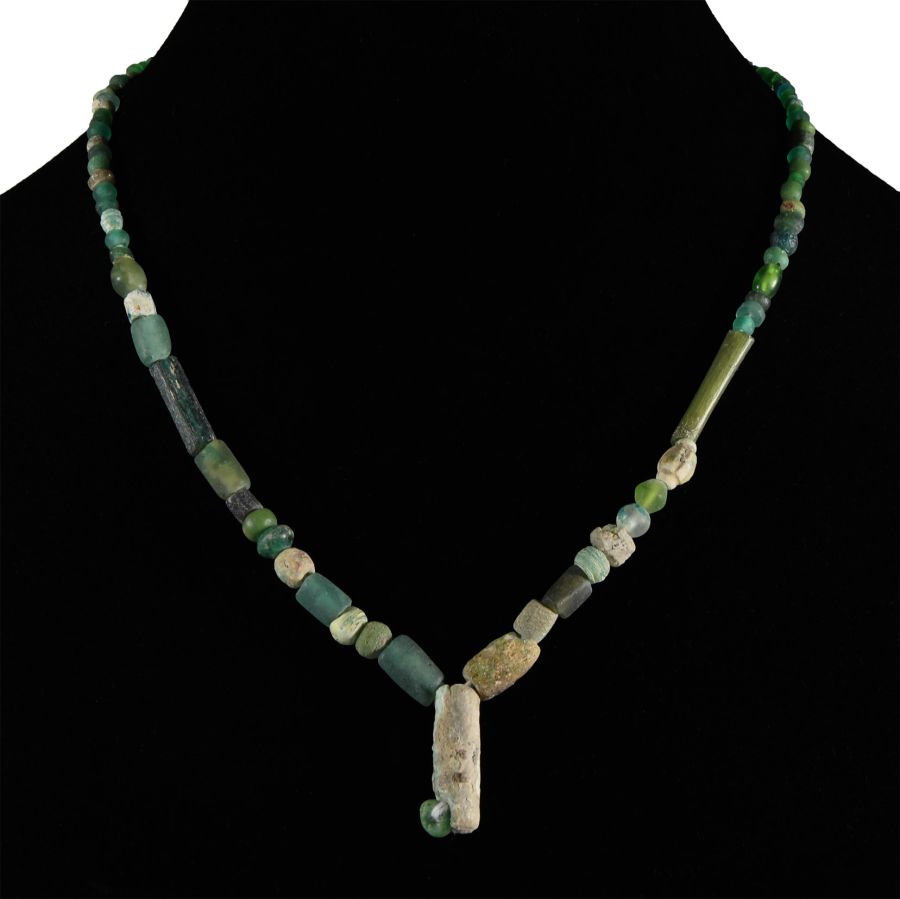
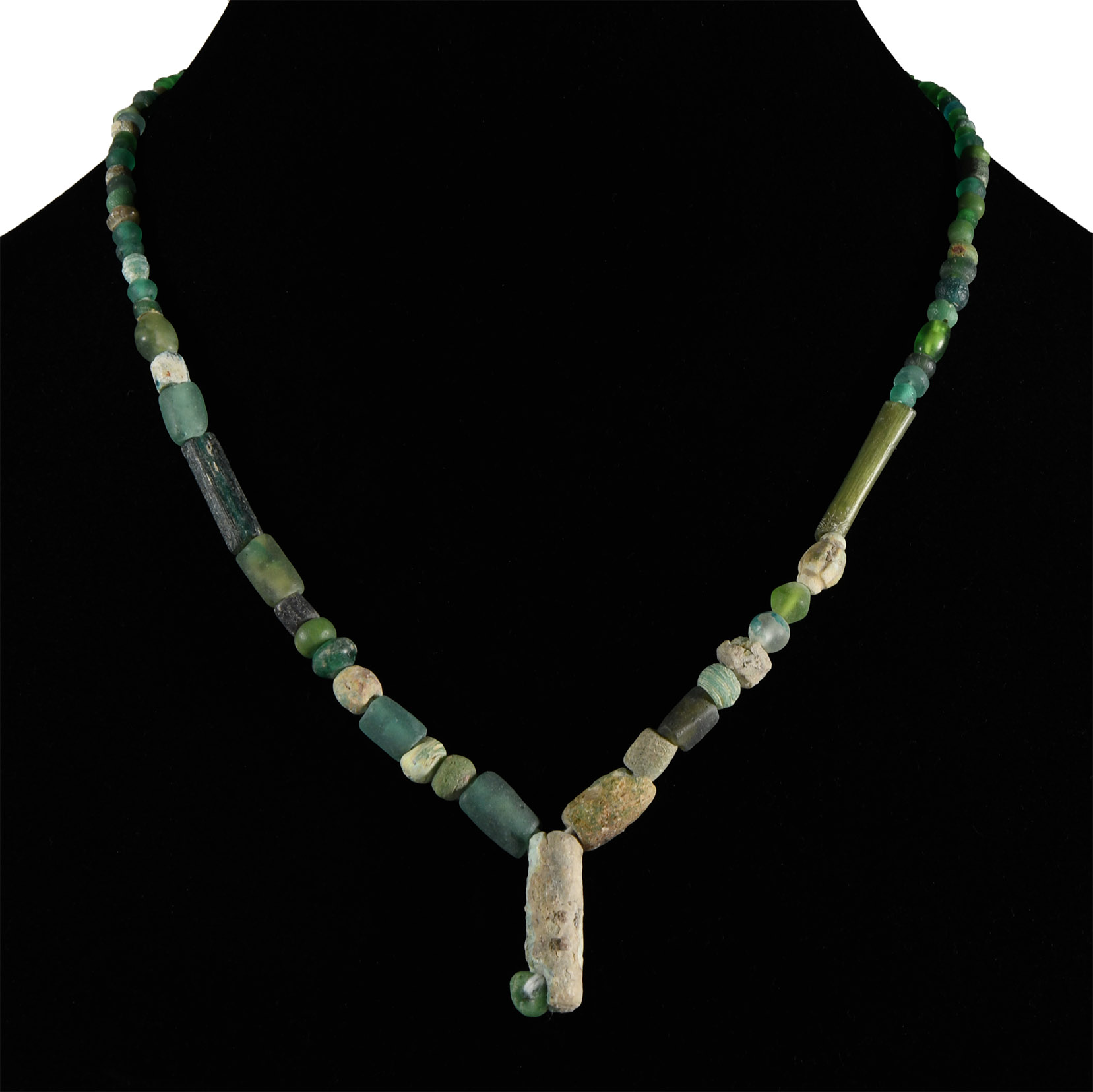
Roman and Other Bead Necklace
1ST-4TH CENTURY A.D. AND LATER
15 in. (18.7 grams, 38 cm).
Including tubular, oblate, melon and other beads. [No Reserve]
ProvenanceAcquired on the London, UK, art market in the 1990s.
Ex London, UK, gallery.
TimeLine Auctions follows a vetting process to ensure the authenticity and legality of all items, reinforcing our commitment to integrity and responsible trading. Each antiquity, antique, and coin lot undergoes thorough examination by a vetting committee of at least ten external specialists, professional trade association members, scientists, and archaeologists: Our Vetting Process
AUCTIONS:
TimeLine is a leading auction house specialising in antiquities, ancient art, collectables, natural history, coins, medals, and books. Our auctions offer museums, collectors, historians, and enthusiasts the opportunity to acquire unique and historically significant pieces.
-
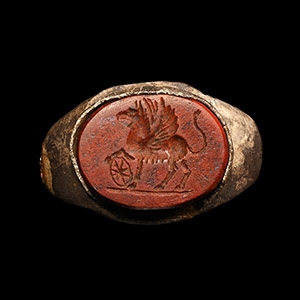
Roman Bronze Ring with Gryphon and Shield Gemstone
Mid 3rd century A.D.Sold for (Inc. bp): £442
With a possibly later inset red jasper plaque with incuse gryphon supporting a shield or spoked wheel. 9.94 grams, 23.87 mm overall, 16.67 mm internal diameter (approximate size British H, USA 3 3/4, Europe 6.18, Japan 6)
Ex German art market, 2000s. Acquired from an EU collector living in London. From the collection of Surrey, UK, gentleman. -
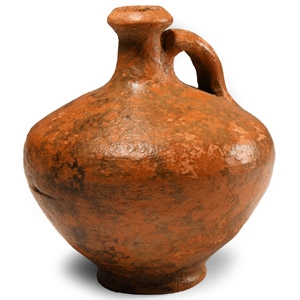
Roman Terracotta Wine Flagon
1st-4th century A.D.Sold for (Inc. bp): £117
Of squat profile with narrow flared foot, broad shoulder, single strap handle and trumpet-shaped mouth. 202 grams, 11 cm high
Ex German art market, 2000s. Acquired from an EU collector living in London. From the collection of Surrey, UK, gentleman. -
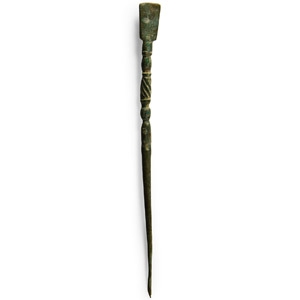
Roman Bronze Stylus with Eraser
1st-4th century A.D.Sold for (Inc. bp): £234
With balusters to the shank, slender point and erasing blade finial. 5.97 grams, 10.7 cm
Ex German art market, 2000s. Acquired from an EU collector living in London. From the collection of Surrey, UK, gentleman.
