
Loading, please wait...
LOT 0770
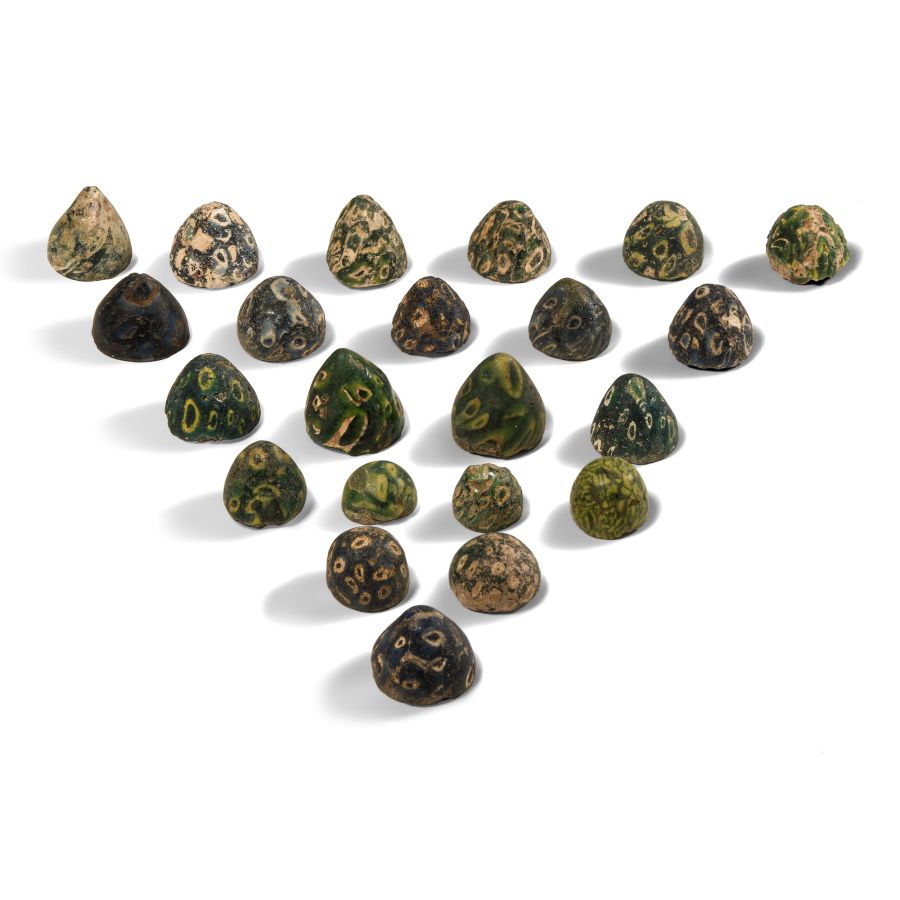
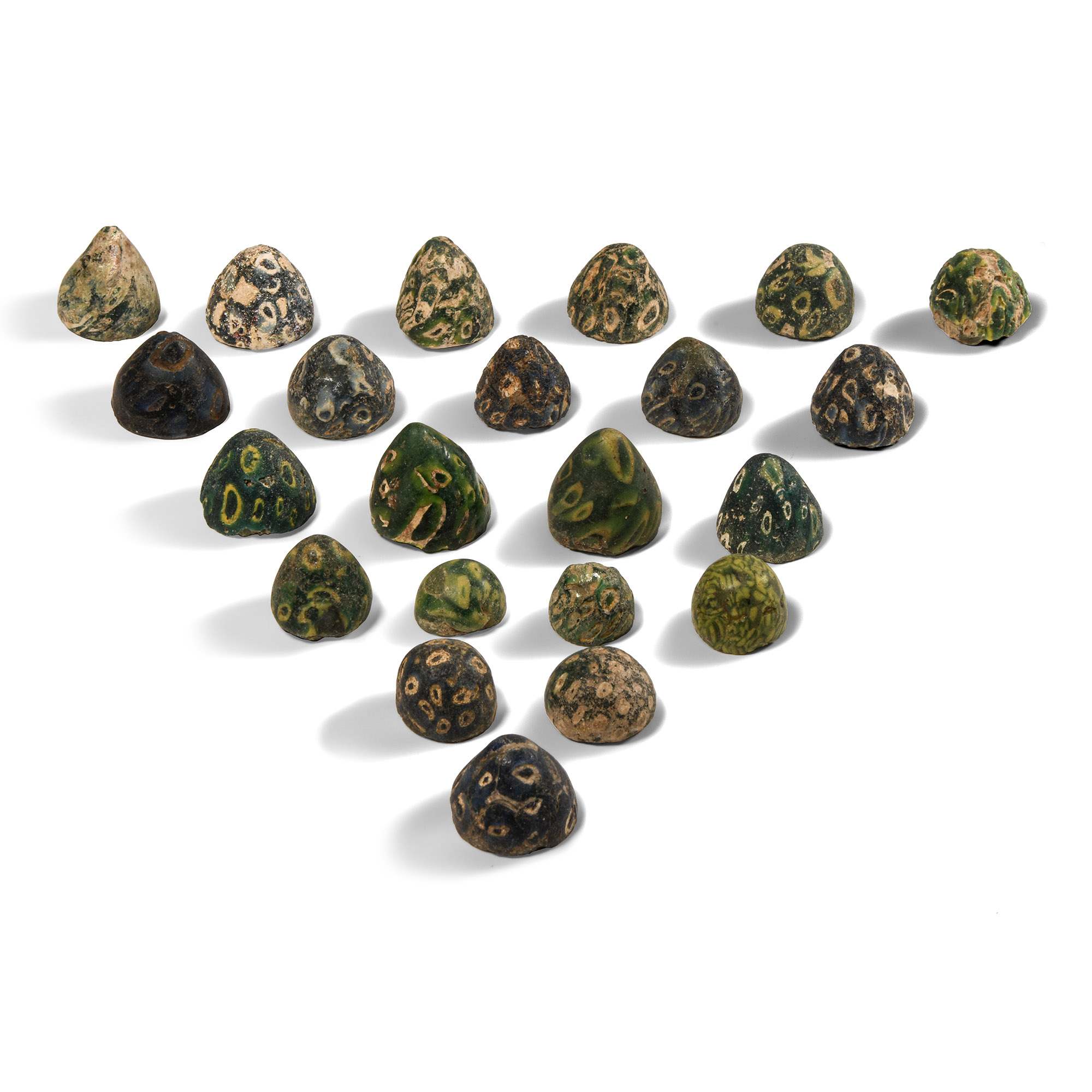
Roman and Later Mosaic Glass Gaming Piece Collection
1ST-9TH CENTURY A.D.
5/8 - 1 in. (240 grams total, 16-25 mm).
Set of conical and domed multi-coloured glass studs. [22]
ProvenanceLondon private collection, acquired between 1979-1983.
CONDITIONTimeLine Auctions follows a vetting process to ensure the authenticity and legality of all items, reinforcing our commitment to integrity and responsible trading. Each antiquity, antique, and coin lot undergoes thorough examination by a vetting committee of at least ten external specialists, professional trade association members, scientists, and archaeologists: Our Vetting Process
AUCTIONS:
TimeLine is a leading auction house specialising in antiquities, ancient art, collectables, natural history, coins, medals, and books. Our auctions offer museums, collectors, historians, and enthusiasts the opportunity to acquire unique and historically significant pieces.
-
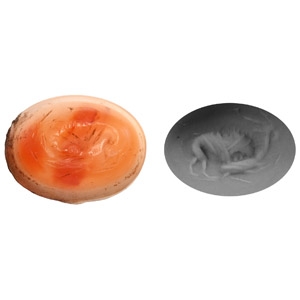
Roman Banded Agate Lion Attack Gemstone
Circa 2nd century A.D.Sold for (Inc. bp): £208
With intaglio scene of a lion attacking an ibex; supplied with a museum-quality impression. 1.55 grams, 14 mm
From a Swiss collection. Property of a North London, UK, gentleman. Accompanied by an old collection ticket. -
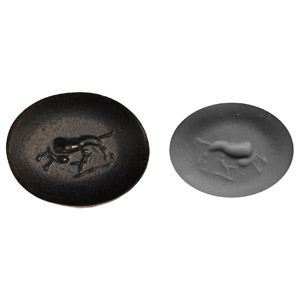
Roman Gemstone with Bull Trampling a Dog
2nd-3rd century A.D.Estimate: £120 - 170 (+bp*)
Opening Bid: £60
Plano-convex in profile with chamfered rim, intaglio scene of a horned bull one baseline with a hound attacking it from below; supplied with a museum-quality impression. 0.90 grams, 13 mm
From a Swiss collection, 1980s onwards. Property of a North London, UK, gentleman. -
.jpg)
Roman Marble Torso of Aphrodite
1st century B.C.-2nd century A.D.Estimate: £8,000 - 10,000 (‡+bp*)
Opening Bid: £4,000
Carved in the round as a torso of a slender female with hips turned, probably in contrapposto pose; mounted on a custom-made display stand. 23.4 kg total, 44 cm including stand
Ex private collection. with Artemis Gallery, Munich, Germany, early 1990s. Acquired from the above, 1999. Private European collection. Accompanied by an academic report by Dr Raffaele D'Amato. This lot has been checked against the Interpol Database of stolen works of art and is accompanied by a search certificate number no.12101-218196.
