
Loading, please wait...
LOT 0928
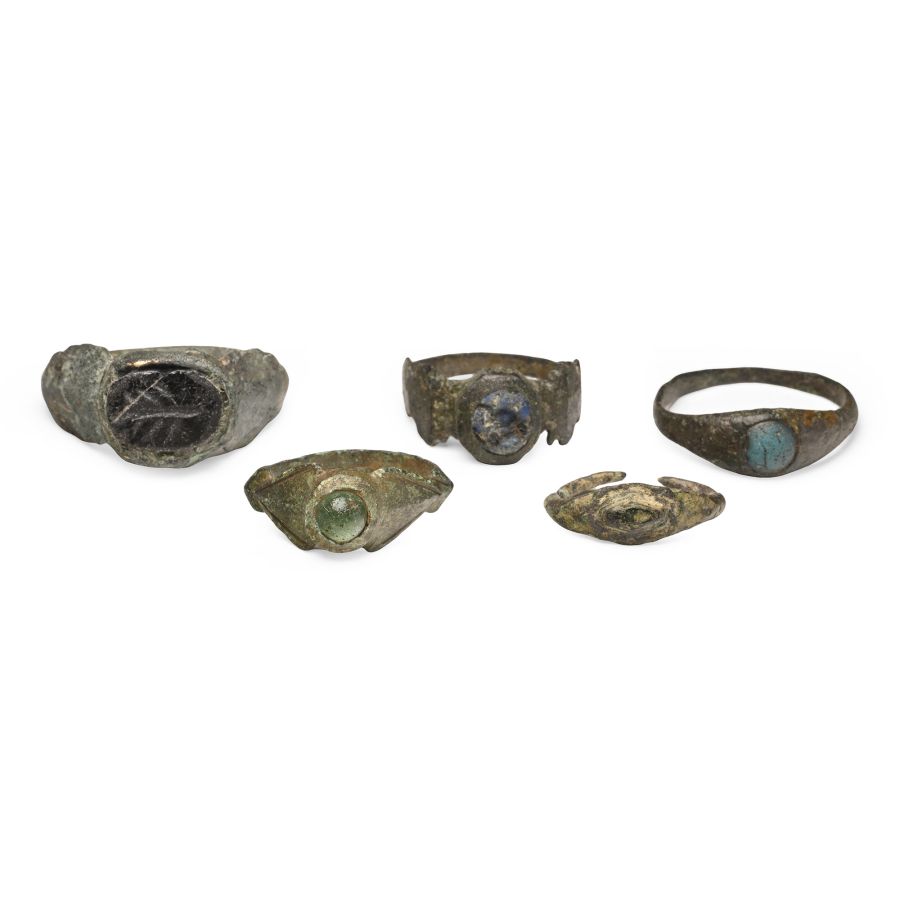
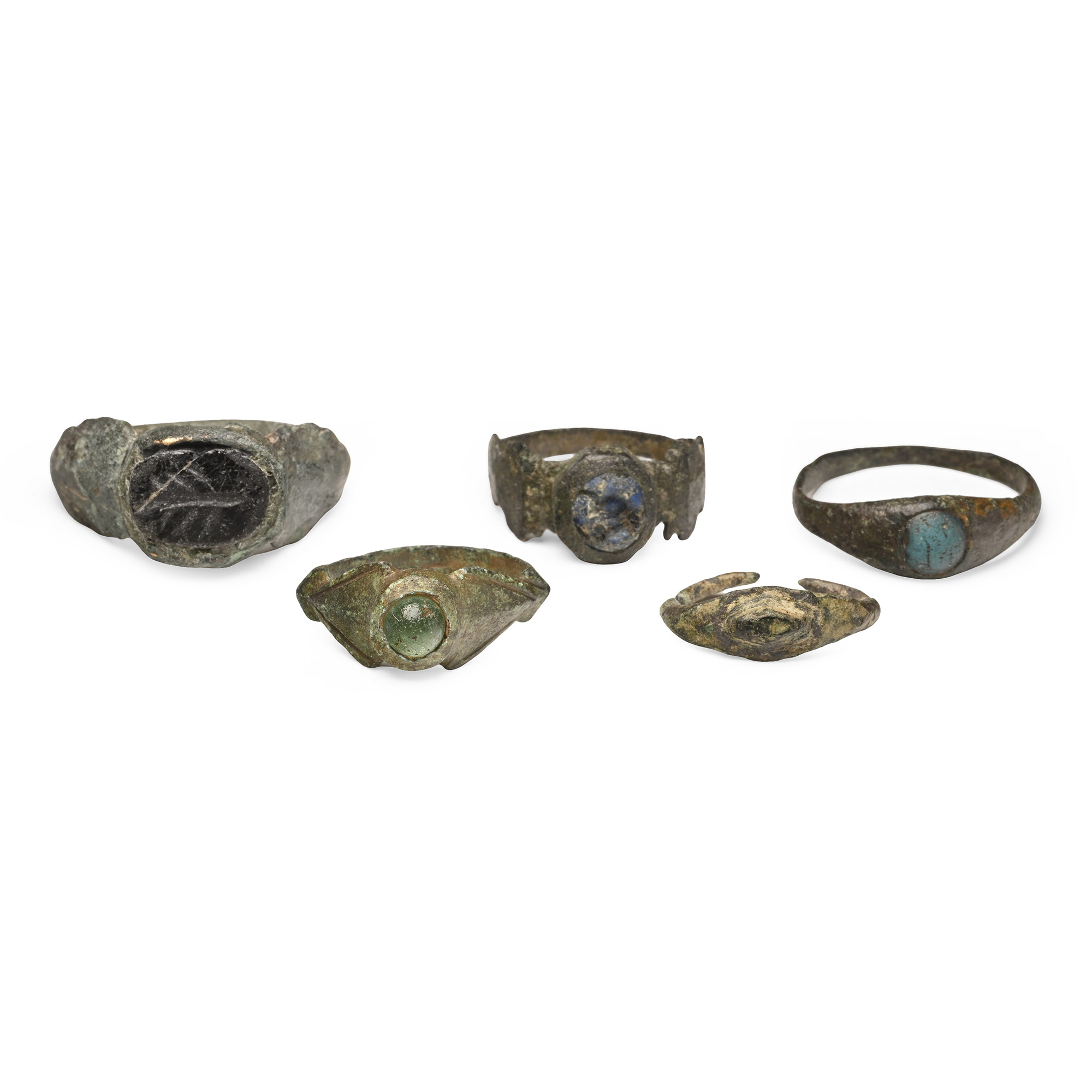
Roman and Later Bronze Ring Group
CIRCA 3RD-16TH CENTURY A.D.
3/4 - 1 in. (18 grams total, 18-27 mm).
Including a bronze ring with sloping shoulders and frond intaglio, and other types. [5]
ProvenanceAcquired on the UK art market in the late 20th century A.D.
From the private collection of the late David King (1940-2024), Hoddesdon, Hertfordshire, UK.
TimeLine Auctions follows a vetting process to ensure the authenticity and legality of all items, reinforcing our commitment to integrity and responsible trading. Each antiquity, antique, and coin lot undergoes thorough examination by a vetting committee of at least ten external specialists, professional trade association members, scientists, and archaeologists: Our Vetting Process
AUCTIONS:
TimeLine is a leading auction house specialising in antiquities, ancient art, collectables, natural history, coins, medals, and books. Our auctions offer museums, collectors, historians, and enthusiasts the opportunity to acquire unique and historically significant pieces.
-
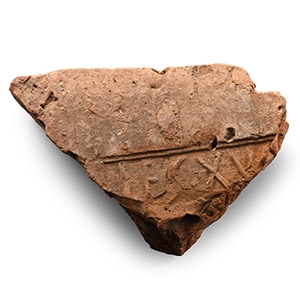
Roman Roof Tile with 'LEG XVI' Legionary Stamp
2nd-4th century A.D.Sold for (Inc. bp): £208
Irregular terracotta fragment with stamped legend 'LEG XV[I]' in a rectangular frame. 497 grams, 15 cm
From the collection of a Buckinghamshire, UK, collector established from the earlier 1960s.
The Legio XVI Gallica ("Gallic Sixteenth Legion") was raised by Octavian in 41/40 BC. having surrendered during the Batavian revolt under Julius Civilis (AD 70, it was disbanded but Vespasian later recruited a new legion, the XVI Flavia Firma. -
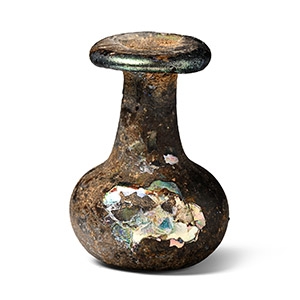
Roman Glass Unguentarium
1st-4th century A.D.Sold for (Inc. bp): £91
With a squat bulbous body, tall neck and broad flared mouth, iridescent surface. 10 grams, 56 mm
Ex London, UK, gentleman, 1990s. -
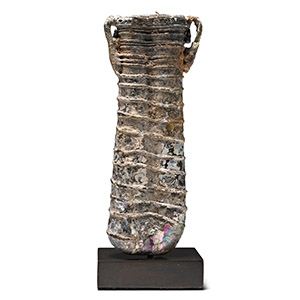
Late Roman Glass Double Unguentarium
5th-6th century A.D.Estimate: £350 - 450 (+bp*)
Opening Bid: £180
Composed of two conjoined tapering tubular cells, with lateral applied handles at the shoulder, decorated with applied trails; mounted on a custom-made stand. 53.7 grams, 11.6 cm (116 grams total, 13.5 cm including stand)
From an important London collection of glass, 1990s. This lot is accompanied by an illustrated lot declaration signed by the Head of the Antiquities Department, Dr Raffaele D'Amato.
These late Roman double cosmetic tubes were mainly produced in the Eastern provinces. They were formed as two tubes, side by side, made from a single bubble of glass by pinching the sides vertically to form a diaphragm. The decoration consisted of a trail wound once around the body just below the rim, and a further trail wound in a spiral several times around the body.
