
Loading, please wait...
LOT 0832
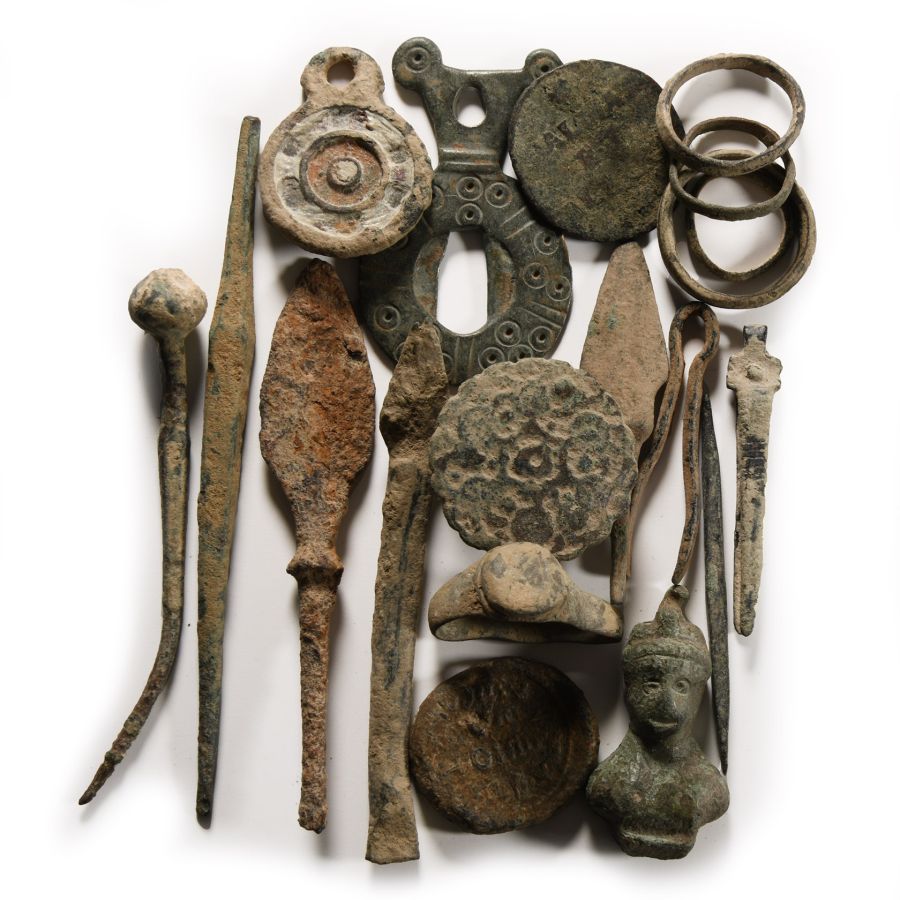
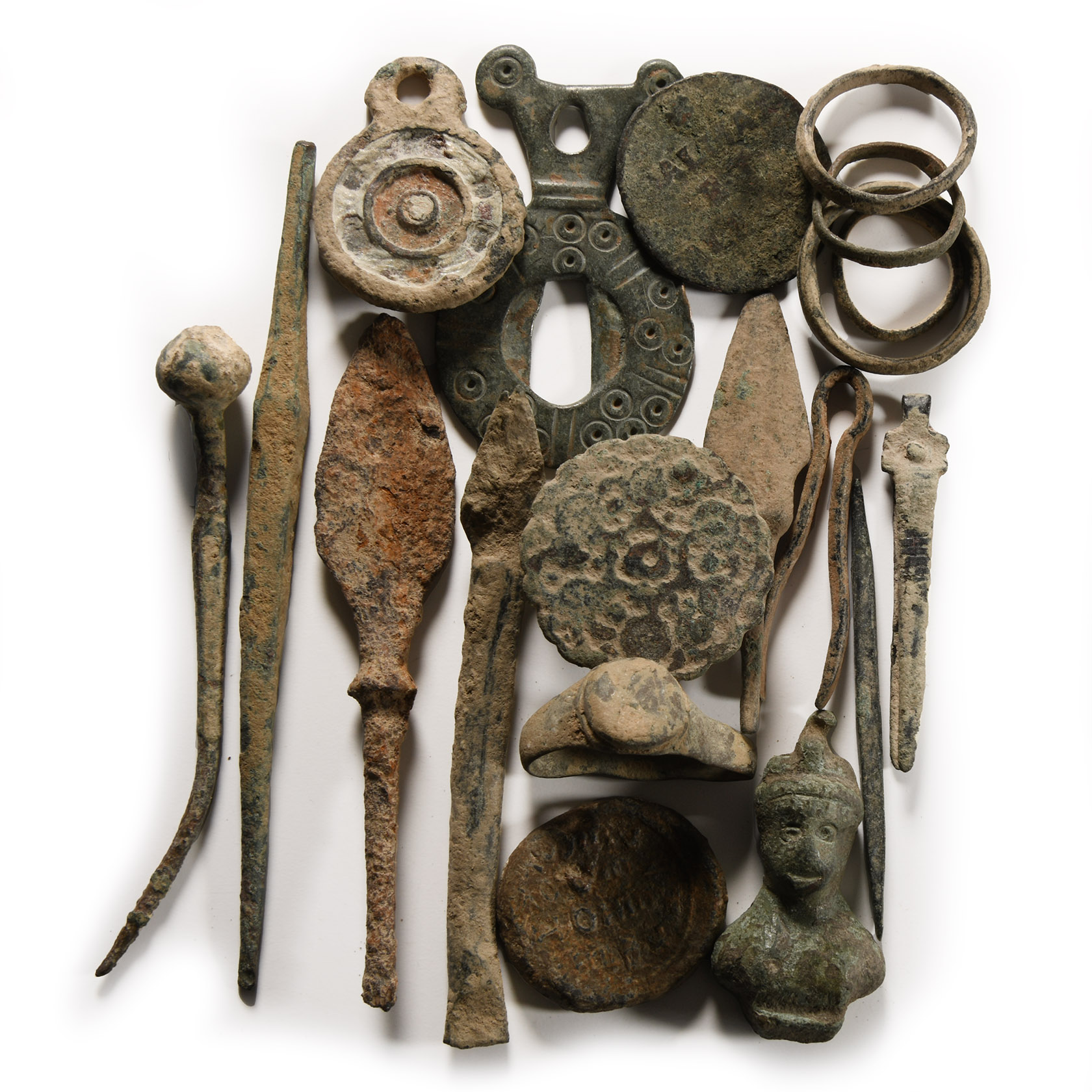
Roman and Later Bronze Artefact Collection
MAINLY 1ST-3RD CENTURY A.D.
5/8 - 3 7/8 in. (145 grams total, 17-99 mm).
Including bust of Victory pendant, tanged arrowhead, rosette belt slider, finger rings and other items. [19, No Reserve]
ProvenanceEx Nigel Mills, London, UK.
CONDITIONTimeLine Auctions follows a vetting process to ensure the authenticity and legality of all items, reinforcing our commitment to integrity and responsible trading. Each antiquity, antique, and coin lot undergoes thorough examination by a vetting committee of at least ten external specialists, professional trade association members, scientists, and archaeologists: Our Vetting Process
AUCTIONS:
TimeLine is a leading auction house specialising in antiquities, ancient art, collectables, natural history, coins, medals, and books. Our auctions offer museums, collectors, historians, and enthusiasts the opportunity to acquire unique and historically significant pieces.
-
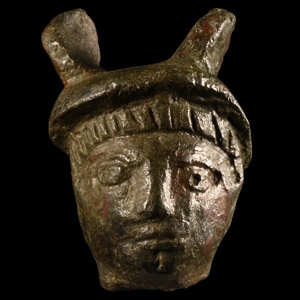
Roman Bronze Mercury Statuette Head
1st-2nd century A.D.Sold for (Inc. bp): £234
With winged petasos traveller's headgear and low-relief facial detailing. 13.3 grams, 20 mm
Property of a Gloucestershire, UK, collector. Property of an East Sussex, UK, gentleman. -
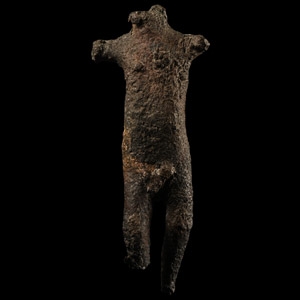
Roman Bronze Apollo Statuette
1st century B.C.-1st century A.D.Sold for (Inc. bp): £39
Standing nude with arms raised, legs in advancing pose. 37 grams, 60 mm
From a collection acquired on the UK art market from various auction houses and collections mostly before 2000. From an important Cambridgeshire estate; thence by descent. -
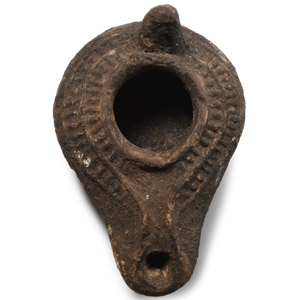
Roman Buffware Slipper Oil Lamp
Circa 4th-5th century A.D.Sold for (Inc. bp): £46
Moulmade with large handle; squat pear-shaped body, open discus with large central filling hole surrounded by two rows of radiating lines and ridge that forms a narrow channel to the nozzle; base decorated with a stylised Chrismon. 78 grams, 94 mm
From a collection acquired on the UK art market from various auction houses and collections mostly before 2000. From an important Cambridgeshire estate; thence by descent.
The type belongs probably to a variant of so-called Late Ephesian Lamps, i.e. lamps of Asia Minor. Late Ephesian type lamps have very characteristic underbodies. Several examples have an impressed circular mark, for example a cross formed of four vertically placed small circles with two more placed horizontally, or a Chi Rho, like in this example.
