
Loading, please wait...
LOT 0883
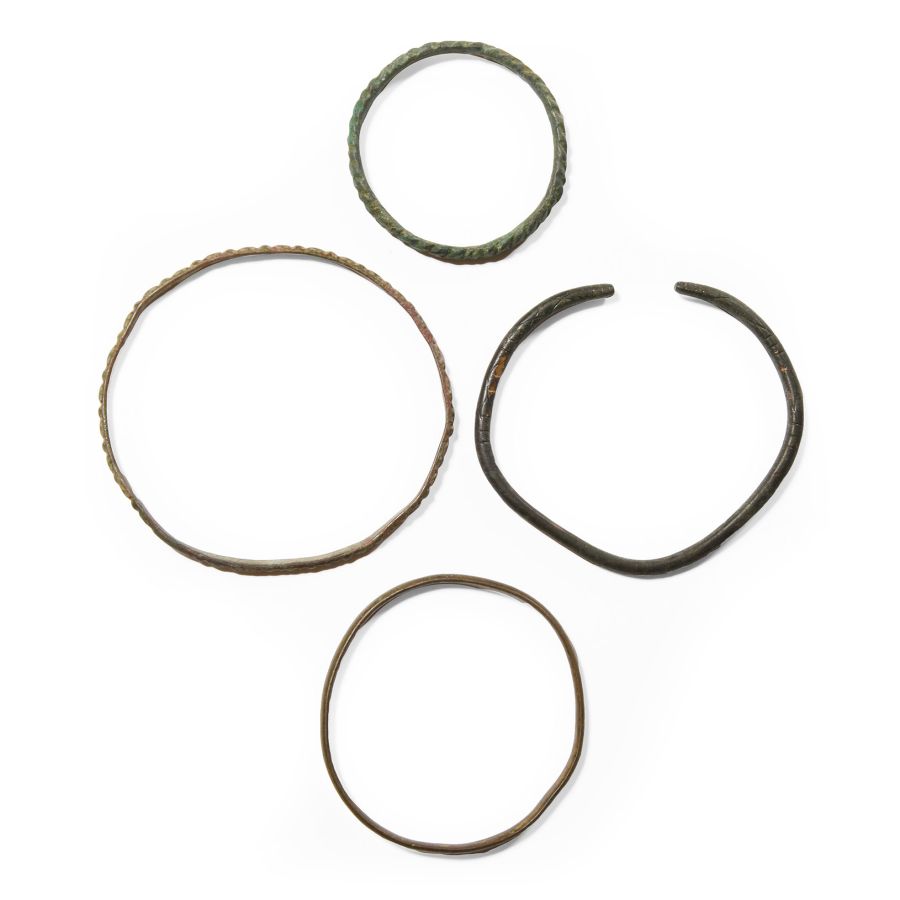
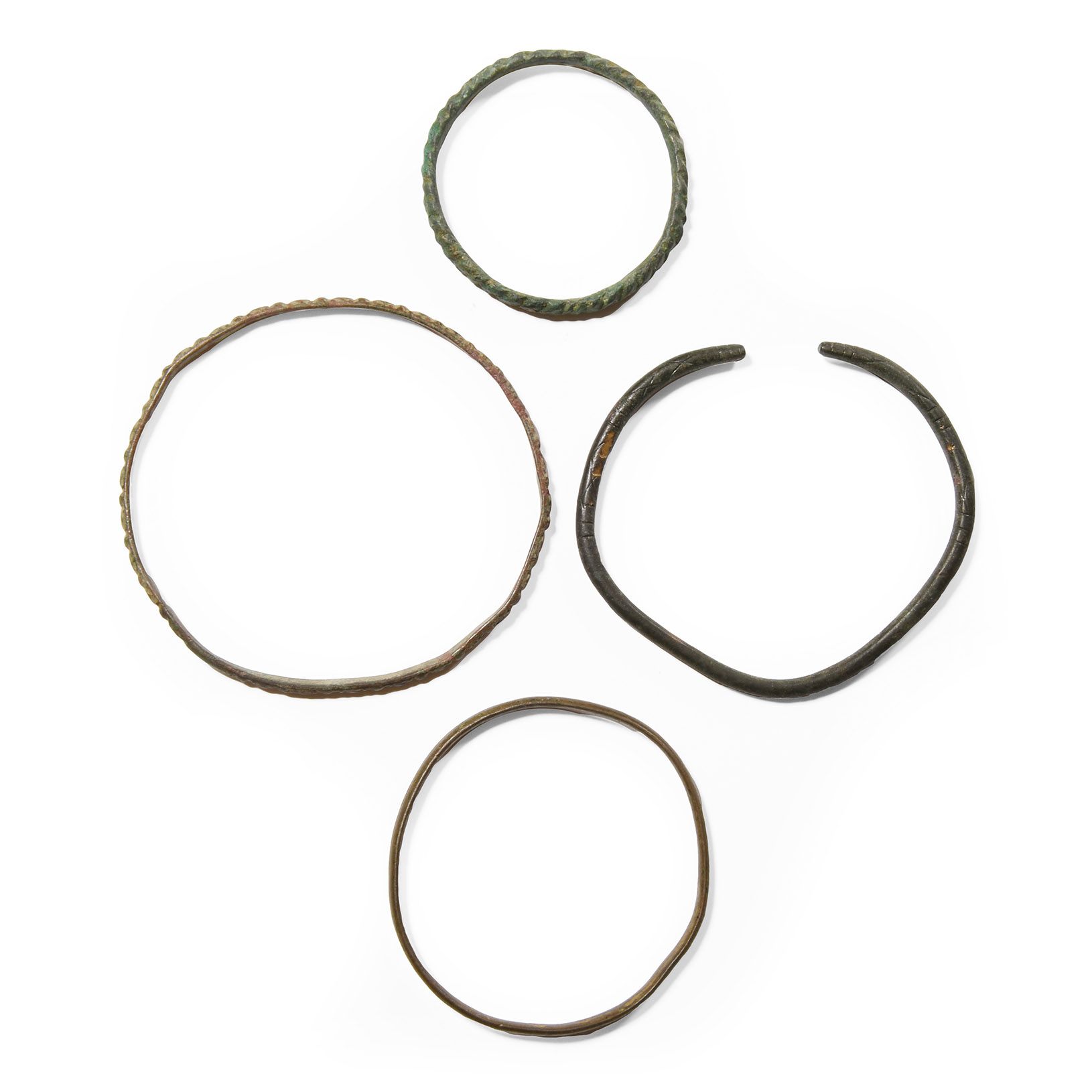
Roman and Later Bracelet Collection
4TH-17TH CENTURY A.D.
1 3/4 - 2 7/8 in. (44 grams total, 46-72 mm).
Including a D-section hoop with ropework detailing, flat-section band with median gusset, penannular hoop and other types. [4, No Reserve]
ProvenanceFrom the collection of the famous author, writer and speaker, Gordon Bailey, Essex, UK; formed since 1968.
CONDITIONTimeLine Auctions follows a vetting process to ensure the authenticity and legality of all items, reinforcing our commitment to integrity and responsible trading. Each antiquity, antique, and coin lot undergoes thorough examination by a vetting committee of at least ten external specialists, professional trade association members, scientists, and archaeologists: Our Vetting Process
AUCTIONS:
TimeLine is a leading auction house specialising in antiquities, ancient art, collectables, natural history, coins, medals, and books. Our auctions offer museums, collectors, historians, and enthusiasts the opportunity to acquire unique and historically significant pieces.
-
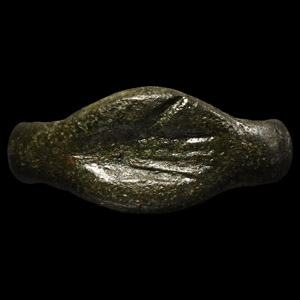
Roman Bronze Ring with Hand
2nd-3rd century A.D.Sold for (Inc. bp): £65
Wide hoop expanding to an oval-shaped intaglio with open hand. 3.18 grams, 20.88 mm overall, 17.14 mm internal diameter (approximate size British N, USA 6 1/2, Europe 13.72, Japan 13)
Private collection formed since the 1940s. UK art market. Property of an Essex, UK, gentleman. -
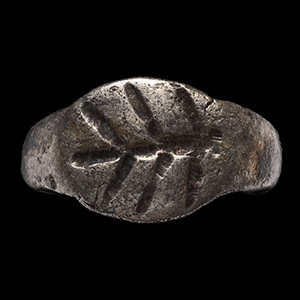
Roman Silver Child's Ring with Palm Branch
1st-2nd century A.D.Sold for (Inc. bp): £33
With lentoid-profile hoop, ellipsoid bezel with incuse frond motif. 2.31 grams, 16.88 mm overall, 13.87 mm internal diameter (approximate size British E, USA 2 1/4, Europe 2.41, Japan 2)
UK private collection before 2000. Acquired on the UK art market. Property of a London gentleman. -
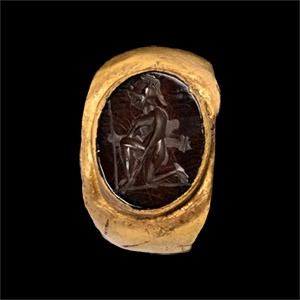
Roman Gold Ring with Kneeling Soldier Gemstone
2nd-3rd century A.D.Sold for (Inc. bp): £1,040
With flared shoulders and ellipsoid cell, inset carnelian intaglio warrior kneeling on a baseline, Pseudo-Corinthian-style helmet pushed back on the head, spear held in one hand the other touching his ankle. 4.73 grams, 17.88 mm overall, 15.40 mm internal diameter (approximate size British H, USA 3 3/4, Europe 6.18, Japan 6)
Acquired on the European art market in the 1990s. UK collection of a European gentleman.
The type is defined from Ruseva-Slokoska as Eastern Influence, widespread in the 2nd-3rd centuries A.D. The scene possibly alludes to the incident in the Trojan Cycle where Achilles is wounded by an arrow in his heel, the only portion of his body which was not impervious to injury.
