
Loading, please wait...
LOT 0650
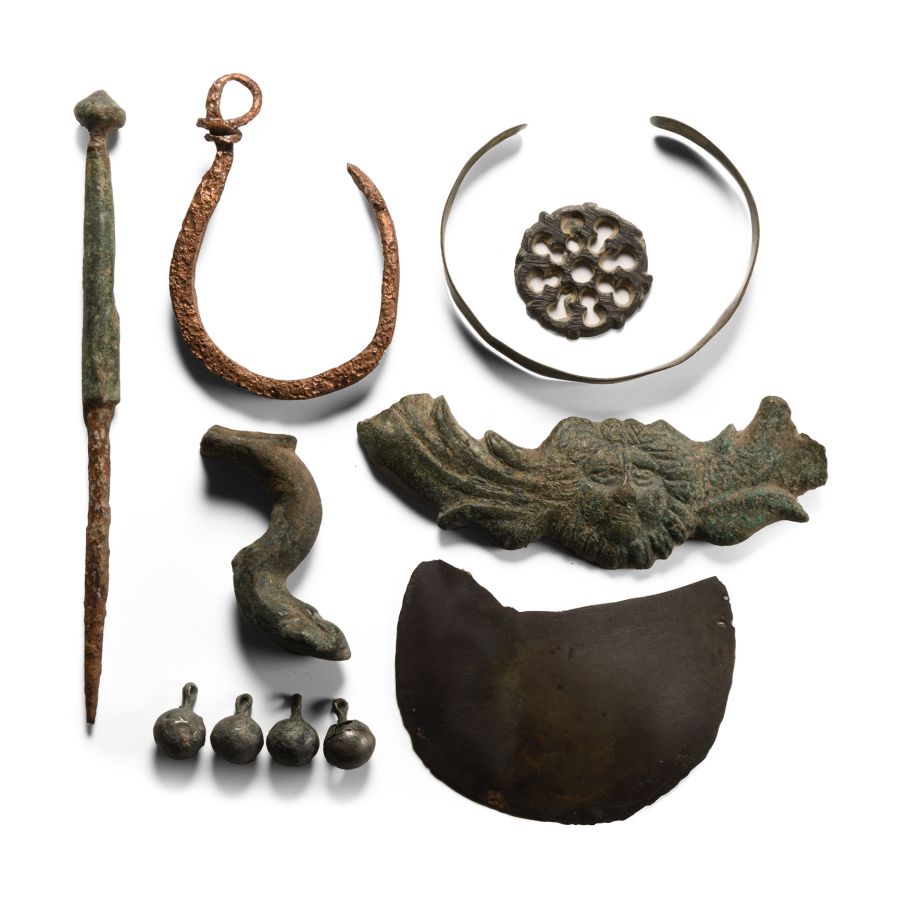
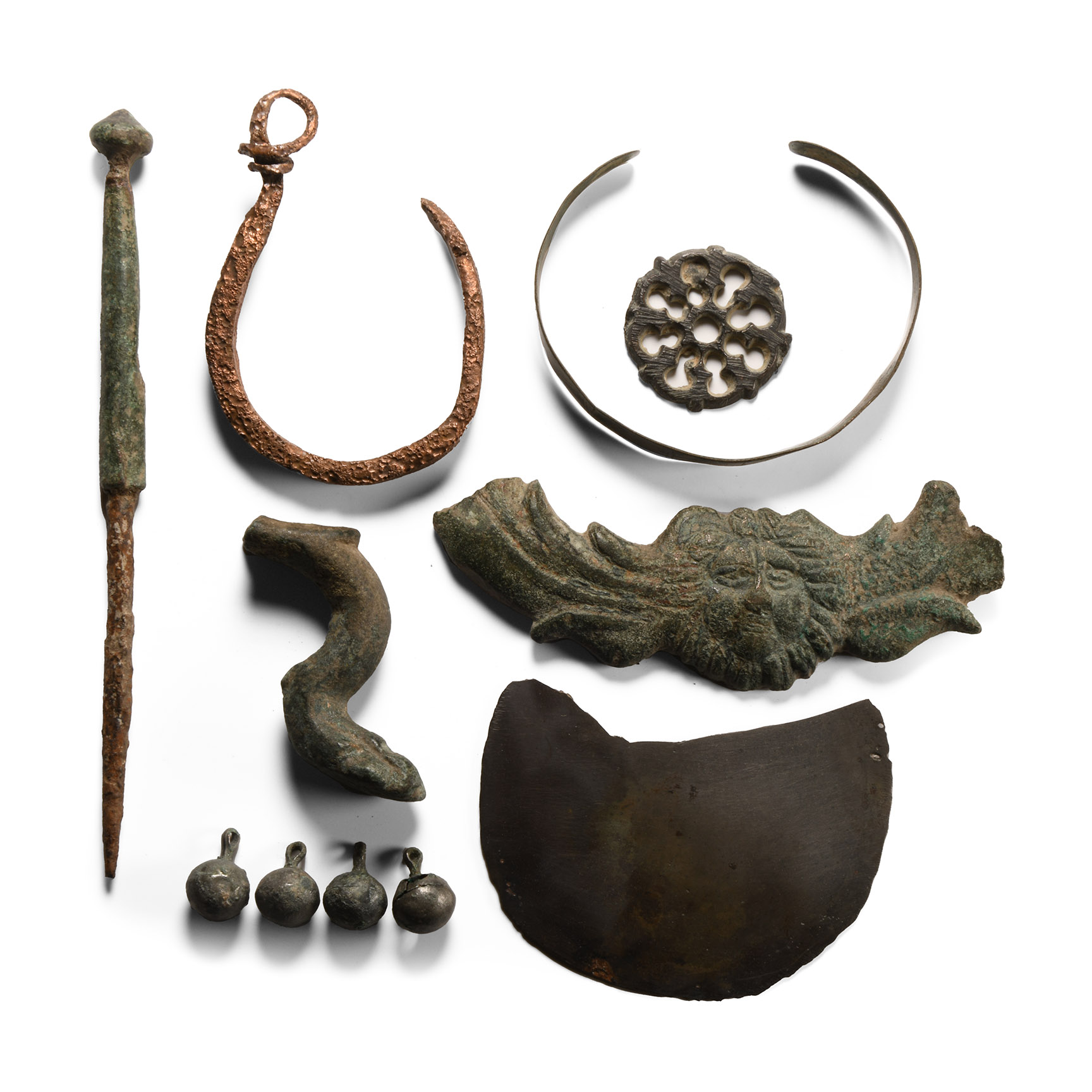
Roman and Later Artefact Group
3RD-17TH CENTURY A.D.
1/2 - 4 3/4 in. (179 grams total, 1.3-12 cm).
Comprising: an annular bracelet with linear decoration; four spherical buttons; an openwork mount; a large mount with a central face mask; a polished mirror insert fragment; a casket leg formed as lion's paw; a pin with iron stem; and a hook. [11, No Reserve]
ProvenanceProperty of the vendor's grandfather, thence by family descent, circa 1985.
From the private collection of a New York, USA gentleman.
TimeLine Auctions follows a vetting process to ensure the authenticity and legality of all items, reinforcing our commitment to integrity and responsible trading. Each antiquity, antique, and coin lot undergoes thorough examination by a vetting committee of at least ten external specialists, professional trade association members, scientists, and archaeologists: Our Vetting Process
AUCTIONS:
TimeLine is a leading auction house specialising in antiquities, ancient art, collectables, natural history, coins, medals, and books. Our auctions offer museums, collectors, historians, and enthusiasts the opportunity to acquire unique and historically significant pieces.
-
Roman Iridescent Aubergine Glass Jar with Two Handles
4th century A.D.Estimate: £700 - 900 (+bp*)
Opening Bid: £350
With squat bulbous body, dimple base, flared trumpet neck; applied trails to the shoulder, two strap handles. 51 grams, 76 mm
Ex property of a late Japanese collector, 1970-2000s. -
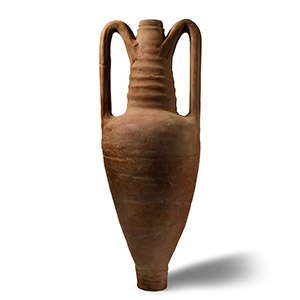
Large Roman Aegean Terracotta Amphora
Early 3rd century B.C.Sold for (Inc. bp): £1,950
Tall and with a narrow base, two sturdy ribbed strap handles and a conical neck with a stepped profile; restored. 7.8 kg, 69 cm
From a collection acquired on the UK art market from various auction houses and collections mostly before 2000. From an important Cambridgeshire estate; thence by descent. -
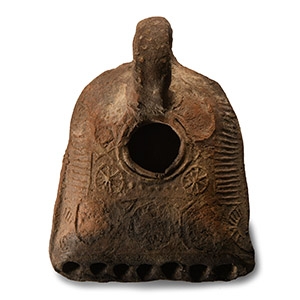
Romano-Jewish Terracotta Oil Lamp with Seven Spouts
4th-5th century A.D.Sold for (Inc. bp): £416
Hollow-formed tongue-shaped lamp with chamfered sides, loop handle, large filler hole; low-relief rosette and other ornament to the discus, chamfered forward edge with seven nozzles. 238 grams, 13 cm
Acquired on the German art market, 1989-1995. with The Museum Gallery, 19 Bury Place, London, WC1, UK, 1998-2003. Property of a London based academic, 2003-present.
The lamp was probably a variant on the menorah with seven separate lights from a single source.
