
Loading, please wait...
LOT 0727
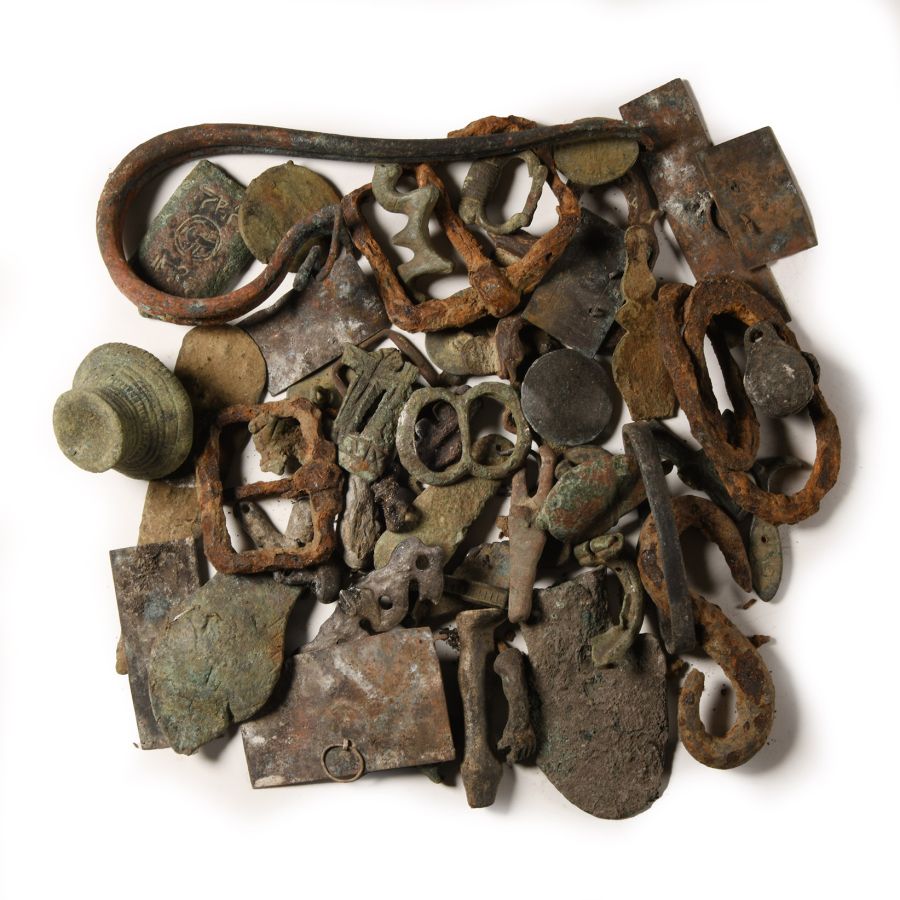
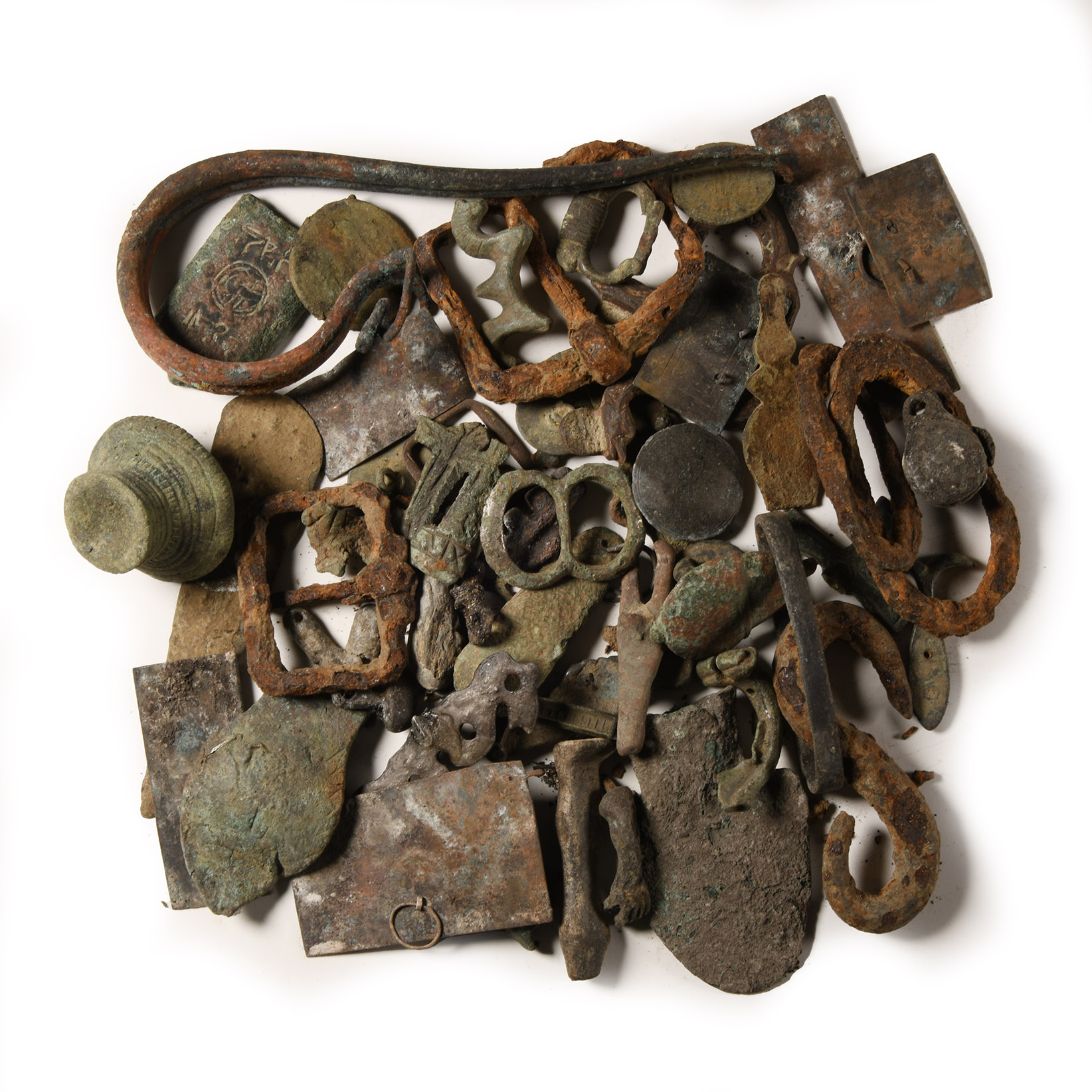
Roman and Later Artefact Collection
1ST-20TH CENTURY A.D.
5/8 - 5 3/8 in. (646 grams total, 1.6-13.6 cm).
Including a bifid vessel handle with coiled finial, buckles, belt-plaques; harness fittings, key-wards and other items. [51, No Reserve]
ProvenanceFrom a collection acquired on the UK art market from various auction houses and collections mostly before 2000.
From an important Cambridgeshire estate; thence by descent.
TimeLine Auctions follows a vetting process to ensure the authenticity and legality of all items, reinforcing our commitment to integrity and responsible trading. Each antiquity, antique, and coin lot undergoes thorough examination by a vetting committee of at least ten external specialists, professional trade association members, scientists, and archaeologists: Our Vetting Process
AUCTIONS:
TimeLine is a leading auction house specialising in antiquities, ancient art, collectables, natural history, coins, medals, and books. Our auctions offer museums, collectors, historians, and enthusiasts the opportunity to acquire unique and historically significant pieces.
-
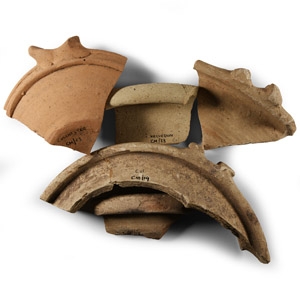
Romano-British 'Colchester' Mortarium Sherd Group
1st-4th century A.D.Sold for (Inc. bp): £98
Including mainly rim fragments, one with the pouring lip; on marked 'Colchester / CM/23', another with 'Col / CM/19'. 1.64 kg total. 11-29.5 cm
Found Colchester, UK. From the collection of a late East Anglian teacher and antiquarian who retired to the Isle of Wight in Hampshire, UK. He amassed a large collection of objects between the 1960s-1980s. -
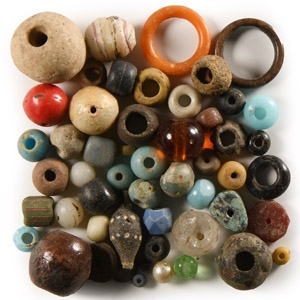
'Thames' Bead Collection
1st-2nd millennium A.D.Sold for (Inc. bp): £156
Including annular, spherical, tabular and other types in various materials. 66 grams total, 3-22 mm
Found Billingsgate spoil from the Thames foreshore, London, UK, circa 1984. Property of an Essex collector. -
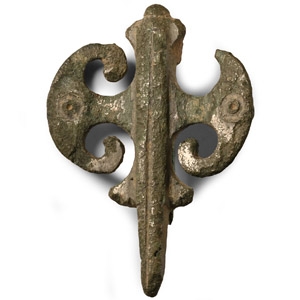
Roman Bronze Double Axe-Shaped Plate Brooch
2nd century A.D.Sold for (Inc. bp): £117
With vertical spine and peltoid lateral extensions with silvered surface, enamelled annular motif to the centre of each; pin and catchplate to the reverse. 10 grams, 42 mm
UK art market, acquired prior to 1980. Property of a Kent lady collector.
