
Loading, please wait...
LOT 0876
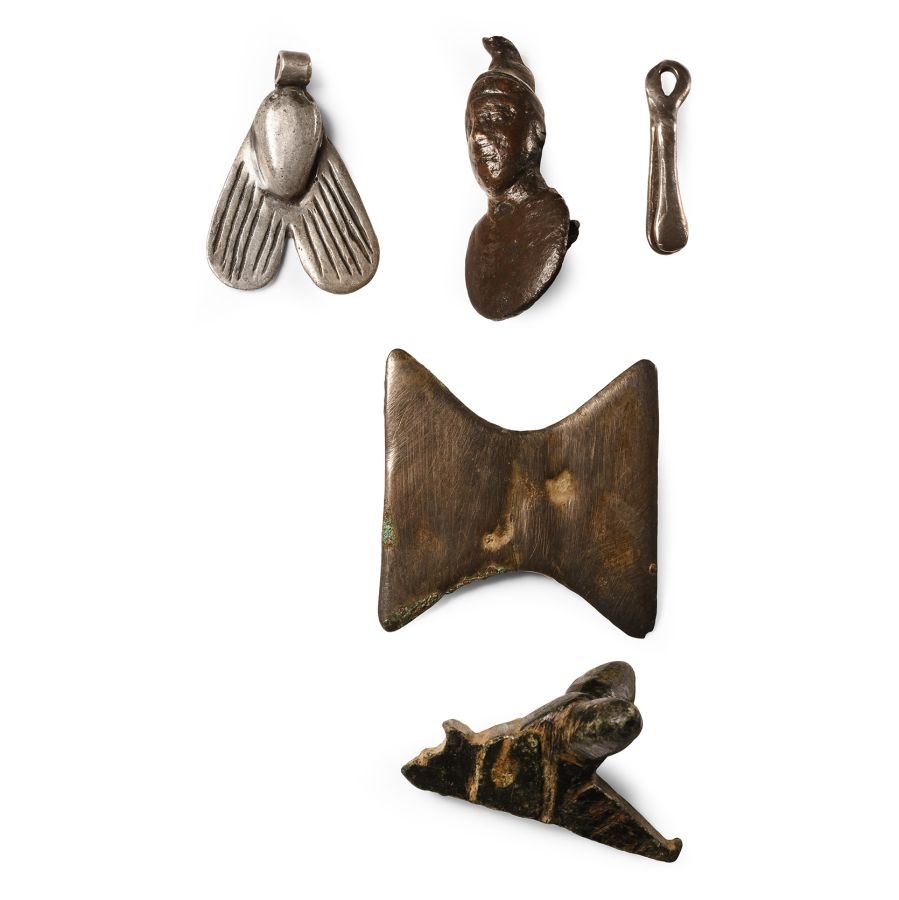
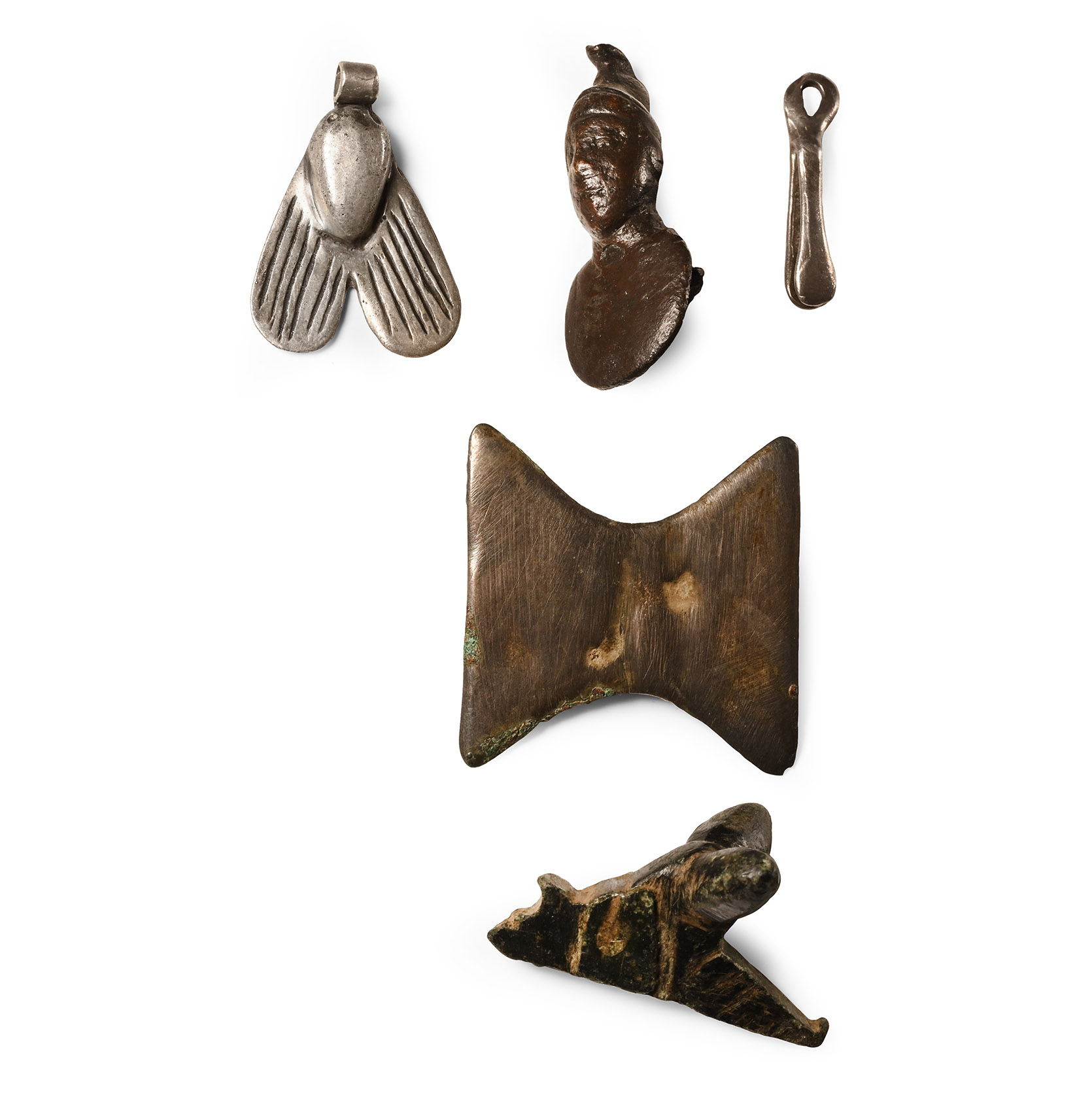
Roman and Earlier Silver and Bronze Artefact Collection
1ST MILLENNIUM B.C.-4TH CENTURY A.D.
7/8 - 1 3/8 in. (34.5 grams total, 23-35 mm).
Comprising: amuletic pendant in the form of a fly with hatched wings; amuletic wishbone pendant; figure fragment; mount formed as the bust of Minerva with crested helmet; Bronze Age butterfly toggle. [5, No Reserve]
ProvenanceFrom the collection of the famous author, writer and speaker, Gordon Bailey, Essex, UK; formed since 1968.
PublishedBailey, G., Buttons and Fasteners 500 BC-AD1840, Witham, 2004, item 10.1 (butterfly toggle).
CONDITIONTimeLine Auctions follows a vetting process to ensure the authenticity and legality of all items, reinforcing our commitment to integrity and responsible trading. Each antiquity, antique, and coin lot undergoes thorough examination by a vetting committee of at least ten external specialists, professional trade association members, scientists, and archaeologists: Our Vetting Process
AUCTIONS:
TimeLine is a leading auction house specialising in antiquities, ancient art, collectables, natural history, coins, medals, and books. Our auctions offer museums, collectors, historians, and enthusiasts the opportunity to acquire unique and historically significant pieces.
LOT 0876
Roman and Earlier Silver and Bronze Artefact Collection
Sold for (Inc. bp): £169
-
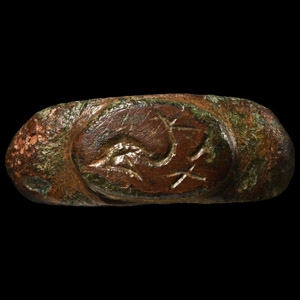
Roman Bronze Ring with Dolphin
2nd-3rd century A.D.Sold for (Inc. bp): £520
With broad shoulders and ellipsoid bezel, intaglio dolphin and 'XA' enigmatic inscription. 4.35 grams, 23.65 mm overall, 18.90 mm internal diameter (approximate size British L 1/2, USA 6, Europe 11.87, Japan 11)
Ex German art market, 2000s. Acquired from an EU collector living in London. From the collection of Surrey, UK, gentleman. -
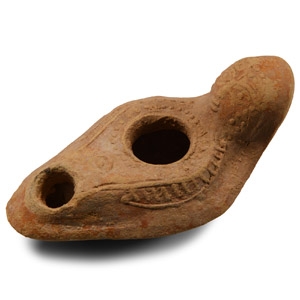
Roman Early Christian Terracotta Oil Lamp
3rd-4th century A.D.Sold for (Inc. bp): £211
With decorated bow shaped nozzle, large central filling-hole surrounded by a dotted ridge, shoulder decorated by geometric patterns; the handle shaped as a human face representing a head of Christ or a saint. 64 grams, 10 cm
Collected from 1970-1999. From the collection of the late Mr S.M., London, UK.
The lamp seems to be a variant of the type Beit Nattif lamps, usually with pyramidal handle (here substituted by a head of a saint or Christ) and a reddish slip on the upper part. This was the most widespread type of lamps in use in Judaea in the Late Roman Period. -
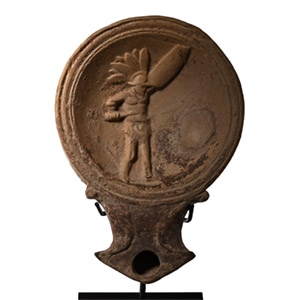
Roman Terracotta Lamp with Gladiator
1st-2nd century A.D.Estimate: £1,800 - 2,400 (‡+bp*)
Opening Bid: £1,000
Discoid body with sunken discus with bas-relief scene of a gladiator in combat with gladius poised and scutum raised above his head, D-shaped nozzle with volutes; supplied with a custom-made stand. 167 grams total, 19 cm including stand (lamp 11.6 cm)
Ex Axel Guttmann collection of ancient arms and armour, Germany (1944-2001). Axel Guttmann collection of ancient arms and armour, part 2, Christie's London, 28 April 2004, no.178 (part). Acquired by the present owner at the above sale. Accompanied by a copy of the Christie's lot listing. This lot has been checked against the Interpol Database of stolen works of art and is accompanied by search certificate number no.12235-222198.
