
Loading, please wait...
LOT 0781
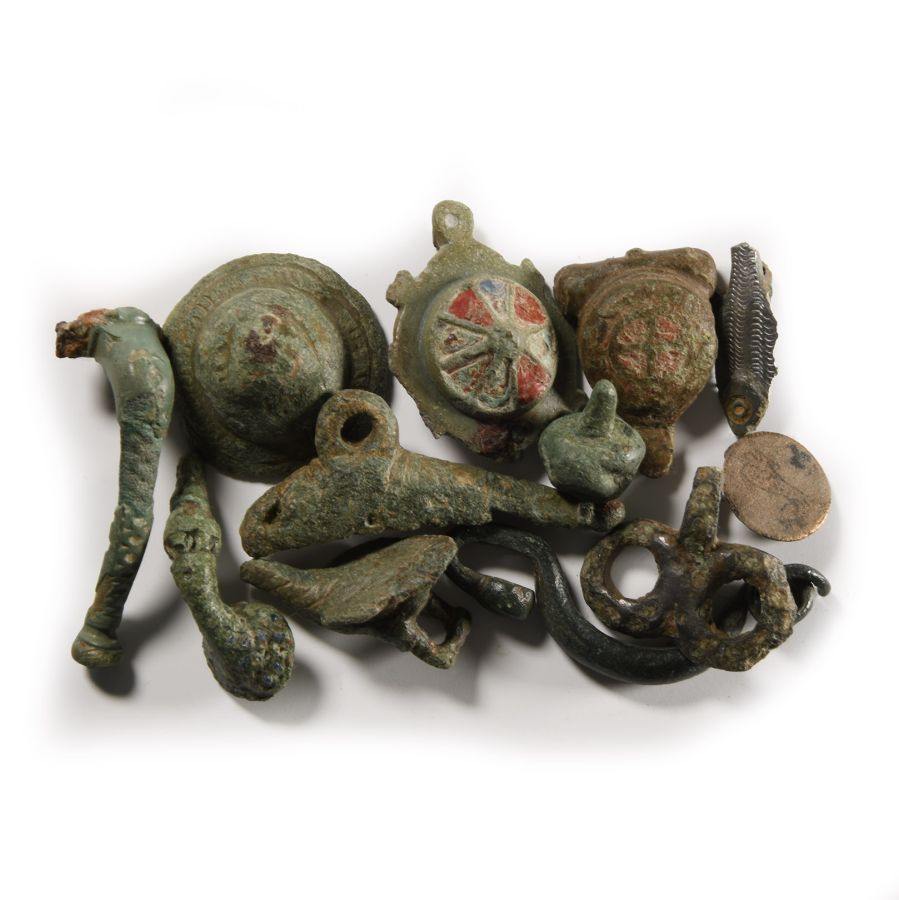
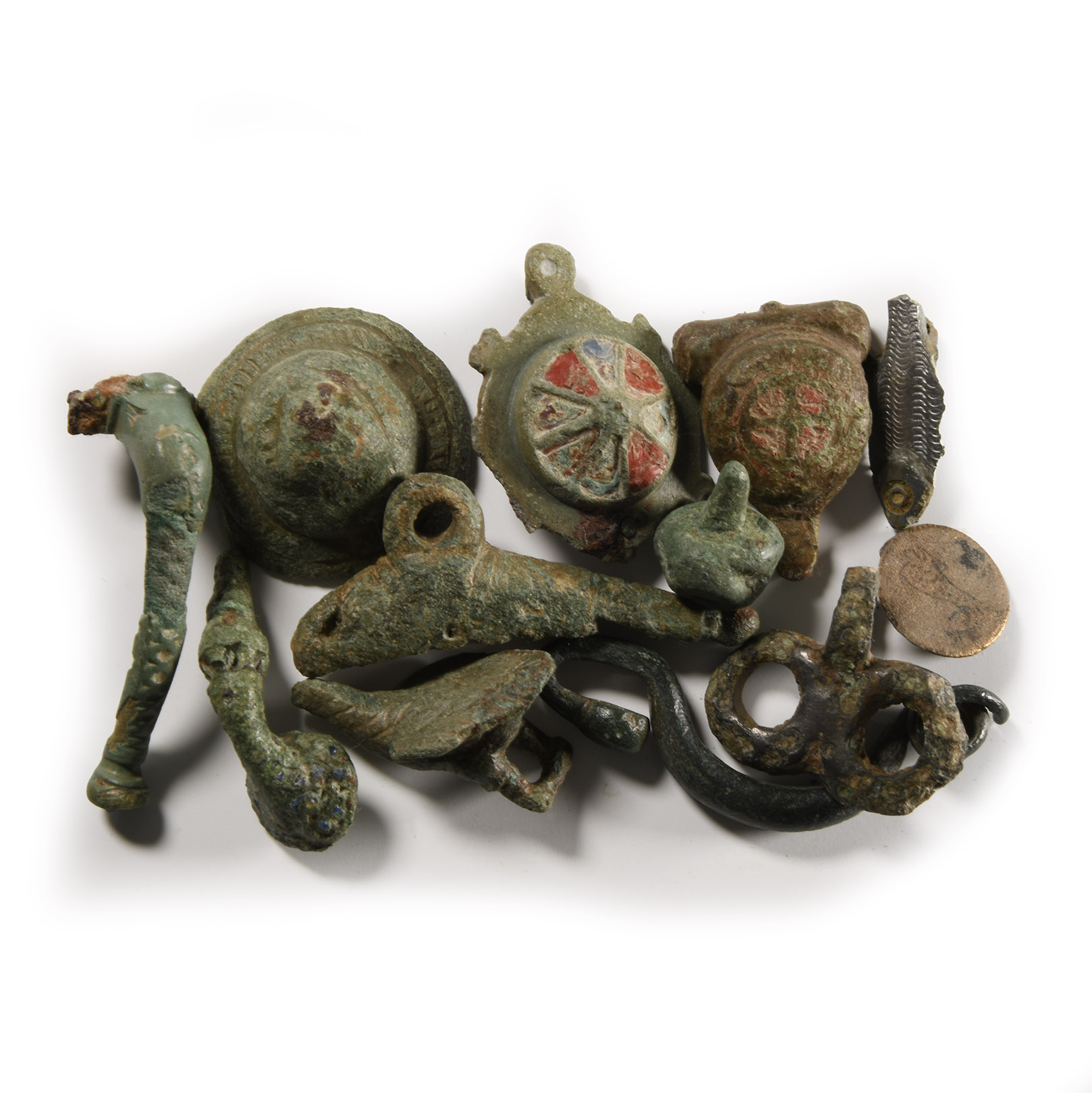
Roman and Celtic Artefact Group
1ST CENTURY B.C.-4TH CENTURY A.D.
5/8 - 2 1/8 in. (127 grams total, 16-54 mm).
Mixed group including a cosmetic grinder bed, a fish-shaped silver plate broch, a looped rein guide, a La Tène I brooch fragment, trumpet brooch fragment and other items. [12, No Reserve]
ProvenanceAcquired since the 1970s.
From the private collection of a Surrey, UK, gentleman.
TimeLine Auctions follows a vetting process to ensure the authenticity and legality of all items, reinforcing our commitment to integrity and responsible trading. Each antiquity, antique, and coin lot undergoes thorough examination by a vetting committee of at least ten external specialists, professional trade association members, scientists, and archaeologists: Our Vetting Process
AUCTIONS:
TimeLine is a leading auction house specialising in antiquities, ancient art, collectables, natural history, coins, medals, and books. Our auctions offer museums, collectors, historians, and enthusiasts the opportunity to acquire unique and historically significant pieces.
-
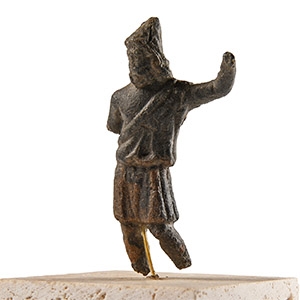
Roman Bronze Vulcan Statuette
1st-2nd century A.D.Sold for (Inc. bp): £312
Standing wearing a tunic draped from the left shoulder and a conical hat, left arm extended at shoulder-height; mounted on a custom-made stand. 110 grams total, 71 mm including stand
From a collection acquired on the UK art market from various auction houses and collections mostly before 2000. From an important Cambridgeshire estate; thence by descent. -
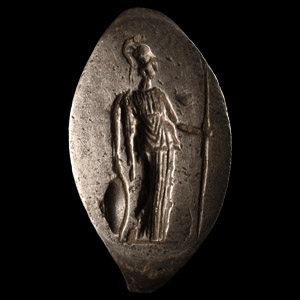
Roman Silver Ring with Minerva
Circa 1st century A.D.Sold for (Inc. bp): £520
Ellipsoid bezel with incuse image of Minerva standing helmetted holding spear and shield; supplied with a museum-quality impression. 3.71 grams, 22.95 mm overall, 19.56 mm internal diameter (approximate size British P 1/2, USA 7 3/4, Europe 16.86, Japan 16)
Acquired on the London art market in the late 1980s-1990s. From the family collection of an East London, UK, gentleman. -
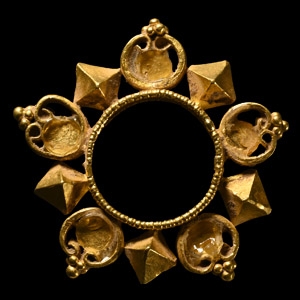
Late Roman Highly Ornate Solid Gold Frame
3rd-7th century A.D.Estimate: £800 - 1,000 (+bp*)
Opening Bid: £400
With applied heart-shaped openwork panels and octahedrons on the outer face of a decorative ring band. 12.4 grams, 32.4 mm
From a late Japanese specialist collector, 1970-2000s.
