
Loading, please wait...
_900x900.jpg "Roman and Byzantine Ceramic Oil Lamp Collection")
_200x200.jpg "Roman and Byzantine Ceramic Oil Lamp Collection")
.jpg "Roman and Byzantine Ceramic Oil Lamp Collection")
LOT 0907
Roman and Byzantine Ceramic Oil Lamp Collection
2ND-8TH CENTURY A.D.
3 1/2 - 3 3/4 in. (159 grams total, 88-94 mm).
Comprising: a slipper-shaped lamp with low-relief linear decoration; a rounded lamp with large nozzle, a band of omega motifs around the central filler hole; a drum-shaped lamp with low discus with raised double border, short nozzle with ring-and-dot motifs. [3]
Provenancewith Galerie Rhéa, Zurich, Switzerland.
CONDITIONTimeLine Auctions follows a vetting process to ensure the authenticity and legality of all items, reinforcing our commitment to integrity and responsible trading. Each antiquity, antique, and coin lot undergoes thorough examination by a vetting committee of at least ten external specialists, professional trade association members, scientists, and archaeologists: Our Vetting Process
AUCTIONS:
TimeLine is a leading auction house specialising in antiquities, ancient art, collectables, natural history, coins, medals, and books. Our auctions offer museums, collectors, historians, and enthusiasts the opportunity to acquire unique and historically significant pieces.
-
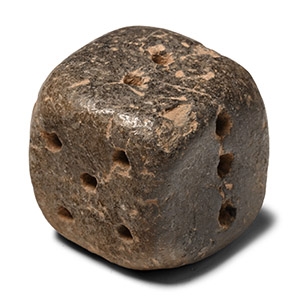
Large Roman Bone Gaming Dice
1st-2nd century A.D.Sold for (Inc. bp): £72
Cuboid with drilled holes disposed 1:2, 3:6, 4:5. 11 grams, 19 mm
From a collection of gaming items, formed 1980-1990s. -
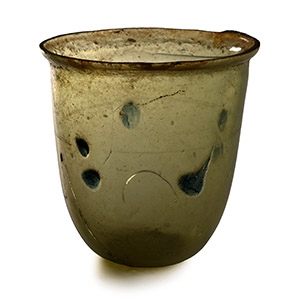
Roman Olive Green Glass Vessel with Blue Spot Decoration
1st-2nd century A.D.Sold for (Inc. bp): £442
With tapering sidewall and flared rim, applied blue glass splashes. 37.8 grams, 68 mm
Acquired Christie's, London, Antiquities, Works of Art and Important Renaissance Bronzes, Plaquettes and Limoges Enamels, 8 July 1981, no.6 (part). From a private Wiltshire, UK, collection. Accompanied by a copy of the relevant Christie's catalogue pages. -
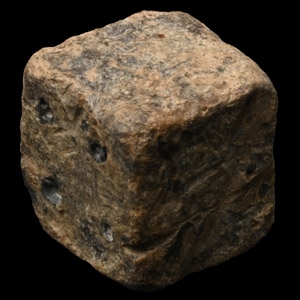
Romano-British Lead Gaming Dice
1st-4th century A.D.Sold for (Inc. bp): £156
Cuboid with pellet markings on most faces. 16.6 grams, 12 mm
Found Wiltshire, UK. From the private collection of Colin Narbeth, UK, 1990s, with collection reference no.52. Accompanied by a typed collection ticket.
