
Loading, please wait...
LOT 0709
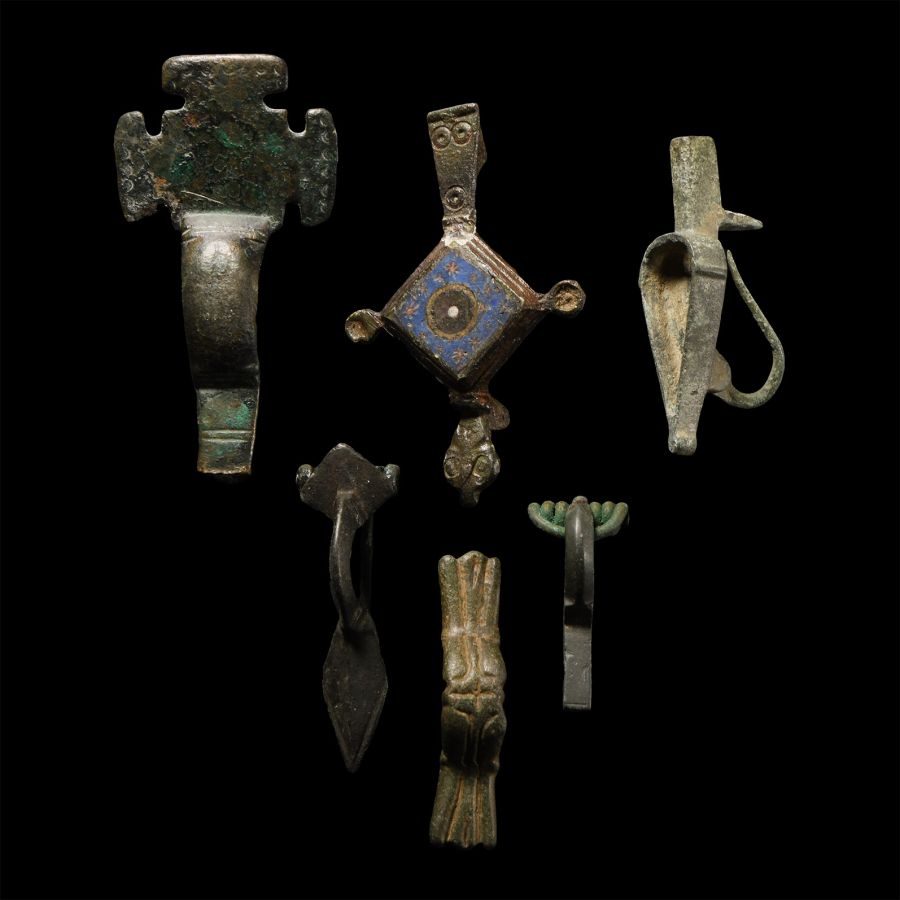
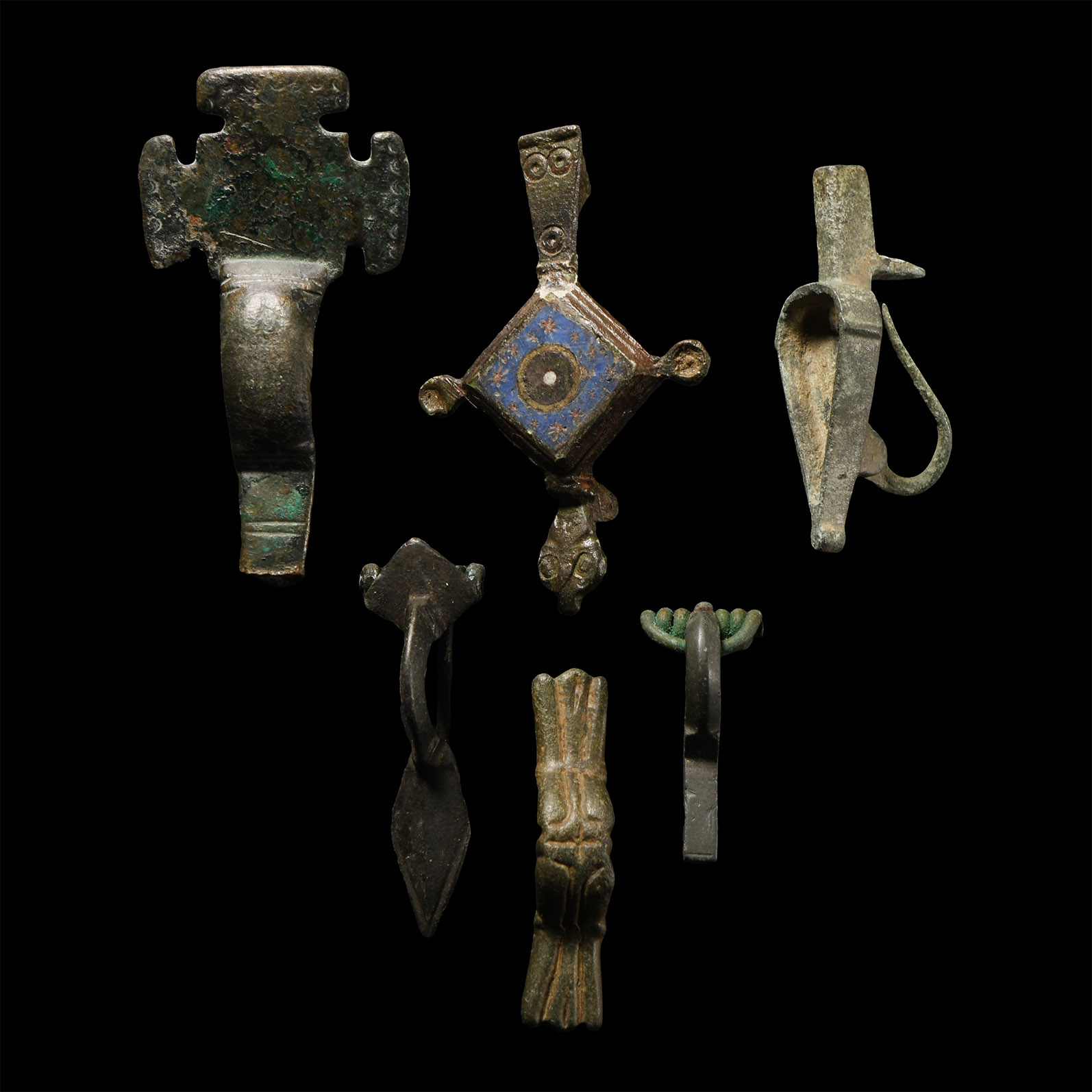
Roman and Anglo-Saxon Bronze Brooch Collection
2ND-7TH CENTURY A.D.
1 1/4 - 2 3/8 in. (62 grams total, 31-61 mm).
Comprising: two bow brooches; an equal-arm brooch with incised decoration; a large portion of a Saxon cruciform brooch; a brooch with a teardrop-shaped cell; a hybrid brooch with enamelled lozenge-shaped central plate. [6, No Reserve]
ProvenanceEx Hansons Auctions, Derbyshire, UK.
Property of a Shropshire private collector.
Accompanied by an old identification ticket for the equal-armed brooch.
TimeLine Auctions follows a vetting process to ensure the authenticity and legality of all items, reinforcing our commitment to integrity and responsible trading. Each antiquity, antique, and coin lot undergoes thorough examination by a vetting committee of at least ten external specialists, professional trade association members, scientists, and archaeologists: Our Vetting Process
AUCTIONS:
TimeLine is a leading auction house specialising in antiquities, ancient art, collectables, natural history, coins, medals, and books. Our auctions offer museums, collectors, historians, and enthusiasts the opportunity to acquire unique and historically significant pieces.
-
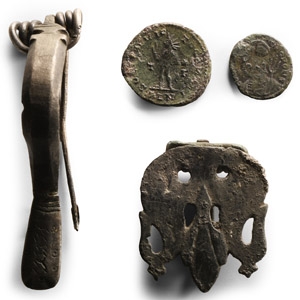
Roman Silver and Bronze Artefact and Coin Group
1st-4th century A.D.Sold for (Inc. bp): £39
Mixed group including a vine-leaf plate brooch, repaired P-shaped bow brooch, and silver coin of Constantine and another. 39.1 grams total, 17-69 mm
From a Suffolk collection. Property of a Scottish collector, acquired in 2013. -
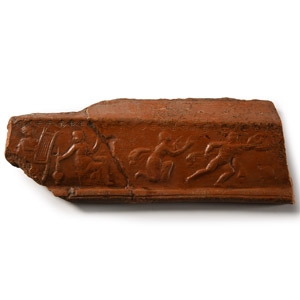
Roman Redware Pottery Sherd with Achilles and Thetis
4th-5th century A.D.Sold for (Inc. bp): £169
From the upper part of a vessel, displaying a frieze of profile images and figural scenes from Graeco-Roman mythology: a musician in late Roman garments playing a harp (Orpheus?), a seated woman weaving with a distaff in her hand (Penelope?), a kneeling naked woman imploring a naked warrior fighting with shield and spear (Achilles and Thetis?). 202 grams, 18 cm
Acquired 1960s-1990s. From the late Alison Barker collection, a retired London barrister.
This terra sigillata fragment appears to have been part of a large tray. Elements of dying paganism were still used to celebrate the deeds of the new imperial heroes. Note the detailed late Roman clothing of the harpist, with a chlamys-paludamentum on the right shoulder and the tunic decorated with clavi and orbiculi. -
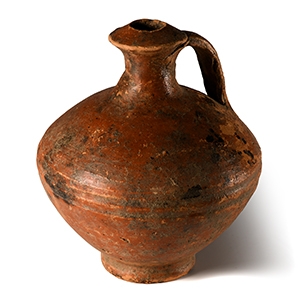
Roman Terracotta Wine Flagon
1st-2nd century A.D.Sold for (Inc. bp): £169
With globular body, thick basal ring, tall columnar neck with biconical collar, single strap handle to the rear. 275 grams, 13.5 cm high
Ex German art market, 2000s. Acquired from an EU collector living in London. From the collection of Surrey, UK, gentleman.
