
Loading, please wait...
LOT 0713
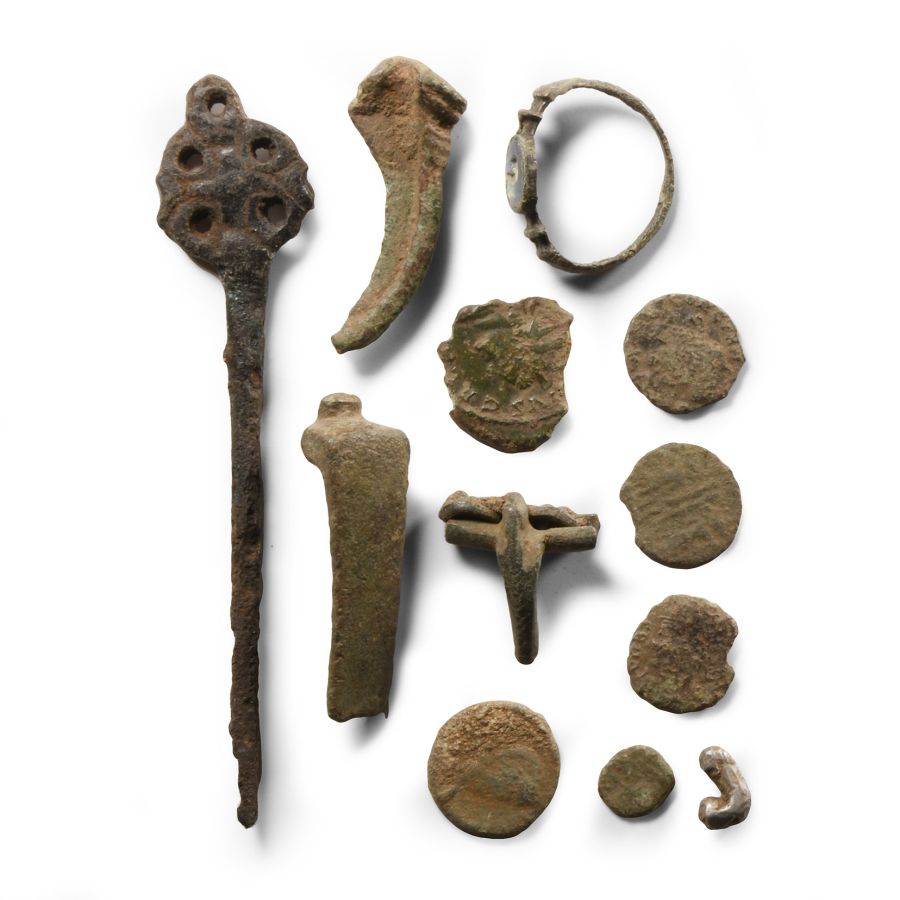
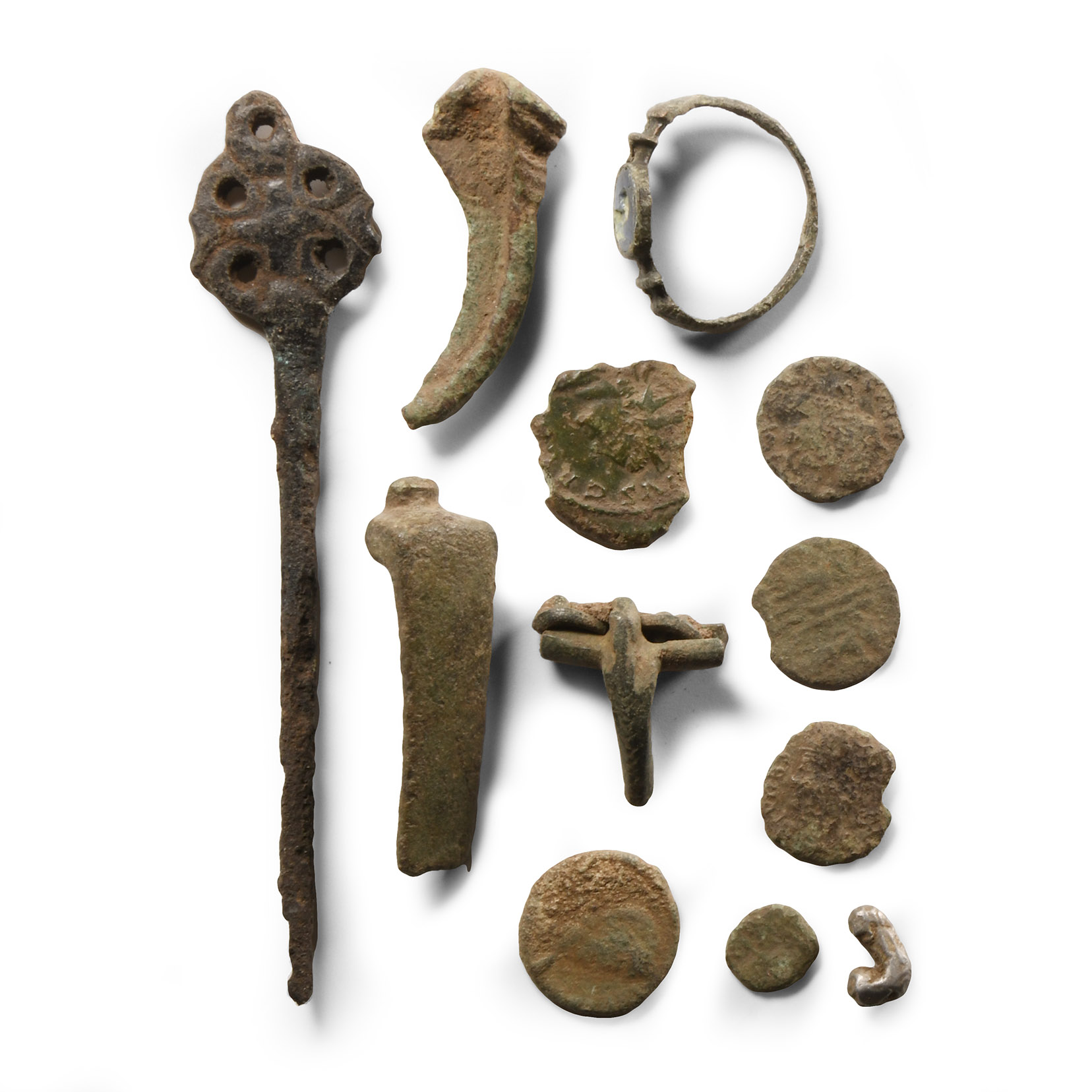
Roman and Anglo-Saxon Artefact Group
1ST-8TH CENTURY A.D.
1/4 - 3 1/8 in. (31 grams total, 8-81 mm).
Including a finger ring with enamelled bezel, a knee brooch, dress pin and other items. [12, No Reserve]
ProvenanceFound on a multi-period site in East Yorkshire, UK.
Acquired circa 2006.
Ian Wilkinson collection, Nottinghamshire, UK.
TimeLine Auctions follows a vetting process to ensure the authenticity and legality of all items, reinforcing our commitment to integrity and responsible trading. Each antiquity, antique, and coin lot undergoes thorough examination by a vetting committee of at least ten external specialists, professional trade association members, scientists, and archaeologists: Our Vetting Process
AUCTIONS:
TimeLine is a leading auction house specialising in antiquities, ancient art, collectables, natural history, coins, medals, and books. Our auctions offer museums, collectors, historians, and enthusiasts the opportunity to acquire unique and historically significant pieces.
-

Roman Samian Ware Sherd with Inscription
2nd century A.D.Sold for (Inc. bp): £72
Bowl fragment in burnished redware with high-relief swags and gadroons; one with epigraphic '[..]MIO' legend. 140 grams, 12 cm
From the collection of a late East Anglian teacher and antiquarian who retired to the Isle of Wight in Hampshire, UK. He amassed a large collection of objects between the 1960s-1980s.
The surface divided into panels by conventional palm-leaf ornament reports often the inscription [CINNAMI]. The letter here left could be the end of the stamp CINNAMI, if we consider the last letter O just an ornament. His work was common throughout Gallia and Britannia. He belongs to a period of great activity at Lezoux, but also to a time when the potteries on the Rhine had to some extent displaced the wares of the south. In Scotland we must associate his wares with the Antonine occupation. -
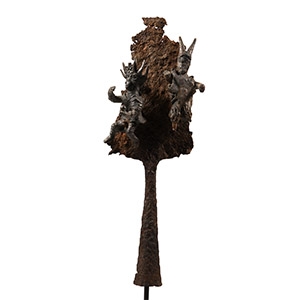
Roman Votive Iron Military Standard with Faunus and Sol Invictus
3rd century A.D.Sold for (Inc. bp): £2,470
Comprising a triangular spearhead-shaped panel with flared split socket; two separate figures attached with rivets: on the left Helios (or Sol) with draped mantle and radiant crown, holding a sphere in his left hand; on the right Faunus (Pan) with two curved horns, a short beard, arms bent forwards, the upper body covered by a hide jerkin and the legs with shaggy fur; mounted on a custom-made display stand. 1.39 kg total, 38 cm including stand
From a collection acquired on the UK art market from various auction houses and collections mostly before 2000. From an important Cambridgeshire estate; thence by descent.
The piece is reminiscent of the votive plates in the Dolichenus cult, or possibly of some other cult. -
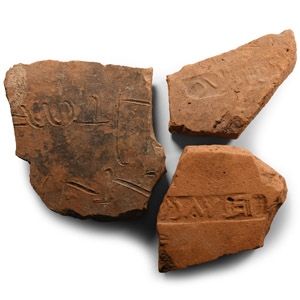
Romano-British Legionary Terracotta Tile Fragment Group
1st-4th century A.D.Sold for (Inc. bp): £247
Group of three terracotta fragments with impressed stamps '[..]NVAC', 'LEG.AVG' and one marked freehand '[..}LITOF[..]'. 1.46 kg total, 13-15.4 cm
Found UK. From the collection of a late East Anglian teacher and antiquarian who retired to the Isle of Wight in Hampshire, UK. He amassed a large collection of objects between the 1960s-1980s.
The bricks belonged to the famous Legio II Augusta, (Legio II Gallica Augusta Sabina Britannica Felix) which since the 43 A.D. until the 5th century A.D. were linked to Britain. Its headquarters were at Isca Augusta or Isca Silurum (Newport in South Wales) and in the Late Empire at Rutupiae (Richborough). Traces of this legion were still found in Sub-Roman Britain and Sub-Roman Gallia in 5th-6th centuries A.D.
