
Loading, please wait...
LOT 0110
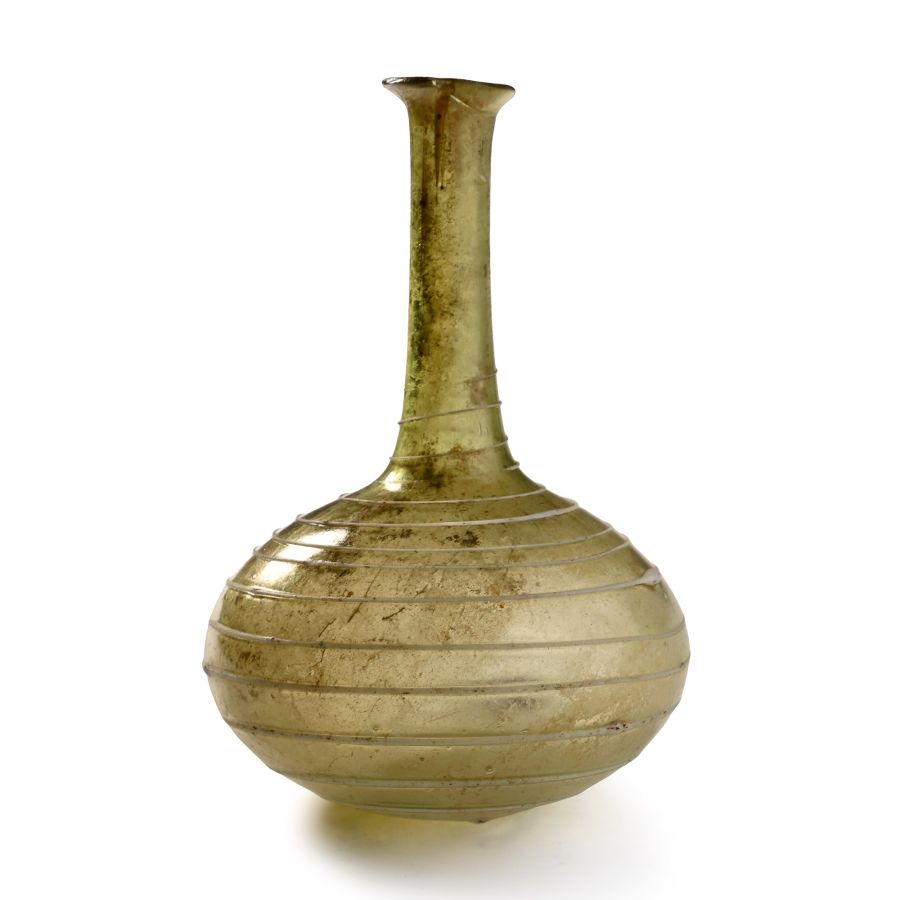
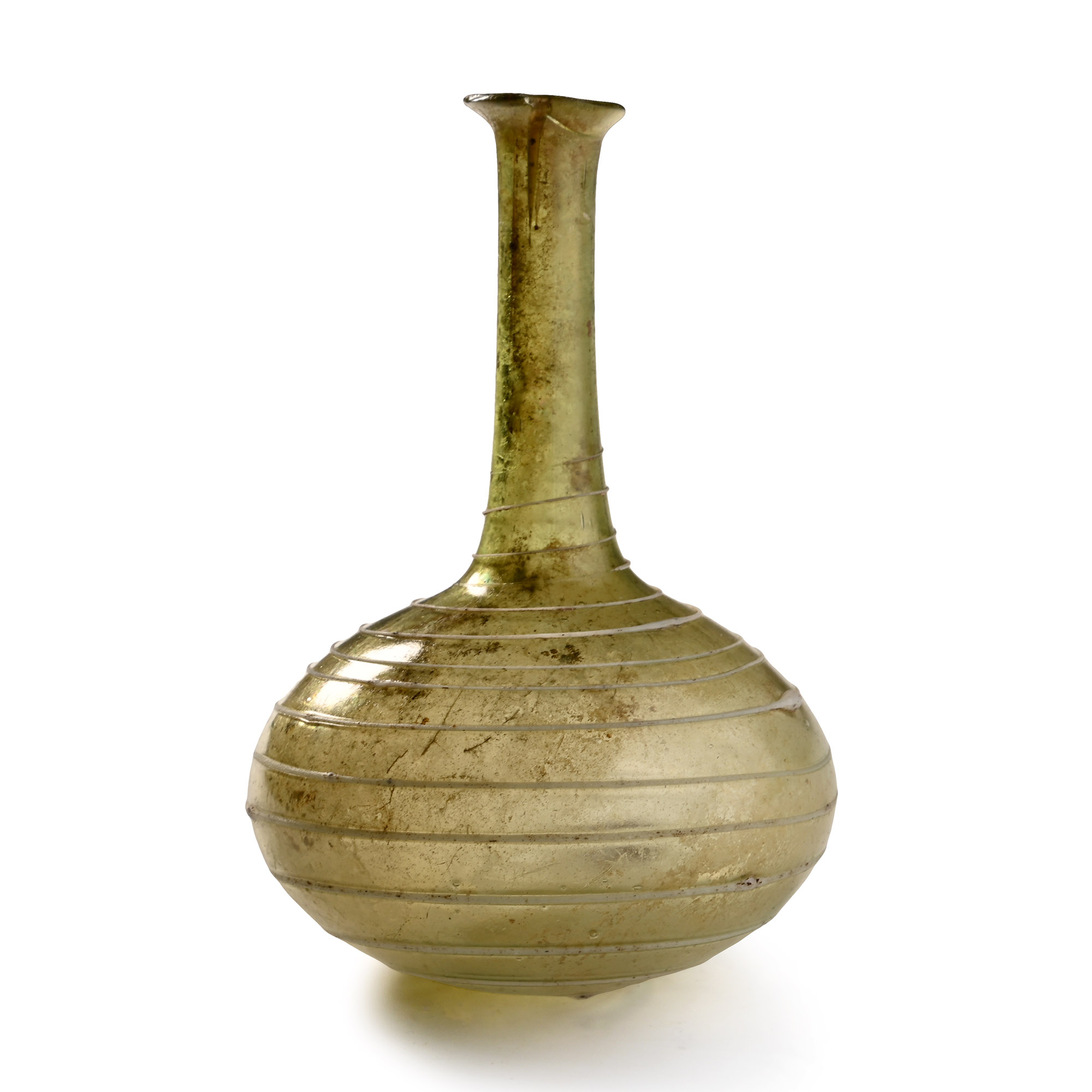
Roman Amber Glass Bottle with Trail
1ST CENTURY A.D.
3 1/2 in. (21.77 grams, 90 mm).
With bulbous body, tall tubular neck, broad everted rim; applied trail from lower neck to base; extensive iridescence.
ProvenancePreviously from a German private collection.
Acquired Sotheby's, London, 13 & 14 July 1981, no.442 (illus).
From a private Wiltshire, UK, collection.
Accompanied by a copy of the relevant Sotheby's catalogue pages.
Cf. Whitehouse, D., Roman Glass in the Corning Museum of Glass, vol.1, New York, 1997, item 203, for type.
CONDITIONTimeLine Auctions follows a vetting process to ensure the authenticity and legality of all items, reinforcing our commitment to integrity and responsible trading. Each antiquity, antique, and coin lot undergoes thorough examination by a vetting committee of at least ten external specialists, professional trade association members, scientists, and archaeologists: Our Vetting Process
AUCTIONS:
TimeLine is a leading auction house specialising in antiquities, ancient art, collectables, natural history, coins, medals, and books. Our auctions offer museums, collectors, historians, and enthusiasts the opportunity to acquire unique and historically significant pieces.
-
Roman Tall Glass Flask
1st-4th century A.D.Sold for (Inc. bp): £130
Comprising a squat conical body with a dimple at the base, long tubular neck with wide rim. 87 grams, 15 cm
Ex German art market, 2000s. Acquired from an EU collector living in London. From the collection of a Surrey, UK, gentleman. -
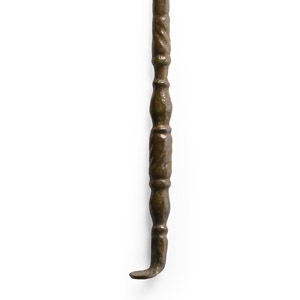
Roman Decorated Bronze Stylus with Eraser
1st-3rd century A.D.Sold for (Inc. bp): £117
With tapering balustered body, sub-circular eraser to the terminal. 6.08 grams, 93 mm
Ex German art market, 2000s. Acquired from an EU collector living in London. From the collection of a Surrey, UK, gentleman. -
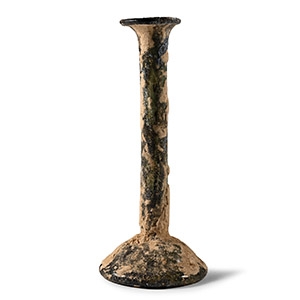
Roman Glass Vessel
1st-3rd century A.D.Estimate: £100 - 140 (+bp*)
Opening Bid: £50
Tall thin translucent pale green vessel with wide foot and dimpled base, tapering stem and flared rim. 27.6 grams, 12.5 cm
From a London, UK, collection, 1990s. This lot is accompanied by an illustrated lot declaration signed by the Head of the Antiquities Department, Dr Raffaele D’Amato.
Similar bottles were produced in Roman Cyprus, mainly. Hayes had divided the Cypriot products into three classes on the basis of the character of the glass. This example belongs to the third class, i.e. ‘very thin walled pieces in a pale fabric, almost colorless in parts’.
