
Loading, please wait...
LOT 0656
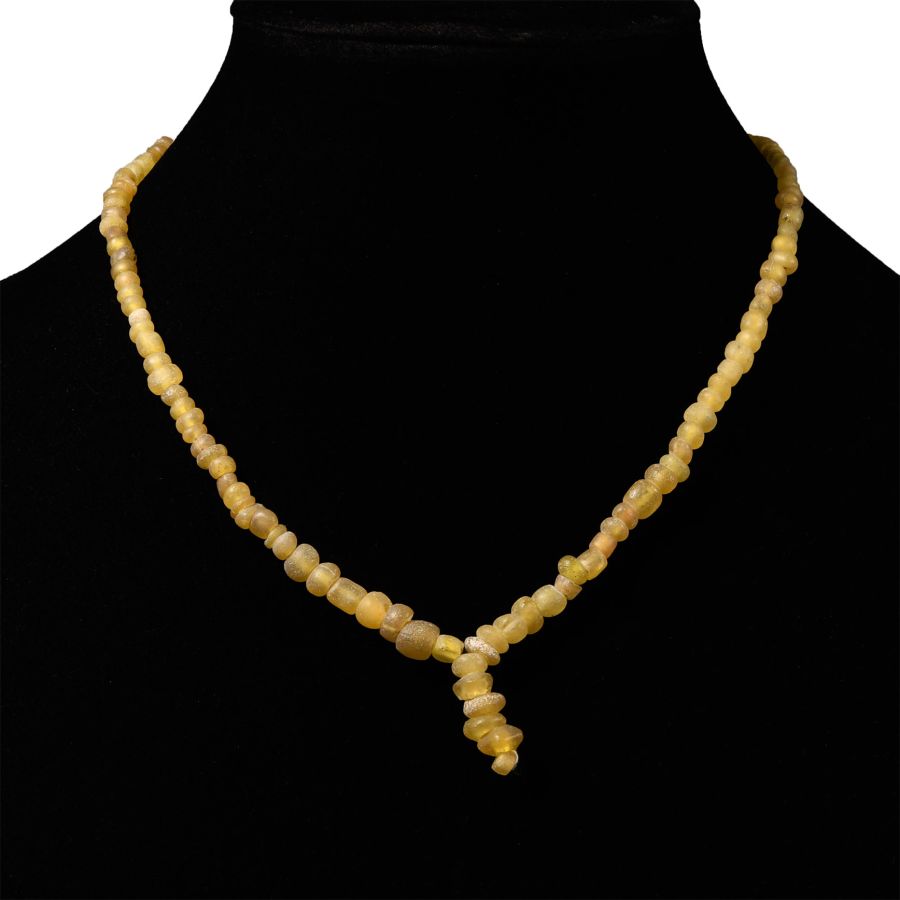
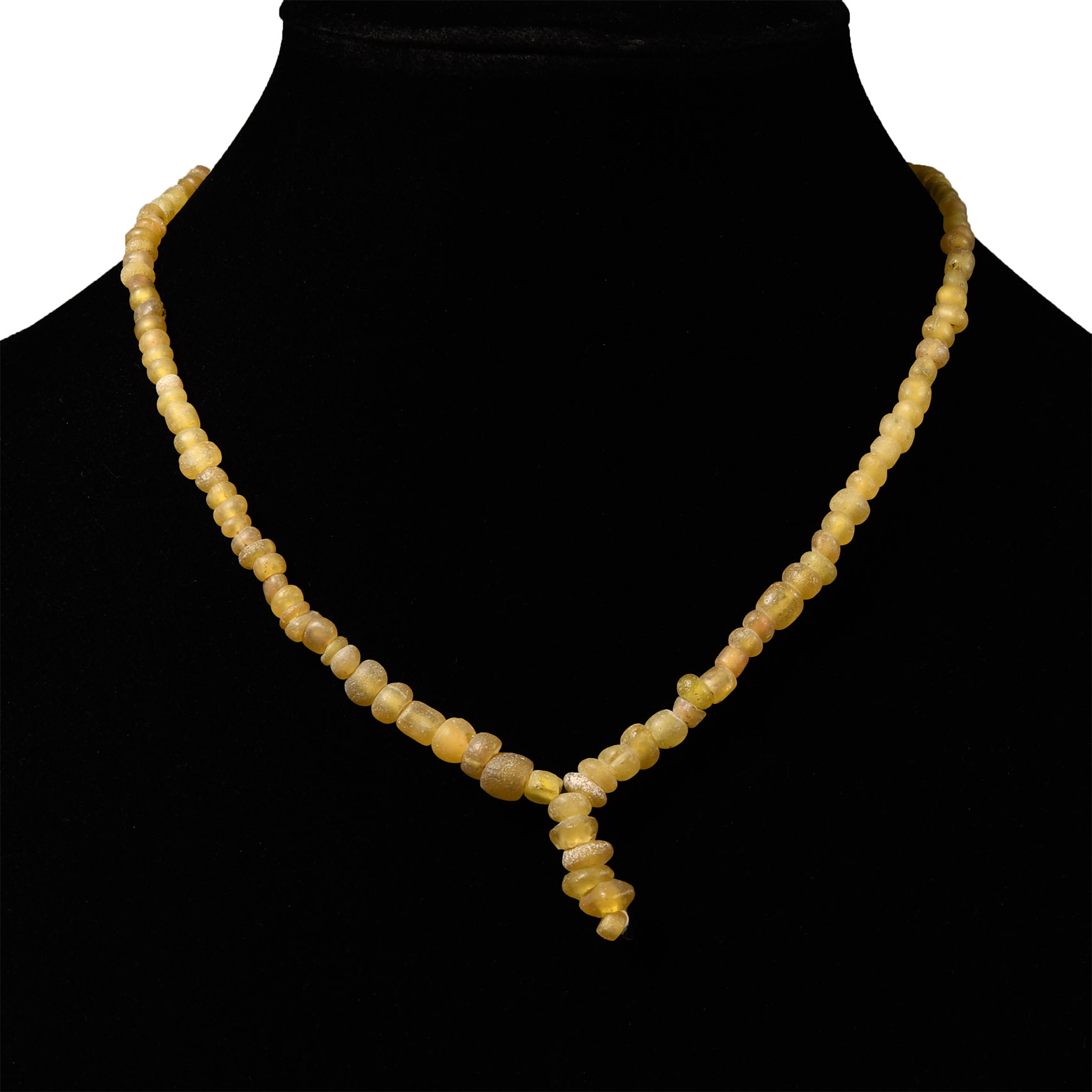
Roman Amber Glass Bead Necklace String
1ST-4TH CENTURY A.D. AND LATER
14 3/4 in. (31.4 grams, 37.5 cm).
Restrung designer necklace of graduated irregular oblate and other beads. [No Reserve]
ProvenanceAcquired 1980-2015.
Ex Abelita family collection.
TimeLine Auctions follows a vetting process to ensure the authenticity and legality of all items, reinforcing our commitment to integrity and responsible trading. Each antiquity, antique, and coin lot undergoes thorough examination by a vetting committee of at least ten external specialists, professional trade association members, scientists, and archaeologists: Our Vetting Process
AUCTIONS:
TimeLine is a leading auction house specialising in antiquities, ancient art, collectables, natural history, coins, medals, and books. Our auctions offer museums, collectors, historians, and enthusiasts the opportunity to acquire unique and historically significant pieces.
-
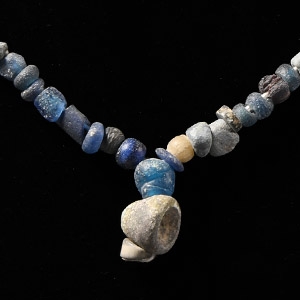
Roman Blue Glass Bead Necklace String
1st-4th century A.D. and laterSold for (Inc. bp): £52
Restrung group of graduated beads, mainly oblate and annular types. 16 grams, 41 cm
Acquired 1980-2015. Ex Abelita family collection. -
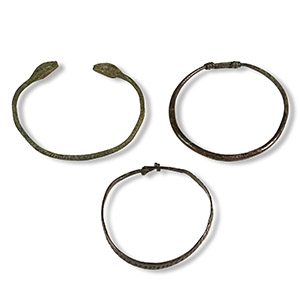
Roman Bronze Bracelet Group
1st-3rd century A.D.Sold for (Inc. bp): £91
Comprising: one with round-section hoop with the ends wound around the hoop; one with a flat-section body with the ends wound around the body, punched decoration to the upper surface; one with a round-section penannular body, the terminals formed as large stylised serpent heads with pellet eyes and raised crest. 21.5 grams total, 51-66 mm
Ex German art market, 2000s. Acquired from an EU collector living in London. From the collection of Surrey, UK, gentleman. -
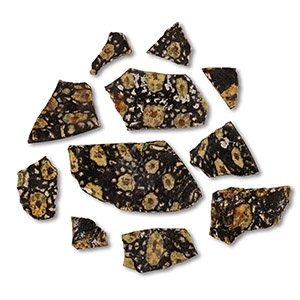
Roman Mosaic Glass Fragment Collection
1st century B.C.-1st century A.D.Sold for (Inc. bp): £111
Comprising fragments of black glass decorated with green and yellow rosettes surrounded by white pellets, from the same plate. 40.7 grams total, 16-65 mm
From the collection of Mr N.A., Brussels, 1970s.
