
Loading, please wait...

LOT 0902
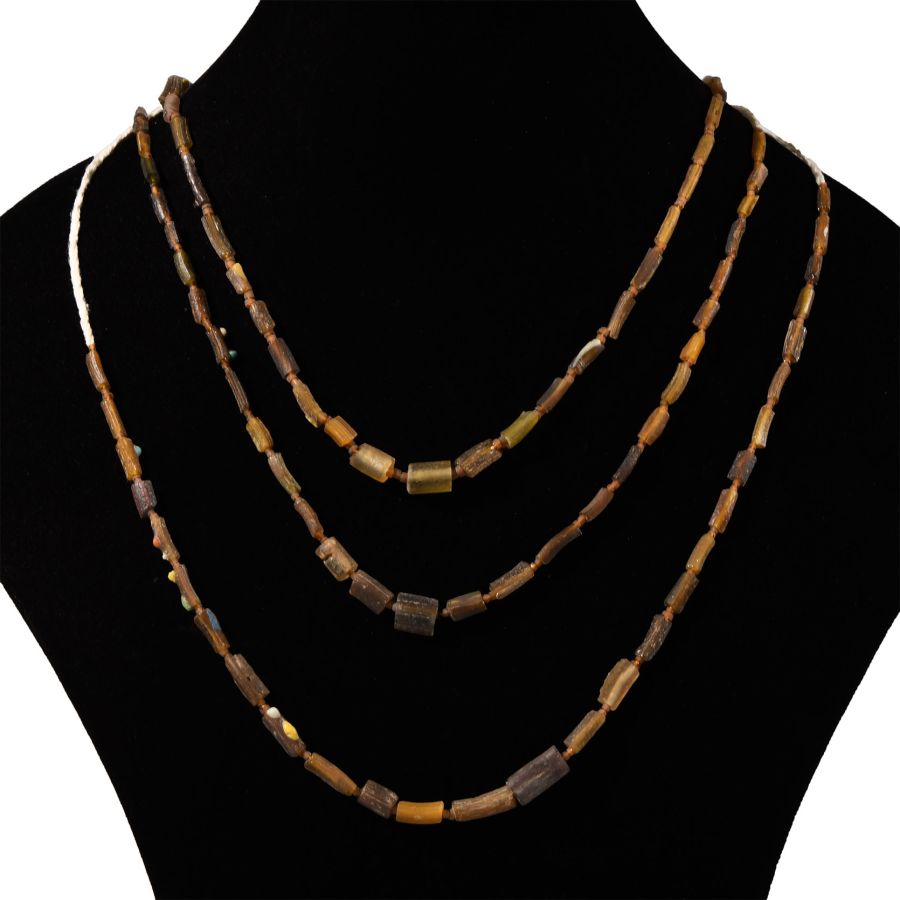
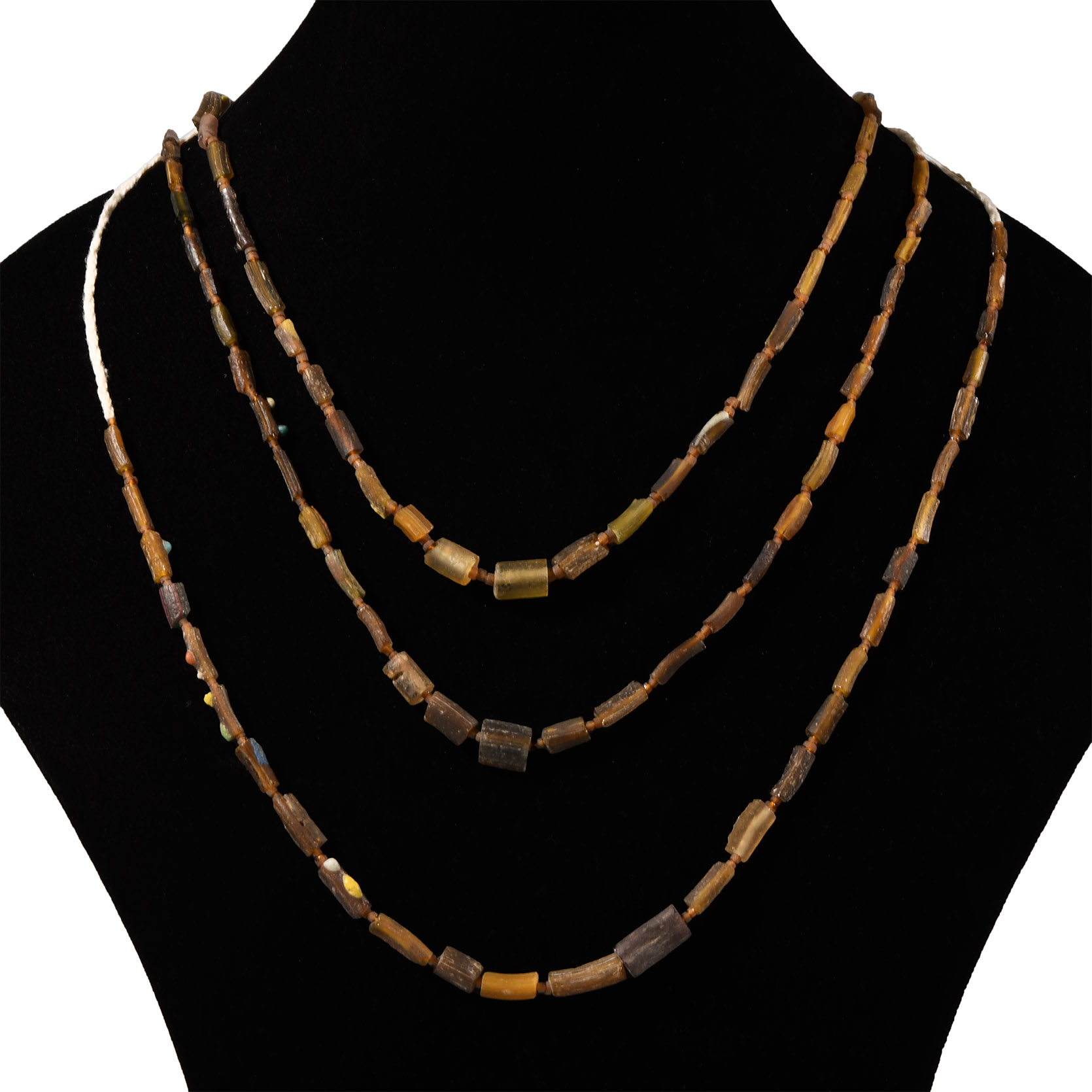
Roman Amber Coloured Glass Bead Necklace Group
1ST-4TH CENTURY A.D. AND LATER
25 1/4 - 28 in. (29 grams total, 64-71 cm).
Comprising three necklaces restrung from beads of drilled ancient glass bangle fragments. [3, No Reserve]
ProvenanceUK gallery, early 2000s.
CONDITIONTimeLine Auctions follows a vetting process to ensure the authenticity and legality of all items, reinforcing our commitment to integrity and responsible trading. Each antiquity, antique, and coin lot undergoes thorough examination by a vetting committee of at least ten external specialists, professional trade association members, scientists, and archaeologists: Our Vetting Process
AUCTIONS:
TimeLine is a leading auction house specialising in antiquities, ancient art, collectables, natural history, coins, medals, and books. Our auctions offer museums, collectors, historians, and enthusiasts the opportunity to acquire unique and historically significant pieces.
-
Roman Military Bronze Belt Mount Collection
2nd-3rd century A.D.Sold for (Inc. bp): £143
Including La Tène scrolls, rectangular panel with pelta and other types. 46 grams total, 32-53 mm
Property of the vendor's grandfather, thence by family descent, circa 1985. From the private collection of a New York, USA gentleman. -
Roman Bronze Architectural Ring
4th-6th century A.D.Sold for (Inc. bp): £39
Narrow D-section hoop with inverted pyramid to the bezel and knop finial. 4.375 Grams, 29.97 mm.
Acquired on the UK art market. Property of a Essex, UK, collector. Accompanied by an old typed information card. -
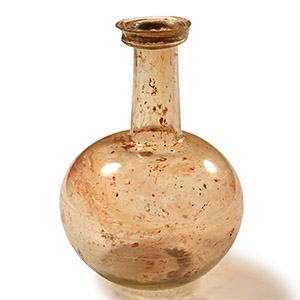
Roman Wheel-Cut Glass Vessel
3rd-4th century A.D.Sold for (Inc. bp): £494
With globular body and long tubular neck, dimple base, everted rim with gusset to the outer edge; wheel-cut horizontal lines to the body. 82 grams, 12.5 cm
Ex London, UK, collection, 1980-1990s.
This bottle belongs to a group of globular bottles with cylindrical necks (some longer than others) and plain or collar-like rims, which are decorated with parallel and/or intersecting circles or combinations of circles and other motifs.
