
Loading, please wait...
LOT 0092
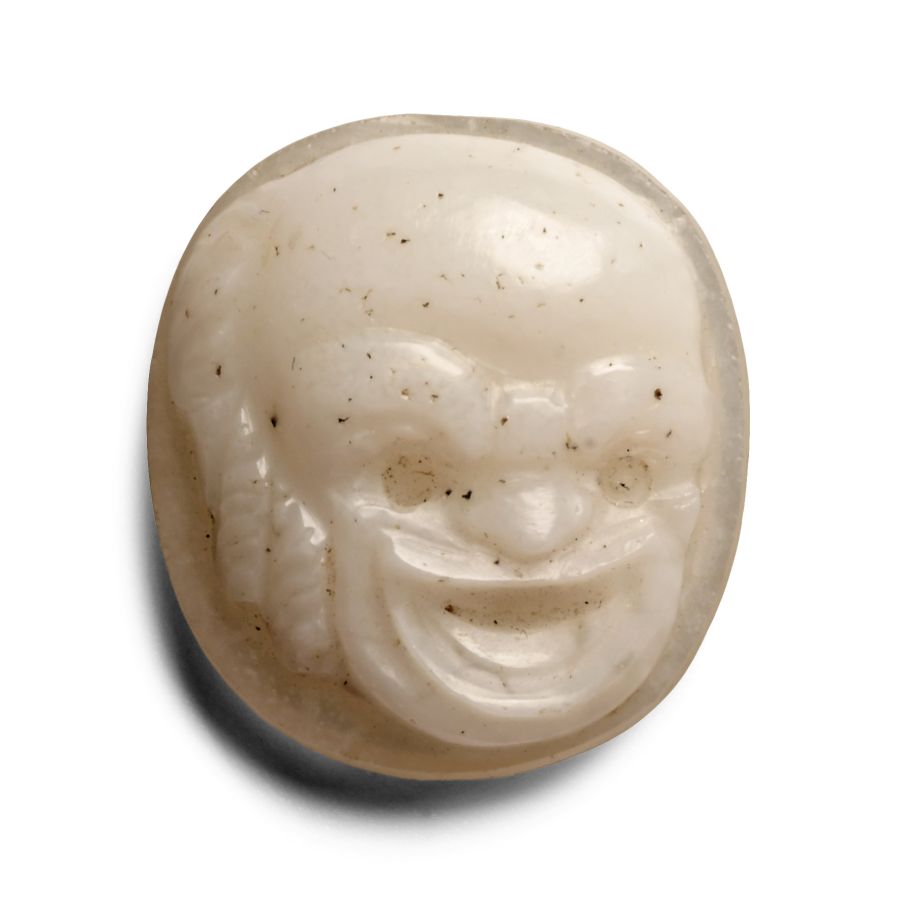
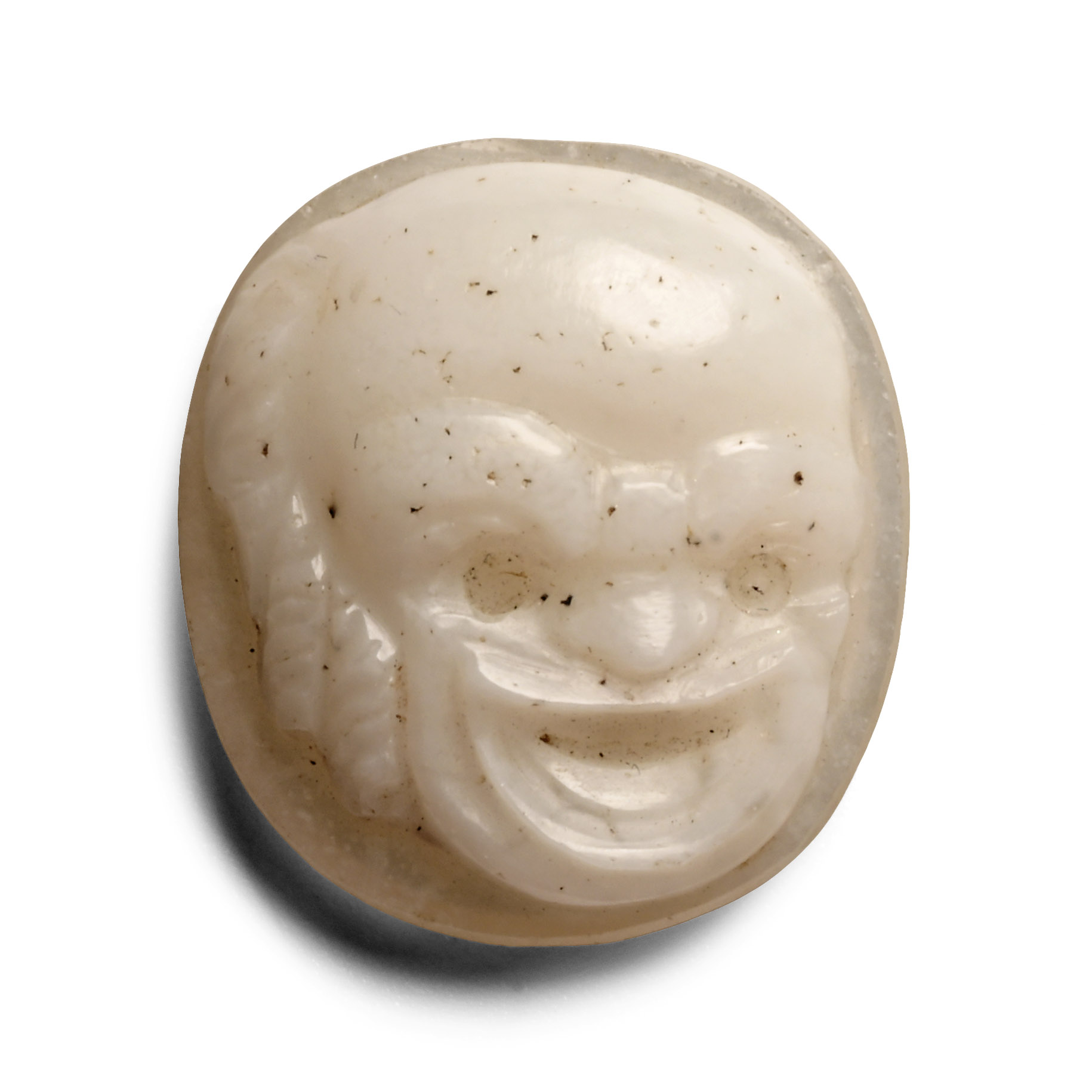
Roman Agate Cameo of a Theatre Mask
1ST CENTURY A.D.
1/2 in. (1.07 grams, 13 mm).
Showing a New Comedy, The Cook Type theatre mask, with an open mouth; supplied with a museum-quality impression.
ProvenancePrivate English collection, formed between the late 1970s and early 1990s.
Private collection, London, UK.
TimeLine Auctions follows a vetting process to ensure the authenticity and legality of all items, reinforcing our commitment to integrity and responsible trading. Each antiquity, antique, and coin lot undergoes thorough examination by a vetting committee of at least ten external specialists, professional trade association members, scientists, and archaeologists: Our Vetting Process
AUCTIONS:
TimeLine is a leading auction house specialising in antiquities, ancient art, collectables, natural history, coins, medals, and books. Our auctions offer museums, collectors, historians, and enthusiasts the opportunity to acquire unique and historically significant pieces.
LOT 0092
Roman Agate Cameo of a Theatre Mask
Estimate £1,500 - 2,000€1,740 - 2,320 (for guidance only)$2,030 - 2,700 (for guidance only)
-
Roman Period Miniature Glass Bottle Collection
1st century A.D. and laterSold for (Inc. bp): £59
Comprising: three round-section with flared neck and one square-section with bell-shaped mouth. 26 grams total, 31-49 mm
From the private collection of a North West London lady; previously with a central London gallery; formerly acquired before 1990. -
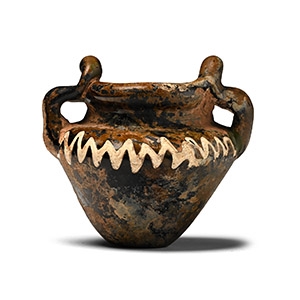
Roman Miniature Glass Amphora
1st-3rd century A.D.Estimate: £400 - 600 (+bp*)
Opening Bid: £125
With broad shoulder and conical body, everted rim, two loop handles and applied undulating band to the shoulder. 51.34 grams, 47 mm wide
Acquired 1970s-1996. Property of a North American collector. London collection, 2016. -
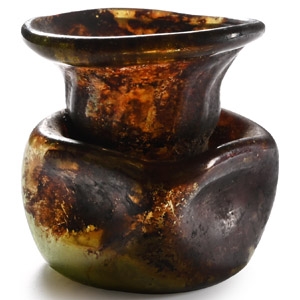
Roman Square Green Glass Flask
6th-7th century A.D.Estimate: £180 - 240 (+bp*)
Opening Bid: £90
With dimple to the underside, squat square body and wide everted rim. 34.7 grams, 49 mm
From an important London collection of glass, 1990s. This lot is accompanied by an illustrated lot declaration signed by the Head of the Antiquities Department, Dr Raffaele D'Amato.
The object is certainly Late Roman in shape, although similar typologies did also exist in early Islamic glasswork. The bottle was probably blown into a flat mould to produce the ribs, then expanded and tooled to form the body.
