
Loading, please wait...
_900x900.jpg "Roman Agate Bust of Artemis Gemstone")
_200x200.jpg "Roman Agate Bust of Artemis Gemstone")
.jpg "Roman Agate Bust of Artemis Gemstone")
LOT 0697
Roman Agate Bust of Artemis Gemstone
1ST-3RD CENTURY A.D.
1/2 in. (1.16 grams, 14 mm).
Plano-convex in form with bust of Artemis above legend 'R A P'.
ProvenanceAcquired on the German art market, 1989-1995.
with The Museum Gallery, 19 Bury Place, London, WC1, UK, 1998-2003.
Property of a London based academic, 2003 to present.
This lot is accompanied by an illustrated lot declaration signed by the Head of the Antiquities Department, Dr Raffaele D'Amato.
TimeLine Auctions follows a vetting process to ensure the authenticity and legality of all items, reinforcing our commitment to integrity and responsible trading. Each antiquity, antique, and coin lot undergoes thorough examination by a vetting committee of at least ten external specialists, professional trade association members, scientists, and archaeologists: Our Vetting Process
AUCTIONS:
TimeLine is a leading auction house specialising in antiquities, ancient art, collectables, natural history, coins, medals, and books. Our auctions offer museums, collectors, historians, and enthusiasts the opportunity to acquire unique and historically significant pieces.
-
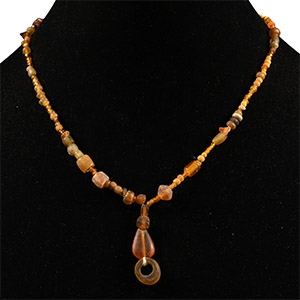
Roman Yellow Glass Bead Necklace String
1st-4th century A.D. and laterSold for (Inc. bp): £98
Restrung group of tabular, biconical, drum-shaped and other beads. 12.3 grams, 34 cm
Ex London, UK, collection, 1990s. This lot is accompanied by an illustrated lot declaration signed by the Head of the Antiquities Department, Dr Raffaele D'Amato. -
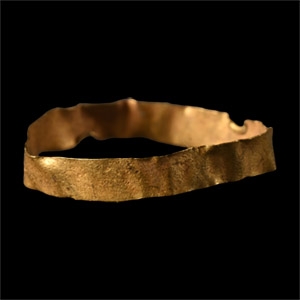
Roman Child's Gold Funerary Ring
1st-4th century A.D.Sold for (Inc. bp): £78
Comprising a slender sheet-gold hoop. 0.12 grams, 12 mm
Ex property of a late Japanese collector, 1970-2000s. This lot is accompanied by an illustrated lot declaration signed by the Head of the Antiquities Department, Dr Raffaele D'Amato. -
.jpg)
Roman Bronze Statue of Mercury
1st century A.D.Sold for (Inc. bp): £3,380
A youthful and muscular figure of the god Mercury (Greek Hermes) standing nude with his weight resting on his right leg, left leg slightly bent and the heel raised; his hair dressed in short curls, wearing a winged petasos, and a cloak wrapped over his shoulder and left arm, naturalistic anatomical detailing; mounted on a custom-made display base. 298 grams total, 14.3 cm including stand
Swiss private collection, 1970. Private collection, Zurich, Switzerland. This lot has been checked against the Interpol Database of stolen works of art and is accompanied by a search certificate number no.12685-236368. This lot has been cleared against the Art Loss Register database, and is accompanied by an illustrated lot declaration signed by the Head of the Antiquities Department, Dr Raffaele D'Amato.
