
Loading, please wait...
LOT 2077
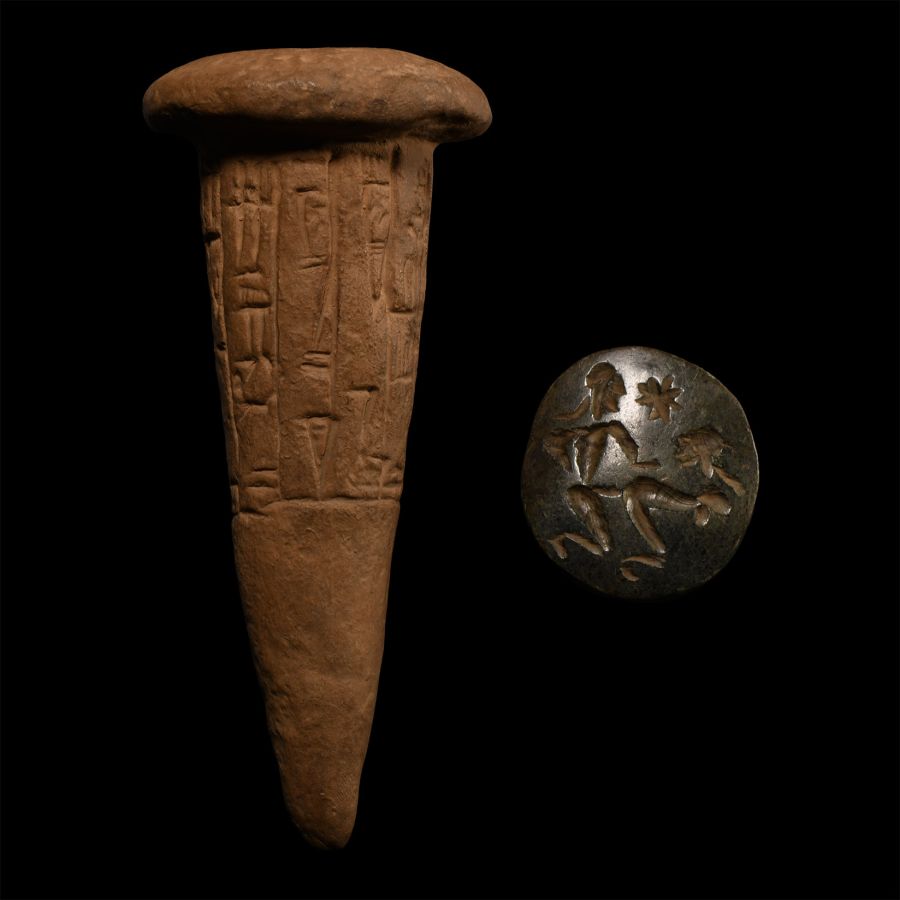
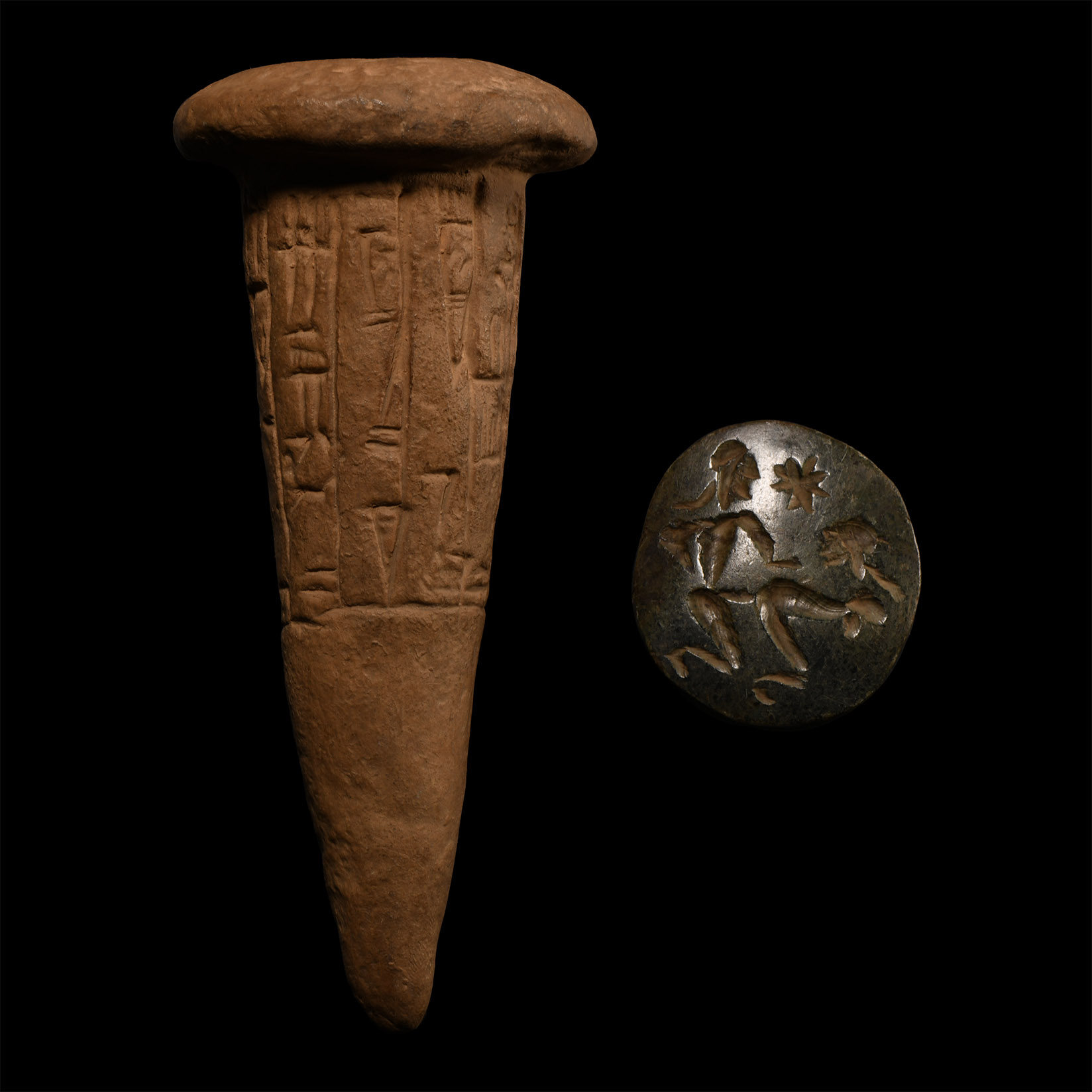
Reproduction Cuneiform Foundation Cone and Erotic Seal Group
20TH CENTURY A.D.
1 - 14 1/2 in. (363 grams total, 48-147 mm).
A mixed reproduction group comprising: cuneiform cone for Ishme-Dagan, King of Isin; large plano-convex black stone stamp seal with incuse erotic scene. [2, No Reserve]
ProvenanceFrom a North American gallery.
From the estate of Mr R.W., a private Wiltshire, UK, collector; thence by descent.
TimeLine Auctions follows a vetting process to ensure the authenticity and legality of all items, reinforcing our commitment to integrity and responsible trading. Each antiquity, antique, and coin lot undergoes thorough examination by a vetting committee of at least ten external specialists, professional trade association members, scientists, and archaeologists: Our Vetting Process
AUCTIONS:
TimeLine is a leading auction house specialising in antiquities, ancient art, collectables, natural history, coins, medals, and books. Our auctions offer museums, collectors, historians, and enthusiasts the opportunity to acquire unique and historically significant pieces.
LOT 2077
Reproduction Cuneiform Foundation Cone and Erotic Seal Group
Sold for (Inc. bp): £52
-
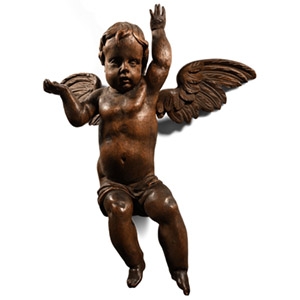
Large Wooden Putto
18th century A.D.Sold for (Inc. bp): £624
Figure carved in the round with draped cloth to the thighs, wings spread, arms raised and hands open to support a symbol; suspension ring to reverse; repaired. 2.35 kg, 56 cm
Private collection, England. -
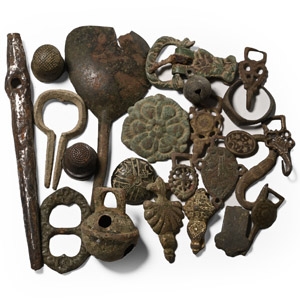
Tudor and Later Bronze Artefact Collection
16th-20th century A.D.Sold for (Inc. bp): £33
Including a crotal bell, thimble, hooked tag, double-loop belt buckle and other items. 190 grams total, 1.6-11.7 cm
Found various site in the UK. Ex N. Mills. -
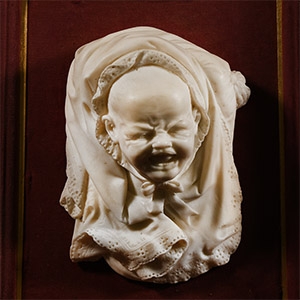
Framed Marble Bust of a Crying Baby
Early 20th century A.D.Sold for (Inc. bp): £182
With brass plate 'La Vie en Perspective: L'épingle qui pique' (Life in Perspective: the pin which pricks); finely modelled infant's face with open mouth and protruding tongue; lace borders to the hooded garment and ribbon tied beneath the throat; wooden frame with gilt and velvet field. 5.5 kg, 54.5 x 49 cm
Acquired on the UK art market.
