
Loading, please wait...

LOT 0384
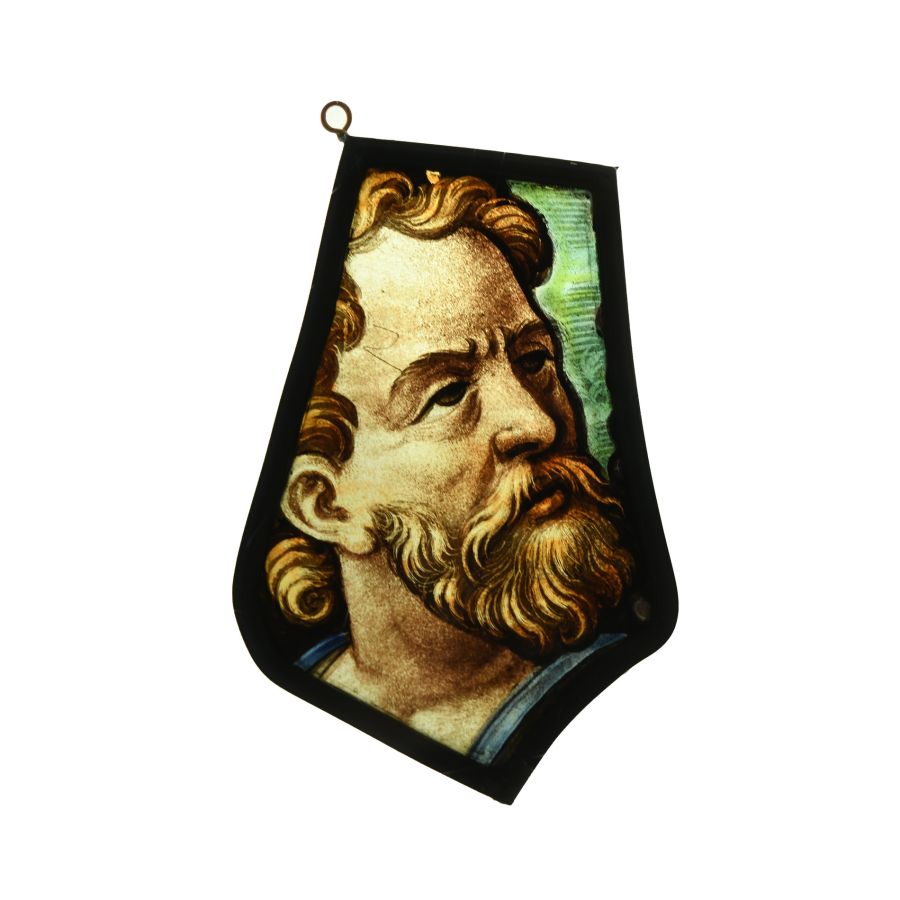
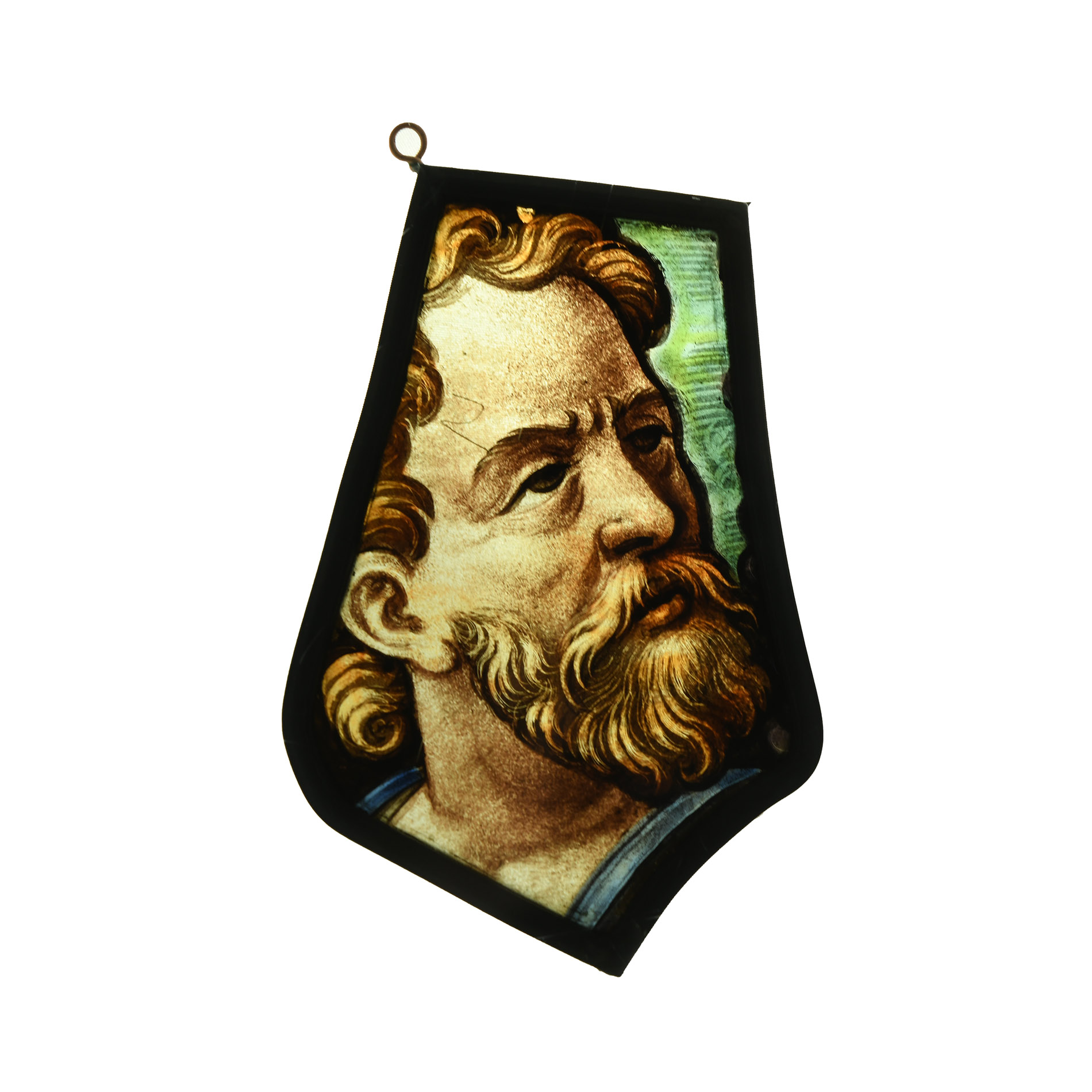
Renaissance Stained Glass Panel of a Bearded Man
NORTHERN FRANCE, CIRCA 1580-1600 A.D.
5 in. (81 grams, 12.6 cm).
Irregular fragment depicting the face of a man, possibly St Peter, in three-quarter view with luxuriant fair hair and beard on a blue field. [No Reserve]
ProvenanceDe Baecque Vente, Paris, France, 5 March 2022, no.57.
Ex central London gallery.
TimeLine Auctions follows a vetting process to ensure the authenticity and legality of all items, reinforcing our commitment to integrity and responsible trading. Each antiquity, antique, and coin lot undergoes thorough examination by a vetting committee of at least ten external specialists, professional trade association members, scientists, and archaeologists: Our Vetting Process
AUCTIONS:
TimeLine is a leading auction house specialising in antiquities, ancient art, collectables, natural history, coins, medals, and books. Our auctions offer museums, collectors, historians, and enthusiasts the opportunity to acquire unique and historically significant pieces.
-
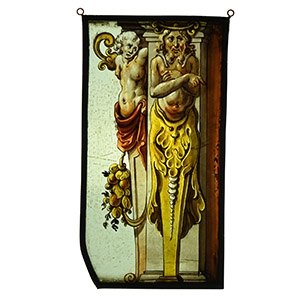
Renaissance Stained Glass Panel with Two Grotesque Caryatid Herms
Southern Low Countries, 16th century A.D.Sold for (Inc. bp): £624
Rectangular panel in a lead frame; painted scene depicting an architectural feature with male and female herms, each on a tapering square-section stand and bare-chested. 254 grams, 25.5 cm
De Baecque Vente, Paris, France, 5 March 2022, no.52 (Part). Ex central London gallery. -
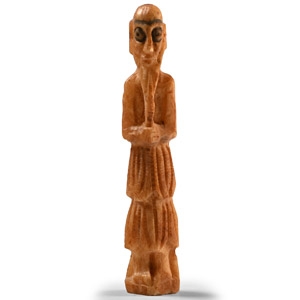
Sumerian Style Bone Carving of a God
20th century A.D.Sold for (Inc. bp): £26
Carved in the round and standing on a small rectangular pedestal, wearing a pleated robe; hands clasped at the waist; stylised facial features with large eyes rimmed with dark colour, the eyebrows indicated in a similar fashion, bald head a long beard extending above the hands; after the antique. 3.73 grams, 49 mm
From the property of late Mr SM, London, UK, 1969-1999. -
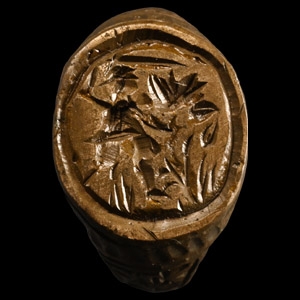
Tudor Period Bronze Ring with Marching Figure
Circa 16th century A.D.Sold for (Inc. bp): £117
With chamfered edges and textured band to the rim of the bezel, ellipsoid plaque with incuse design of an advancing figure wielding his sword above his head. 5.87 grams, 22.08 mm overall, 18.14 mm internal diameter (approximate size British Q, USA 8, Europe 17.49, Japan 16)
Ex European private collection, 1990s. Acquired from a London, UK, gallery. property of an Essex gentleman.
