
Loading, please wait...
LOT 0415
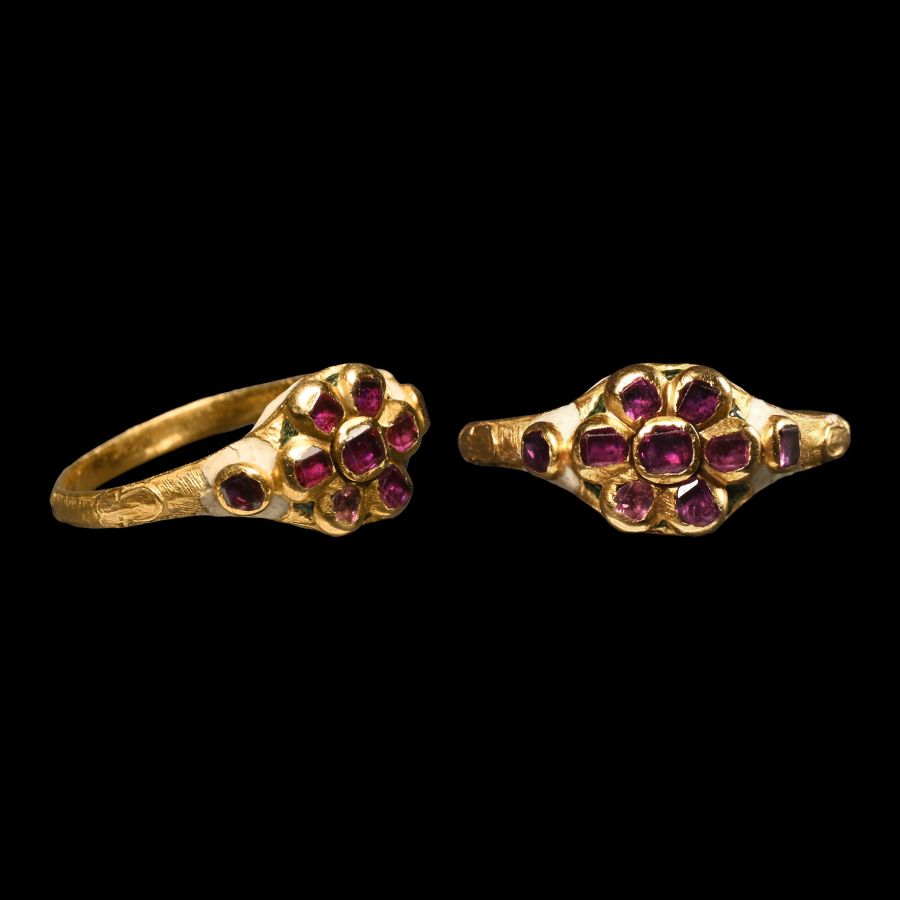
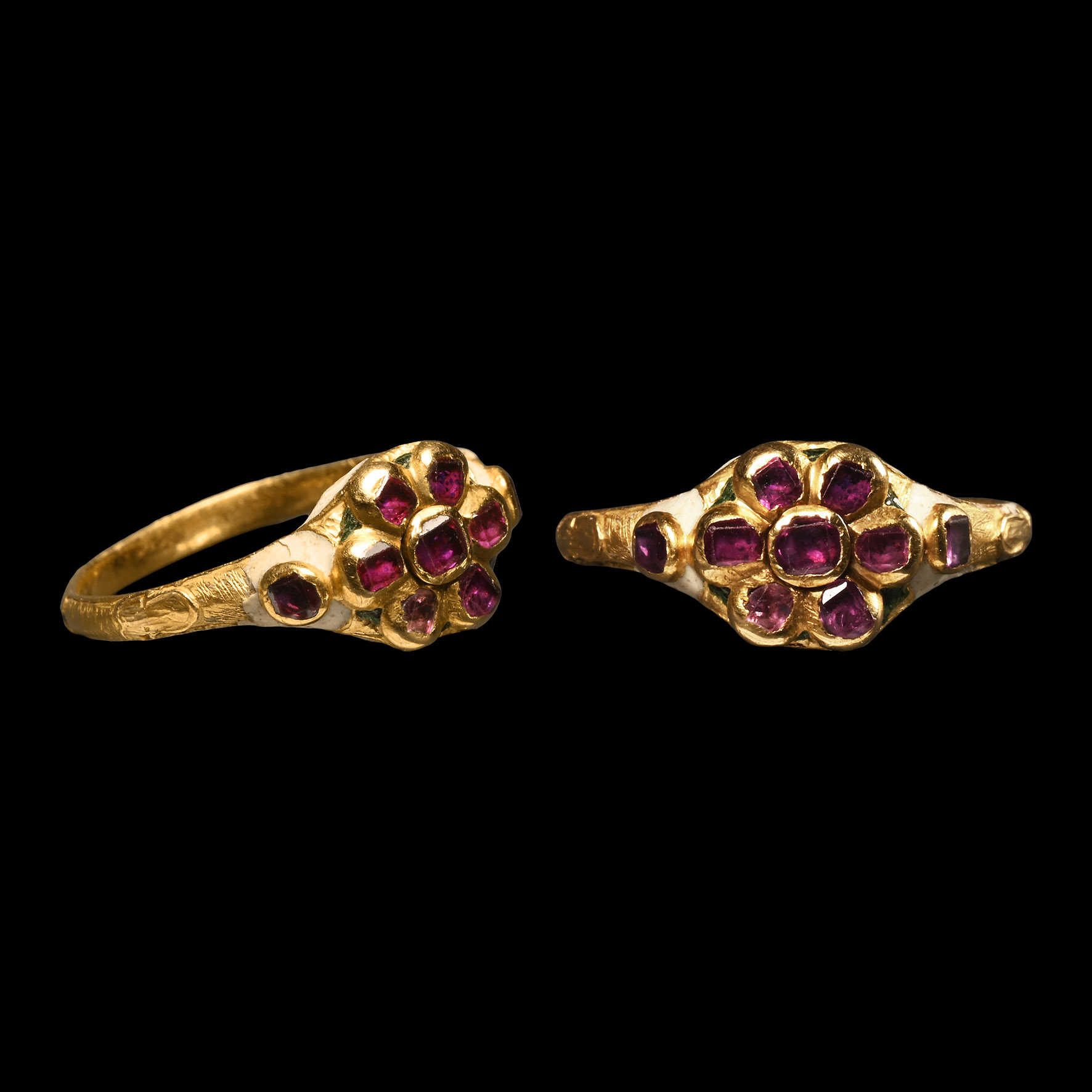
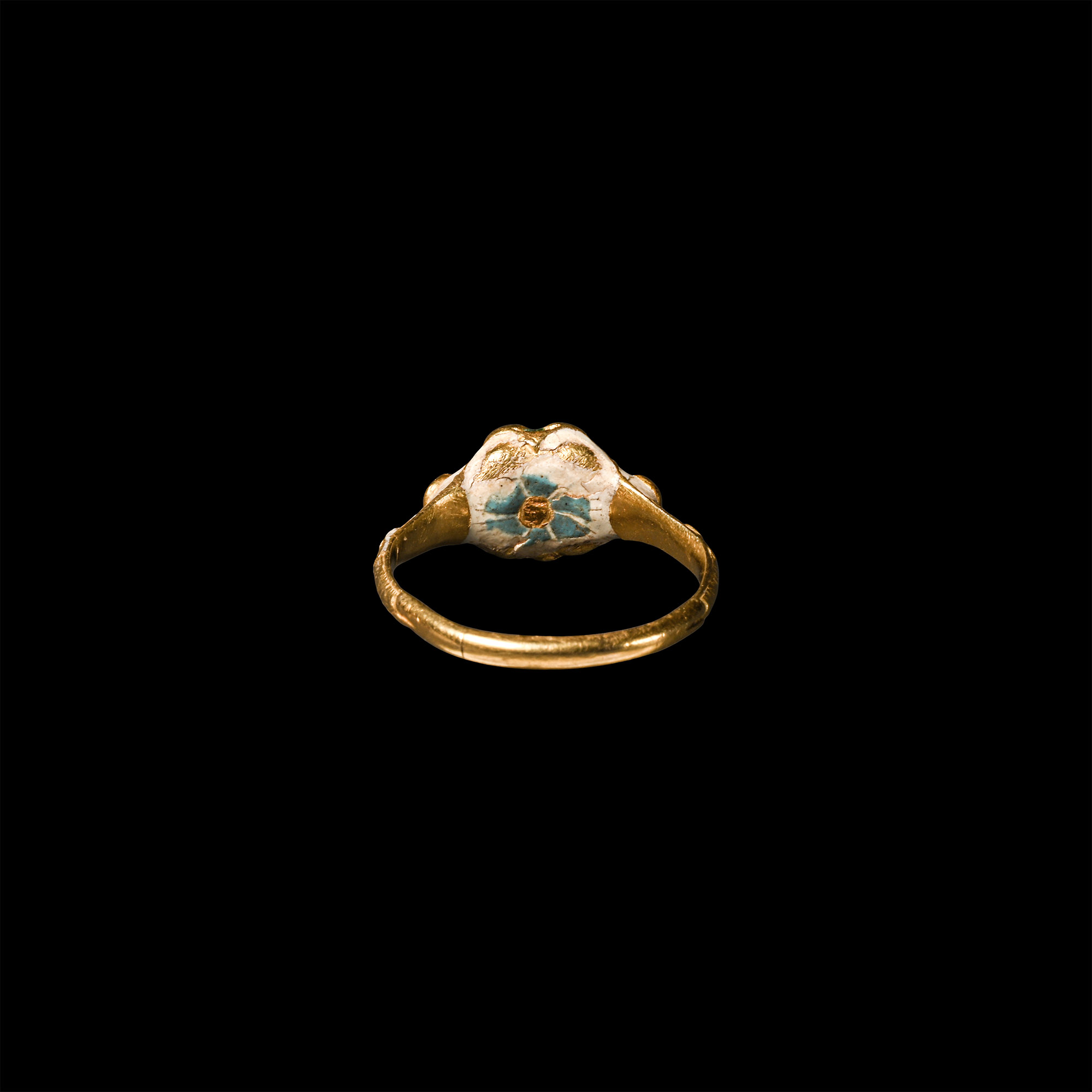
Renaissance Enamelled Gold Ring with Rubies
17TH CENTURY A.D.
3/4 in. (2.88 grams, 19.66 mm overall, 15.82 mm internal diameter (approximate size British H 1/2, USA 4, Europe 6.81, Japan 6)).
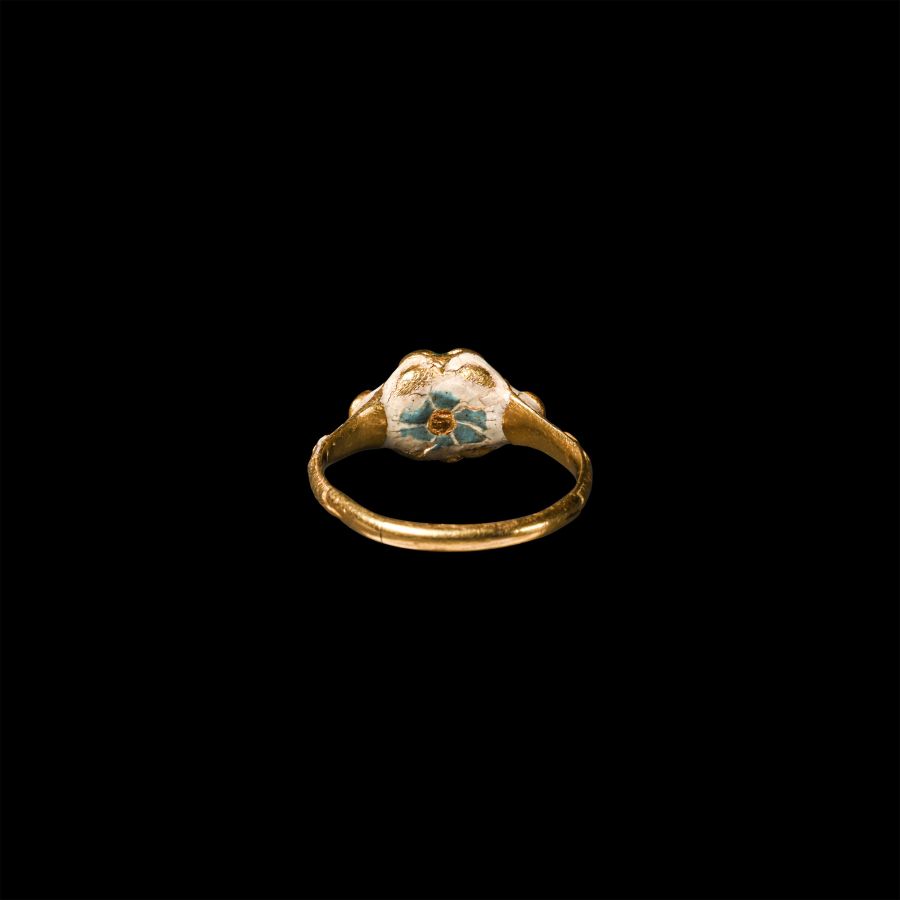
Composed of a slender hoop with decoration to the shoulders, floral bezel set with polished rubies embellished with 'white' and green enamelling; reverse with white and blue enamelled floral design.
ProvenanceFrom the collection of a North American gentleman, formed in the 1990s.
LiteratureCf. The V&A Museum, accession numbers M.17-1929, 857-1871 and M.212-1962, for comparable examples of this period.
CONDITIONTimeLine Auctions follows a vetting process to ensure the authenticity and legality of all items, reinforcing our commitment to integrity and responsible trading. Each antiquity, antique, and coin lot undergoes thorough examination by a vetting committee of at least ten external specialists, professional trade association members, scientists, and archaeologists: Our Vetting Process
AUCTIONS:
TimeLine is a leading auction house specialising in antiquities, ancient art, collectables, natural history, coins, medals, and books. Our auctions offer museums, collectors, historians, and enthusiasts the opportunity to acquire unique and historically significant pieces.
-
Post Medieval Bronze 'Fauno Rosso' Satyr
19th century A.D.Sold for (Inc. bp): £1,690
Standing on a hexagonal base wearing a goatskin mantle tied by the forelegs around his shoulders, with poppy seed-heads and bunches of grapes by the left arm; in his raised right hand, a bunch of grapes and in his left hand a cudgel; stump of a tree by his right leg and barrel beside his left, with a lamb to the rear placing its foreleg on top; modelled after the so-called Fauno Rosso from Hadrian's Villa, now in the Capitoline Museum. 18.5 kg, 67 cm high
From an important Paris gallery, France.
Half-man, half-beast, satyrs were believed to be the children of goats and mountain nymphs. Followers of the god Dionysus, they had a reputation for drunkenness and spent their days participating in orgiastic rituals. They represented the crude and boisterous facets of the stereotypical male persona, particularly of rural man. -
Georgian and Other Copper-Alloy Artefact Group
Circa 15th-20th century A.D.Sold for (Inc. bp): £13
Comprising: bells; buckles; decorative fittings and mounts; thimble; heart-shaped mount; ring stamped '925'; together with other miscellaneous items. 269 grams total, 11-64 mm
Found Wiltshire, UK. -
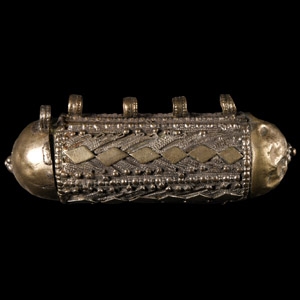
Judaic or Arabic Hirzbaase Silver Amulet Case
Circa 19th century A.D.Sold for (Inc. bp): £52
Cylindrical with domed terminals with apex granules, ridge of suspension loops, body adorned with filigree wire, pellets and lozengiform plaques; one removeable terminal; hollow-formed. 87 grams, 10.4 cm
From the private collection of the late Mr S.M., London, UK, thence by descent.
