
Loading, please wait...

LOT 0420
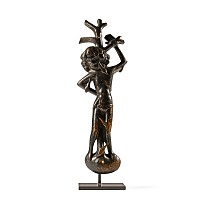
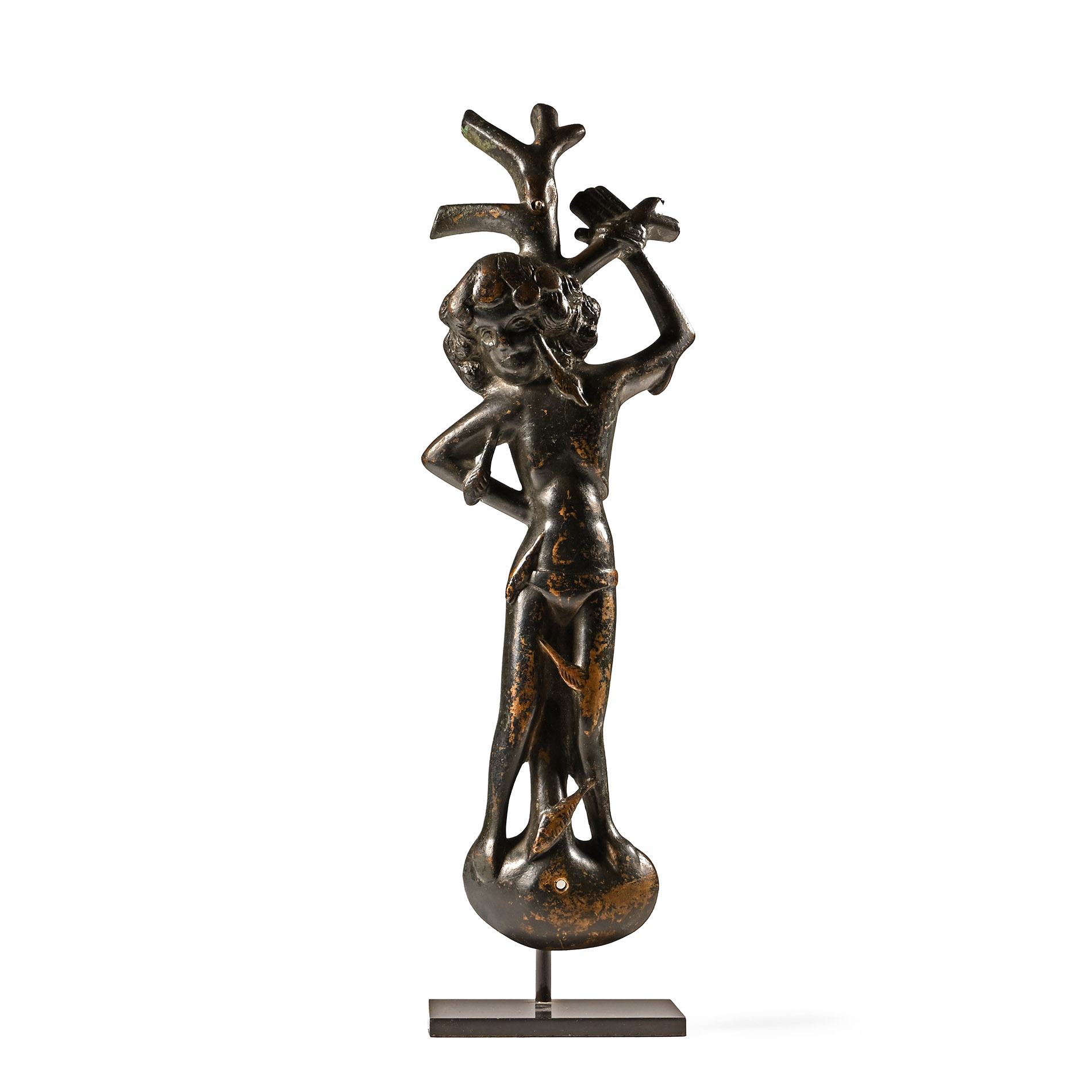
Renaissance Bronze Figure of Saint Sebastian
GERMANY, BAVARIA, NUREMBERG, CIRCA 1490 A.D.
10 1/2 in. (906 grams total, 26.7 cm including stand).
Modelled in the half-round, the saint with his left hand tied to the branch of a tree, right hand behind his back, legs spread on a bulbous base; arrow fletchings protruding from his shin, thigh, hip, shoulder and eye; mounting holes above the head and in the base; mounted on a custom-made stand. [No Reserve]
ProvenanceSchuster collection, Cologne, Germany.
Elmar Robert, 2013.
Private collection, Suffolk, UK.
This lot has been checked against the Interpol Database of stolen works of art and is accompanied by a search certificate number no.12306-221717.
TimeLine Auctions follows a vetting process to ensure the authenticity and legality of all items, reinforcing our commitment to integrity and responsible trading. Each antiquity, antique, and coin lot undergoes thorough examination by a vetting committee of at least ten external specialists, professional trade association members, scientists, and archaeologists: Our Vetting Process
AUCTIONS:
TimeLine is a leading auction house specialising in antiquities, ancient art, collectables, natural history, coins, medals, and books. Our auctions offer museums, collectors, historians, and enthusiasts the opportunity to acquire unique and historically significant pieces.
-
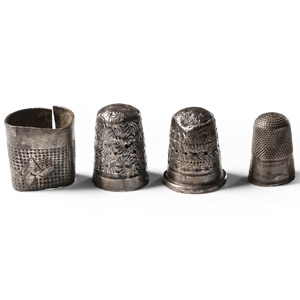
Post Medieval Silver Thimble Group
17th-20th century A.D.Sold for (Inc. bp): £46
Including tubular, bell-shaped and other types. 13.5 grams total, 18-21 mm
From the collection of the famous author, writer and speaker, Gordon Bailey, Essex, UK; formed since 1968. -
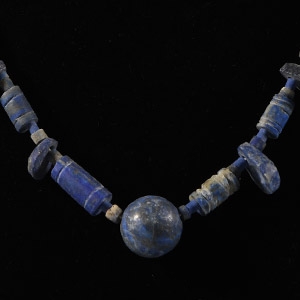
Bactrian Style Lapis Lazuli Bead Necklace String
20th century A.D.Sold for (Inc. bp): £7
Graduated group of beads, mainly tubular and annular types with spherical centrepiece and leaf-shaped dangles. 42 grams, 46 cm
London, UK, art market, 1980-2000s -
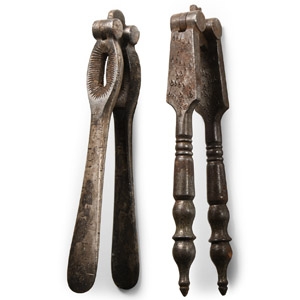
Post Medieval Iron Nutcracker Pair
Circa 19th century A.D.Sold for (Inc. bp): £20
Comprising two nut crackers, consisting of two arms hinged at the top, one with ring design on the handles, both with the top inner sections provided with pips to grip the nut. 243 grams total, 24.3 - 25.8 cm
From the collection of the famous author, writer and speaker, Gordon Bailey, Essex, UK; formed since 1968.
