
Loading, please wait...
_900x900.jpg "Red Polished Black Top Ware 'Tulip' Bowl with Animals")
_200x200.jpg "Red Polished Black Top Ware 'Tulip' Bowl with Animals")
.jpg "Red Polished Black Top Ware 'Tulip' Bowl with Animals")
LOT 0543
Red Polished Black Top Ware 'Tulip' Bowl with Animals
EARLY CYPRIOT I-II PERIOD, 2300-2100 B.C.
6 3/4 in. (426 grams, 17 cm wide).
Mammiform bowl with deep body and pointed base; two vertical concave lugs, one of which is pierced; fired black above and in the interior, and red below, all decorated with white lime-filled zigzags and circles on the body, with semicircles at the rim; repaired. [No Reserve]
ProvenanceTBC.
Acquired from Chrisitie’s, London, 29 April 2009, no.315./
From an important Cambridgeshire estate; thence by descent.
Cf. similar item in the British Museum, London, under accession no.1939,0217.11.
CONDITIONTimeLine Auctions follows a vetting process to ensure the authenticity and legality of all items, reinforcing our commitment to integrity and responsible trading. Each antiquity, antique, and coin lot undergoes thorough examination by a vetting committee of at least ten external specialists, professional trade association members, scientists, and archaeologists: Our Vetting Process
AUCTIONS:
TimeLine is a leading auction house specialising in antiquities, ancient art, collectables, natural history, coins, medals, and books. Our auctions offer museums, collectors, historians, and enthusiasts the opportunity to acquire unique and historically significant pieces.
-
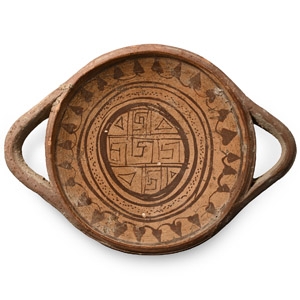
Danubian Decorated Terracotta Bowl with Handles
4th-3rd century B.C.Sold for (Inc. bp): £221
Shallow discoid vessel with thick loop handles, central panel with meander detailing, concentric bands and outer radiating ring of ivy leaves on tendrils. 233 grams, 16.5 cm
Acquired in the mid 1980s-1990s. Private collection, Switzerland, thence by descent. Private collection, since the late-1990s. -
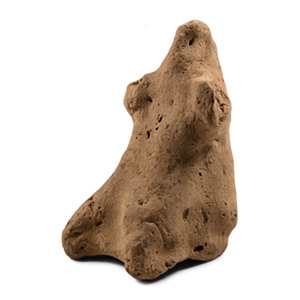
Chalcolithic Terracotta Female Fertility Figure
3rd millennium B.C.Sold for (Inc. bp): £143
Of approximately pyramidal form with stub arms, pinched head, suggestion of incised belt or girdle to the midriff. 165 grams, 89 mm
From the collection of a late London, UK, gentleman, 1979-1999. -
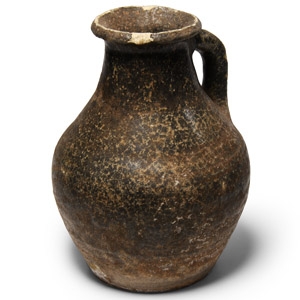
Parthian Glazed Ceramic Jug
1st century B.C.-1st century A.D.Estimate: £120 - 170 (+bp*)
Opening Bid: £67
Speckled glaze; deep shoulder with chamfered rim and strap handle. 776 grams, 16.5 cm high
Acquired by the vendor's father on the UK art market, before 1990.
