
Loading, please wait...
LOT 1293
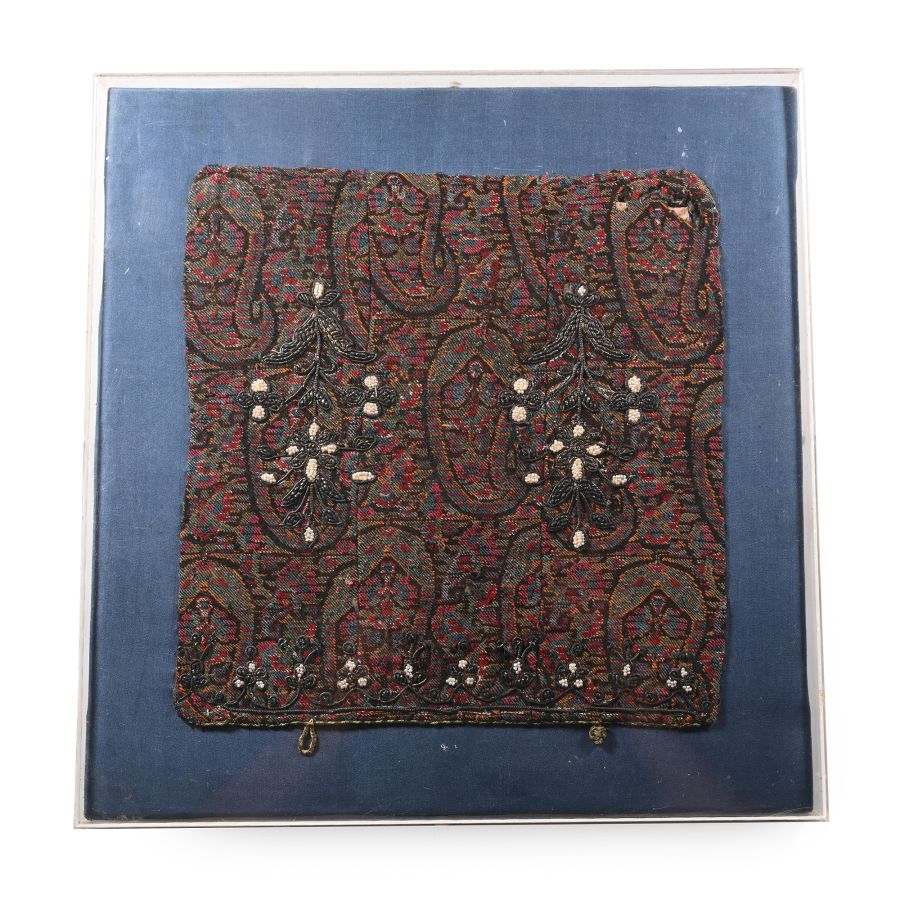
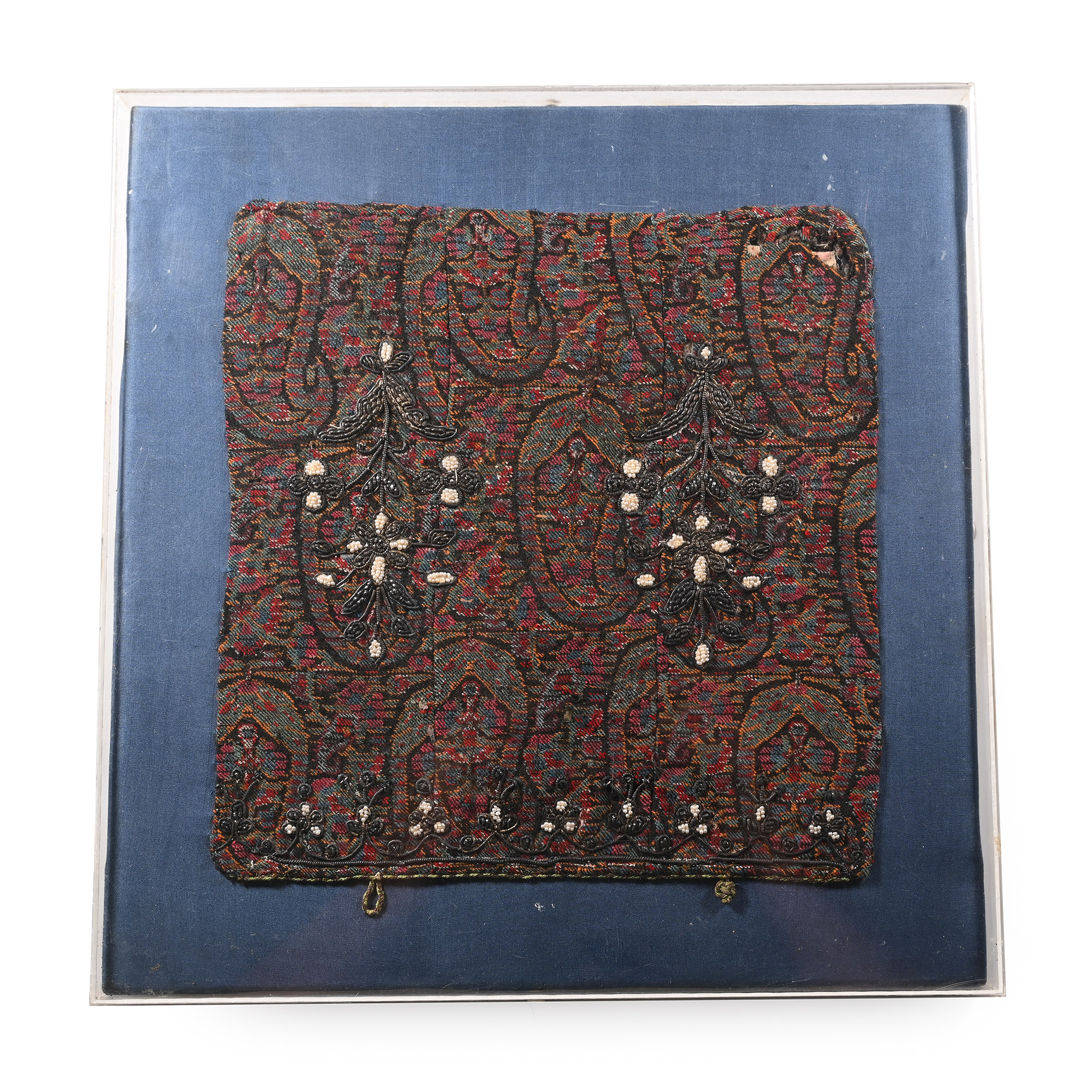
Qajar Textile with Pearls
19TH CENTURY A.D.
12 7/8 x 13 3/8 in. (1.21 kg, 32.8 x 34 cm).
Formed of nine rectangular pieces sown together with suspension loops above, embroidered floral motifs to the centre and a decorative embroidered border above; mounted in a display frame. [No Reserve]
ProvenancePrivate collection, London.
This lot has been cleared against the Art Loss Register database, and is accompanied by an illustrated lot declaration signed by the Head of the Antiquities Department, Dr Raffaele D'Amato.
TimeLine Auctions follows a vetting process to ensure the authenticity and legality of all items, reinforcing our commitment to integrity and responsible trading. Each antiquity, antique, and coin lot undergoes thorough examination by a vetting committee of at least ten external specialists, professional trade association members, scientists, and archaeologists: Our Vetting Process
AUCTIONS:
TimeLine is a leading auction house specialising in antiquities, ancient art, collectables, natural history, coins, medals, and books. Our auctions offer museums, collectors, historians, and enthusiasts the opportunity to acquire unique and historically significant pieces.
-
Old Babylonian Red Agate Cylinder Seal with Geometric Design
Circa 2000-1800 B.C.Sold for (Inc. bp): £143
Cylindrical with a narrow panel of geometric motifs; supplied with a museum-quality impression. 2.15 grams, 22 mm
From the private collection of a North American lady, formed 1970s-early 1990s. This lot has been cleared against the Art Loss Register database, and is accompanied by an illustrated lot declaration signed by the Head of the Antiquities Department, Dr Raffaele D'Amato. -
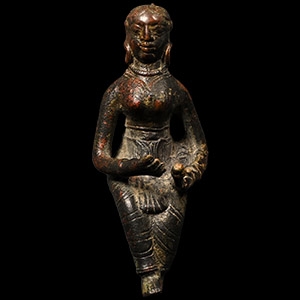
Vijayanagara Bronze Statue of a Seated Fertility Figure
14th-15th century A.D. or earlierEstimate: £1,200 - 1,700 (+bp*)
Opening Bid: £600
Modelled in the round in tight-fitting robe gathered at the waist; the hair piled at the back of the head, with large earrings and collar, holding a ladle in the left hand; socket to underside and top of head. 124 grams, 93 mm
Acquired before 1983. Ex London gallery, 1990s. This lot has been cleared against the Art Loss Register database, and is accompanied by an illustrated lot declaration signed by the Head of the Antiquities Department, Dr Raffaele D'Amato. -
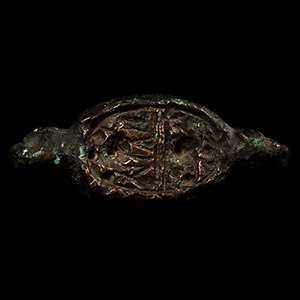
Western Asiatic Bronze Stamp Seal
Late 1st millennium B.C.Sold for (Inc. bp): £20
Comprising an ellipsoid body with lateral extensions joining to form a stem with integral suspension ring; incuse geometric design to underside. 25 grams, 36 mm
From the collection of a gentleman, acquired on the London art market in the 1990s. This lot has been cleared against the Art Loss Register database, and is accompanied by an illustrated lot declaration signed by the Head of the Antiquities Department, Dr Raffaele D'Amato.
