
Loading, please wait...

LOT 1331
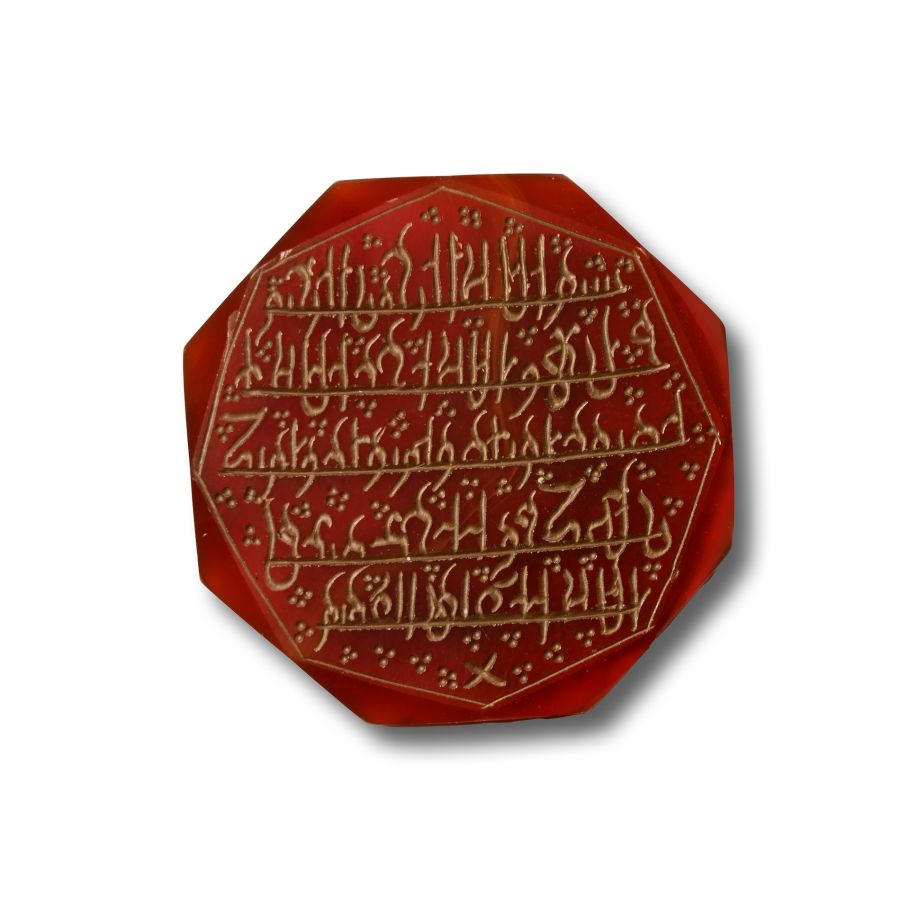
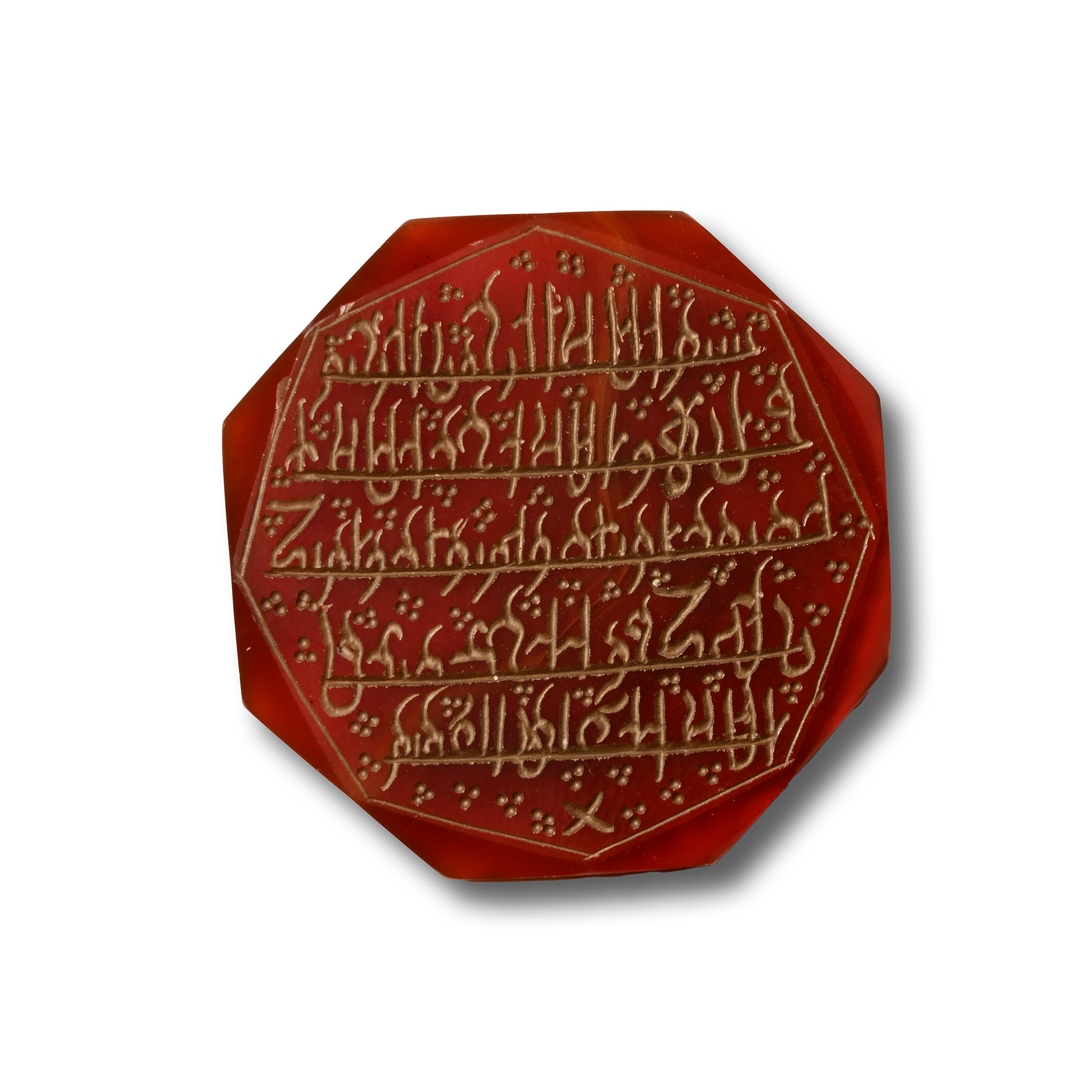
Qajar Plaque with Kufic Inscription
19TH-20TH CENTURY A.D.
1 3/8 in. (10 grams, 34 mm).
Octagonal carnelian plaque with offset chamfered edges, incised calligraphic script text in five lines with clusters of pointillé ornament. [No Reserve]
Provenancewith a London, UK gallery, 1971-early 2000s.
CONDITIONTimeLine Auctions follows a vetting process to ensure the authenticity and legality of all items, reinforcing our commitment to integrity and responsible trading. Each antiquity, antique, and coin lot undergoes thorough examination by a vetting committee of at least ten external specialists, professional trade association members, scientists, and archaeologists: Our Vetting Process
AUCTIONS:
TimeLine is a leading auction house specialising in antiquities, ancient art, collectables, natural history, coins, medals, and books. Our auctions offer museums, collectors, historians, and enthusiasts the opportunity to acquire unique and historically significant pieces.
-
Luristan Miniature Bronze Ibex
8th-6th century B.C.Sold for (Inc. bp): £117
Standing with left front leg slightly bent, crested head, detailed muzzle, raised tail, loop to the back; mounted on a custom-made display stand. 43 grams, 58 mm
with a London, UK gallery, 1971-early 2000s.
Pendants in the form of animals, mostly goats or mouflons, but also horses or other equids, are quite common among the corpus of the Luristan pendants. -
.jpg)
Western Asiatic Mixed Necklace Bead Collection
1st millennium B.C. and laterSold for (Inc. bp): £85
Comprising beads of various types and sizes, including carnelian, quartz, agate and glass examples, together with spherical, oval, facetted, coin, drum and other shapes. 186 grams total, 6-37 mm
UK gallery, early 2000s. -
South Arabian Alabaster Head of a Woman
1st century B.C.-1st century A.D.Sold for (Inc. bp): £1,170
Carved in the half-round, the eyes with drilled pupils to accept inserts; mounted on a custom-made display stand. 3.49 kg total, 22.5 cm high including stand
From the collection of Dr Mohammed Saïd Farsi (1936-2019), acquired between 1960-1990 at Christie's, Sotheby's and Mayfair galleries.
The eyes of these beautiful statues were inlaid with blue glass or lapis lazuli. These portraits could have been inserted in a funerary stele, but most probably this portrait comes from a statue similar to the 'Myriam of Tamna', as can be understood from the flat back, to which braided hair in plaster was probably attached.
