
Loading, please wait...
LOT 1186
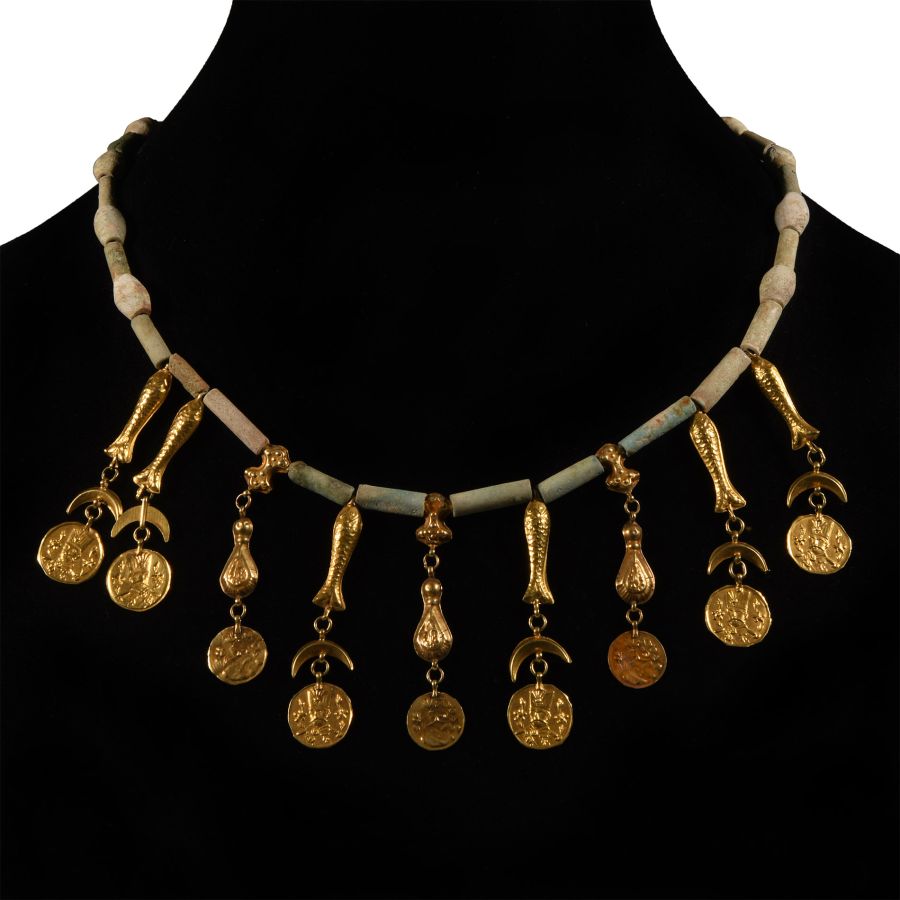
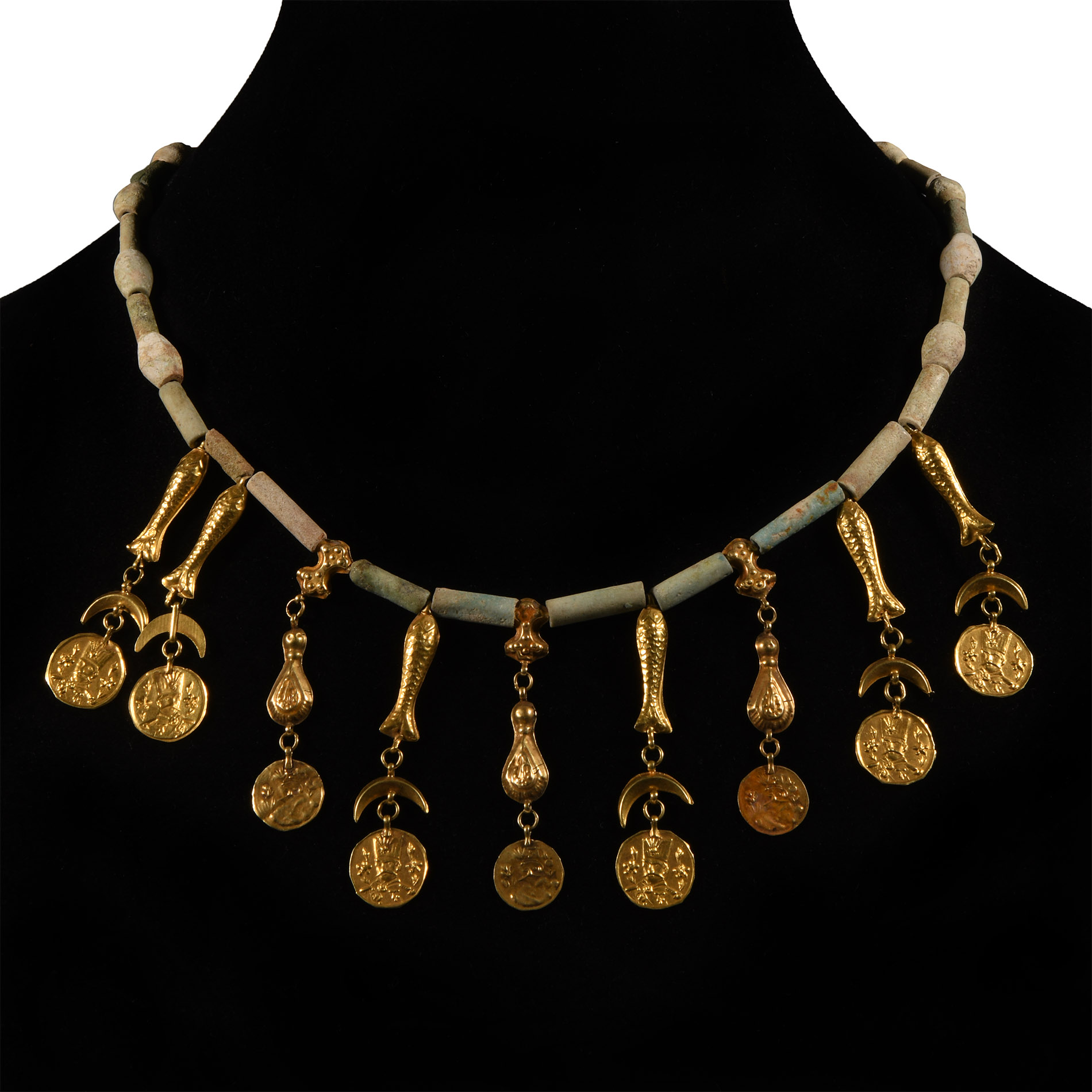
Qajar Necklace with Gold Pendants
18TH-EARLY 20TH CENTURY A.D. AND EARLIER
19 in. (26.37 grams, 48 cm long).
A restrung necklace composed of ancient faience beads of tubular and biconical types, with later gold dangles comprising fishes, crescent moons, pierced bracteates bearing a male bust in military dress, pear-shaped and pelletted pendants; hook-and-eye closure.
ProvenanceAcquired before 1983.
Ex London gallery, 1990s.
TimeLine Auctions follows a vetting process to ensure the authenticity and legality of all items, reinforcing our commitment to integrity and responsible trading. Each antiquity, antique, and coin lot undergoes thorough examination by a vetting committee of at least ten external specialists, professional trade association members, scientists, and archaeologists: Our Vetting Process
AUCTIONS:
TimeLine is a leading auction house specialising in antiquities, ancient art, collectables, natural history, coins, medals, and books. Our auctions offer museums, collectors, historians, and enthusiasts the opportunity to acquire unique and historically significant pieces.
-
Western Asiatic Bronze Ring with Victory
Circa 1st millennium B.C.Sold for (Inc. bp): £78
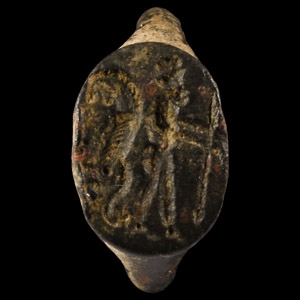
The hoop expanding to form an oval bezel, intaglio image of a standing figure holding a staff, a rearing lion behind. 8.14 grams, 24.02 mm overall, 18.70 mm internal diameter (approximate size British P, USA 7 1/2, Europe 16.23, Japan 15)
UK private collection before 2000. On the UK art market. Property of a London gentleman. -
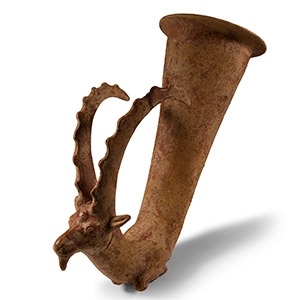
Western Asiatic Ceramic Ibex Rhyton
1st millennium B.C.Sold for (Inc. bp): £7,800
With trumpet-shaped mouth, ibex-shaped finial with curved horns and legs folded beneath the body, spout to the chest; repaired. 803 grams, 30 cm
with a London, UK gallery 1971. Accompanied by an original thermoluminescence analysis report and photograph by Oxford Authentication with sample no.281y94 dated 16 June 1981. This lot has been checked against the Interpol Database of stolen works of art and is accompanied by search certificate no.12068-213298. -
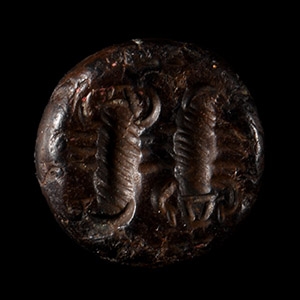
Sassanian Haematite Seal
4th-7th century A.D.Estimate: £200 - 300 (‡+bp*)
Opening Bid: £100
Plano-convex stamp seal with design of two scorpions placed tête-bêche; supplied with a museum-quality impression. 8 grams, 17 mm
Acquired in Europe in 1997. European private collection.
