
Loading, please wait...
LOT 0259
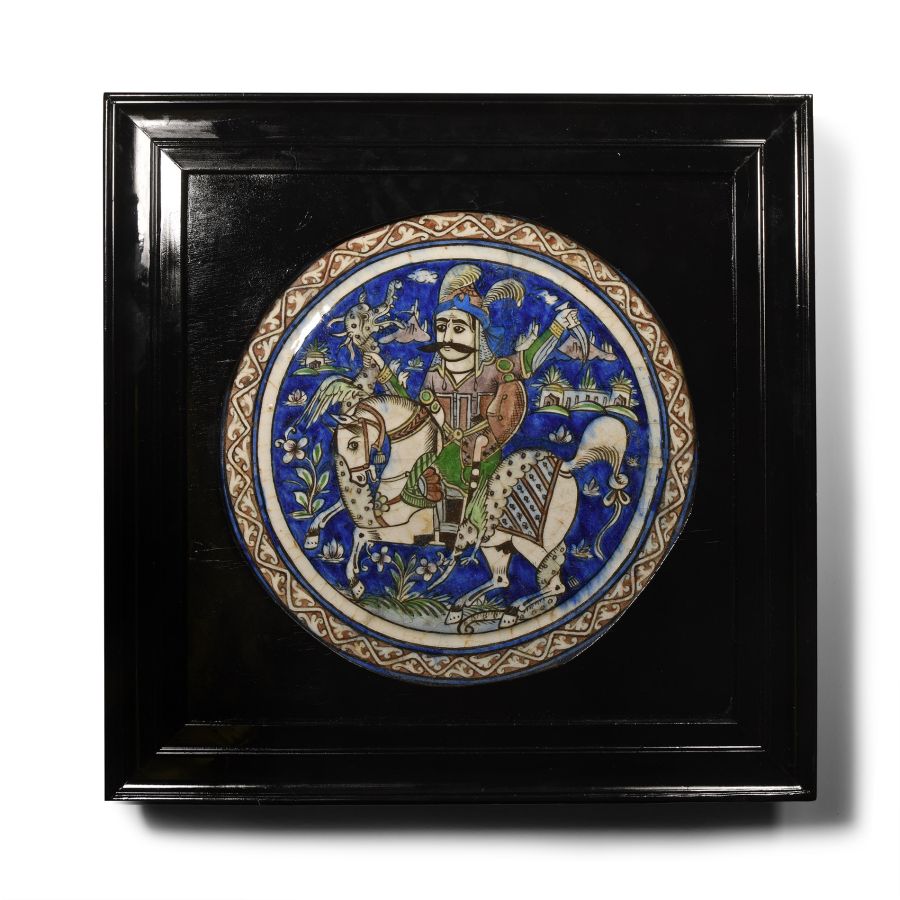
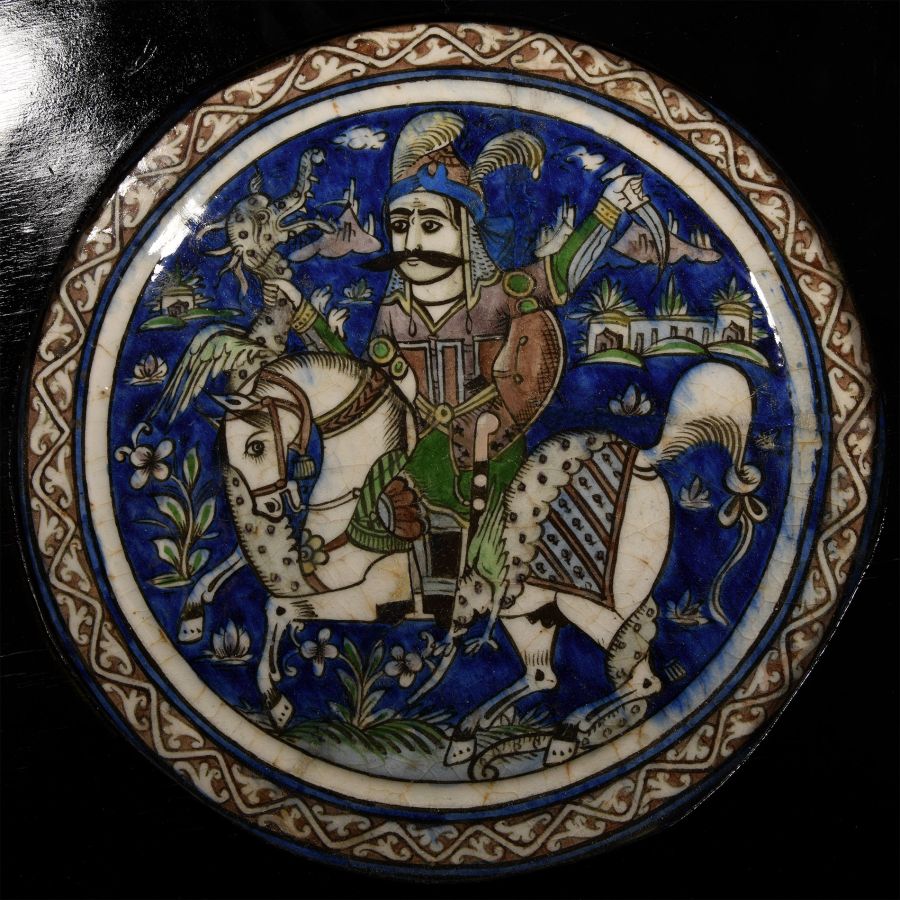
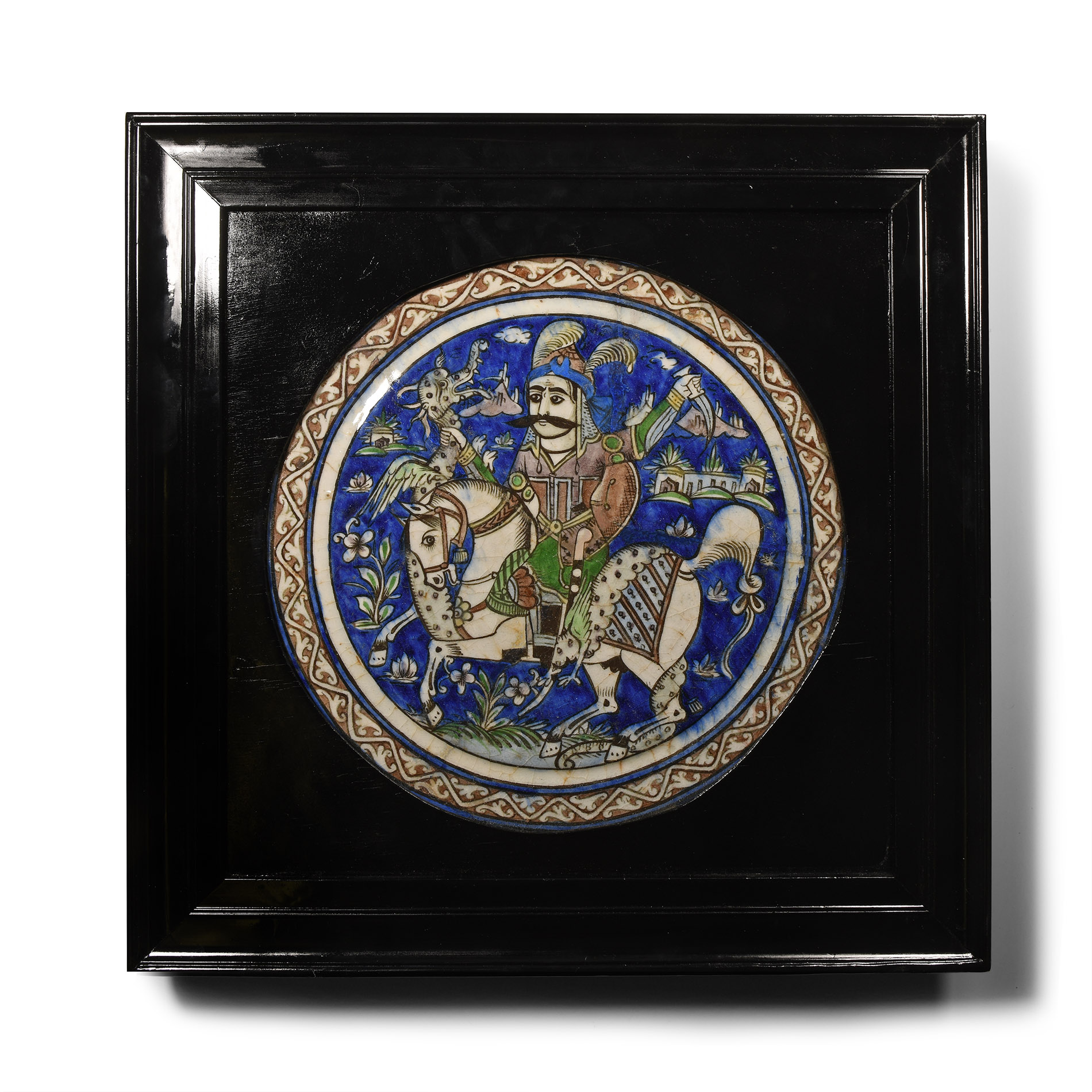
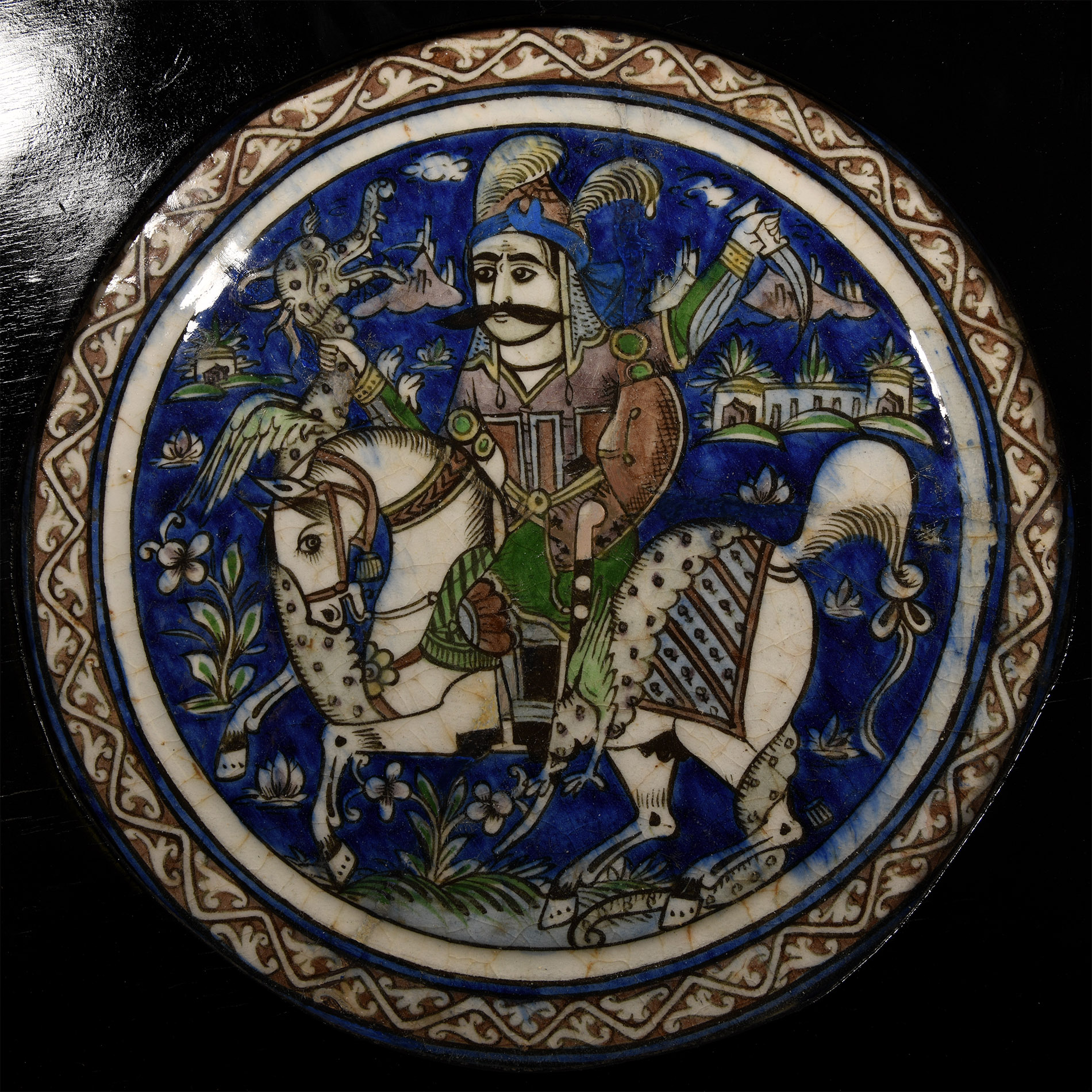
Qajar Glazed Plate with Hero
LATE 19TH-EARLY 20TH CENTURY A.D.
17 1/2 x 17 3/4 in. (5.2 kg, 44.5 x 45 cm).
Border of reserved running tendrils and leaves, central panel a horseman riding in a landscape; white horse with saddle blanket supporting a hero with plumed helmet and shield slung over his back, wielding a dagger in his left hand against a winged serpent wrapped around the rump and hindlegs of his horse, his right hand strangling another such beast; mounted in a wooden display frame.
ProvenanceEx private collection, UK.
with Rosebery's, London, UK, 10 December 2013, no.1184.
with Weber Kunsthandel, Cologne, Germany.
TimeLine Auctions follows a vetting process to ensure the authenticity and legality of all items, reinforcing our commitment to integrity and responsible trading. Each antiquity, antique, and coin lot undergoes thorough examination by a vetting committee of at least ten external specialists, professional trade association members, scientists, and archaeologists: Our Vetting Process
AUCTIONS:
TimeLine is a leading auction house specialising in antiquities, ancient art, collectables, natural history, coins, medals, and books. Our auctions offer museums, collectors, historians, and enthusiasts the opportunity to acquire unique and historically significant pieces.
-
Western Asiatic Gold Earrings
6th-4th century B.C.Estimate: £300 - 400 (+bp*)
Opening Bid: £150
Matched pair, crescentic with chamfered profile, granule cluster to the apex. 5.48 grams total, 18-19 mm
From a late Japanese specialist collector, 1970-2000s. -
Western Asiatic Silver Lion Bracelet Terminal Head
Late 1st millennium B.C.Estimate: £150 - 200 (+bp*)
Opening Bid: £53
Stylised rectangular lion-head with pointillé texture, segmented facial features. 18.6 grams, 25 mm
with a London, UK gallery 1971-early 2000s. -
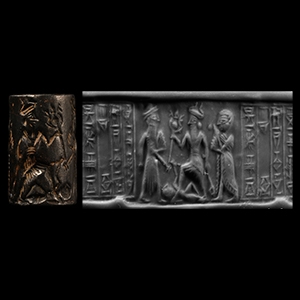
Akkadian Cylinder Seal with Worship Scene
Late 3rd millennium B.C.Sold for (Inc. bp): £1,040
Haematite with a bearded male figure wearing a kilt and cap, in front a bearded male deity wearing a kilt and horned cap, holding a sceptre and standing on a reclining male figure; to the back a female in long robes and hand held in front of mouth; rectangular panel with four rows of cuneiform text. 8.08 grams, 18 mm.
From an important North London collection formed in the late 1980s. From a collection acquired from various auction houses in the UK. From the estate of Mr R.W., a private Wiltshire, UK, collector; thence by descent.
