
Loading, please wait...
LOT 1978
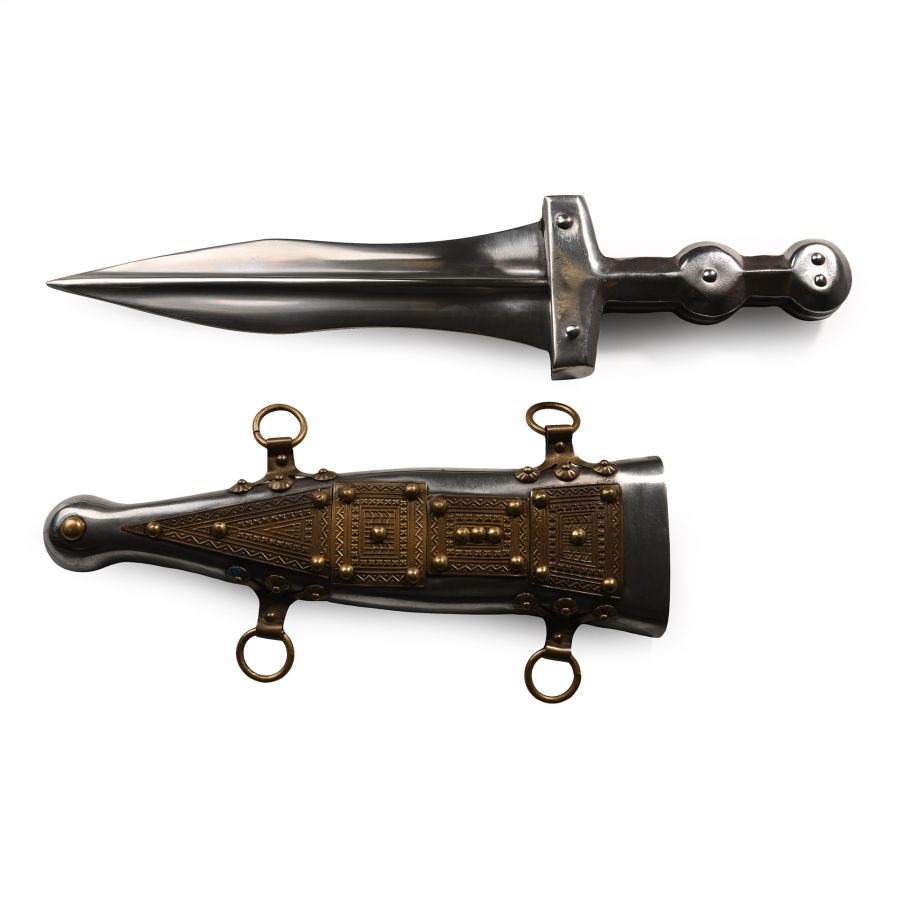
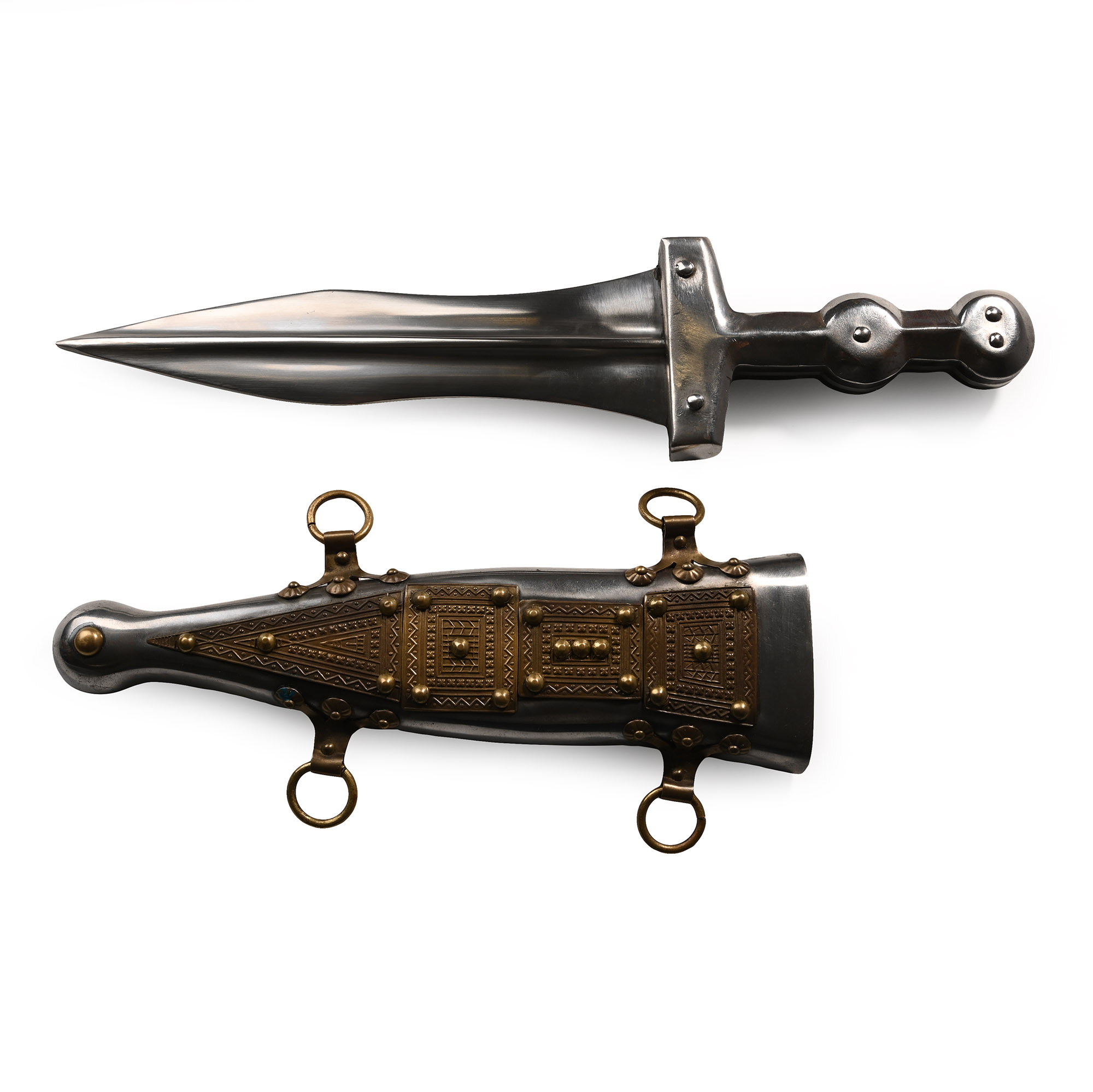
Pugio Dagger and Scabbard Reproduction
21ST CENTURY A.D.
14 1/2 in. (787 grams, 37 cm).
Comprising: dagger with thick midrib to the triangular blade, narrow guard, bulb to the grip and pommel; D-section steel scabbard with applied bronze panels with stamped decoration, four lateral rings for suspension, leather-lined. [No Reserve]
ProvenanceFrom a private Tyneside collection, formed since the early 2000s.
CONDITIONTimeLine Auctions follows a vetting process to ensure the authenticity and legality of all items, reinforcing our commitment to integrity and responsible trading. Each antiquity, antique, and coin lot undergoes thorough examination by a vetting committee of at least ten external specialists, professional trade association members, scientists, and archaeologists: Our Vetting Process
AUCTIONS:
TimeLine is a leading auction house specialising in antiquities, ancient art, collectables, natural history, coins, medals, and books. Our auctions offer museums, collectors, historians, and enthusiasts the opportunity to acquire unique and historically significant pieces.
-
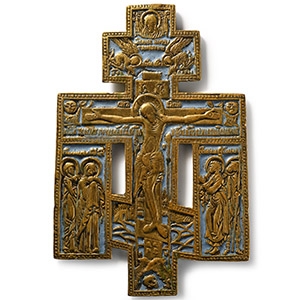
Russian Orthodox Enamelled Bronze Travel Icon with Christ Flanked by Mary, Maria, and Saint John
19th century A.D.Estimate: £300 - 400 (+bp*)
Opening Bid: £150
Representing the Saviour on the cross, the titulum inscribed with the letters 'ΙC ΧΡ' (Jesus Christ); Cyrillic inscriptions over the sun (Солнце) and the moon (Луна), flanking Jesus and above the heads of the figures: Mary of Magdala (Мария Магдала), the Mother of God ('ΜΡ ϴΥ'), Saint John the Theologian (Св Иоанн) and Saint Longinus (Св Лонгин); on the background the symbols of the Passion (sponge on reed, spear and a skull set on stones marking the site as Golgotha, twisted cords or wire, skan) and the city of Jerusalem; on the upper part of the cross the Archangels Michael and Gabriel with cloth-covered hands, the Mandylion above them. 270 grams, 16.6 cm
Acquired from Chris Martin-Zakheim, Iconastas, 5 Piccadilly Arcade, London SW1. From the private collection of a West London, UK, gentleman, formed since the early 2000s.
Orthodox travel icons were used by the faithful to carry a sacred representation with them during their journeys, offering protection and a constant spiritual connection. The icon features meticulous craftsmanship with intricate details of the Passion and Death of the Saviour, according to the Byzantine iconography. -
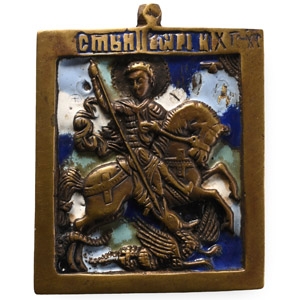
Russian Orthodox Enamelled Bronze Travel Icon with Saint George
19th century A.D.Estimate: £120 - 170 (+bp*)
Opening Bid: £60
Saint George on horseback, dispatching the dragon with a spear; the saint dressed in lamellar Roman cuirass and seated on a high-ended saddle secured by breast, rump, and belly straps; Old Slavic inscription on the top, reciting Saint George (Свято́й Гео́ргий ). 90 grams, 65 mm
Acquired from Chris Martin-Zakheim, Iconastas, 5 Piccadilly Arcade, London SW1. From the private collection of a West London, UK, gentleman, formed since the early 2000s.
According to the Christian tradition, Saint George would have lived between the end of the 3rd century and the beginning of the 4th century: born into a noble Christian family, he became an officer in the Roman army and was then named a praetorian by Diocletian. But when the same emperor decided to resume the persecutions, Saint George became a victim despite his important political rank. His role in the development of the faith is so important that he is included among the Great Martyrs of the Eastern Church and his fight against the dragon becomes a symbol par excellence of the fight for good which defeats evil. -
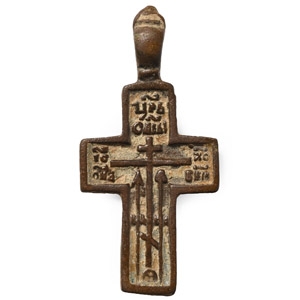
East European Bronze Cross Pendant
17th-18th century A.D.Sold for (Inc. bp): £13
Comprising: the obverse a voided cross with Calvary scene of cross, spear and sponge with text surrounding; reverse with dense text. 5.25 grams, 46 mm
Private collection formed in Europe in the 1980s. Westminster collection, central London, UK.
