
LOT 3082
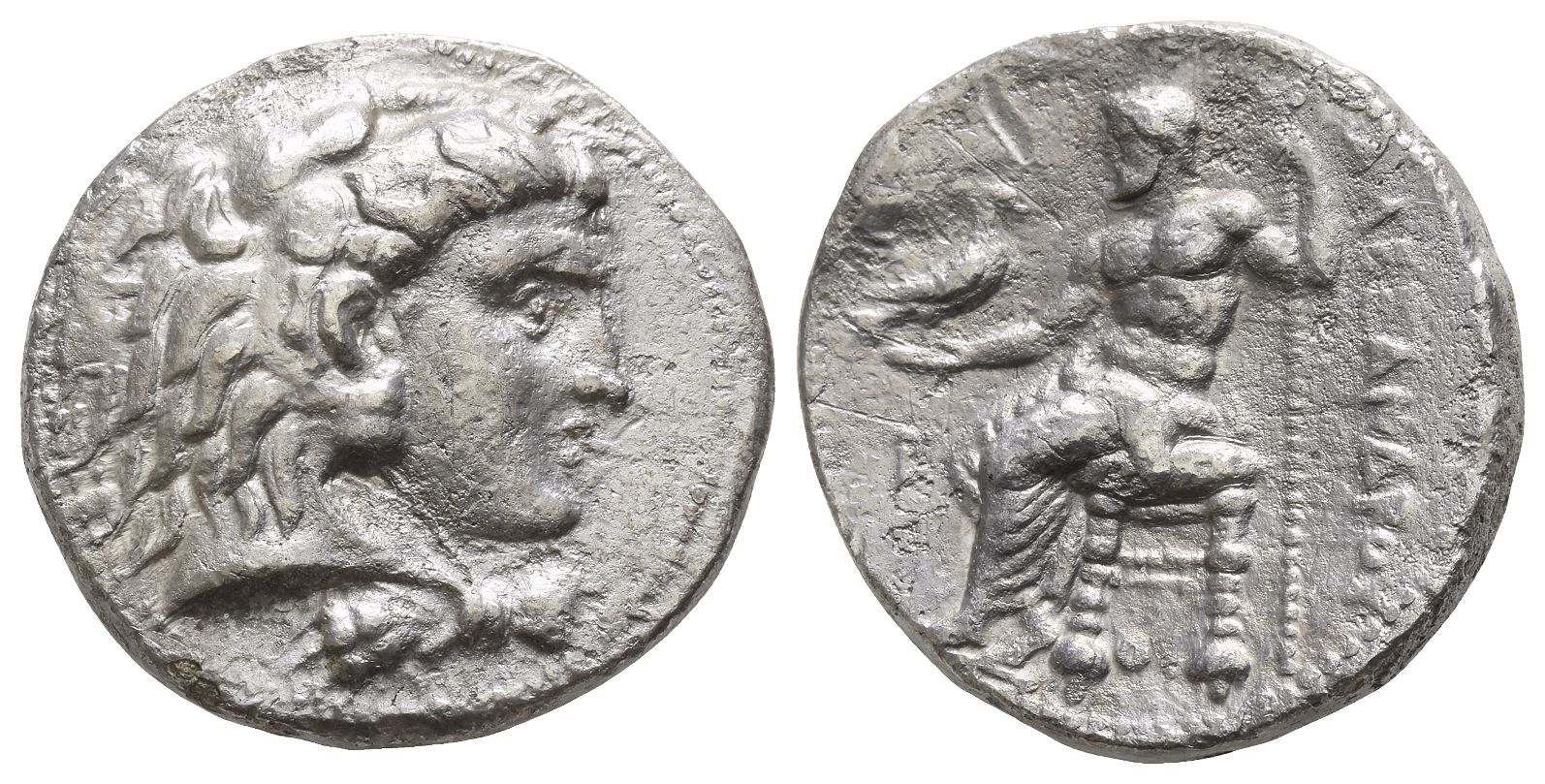
Ptolemaic Kingdom of Egypt, Ptolemy I Soter AR Tetradrachm. As satrap, 323-305 BC. Byblos mint. In the name and types of Alexander III of Macedon.
Head of Herakles to right, wearing lion skin headdress, paws tied beneath chin / ΑΛΕΞΑΝΔΡΟΥ, Zeus seated to left on backless throne, right leg drawn back, his feet resting on low foot rest, holding long sceptre in his left hand and, in his right, eagle standing to right with closed wings; B in left field, OI beneath throne. Price 3420 (Berytos mint); HGC 10, 1003 (Berytos mint). Near Very Fine.(15.68gr, 27mm, 10h.).
ProvenanceFrom the collection of a gentleman, acquired on the London art market in the 1990s.
TimeLine Auctions follows a vetting process to ensure the authenticity and legality of all items, reinforcing our commitment to integrity and responsible trading. Each antiquity, antique, and coin lot undergoes thorough examination by a vetting committee of at least ten external specialists, professional trade association members, scientists, and archaeologists: Our Vetting Process
AUCTIONS:
TimeLine is a leading auction house specialising in antiquities, ancient art, collectables, natural history, coins, medals, and books. Our auctions offer museums, collectors, historians, and enthusiasts the opportunity to acquire unique and historically significant pieces.
LOT 3082
Ptolemaic Kingdom of Egypt, Ptolemy I Soter AR Tetradrachm.
Sold for (Inc. bp): £169
-
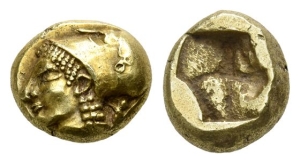
Ionia, Phokaia EL 1/6 of Stater or Hekte. Circa 521-478 BC.
Sold for (Inc. bp): £1,300
Head of Athena wearing Corinthian helmet to left; behind neck, seal swimming upwards / Quadripartite incuse square. BMFA 1906; Bodenstedt 32; SNG von Aulock -. 2.61gr, 9mm.
Extremely Fine.
Ex Roma Numismatics Ltd, E-Sale 25, 27 February 2016, lot 81 (since professionally cleaned). Ex Nomos AG, Auction 20, 10 July 2020, lot 217 (company's ticket included). -
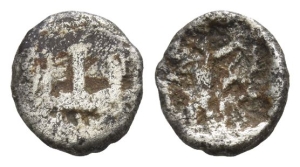
Phoenicia, Sidon 'Abdamon' AR 1/16 Shekel. Circa 425-407 BC.
Sold for (Inc. bp): £7
Galley to left before turreted city wall, lion in exergue / Persian king standing to right and firing bow. Cf. HGC 10, 230. 0.70gr, 10mm, 1h.
Good Fine.
Private collection, acquired 1980–1985. -
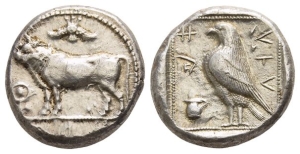
Cyprus. Paphos, Stasandros AR Stater. Second half 5th century BC.
Sold for (Inc. bp): £2,600
Bull standing to left; winged solar disk above, ankh to left, palmette ornament in exergue / Eagle standing to left; one-handled vase to left, 'pa-si sa-ta-sa' in Cypriot script around; all within dotted square in incuse square. Destrooper-Georgiades 15; Zapiti & Michaelidou 7; Tziambazis 7. 11.08gr, 22mm, 9h.
Near Extremely Fine.
From the private coin collection of a West London, UK, gentleman, formed since the mid 1980s. Ex Roma Numismatics Ltd, Auction XXII, 7 October 2021, lot 397.
