
Loading, please wait...
LOT 0183
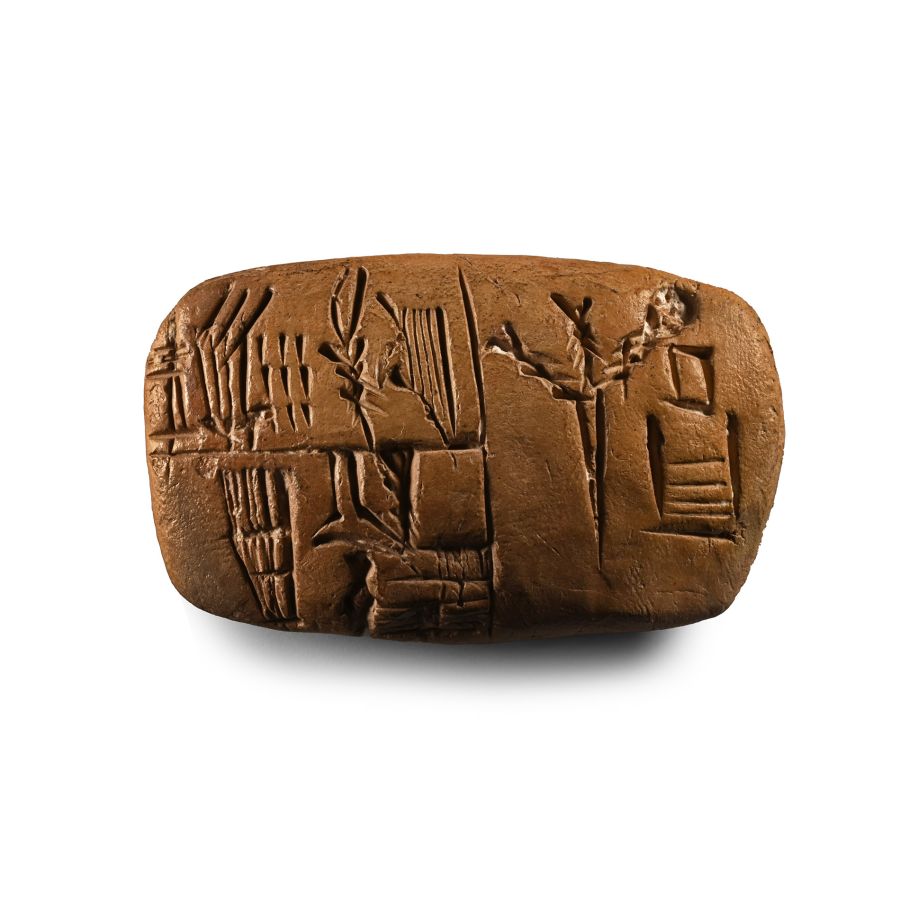
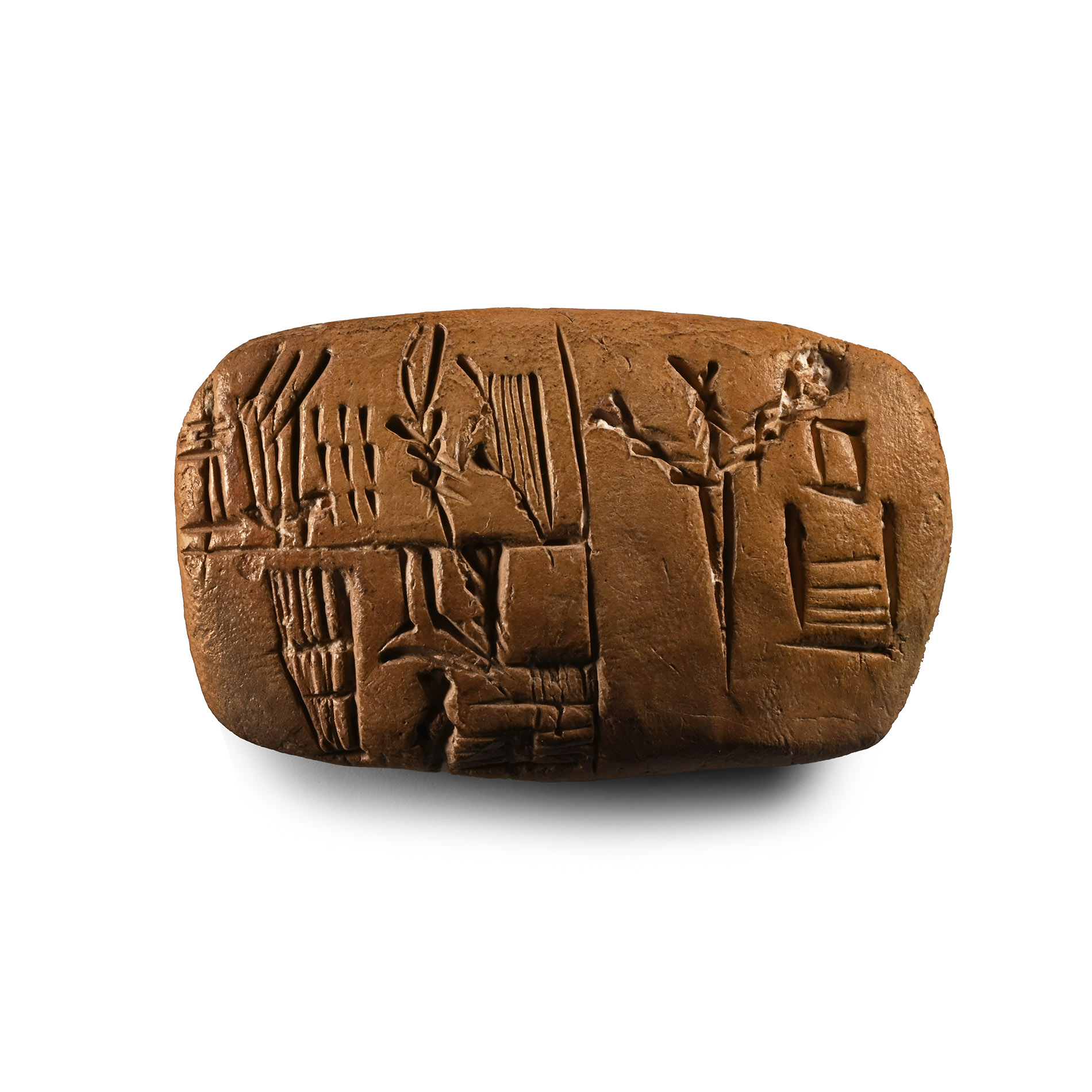
Proto-Sumerian Pictographic Tablet for Amounts of Barley
URUK III, CIRCA 3200-3000 B.C.
2 1/4 in. (26.3 grams, 55 mm).
Rectangular tablet, lentoid in section, with surface divided into three panels, each with a proto-Sumerian legend in an early form of cuneiform script.
ProvenanceFrom an important collection of a London gentleman, 1980-2000s.
This lot has been checked against the Interpol Database of stolen works of art and is accompanied by search certificate number no.12243-220927.
Believed to have been published in Cornell (ATCPC), no.140.
CONDITIONTimeLine Auctions follows a vetting process to ensure the authenticity and legality of all items, reinforcing our commitment to integrity and responsible trading. Each antiquity, antique, and coin lot undergoes thorough examination by a vetting committee of at least ten external specialists, professional trade association members, scientists, and archaeologists: Our Vetting Process
AUCTIONS:
TimeLine is a leading auction house specialising in antiquities, ancient art, collectables, natural history, coins, medals, and books. Our auctions offer museums, collectors, historians, and enthusiasts the opportunity to acquire unique and historically significant pieces.
LOT 0183
Proto-Sumerian Pictographic Tablet for Amounts of Barley
Estimate £3,000 - 4,000€3,480 - 4,640 (for guidance only)$4,050 - 5,400 (for guidance only)
-
.jpg)
Late Achaemenid Bronze Phiale Mesomphalos
6th-4th century B.C.Sold for (Inc. bp): £273
A broad carinated bowl with radiating repoussé panels, central slightly domed roundel, carination below the rim. 233 grams, 17.5 cm
Acquired 1980-2015. Ex Abelita family collection. -
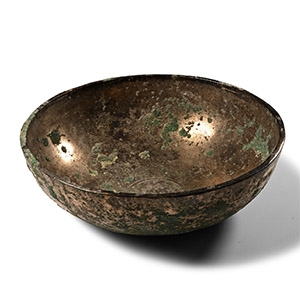
Achaemenid Bronze Bowl
Circa 7th-6th century B.C.Sold for (Inc. bp): £72
With high tinning to the inner face giving a lustrous silvery finish, a tribute to the techniques of the Persian craftsmen; decorated with lightly incised concentric circles inside centre, thickened rim. 338 grams, 16.5 cm
From an old Oxford collection, formed in the 1980s. Ex Chris Martin, UK. -
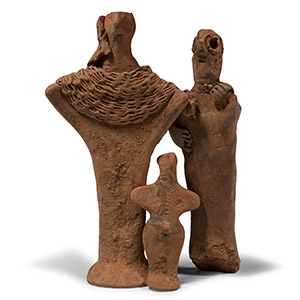
Syro-Hittite Terracotta Fertility Idol Group
2nd millennium B.C.Sold for (Inc. bp): £221
Comprising: idol with applied broad textured collar and hair; idol with exaggerated applied eyes, collar and arm; small idol with phallic detailing; some repairs and restorations. 271 grams total, 8.2-16.5 cm
Ex James Chesterman collection, Cambridge, UK, 1990s.
