
Loading, please wait...
_900x900.jpg "Proto-Elamite Silver Ibex Pendant")
_200x200.jpg "Proto-Elamite Silver Ibex Pendant")
_900x900.jpg "Proto-Elamite Silver Ibex Pendant")
_200x200.jpg "Proto-Elamite Silver Ibex Pendant")
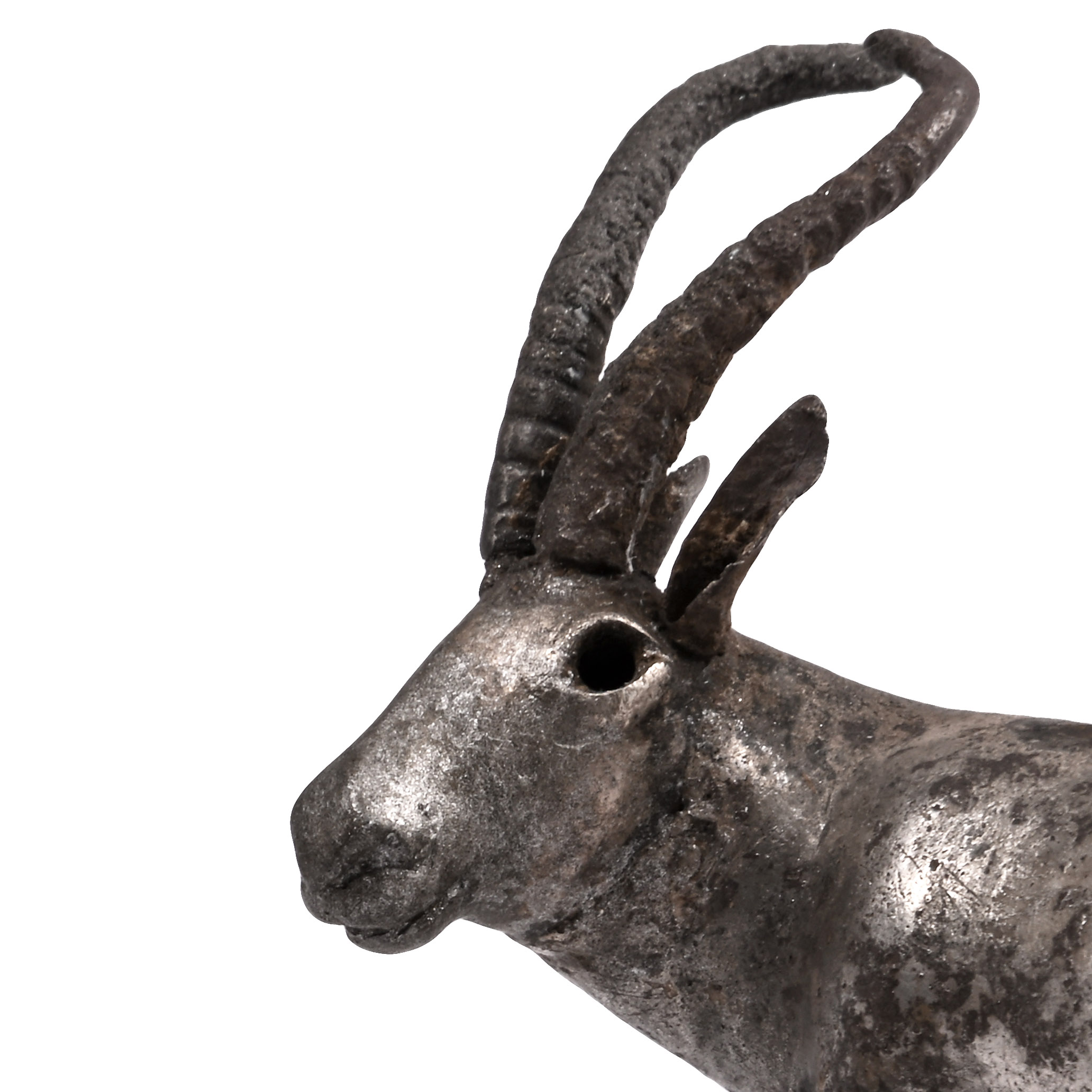
.jpg "Proto-Elamite Silver Ibex Pendant")
.jpg "Proto-Elamite Silver Ibex Pendant")
LOT 0284
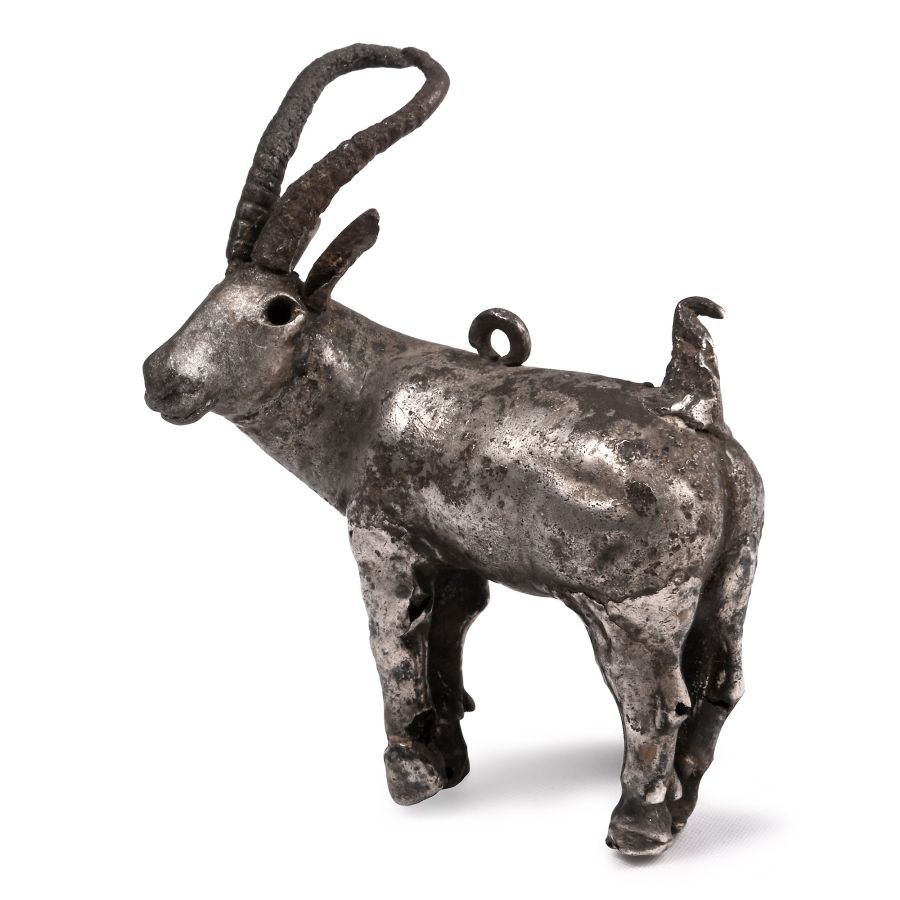
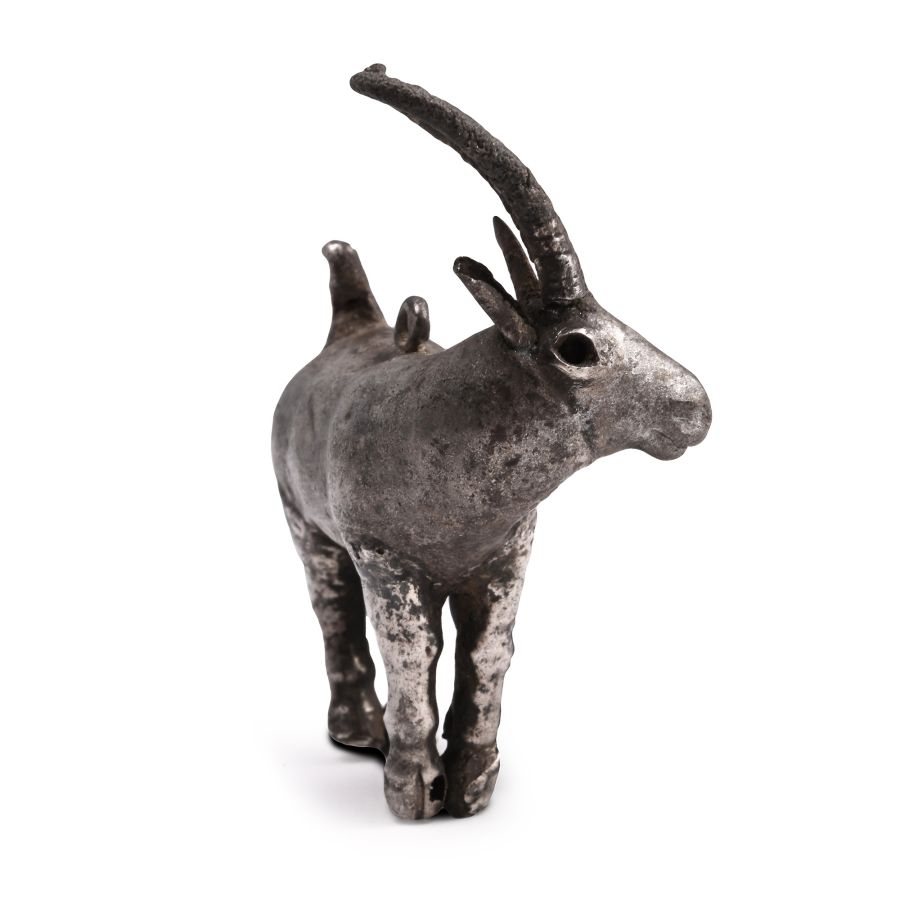
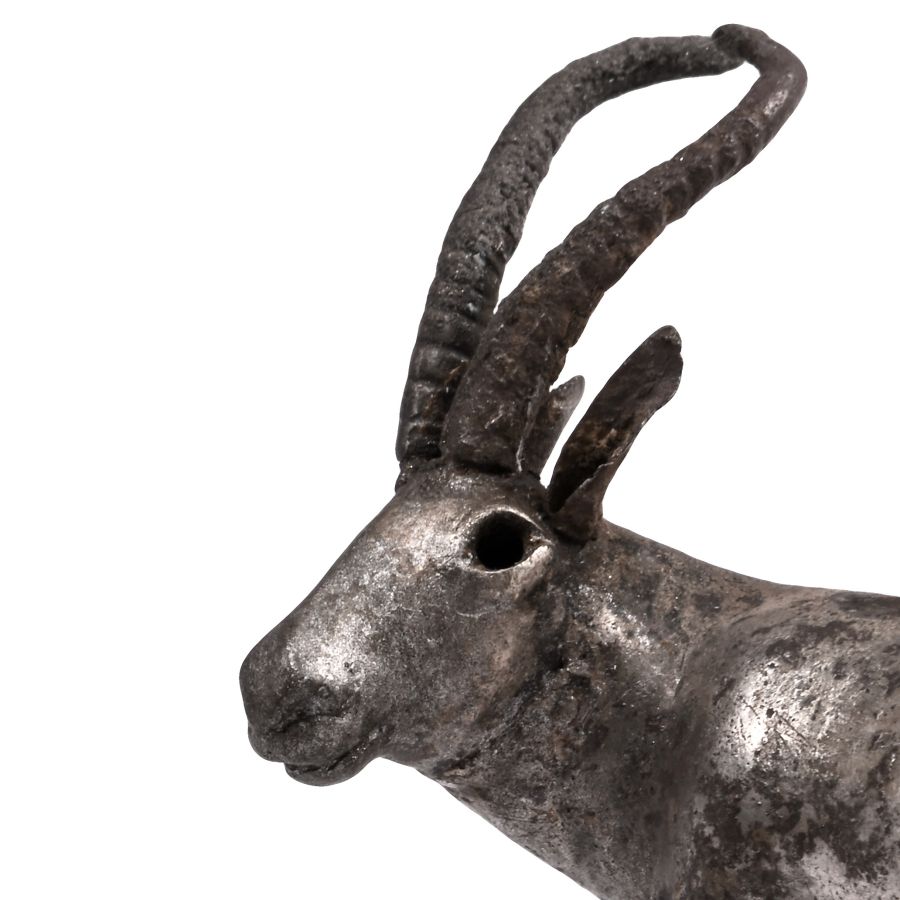
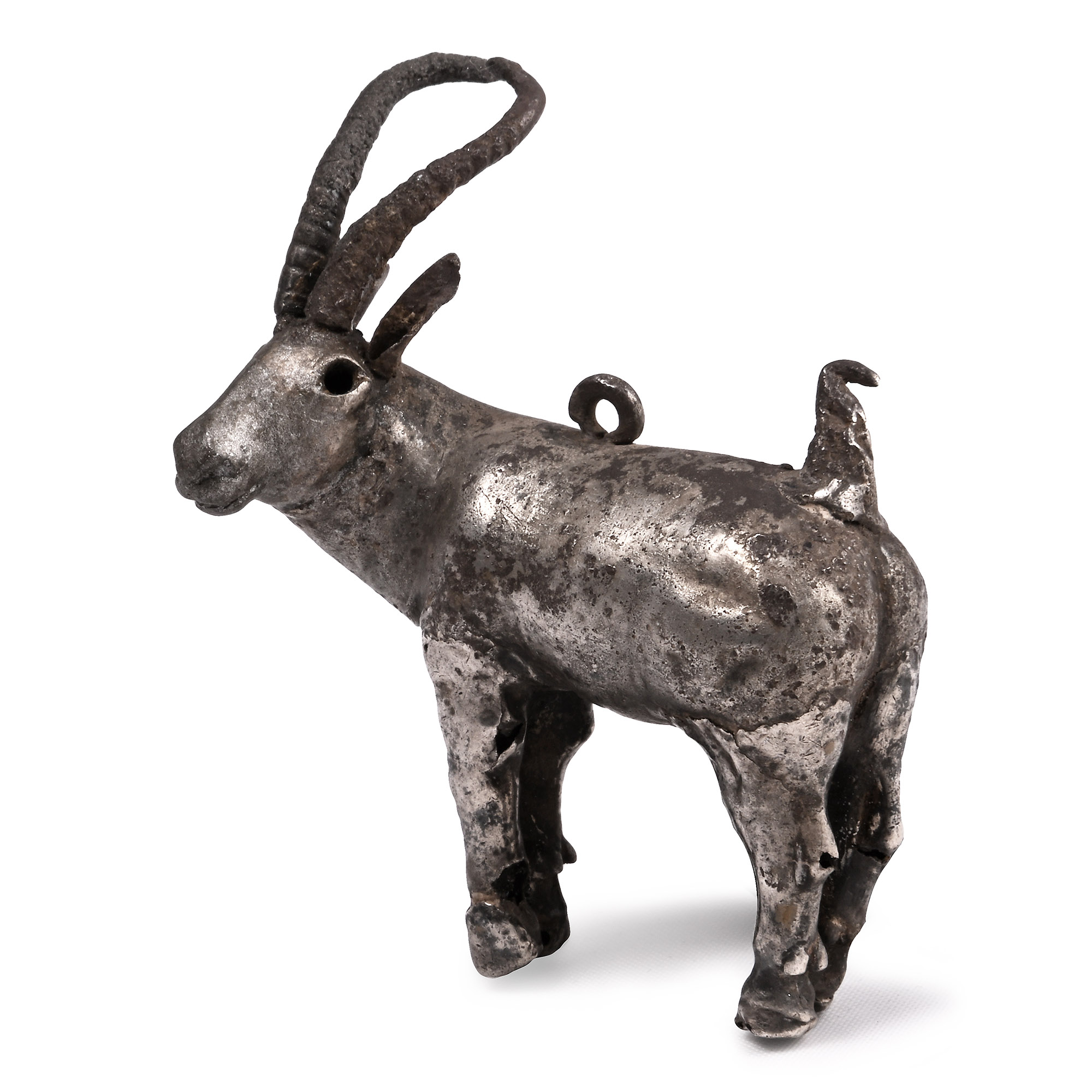
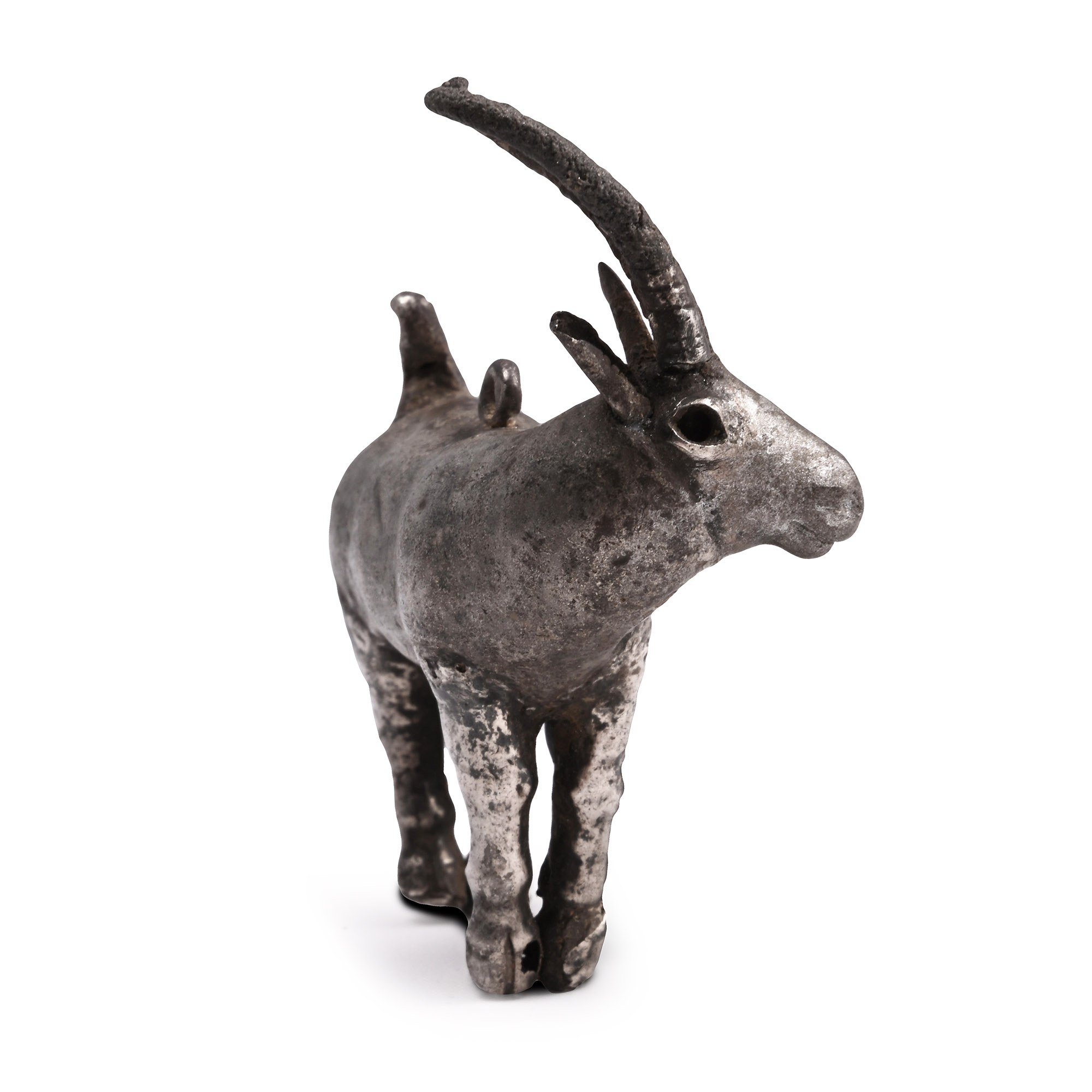
Proto-Elamite Silver Ibex Pendant
CIRCA 3100-2900 B.C.
2 3/8 in. (20.27 grams, 60 mm high).
Hollow-formed in sheet-silver, modelled in the round ibex with head turned to the left; voided eyes to accept inserts, dorsal loop.
Provenancewith Mahboubian Gallery, New York, USA, acquired prior to 1969.
London, UK, collection.
This lot has been checked against the Interpol Database of stolen works of art and is accompanied by a search certificate number no.12712-235585.
This lot has been cleared against the Art Loss Register database, and is accompanied by an illustrated lot declaration signed by the Head of the Antiquities Department, Dr Raffaele D'Amato.
TimeLine Auctions follows a vetting process to ensure the authenticity and legality of all items, reinforcing our commitment to integrity and responsible trading. Each antiquity, antique, and coin lot undergoes thorough examination by a vetting committee of at least ten external specialists, professional trade association members, scientists, and archaeologists: Our Vetting Process
AUCTIONS:
TimeLine is a leading auction house specialising in antiquities, ancient art, collectables, natural history, coins, medals, and books. Our auctions offer museums, collectors, historians, and enthusiasts the opportunity to acquire unique and historically significant pieces.
-
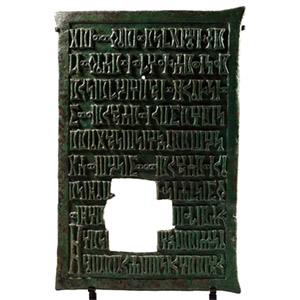
South Arabian King Rabbishamsum Nimran Bronze Dedicatory Plaque
Circa 150 A.D.Estimate: £12,000 - 17,000 (+bp*)
Opening Bid: £6,000
Rectangular in profile with spur to each upper angle; high-relief reserved epigraphic text in ten lines with void at lower centre; dedicated to the god Dhu-Samāwī by Ẓabiyum Yarḥab, under the Reign of King Rabbīshamsum Nimrān; mounted on a custom-made stand. 2.03 kg total, 28 x 18.6 cm (34.5 cm high including stand)
Ex Robin Marshal-Carter, Adelaide, South Australia, 1970. Private collection, London, UK. Accompanied by a full transliteration and translation into modern English. This lot has been checked against the Interpol Database of stolen works of art and is accompanied by a search certificate number no.12697-235195. This lot has been cleared against the Art Loss Register database, and is accompanied by an illustrated lot declaration signed by the Head of the Antiquities Department, Dr Raffaele D'Amato.
From the temple of Yaghrū consecrated to the god dhu-Samāwī, in the wādī 'l-Shudayf in northern Yemen. -
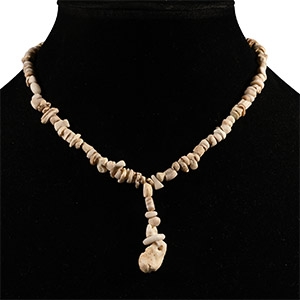
Western Asiatic White Stone and Shell Bead Necklace String
1st millennium B.C. and laterSold for (Inc. bp): £7
Restrung group of fusiform, cylindrical, rectangular and other beads. 15.4 grams, 31 cm
Ex London, UK, collection, 1990s. This lot has been cleared against the Art Loss Register database, and is accompanied by an illustrated lot declaration signed by the Head of the Antiquities Department, Dr Raffaele D'Amato. -
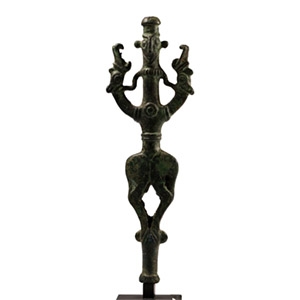
Luristan Bronze Finial with Master of Animals
8th-7th century B.C.Estimate: £1,500 - 2,000 (‡+bp*)
Opening Bid: £675
A bifacial sceptre head formed as a 'Master of Animals' atop a collared tubular stem, comprising two slender crescentic arms representing slender beasts with ridged backs and roaring mouths, each in the grip of the Master standing crowned between them; the Master with tubular body, animal-like ears, prominent nose above a small mouth and wearing a neck ring and domed headdress; mounted on a display stand. 213 grams total, 19.7 cm including stand
Ex Capitaine Patrick Pakenham, Geneva, Switzerland, acquired in the 1960s-1970s, thence by succession. Private collection. This lot has been cleared against the Art Loss Register database, and is accompanied by an illustrated lot declaration signed by the Head of the Antiquities Department, Dr Raffaele D'Amato.
