
Loading, please wait...
LOT 1619
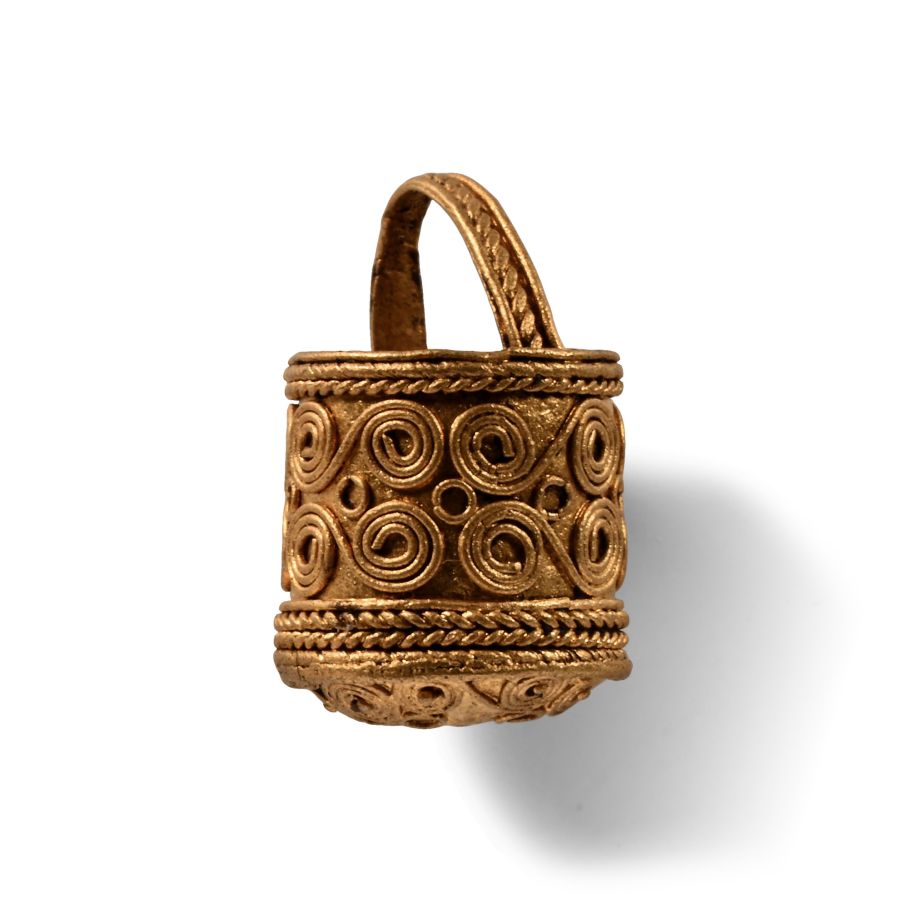
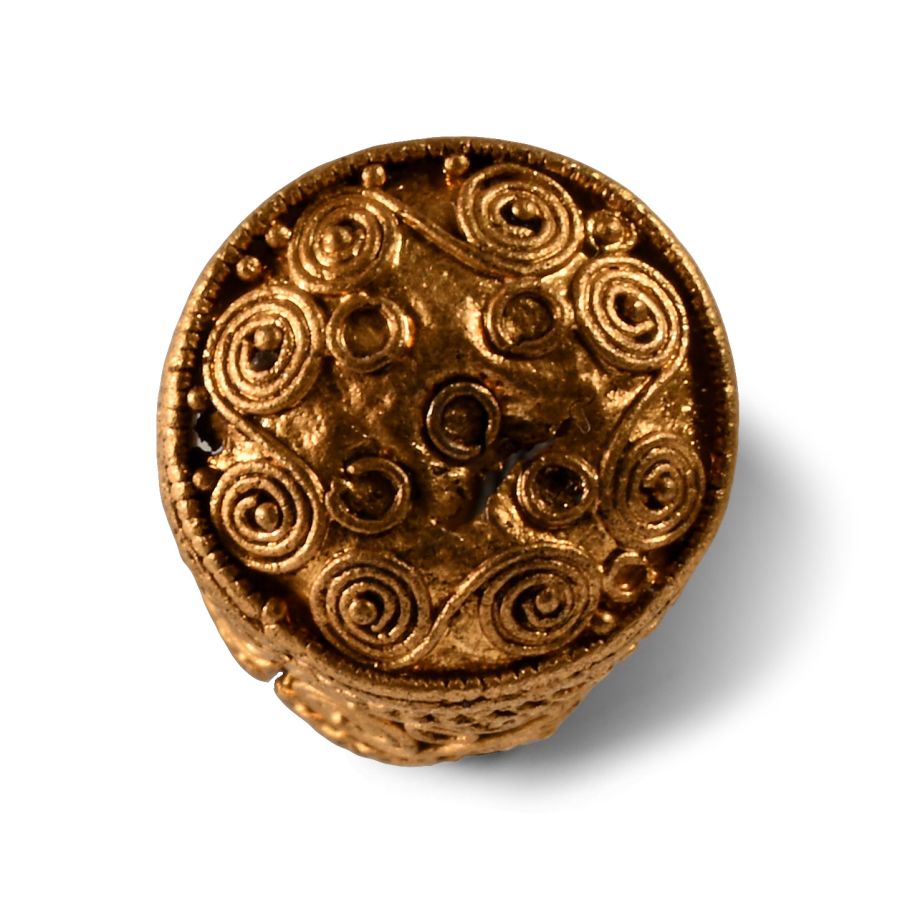
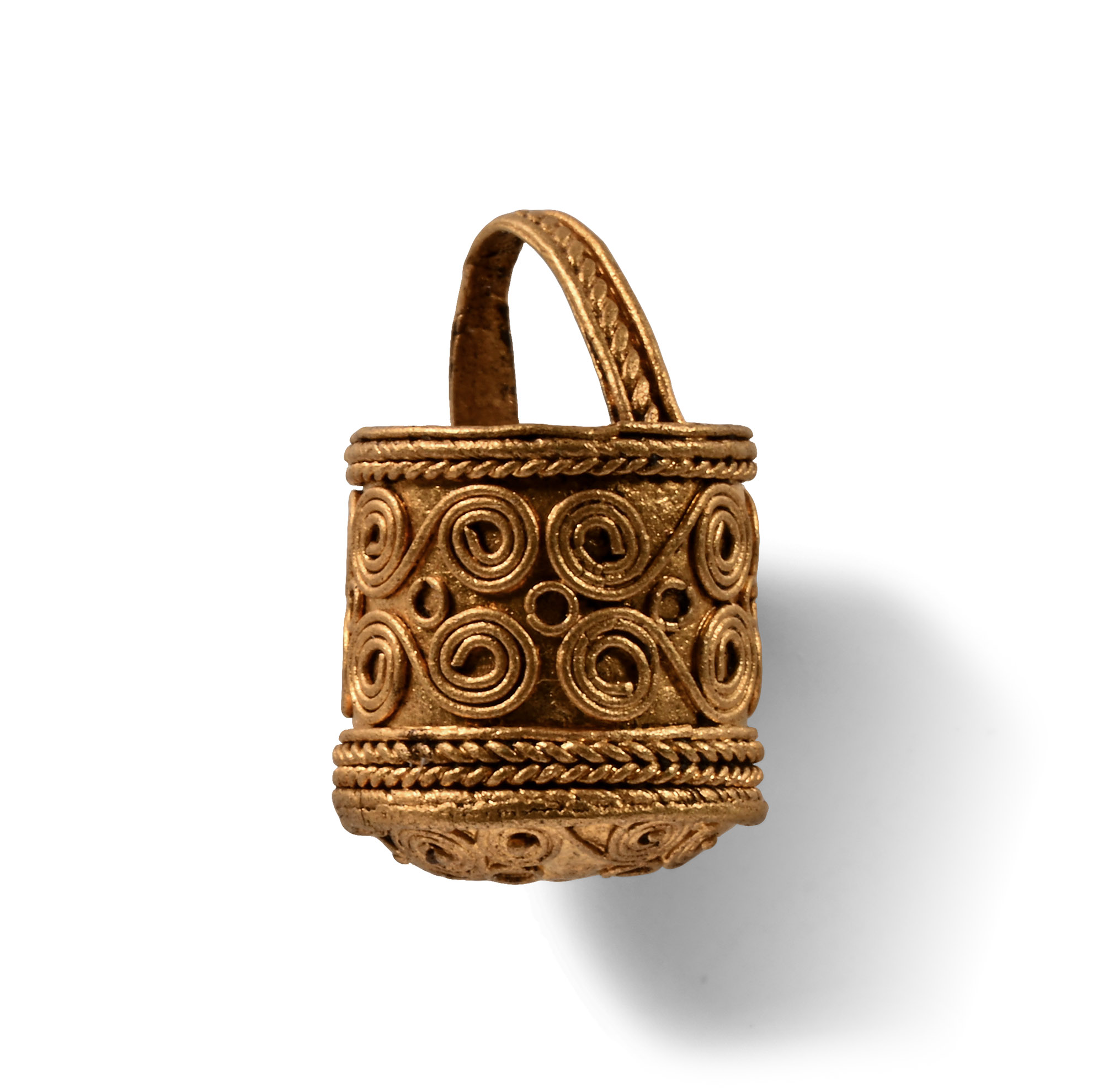
Pre Viking Scandinavian Gold Aroma Bucket Pendant
CIRCA 4TH-7TH CENTURY A.D.
1/2 in. (1.43 grams, 14 mm).
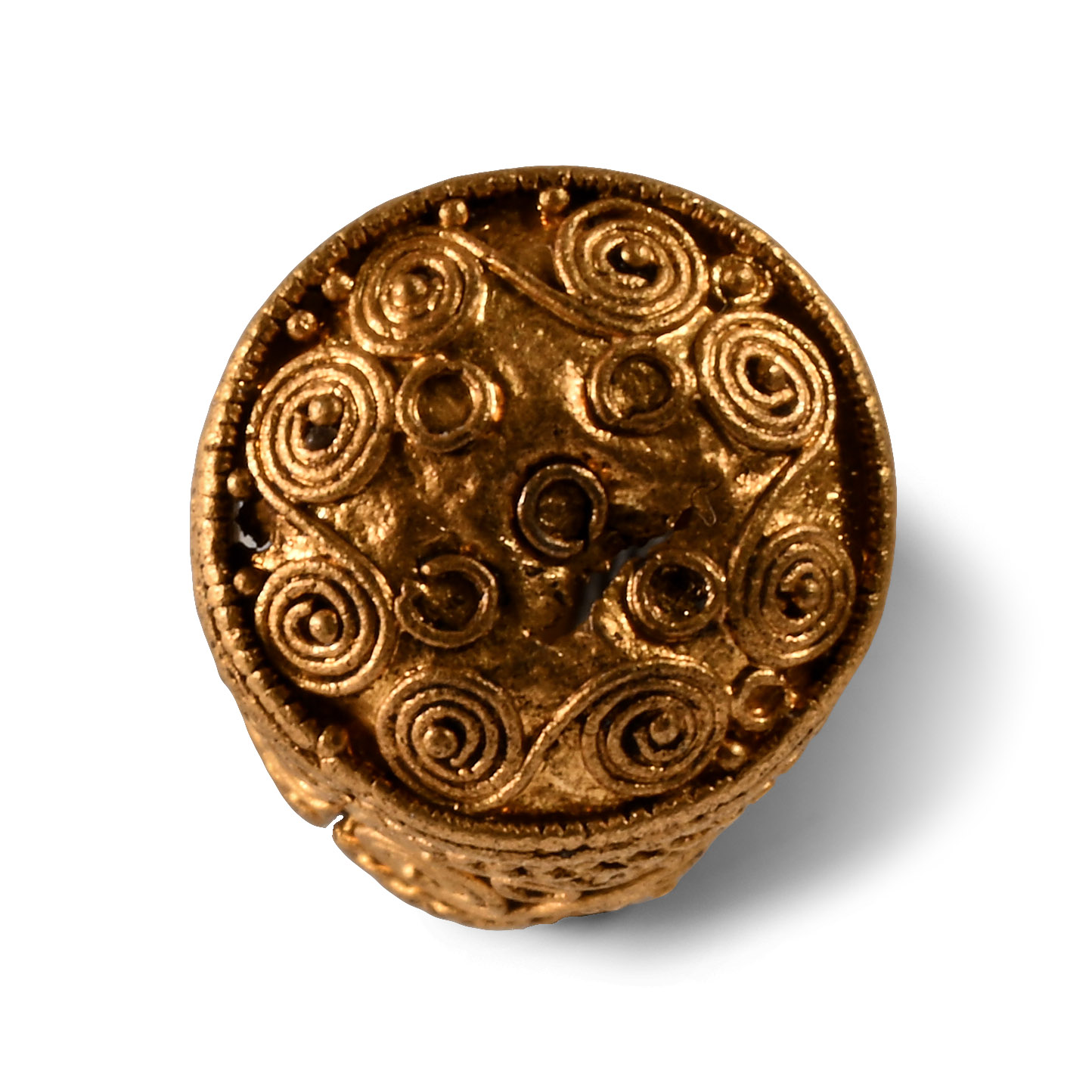
Tubular body with domed base and filigree handle; applied bands of filigree and braided wire to sidewall and base. [No Reserve]
ProvenancePrivate collection formed in Europe in the 1980s.
Westminster collection, central London, UK.
Cf. Khrapunov, I. and Stylegar, F.A., Inter Ambo Maria, Contacts between Scandinavia and the Crimea in the Roman Period, Бажан И, А., Каргапольцев С, Ю, 1989, Об одной категории украшений-амулетов римского времени в Восточной Европе, СА, No.3; see. Meaney, A., Anglo-Saxon Amulets and Curing Stones, Oxford, BAR British Series 96, 1981, p.166-168, for discussion of the type.
FootnotesPendants in the form of miniature buckets have been found in a number of pagan Anglo-Saxon and Viking contexts and are generally made of bronze or iron, with gold examples being rare; three gold examples were found with the hoard from Hoen, Norway. Bronze bucket amulets have been found at Driffield in Yorkshire, and Vimose bog in Denmark, among other places. In form they represent wooden buckets bound with bronze or iron bands which have been found in Anglo-Saxon and Viking graves and are believed to have held mead or ale and were used to replenish the cups from which warriors drank. As amulets they probably represent the ecstatic power of alcoholic drink and the role of women as the dispensers of these precious beverages.
CONDITIONTimeLine Auctions follows a vetting process to ensure the authenticity and legality of all items, reinforcing our commitment to integrity and responsible trading. Each antiquity, antique, and coin lot undergoes thorough examination by a vetting committee of at least ten external specialists, professional trade association members, scientists, and archaeologists: Our Vetting Process
AUCTIONS:
TimeLine is a leading auction house specialising in antiquities, ancient art, collectables, natural history, coins, medals, and books. Our auctions offer museums, collectors, historians, and enthusiasts the opportunity to acquire unique and historically significant pieces.
-

Viking Age Silver Triagular Pendant Group
Circa 9th-11th century A.D.Sold for (Inc. bp): £78
Large pendant with repoussé ring-and-dot and herringbone ornament; suspension rings with the ends coiled about the shank. 9.05 grams total, 26-50 mm
Property of the vendor's grandfather, thence by family descent, circa 1985. From the private collection of a New York, USA gentleman. -
Viking Age Gold Cloisonné Animal-Shaped Pendant
Circa 9th-11th century A.D.Sold for (Inc. bp): £117
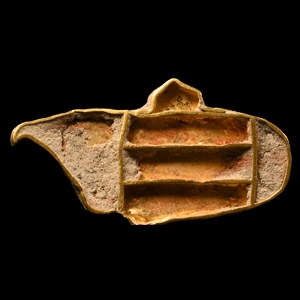
Fragment with central area divided into three rectangular cells, D-shaped cell to the end and lateral triangle, irregular scoped cell above; probably from a larger cloisonné decorative item. 0.53 grams, 20 mm
From a late Japanese specialist collector, 1970-2000s. -

Viking Age Silver-Gilt Oseberg Contorted Beast Pendant
Circa 10th-11th century A.D.Sold for (Inc. bp): £364
Openwork disc pendant with Oseberg Style disjointed body, facing mask, pierced suspension lug above. 6.29 grams, 39.51 mm
Acquired on the German art market before 2000. From a London W1, UK, collection.
There is a class of discoid pendants with banded borders and contorted figures found in the hinterland of the Baltic region, associated with the influence of Scandinavian settlers. The design of these items recalls specific elements of Scandinavian art - for example, the 'gripping hands' motif is a feature of the Oseberg Style named after the famous Norwegian ship-burial. Oseberg Style is associated with the beginnings of the Viking age, and was current in the 9th century when Scandinavian settlers began to establish centres of trade and political control in the area of the rivers Dnieper and Volga. The motif has been interpreted as a horse and linked with various legends and mythic figures.
