
Loading, please wait...
LOT 1448
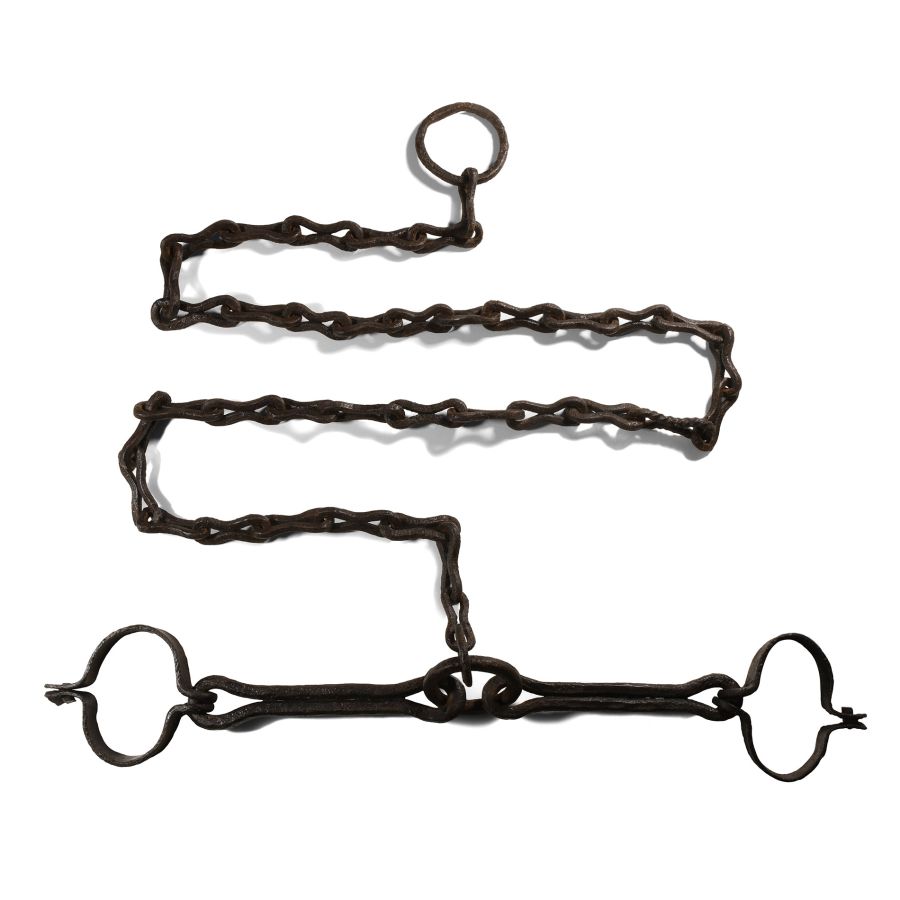
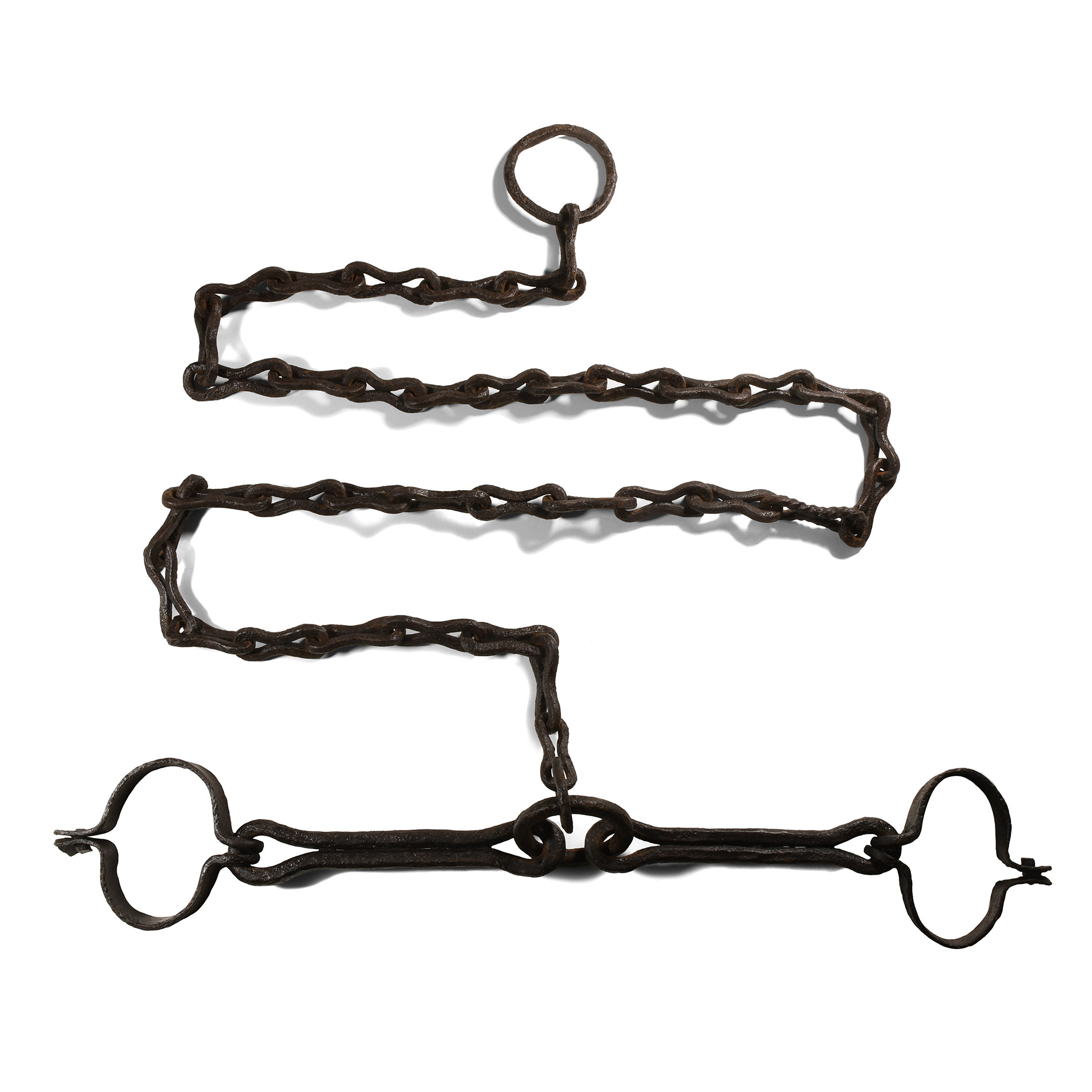
Pre-Viking Iron Slave Chain Shackle
6TH-7TH CENTURY A.D.
101 in. (4.45 kg, 2.57 m long).
Comprising thirty-eight 8-shaped iron links, with interstitial H-shaped twisted elements; securing ring at the upper end; iron ring at the lower end with thick linked ring and two substantial shackles, each a pair of parallel bars with a loop at each end; attached to each a flat rectangular-section fetter with substantial retaining rivet. [No Reserve]
ProvenanceAcquired 1971-1972.
From the collection of the vendor's father.
Property of a London, UK, collector.
Cf. iron collar from John’s Lane, Dublin, now in the National Museum of Ireland.
FootnotesThe shackles are formed with an elliptical void in order to accommodate a human foot, closed with an iron rivet which could not have been easily removed without heating the metal.
CONDITIONTimeLine Auctions follows a vetting process to ensure the authenticity and legality of all items, reinforcing our commitment to integrity and responsible trading. Each antiquity, antique, and coin lot undergoes thorough examination by a vetting committee of at least ten external specialists, professional trade association members, scientists, and archaeologists: Our Vetting Process
AUCTIONS:
TimeLine is a leading auction house specialising in antiquities, ancient art, collectables, natural history, coins, medals, and books. Our auctions offer museums, collectors, historians, and enthusiasts the opportunity to acquire unique and historically significant pieces.
-
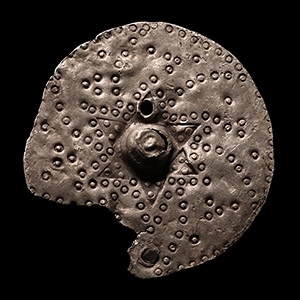
Viking Stamped Silver Mount
9th-11th century A.D.Sold for (Inc. bp): £39
With central repoussé dome, star motif around with punched annulet trails to the arms. 2.28 grams, 30 mm
From the collection of a North American gentleman, formed in the 1990s. -
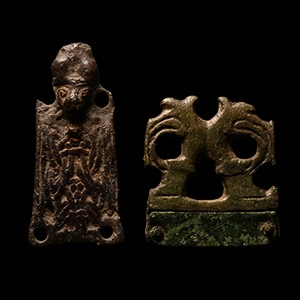
Viking Bronze Zoomorphic Strap End Collection
9th-11th century A.D.Sold for (Inc. bp): £65
Comprising an openwork addorsed bird design and sub-rectangular plaque with interlace motifs and beast head in relief. 13.2 grams total, 27-37 mm
From the collection of a North American gentleman, formed in the 1990s. -
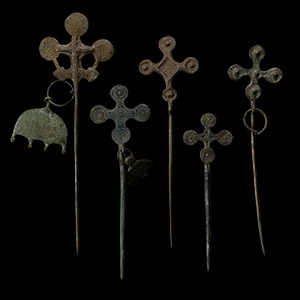
Viking Period Bronze Pin Collection with Lobed Cross Finials
10th-11th century A.D.Sold for (Inc. bp): £312
Together with suspension loops and including examples with pendants. 196 grams total, 14-22 cm
From the collection of a North American gentleman, formed in the 1990s.
