
Loading, please wait...
LOT 1605
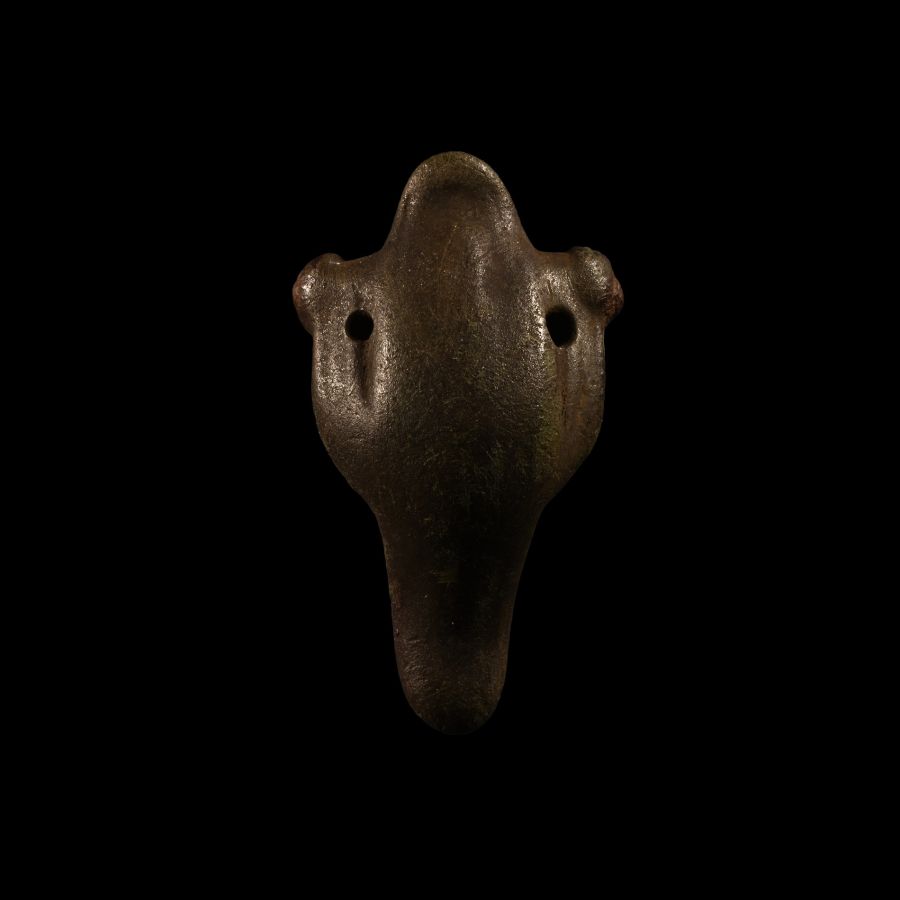
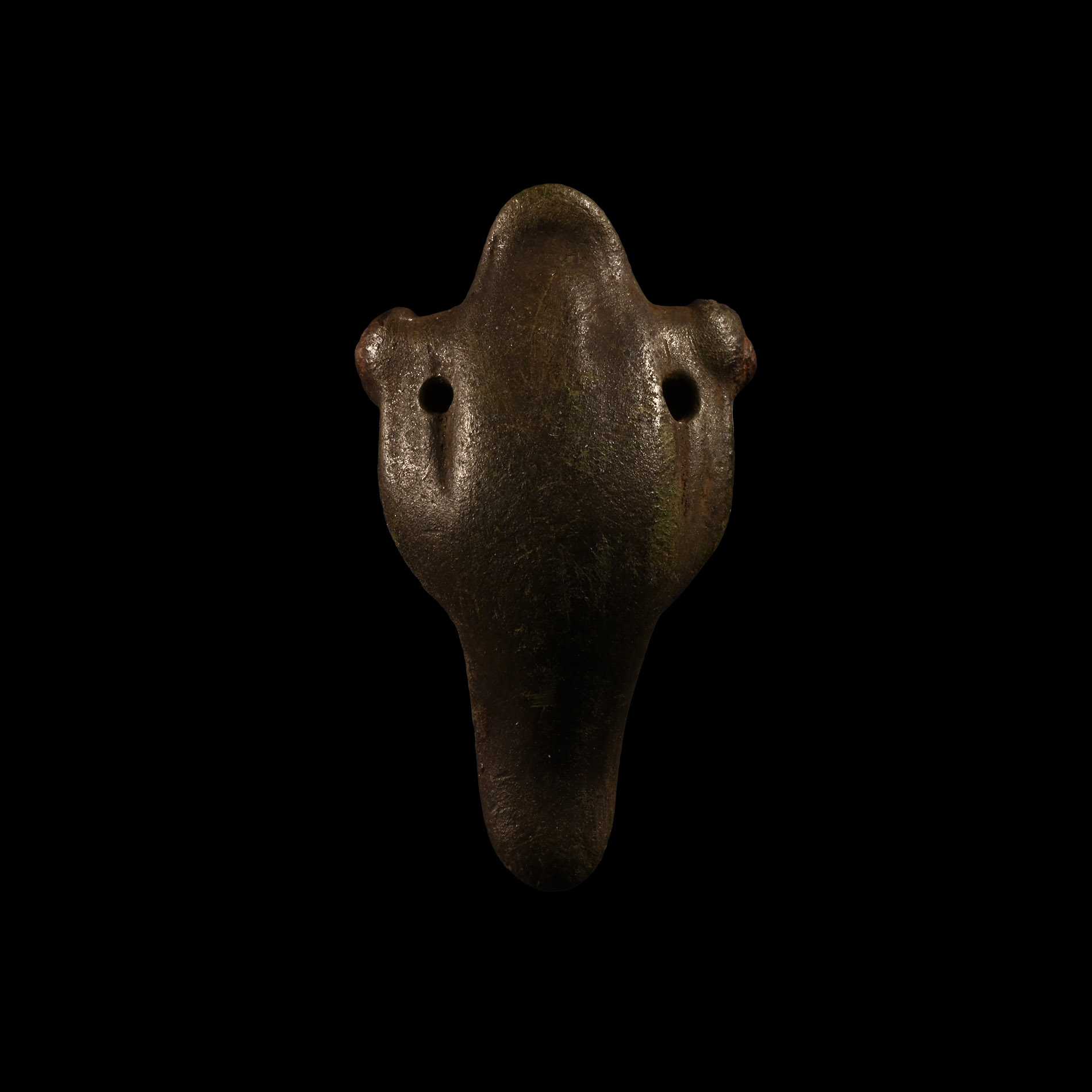
Pre-Viking Bronze Proto Boar's Head Brooch
7TH-8TH CENTURY A.D.
1 3/4 in. (15.4 grams, 46 mm).
Formed as a keeled sub-triangular plaque, convex in profile with bulbs on the flanks extending to a short rounded projection; integral catchplate to reverse and remains of ferrous pin. [No Reserve]
ProvenanceAcquired early 2000s.
East Anglia, UK, collection.
Cf. MacGregor, A. et al., A Summary Catalogue of the Continental Archaeological Collections, Oxford, 1997, item 3.5.
FootnotesThis form of brooch developed from Scandinavian Iron Age forms of bow brooch with crossbar, bow and footplate; it later evolved into the standard form of boar-head brooch.
CONDITIONTimeLine Auctions follows a vetting process to ensure the authenticity and legality of all items, reinforcing our commitment to integrity and responsible trading. Each antiquity, antique, and coin lot undergoes thorough examination by a vetting committee of at least ten external specialists, professional trade association members, scientists, and archaeologists: Our Vetting Process
AUCTIONS:
TimeLine is a leading auction house specialising in antiquities, ancient art, collectables, natural history, coins, medals, and books. Our auctions offer museums, collectors, historians, and enthusiasts the opportunity to acquire unique and historically significant pieces.
-
.jpg)
Viking Age Silver Earring with Bead
9th-11th century A.D.Sold for (Inc. bp): £111
The carinated silver hoop with one flattened and pierced terminal and one coiled; free-running gold-in-glass bead. 0.97 grams, 17 mm
Private collection formed in Europe in the 1980s. Westminster collection, central London, UK. -
.jpg)
Viking Period Silver Lunar Pendant
Circa 10th century A.D.Sold for (Inc. bp): £156
A silver crescent pendant with applied rim, recurved suspension loop with granule, three applied granules and curved band to the field; Slavic workmanship. 3.94 grams, 26 mm
Acquired in the late 1990s-2000. Property of an East London gentleman. -
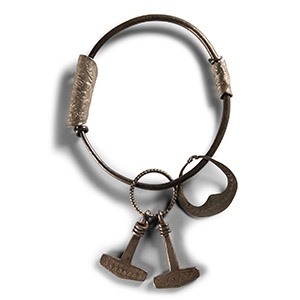
Viking Age Silver Bracelet with Pendants and Amulets
Circa 10th-12th century A.D.Sold for (Inc. bp): £1,300
With sliding closure, amuletic charms comprising two rolled silver dirhem coins, a 'firesteel' pendant, a beaded ring with two miniature Thor's hammers. 24.1 grams total, bracelet 72.52 mm wide
Ex property of a professional collector; acquired before 1990.
