
Loading, please wait...
LOT 2427
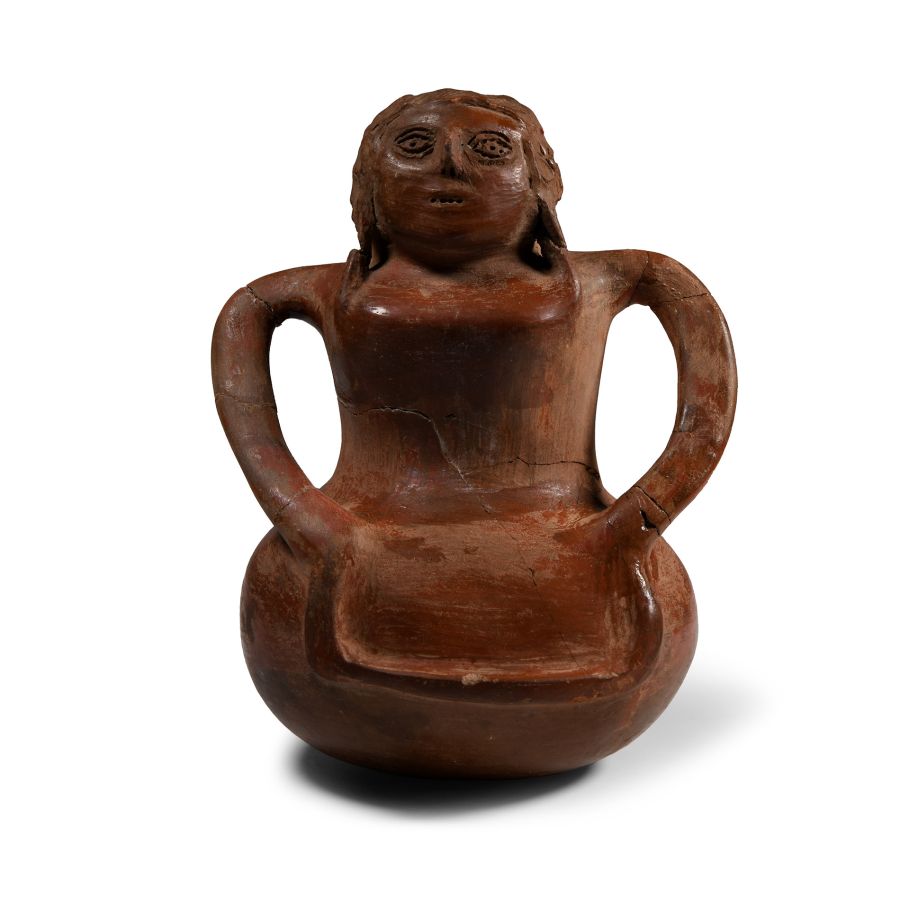
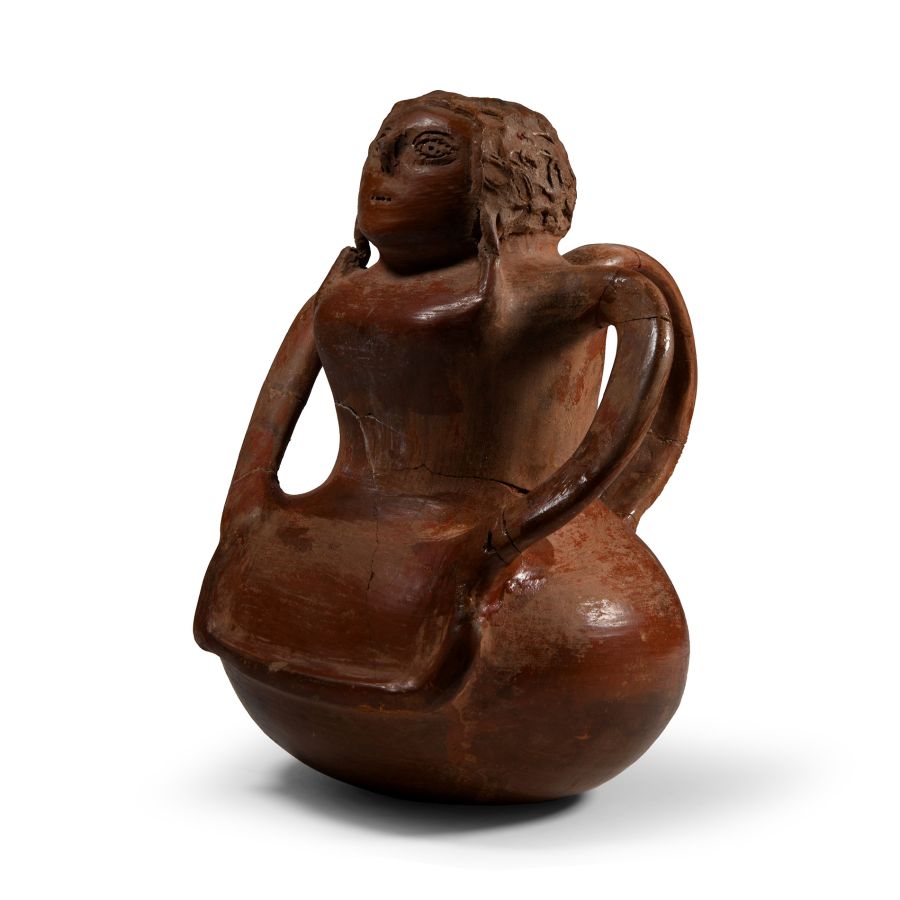
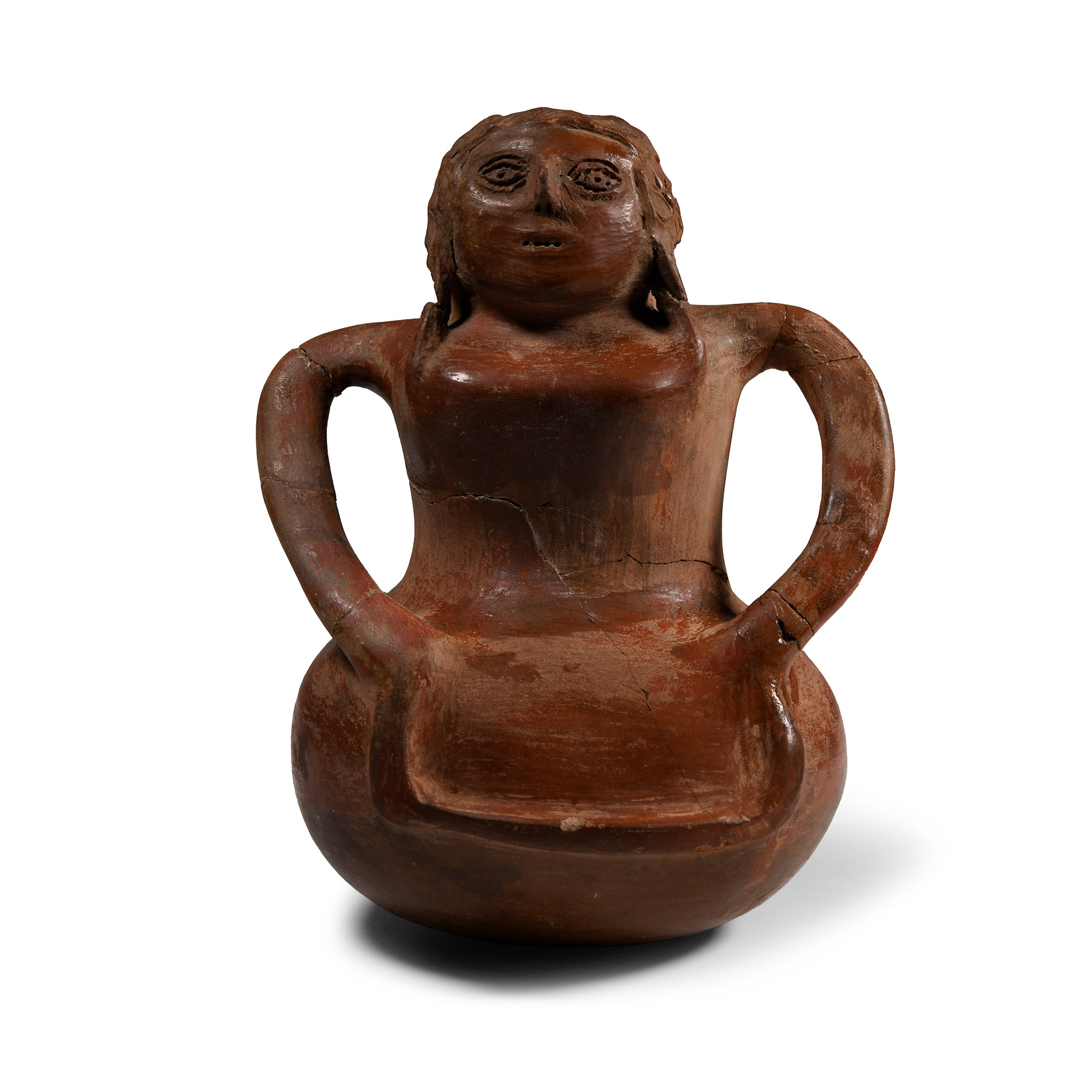
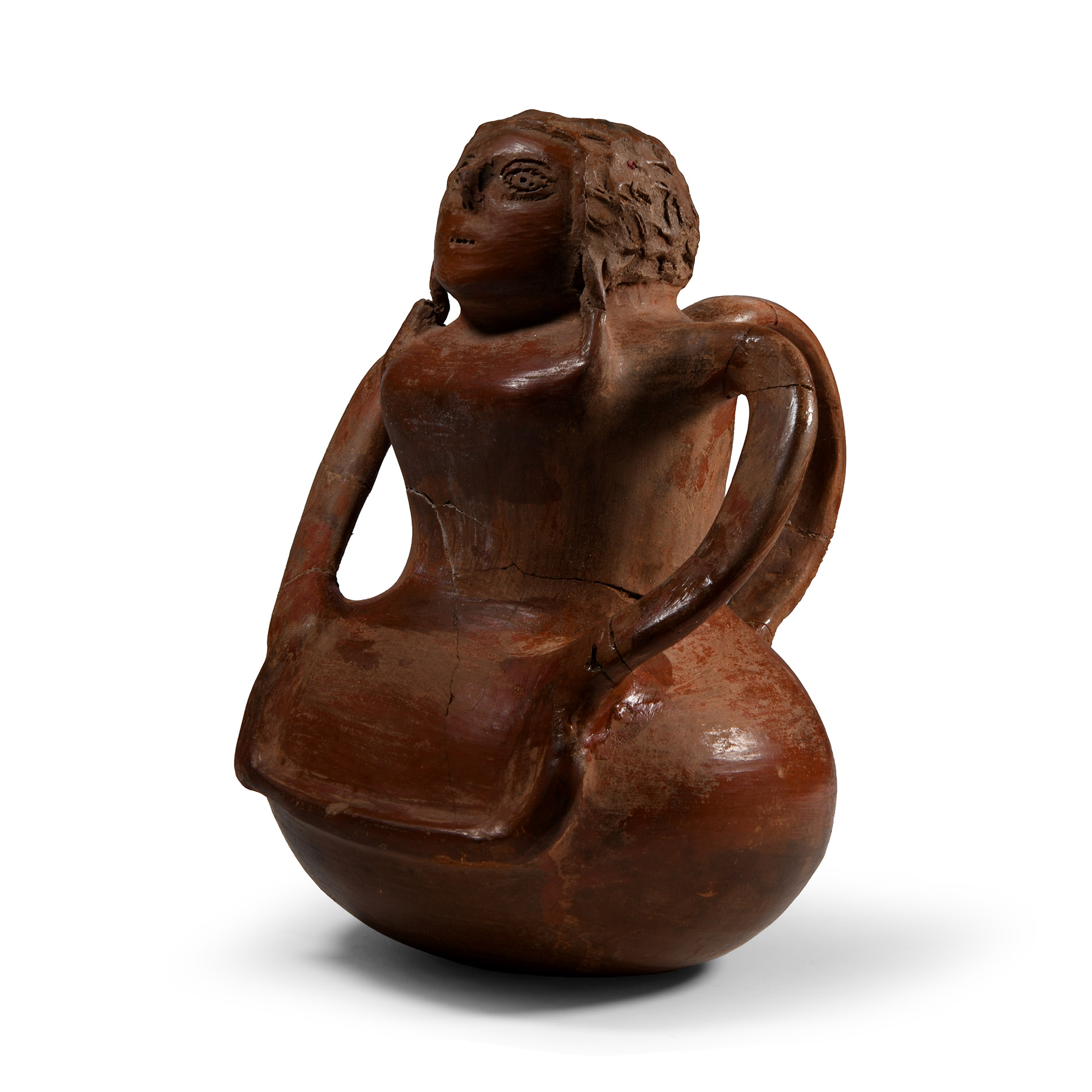
Pre-Columbian Stirrup Pot in Human Form
11TH CENTURY A.D.
7 7/8 in. (877 grams, 20 cm).
Hollow-formed with rounded underside, modelled with bulbous body and head, arms forming lateral loop handles and third to the rear; vent to the top of the head; restored.
ProvenanceAcquired in the 1970s.
Ex Nicolas Cuppy, UK.
Acquired in the 1980s.
Property of a Cambridgeshire gentleman.
TimeLine Auctions follows a vetting process to ensure the authenticity and legality of all items, reinforcing our commitment to integrity and responsible trading. Each antiquity, antique, and coin lot undergoes thorough examination by a vetting committee of at least ten external specialists, professional trade association members, scientists, and archaeologists: Our Vetting Process
AUCTIONS:
TimeLine is a leading auction house specialising in antiquities, ancient art, collectables, natural history, coins, medals, and books. Our auctions offer museums, collectors, historians, and enthusiasts the opportunity to acquire unique and historically significant pieces.
LOT 2427
Pre-Columbian Stirrup Pot in Human Form
Estimate £200 - 300€230 - 350 (for guidance only)$270 - 410 (for guidance only)
-
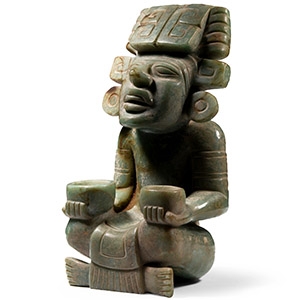
Mesoamerican Aztec Jadeite Seated Figure with Offering Bowls
10th-early 16th century A.D.Sold for (Inc. bp): £10,400
Seated male figure with legs crossed, arms bent, hands placed in an advanced position each offering a cup; bracelets on the upper arms; ceremonial headdress, round lobed earrings, the body covered only by a fringed loincloth, or ehuatl. 5.85 kg, 30 cm
From an Italian collector living in Torino, Canada. Part of her family's collection, 1965. By descent from her grandmother, 1993. Private collection, England. Accompanied by a copy of the Italian cultural export permit. Accompanied by a signed academic report by Emilio J. Bejarano Erosa (Director of the Instituto Nacional de Antropología E Historia, Mexico, 1968-1982). Accompanied by scholarly note TL5340 by Dr Ronald Bonewitz. This lot has been checked against the Interpol Database of stolen works of art and is accompanied by AIAD certificate number no.10287-168435.
The Aztecs' capital city, Tenochtitlan, established in the 14th century, was located on the present-day site of Mexico City. -
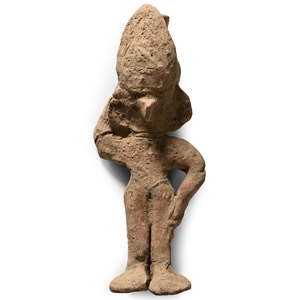
South American Chancay Terracotta Figure with Pitcher
12th-14th century A.D. or laterSold for (Inc. bp): £72
Hand-modelled Chancay(?) figure of a standing female with left hand on her hip and right hand raised to support the pitcher; pinched facial detailing and tall tongue-shaped headdress with lateral flaps; pointillé detailing for the eyes and breasts, incised lines to the collar and groin, exaggerated feet; top of the head supporting a pitcher. 129 grams, 17 cm
Acquired 1980-2015. Ex Abelita family collection. -
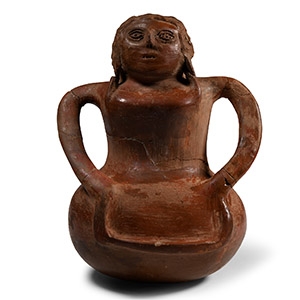
Pre-Columbian Stirrup Pot in Human Form
11th century A.D.Estimate: £200 - 300 (+bp*)
Opening Bid: £100
Hollow-formed with rounded underside, modelled with bulbous body and head, arms forming lateral loop handles and third to the rear; vent to the top of the head; restored. 877 grams, 20 cm
Acquired in the 1970s. Ex Nicolas Cuppy, UK. Acquired in the 1980s. Property of a Cambridgeshire gentleman.
