
Loading, please wait...
LOT 2413
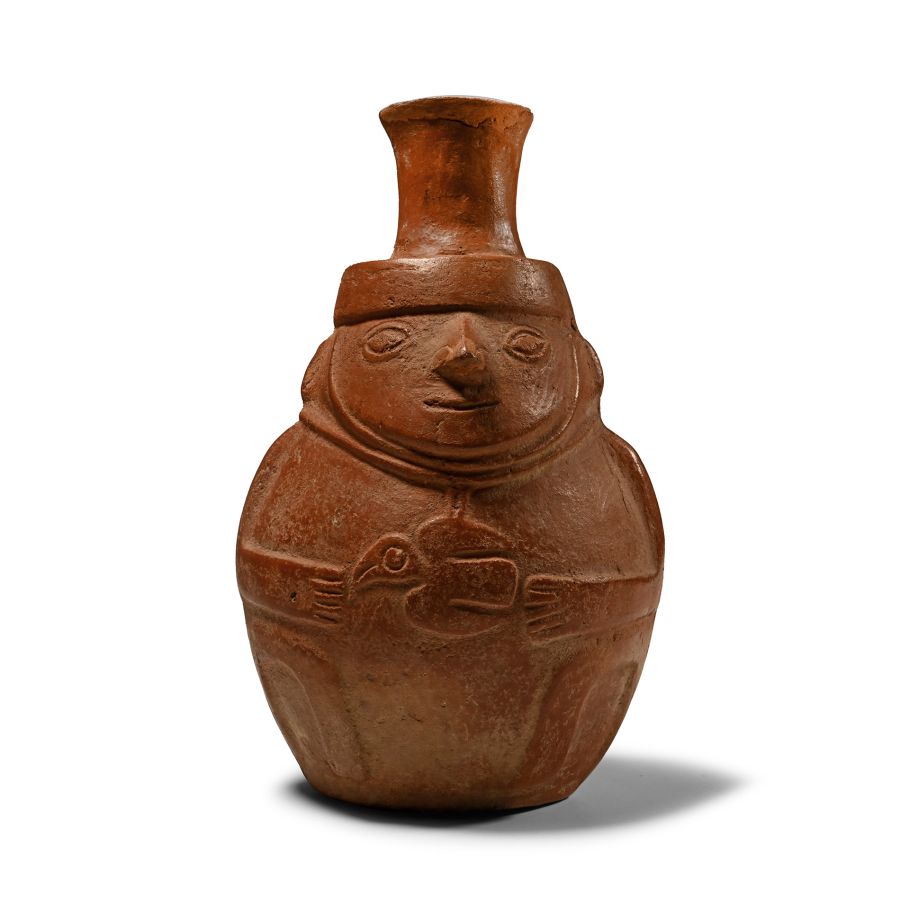
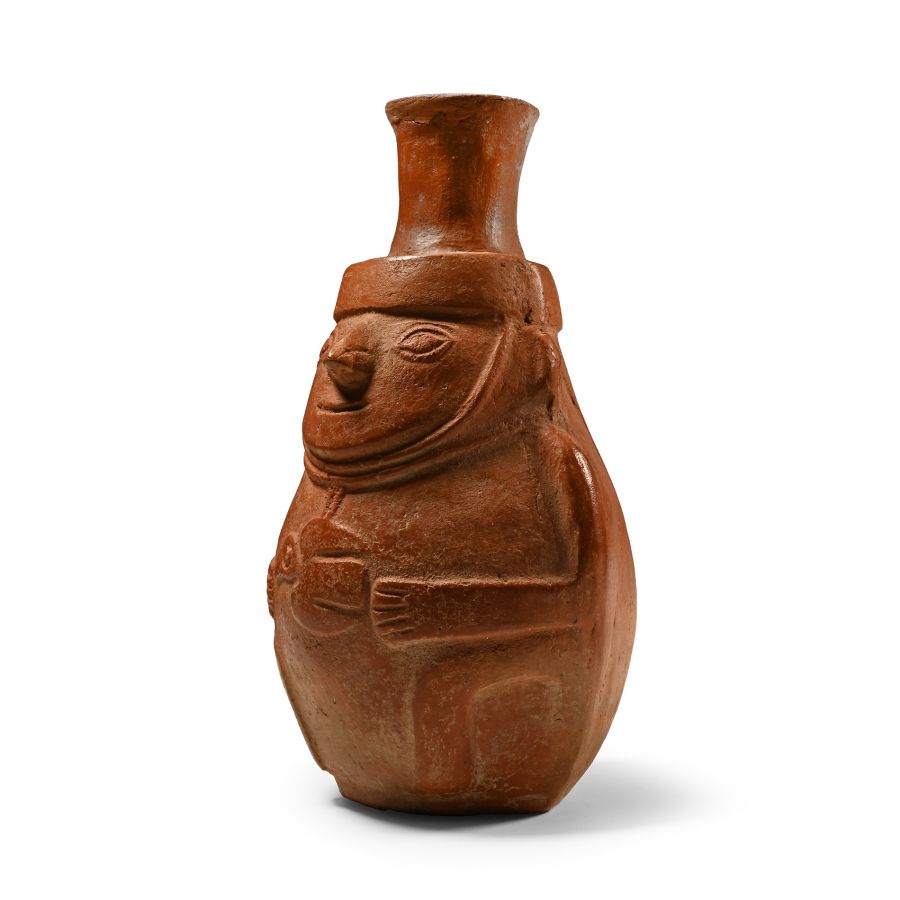
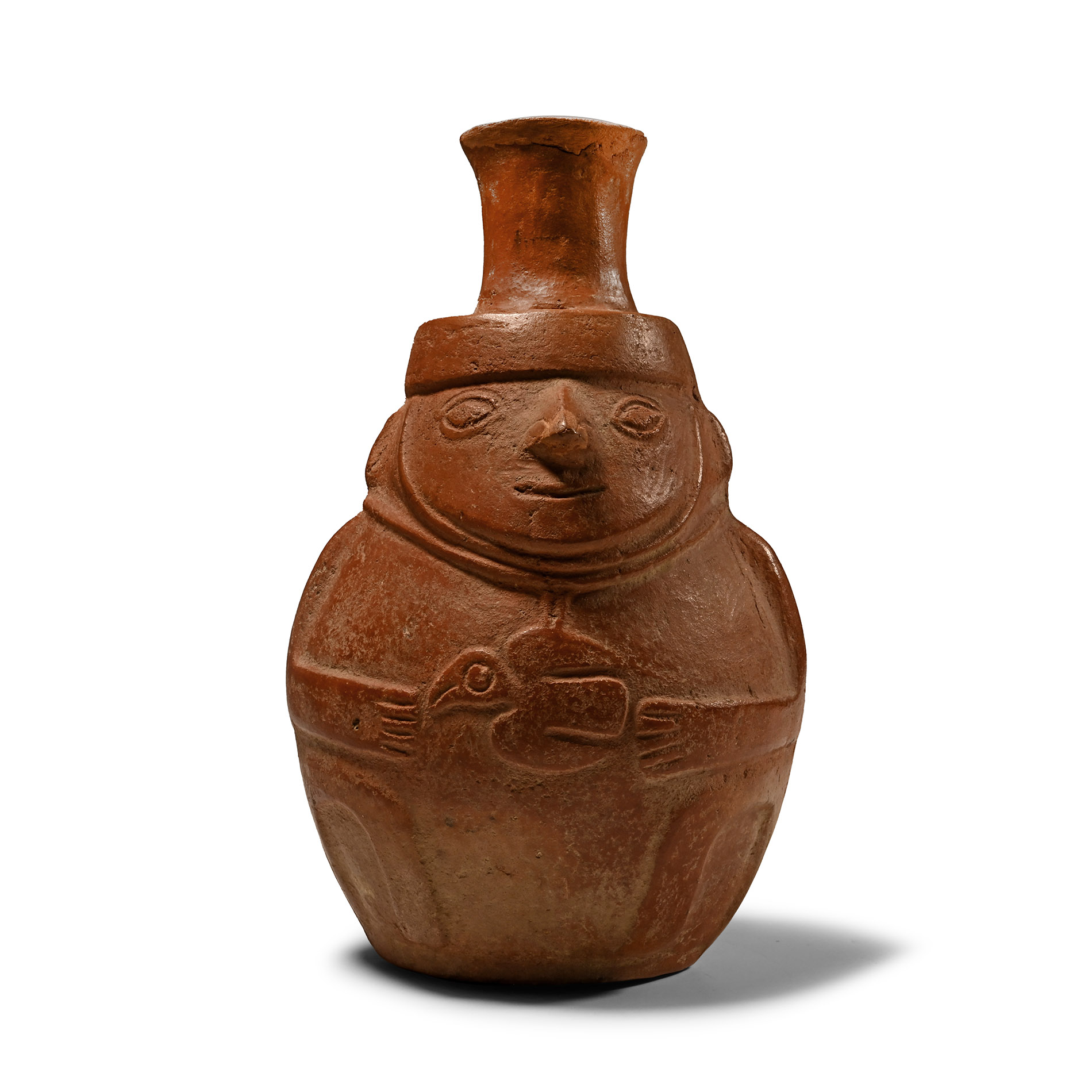
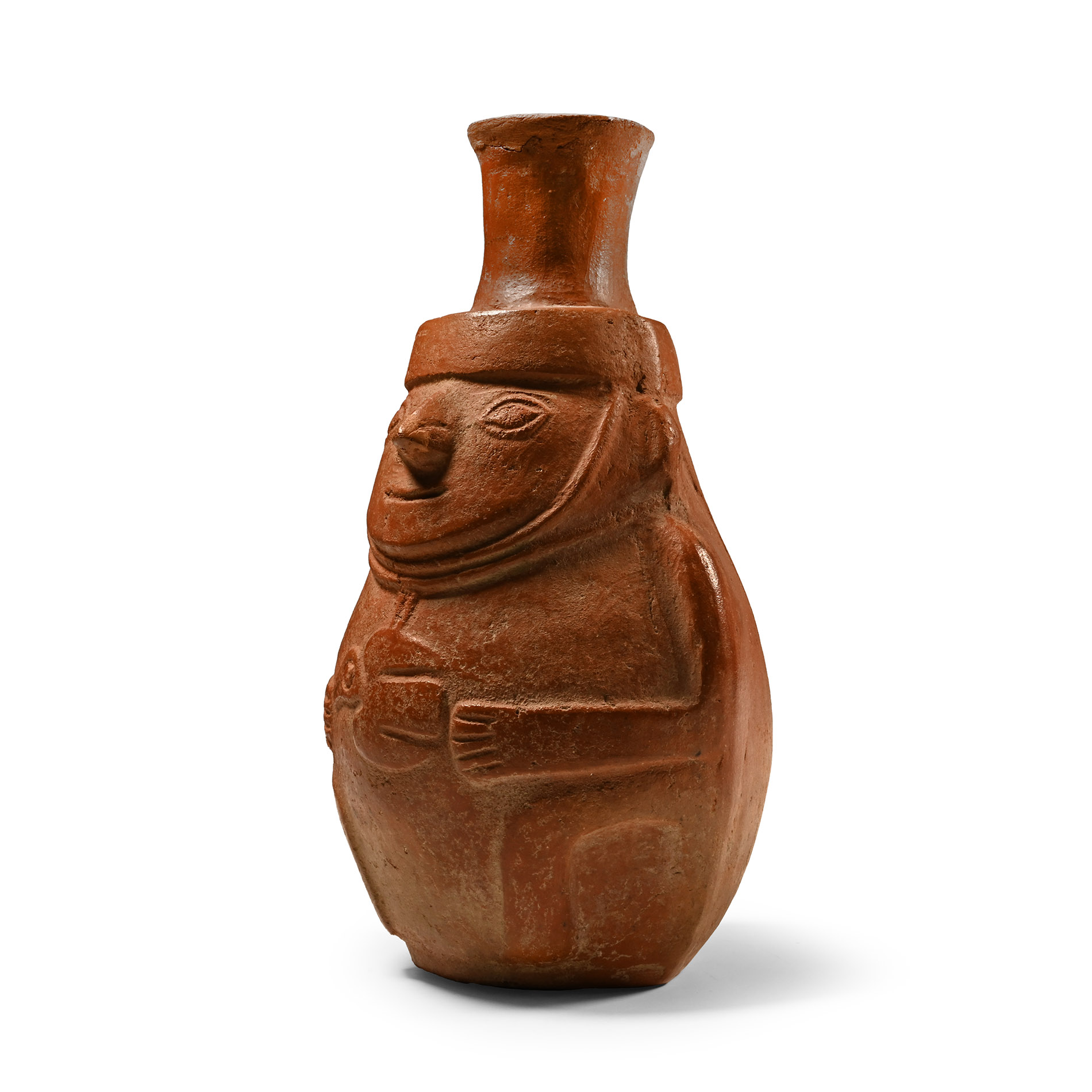
Pre-Columbian Moche Anthropomorphic Vessel
CIRCA 5TH-6TH CENTURY A.D.
8 in. (550 grams, 20.2 cm high).
Hollow-formed bulbous vessel with burnished finish, seated or crouching male figure with bent legs and arms across his waist, straps to the chin securing a flat-topped cap with rectangular flap to the rear decorated with a ropework saltire; the face with aquiline nose, lentoid eyes and small curved mouth; between the hands, a small bird with discoid eye and wings partly extended; funicular spout to the top; marked 'OTX' to the underside. [No Reserve]
ProvenanceFrom the collection of a Norfolk, UK, gentleman, 1990s.
FootnotesExamples of birds are relatively common across the spectrum of Moche pottery as are other animals depicting battle or hunting scenes.
CONDITIONTimeLine Auctions follows a vetting process to ensure the authenticity and legality of all items, reinforcing our commitment to integrity and responsible trading. Each antiquity, antique, and coin lot undergoes thorough examination by a vetting committee of at least ten external specialists, professional trade association members, scientists, and archaeologists: Our Vetting Process
AUCTIONS:
TimeLine is a leading auction house specialising in antiquities, ancient art, collectables, natural history, coins, medals, and books. Our auctions offer museums, collectors, historians, and enthusiasts the opportunity to acquire unique and historically significant pieces.
-
.jpg)
Pre-Columbian Mexican Michoacan Standing Figure
300-100 B.C.Sold for (Inc. bp): £364
Modelled in the half-round as a nude female, wearing arm bangles and an ornamental collar; accompanied by a custom-made display stand. 527 grams total, 23 cm high including stand
Ex Alan Cherry, Bournemouth, UK. Acquired in the 1990s. From a Norfolk, UK, private collection.
This is a large example of the figurines of ancient Michoacan. These sculptures were made in abundance during the pre classic period and were likely crafted for personal use as votive figures. As with this example, these sculptures are renowned for showing details of necklaces and other adornment of the period. -
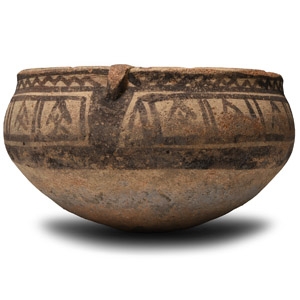
Pre-Columbian Chancay Decorated Bowl
9th-14th century A.D.Sold for (Inc. bp): £117
Squat with rounded underside and slightly everted rim, opposed lugs to the rim, band of painted crosshatching beneath the rim and rectangles with arrowheads beneath. 186 grams, 12.1 cm
Acquired in the 1970s. Ex Nicolas Cuppy, UK. Acquired in the 1980s. Property of a Cambridgeshire gentleman. -
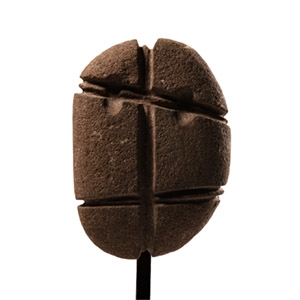
Pre-Columbian Grooved Stone Ritual Object
Circa 3rd millennium B.C. or laterSold for (Inc. bp): £221
Ellipsoid plaque with deeply incised vertical and horizontal grooves, mounted on a custom-made stand. 1.10 kg total, 25.2 cm high including stand
From a collection acquired on the UK art market from various auction houses and collections mostly before 2000. From an important Cambridgeshire estate; thence by descent.
This work, abstract in appearance with deep grooves cutting across what appears to be a face is most aligned with the arts of ancient Guerrero or specifically the Mezcala. In the late pre classic an array of stone carved figures and masks were produced often with minimal adornment and a clear preference for simple lines and forms.
