
Loading, please wait...
LOT 2411
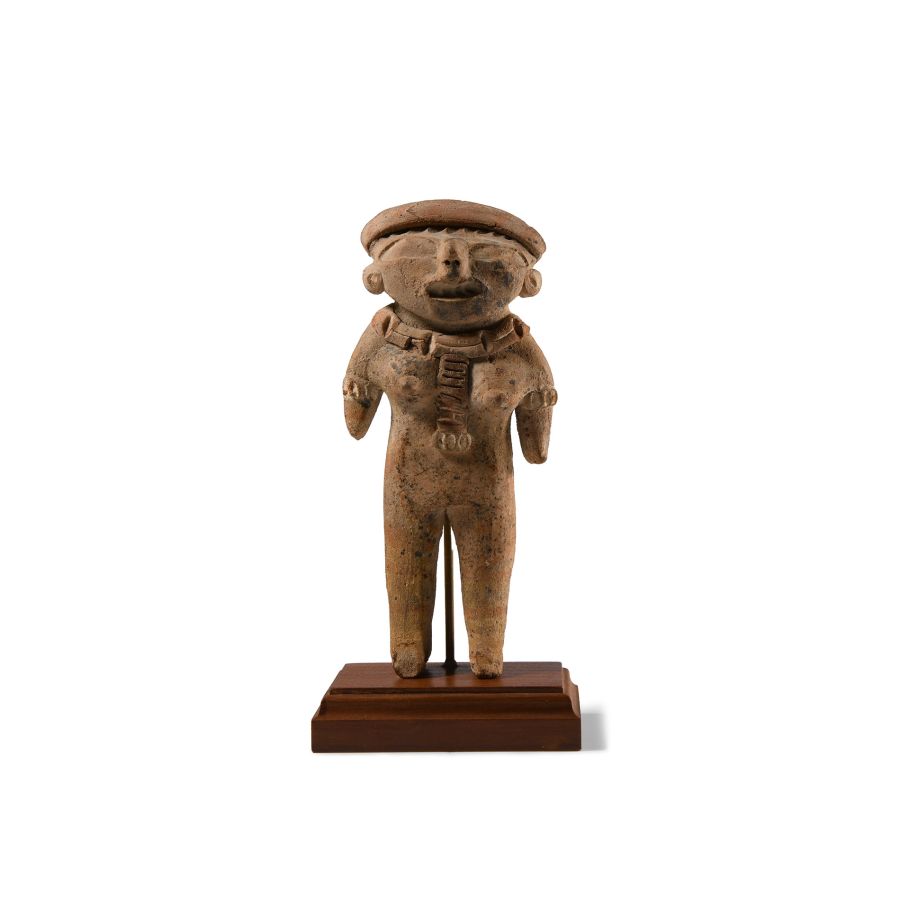
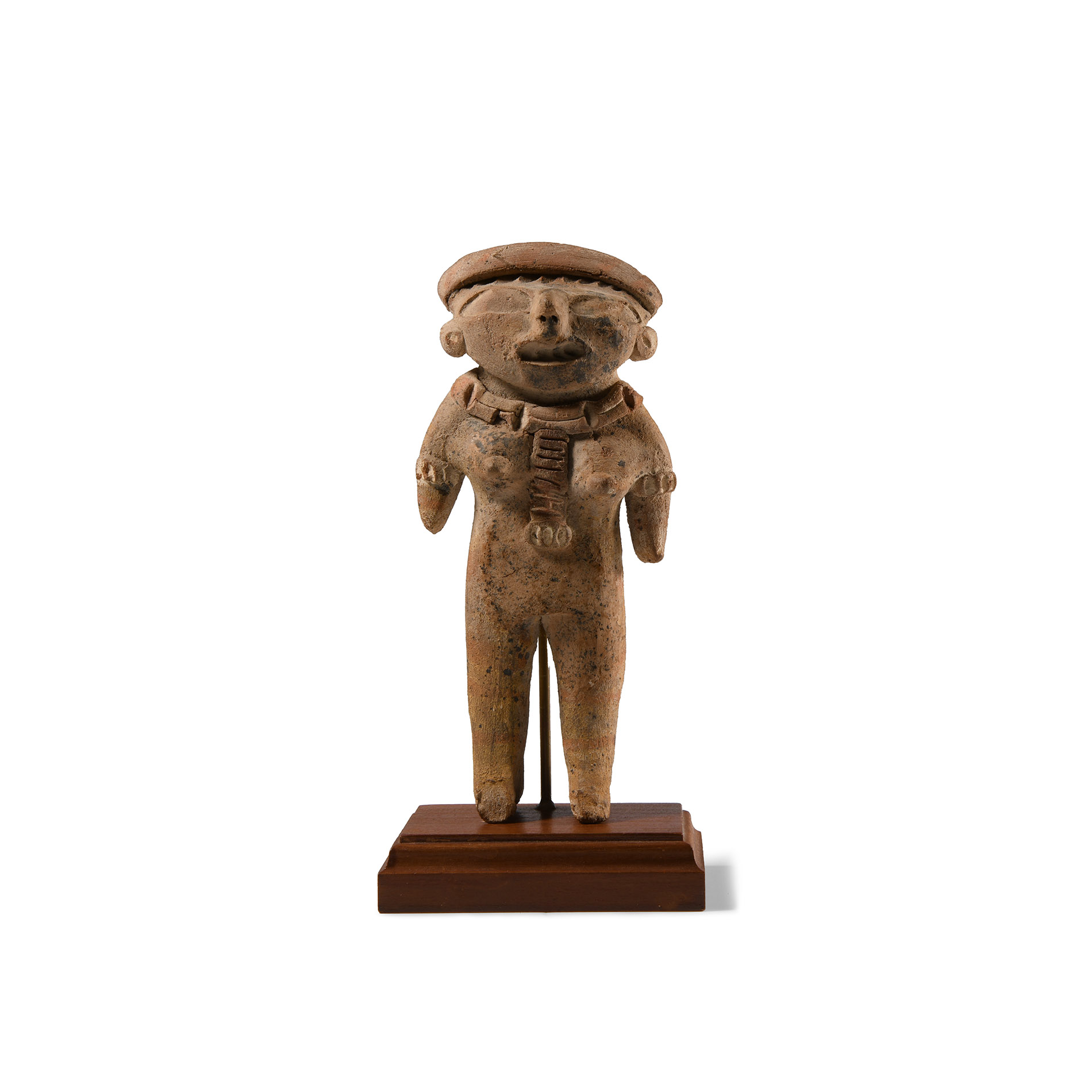
Pre-Columbian Mexican Michoacan Standing Figure
300-100 B.C.
9 in. (527 grams total, 23 cm high including stand).
Modelled in the half-round as a nude female, wearing arm bangles and an ornamental collar; accompanied by a custom-made display stand.
ProvenanceEx Alan Cherry, Bournemouth, UK.
Acquired in the 1990s.
From a Norfolk, UK, private collection.
Cf. The Metropolitan Museum, accession number 1979.206.1067, for a comparable figure; see Taube, K., The Albers Collection of Pre Columbian Art, Hudson Hills Press, New York, 1988, pp. 54-55, for a range of similar examples.
FootnotesThis is a large example of the figurines of ancient Michoacan. These sculptures were made in abundance during the pre classic period and were likely crafted for personal use as votive figures. As with this example, these sculptures are renowned for showing details of necklaces and other adornment of the period.
CONDITIONTimeLine Auctions follows a vetting process to ensure the authenticity and legality of all items, reinforcing our commitment to integrity and responsible trading. Each antiquity, antique, and coin lot undergoes thorough examination by a vetting committee of at least ten external specialists, professional trade association members, scientists, and archaeologists: Our Vetting Process
AUCTIONS:
TimeLine is a leading auction house specialising in antiquities, ancient art, collectables, natural history, coins, medals, and books. Our auctions offer museums, collectors, historians, and enthusiasts the opportunity to acquire unique and historically significant pieces.
-
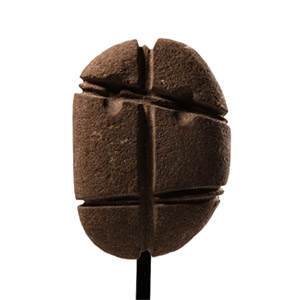
Pre-Columbian Grooved Stone Ritual Object
Circa 3rd millennium B.C. or laterSold for (Inc. bp): £221
Ellipsoid plaque with deeply incised vertical and horizontal grooves, mounted on a custom-made stand. 1.10 kg total, 25.2 cm high including stand
From a collection acquired on the UK art market from various auction houses and collections mostly before 2000. From an important Cambridgeshire estate; thence by descent.
This work, abstract in appearance with deep grooves cutting across what appears to be a face is most aligned with the arts of ancient Guerrero or specifically the Mezcala. In the late pre classic an array of stone carved figures and masks were produced often with minimal adornment and a clear preference for simple lines and forms. -
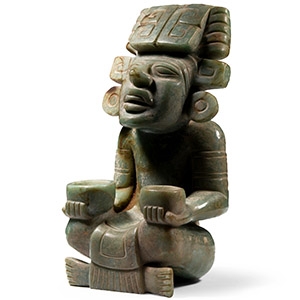
Mesoamerican Aztec Jadeite Seated Figure with Offering Bowls
10th-early 16th century A.D.Sold for (Inc. bp): £10,400
Seated male figure with legs crossed, arms bent, hands placed in an advanced position each offering a cup; bracelets on the upper arms; ceremonial headdress, round lobed earrings, the body covered only by a fringed loincloth, or ehuatl. 5.85 kg, 30 cm
From an Italian collector living in Torino, Canada. Part of her family's collection, 1965. By descent from her grandmother, 1993. Private collection, England. Accompanied by a copy of the Italian cultural export permit. Accompanied by a signed academic report by Emilio J. Bejarano Erosa (Director of the Instituto Nacional de Antropología E Historia, Mexico, 1968-1982). Accompanied by scholarly note TL5340 by Dr Ronald Bonewitz. This lot has been checked against the Interpol Database of stolen works of art and is accompanied by AIAD certificate number no.10287-168435.
The Aztecs' capital city, Tenochtitlan, established in the 14th century, was located on the present-day site of Mexico City. -

Pre-Columbian Nazca Terracotta Bowl With Arrow Design
4th-6th century A.D. or earlierSold for (Inc. bp): £247
'Bell-shaped' bowl with rounded base, the exterior decorated with a polychrome geometric scheme including arrows, circumferential bands and quartered panels. 263 grams, 15 cm
Private U.K. family collection formed in the early 1970s. The property of Mr and Mrs P.R. of East Sussex. Thence by descent to family members.
