
Loading, please wait...
LOT 2122
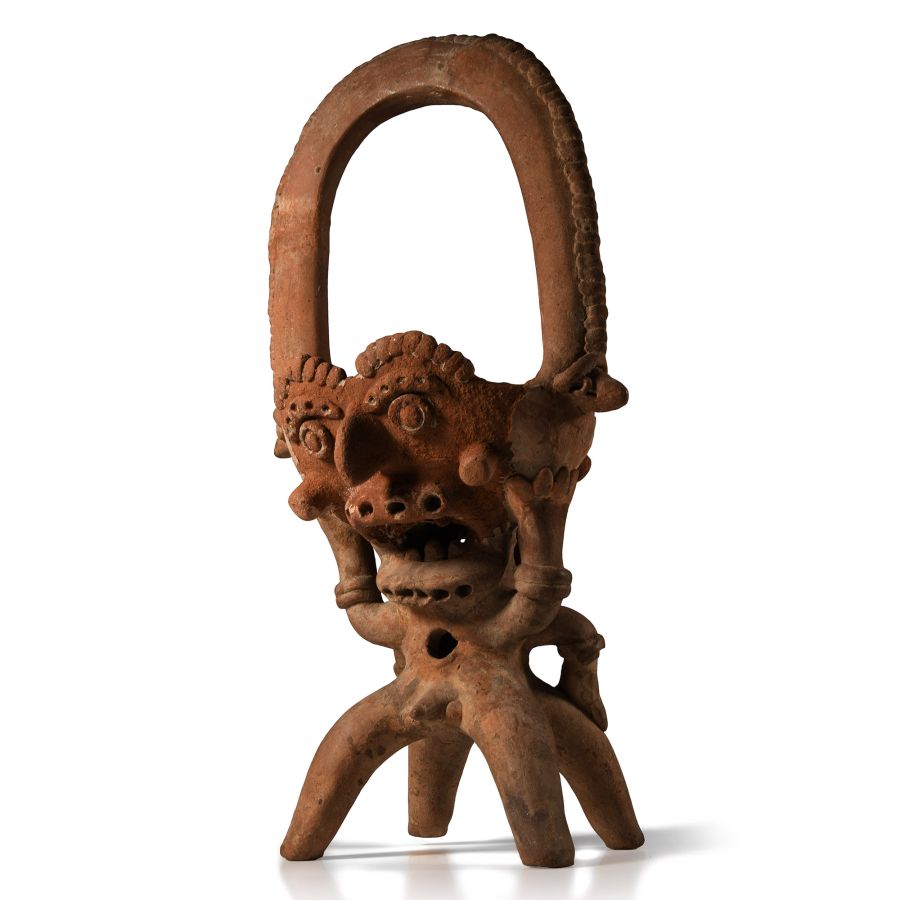
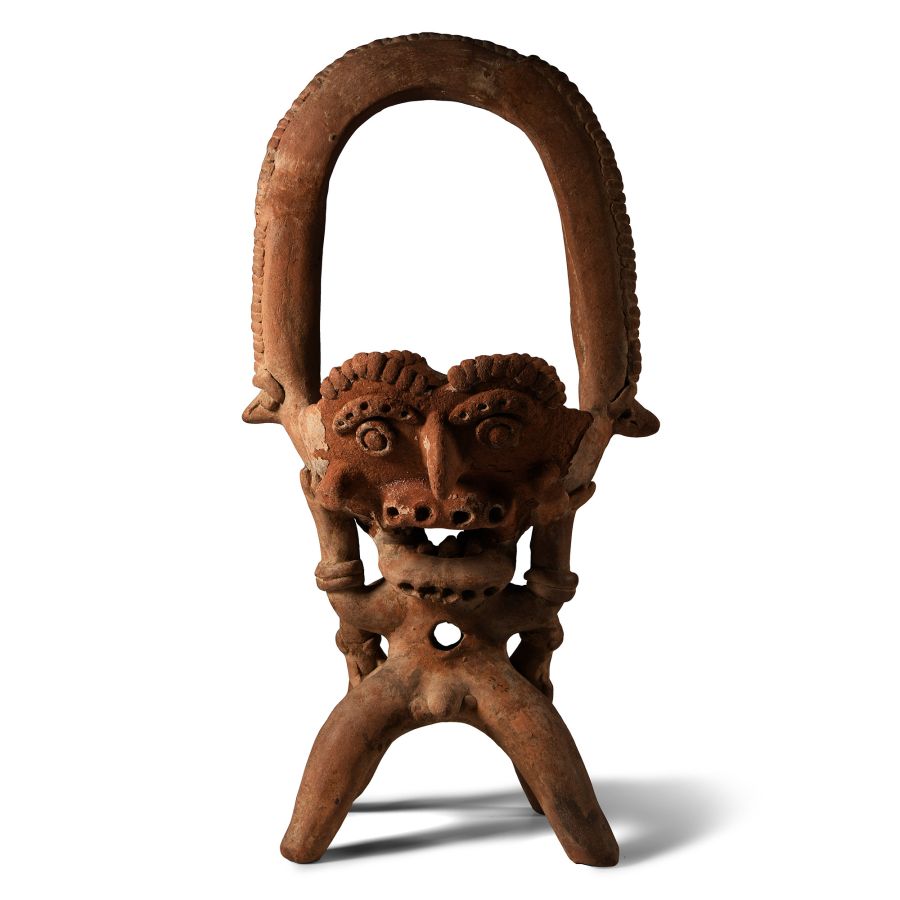
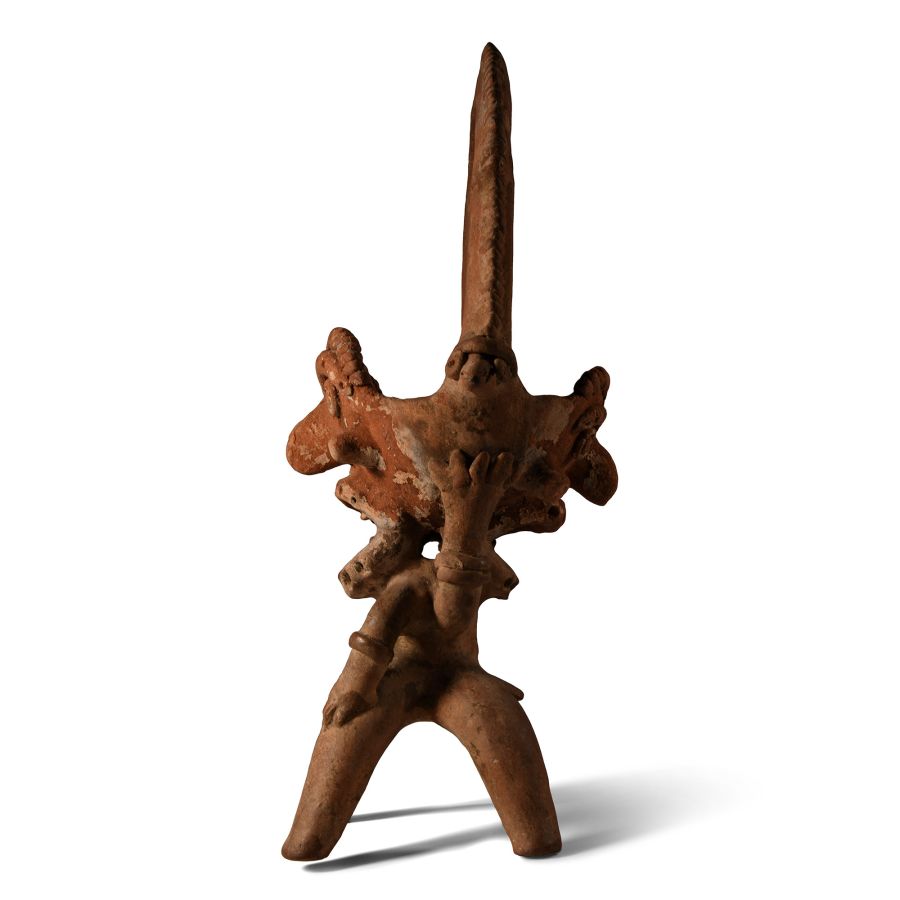
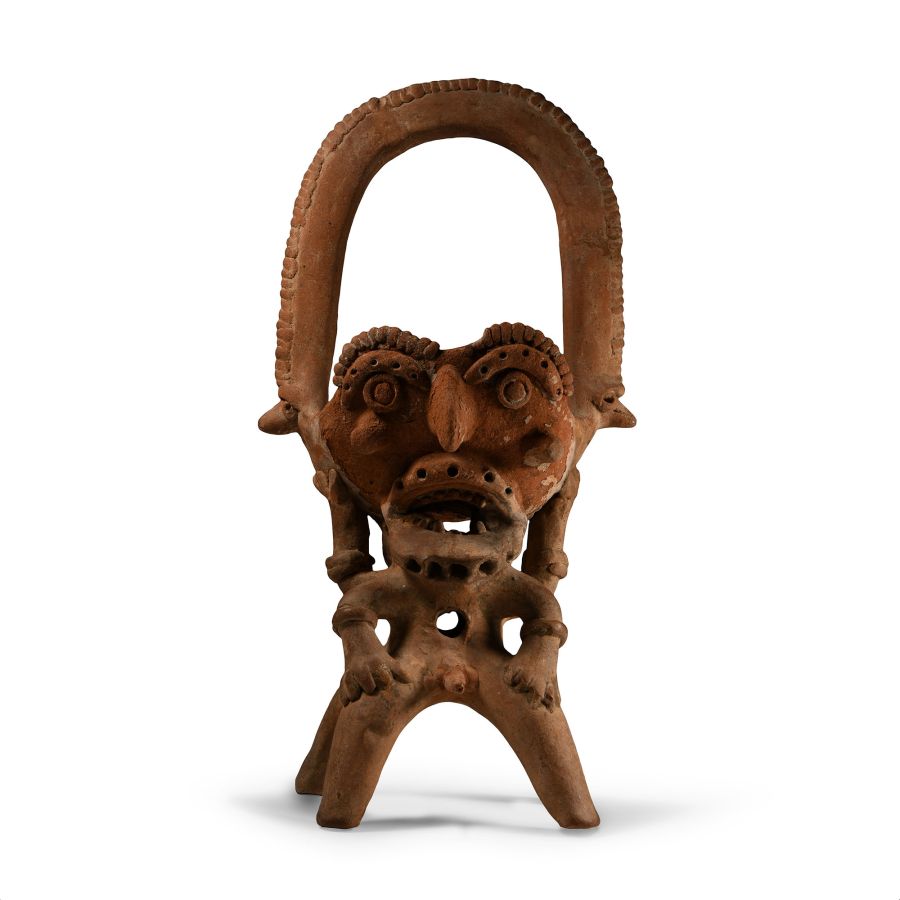
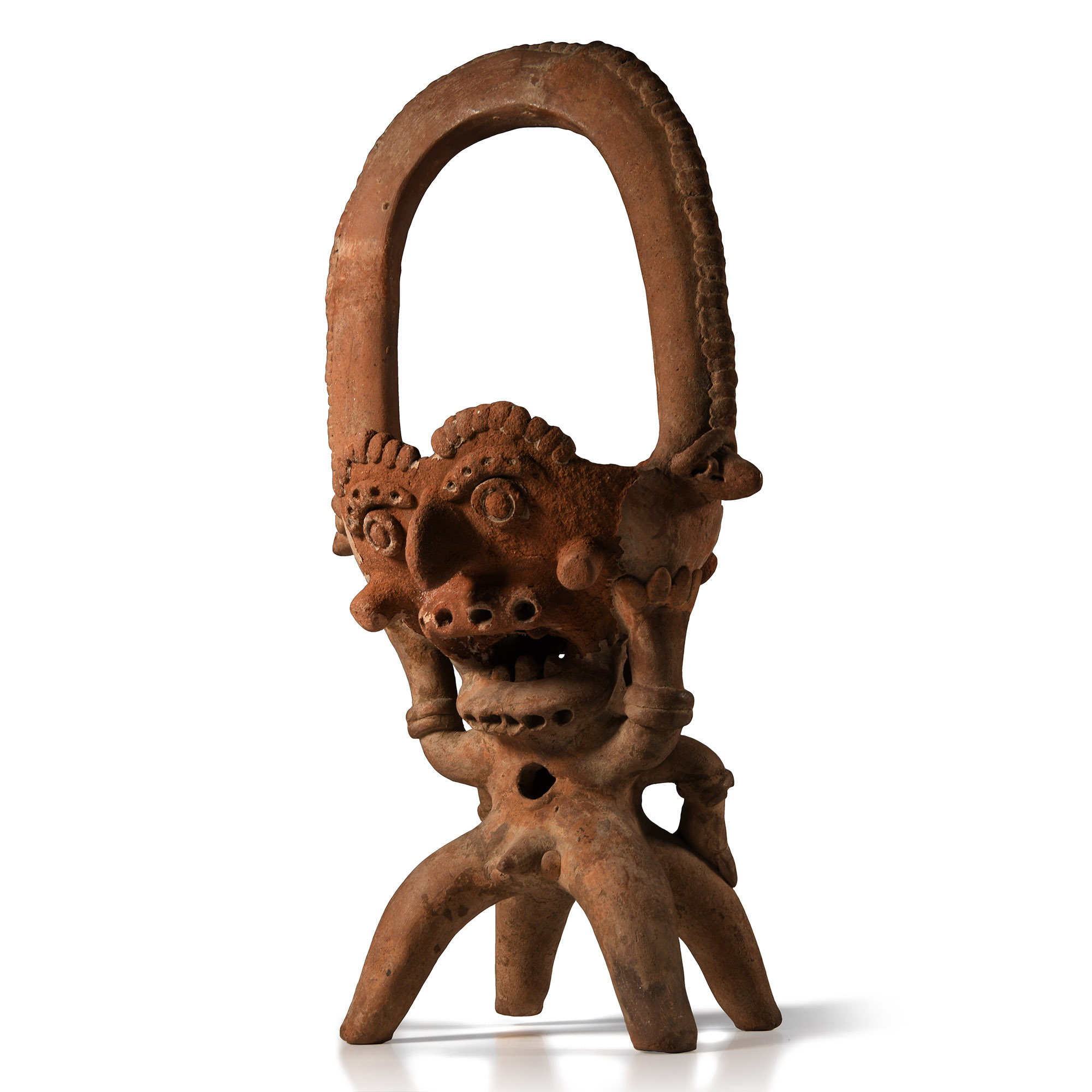
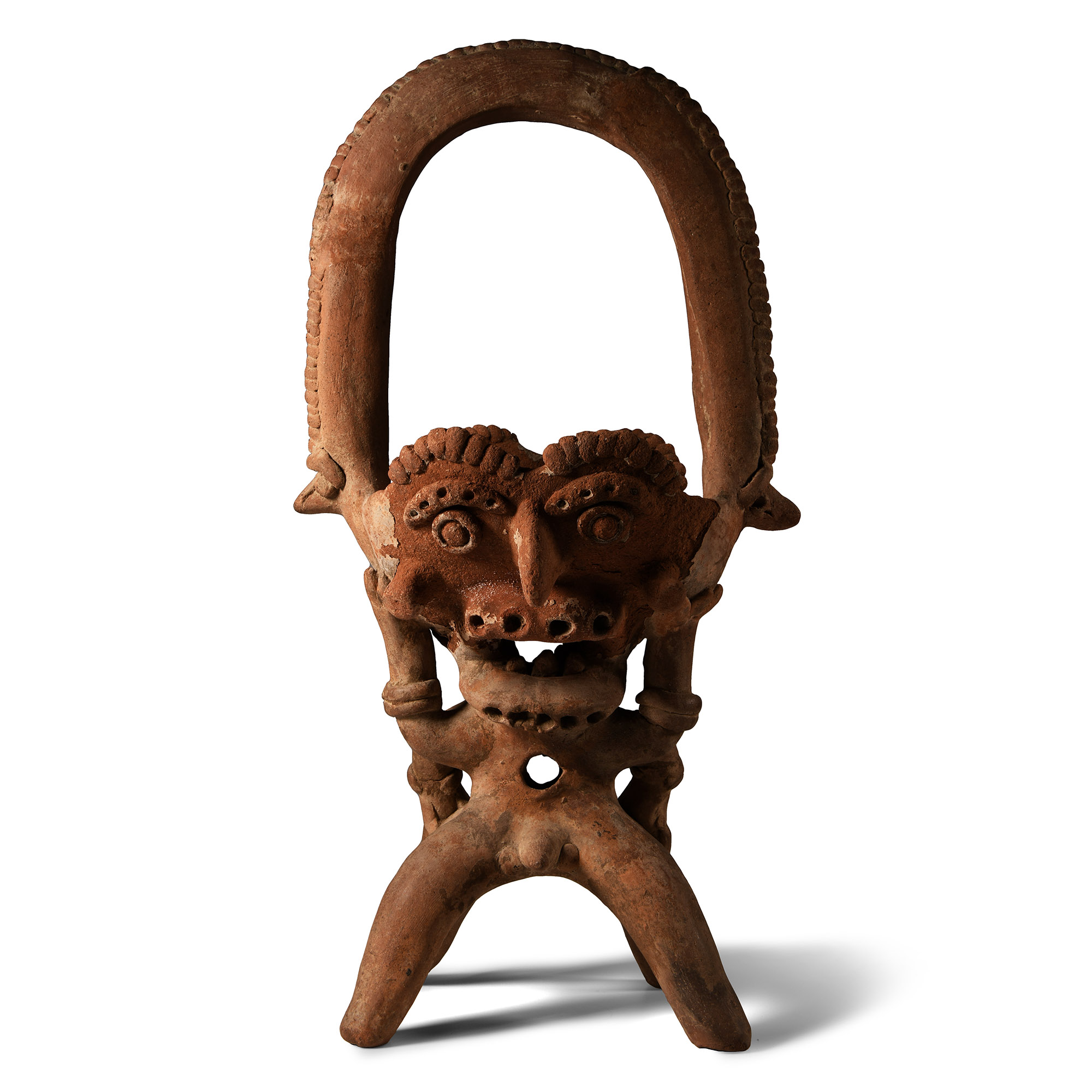
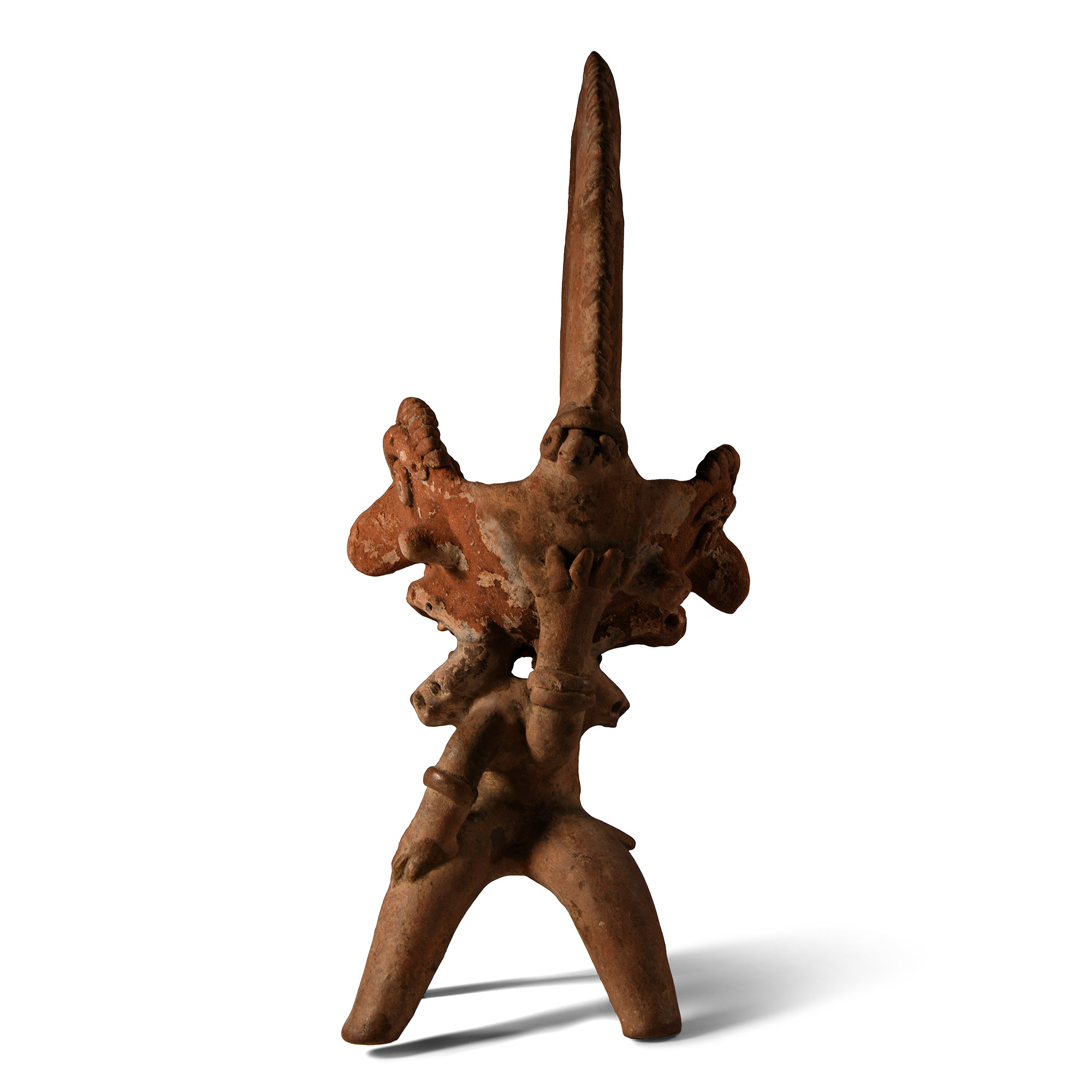
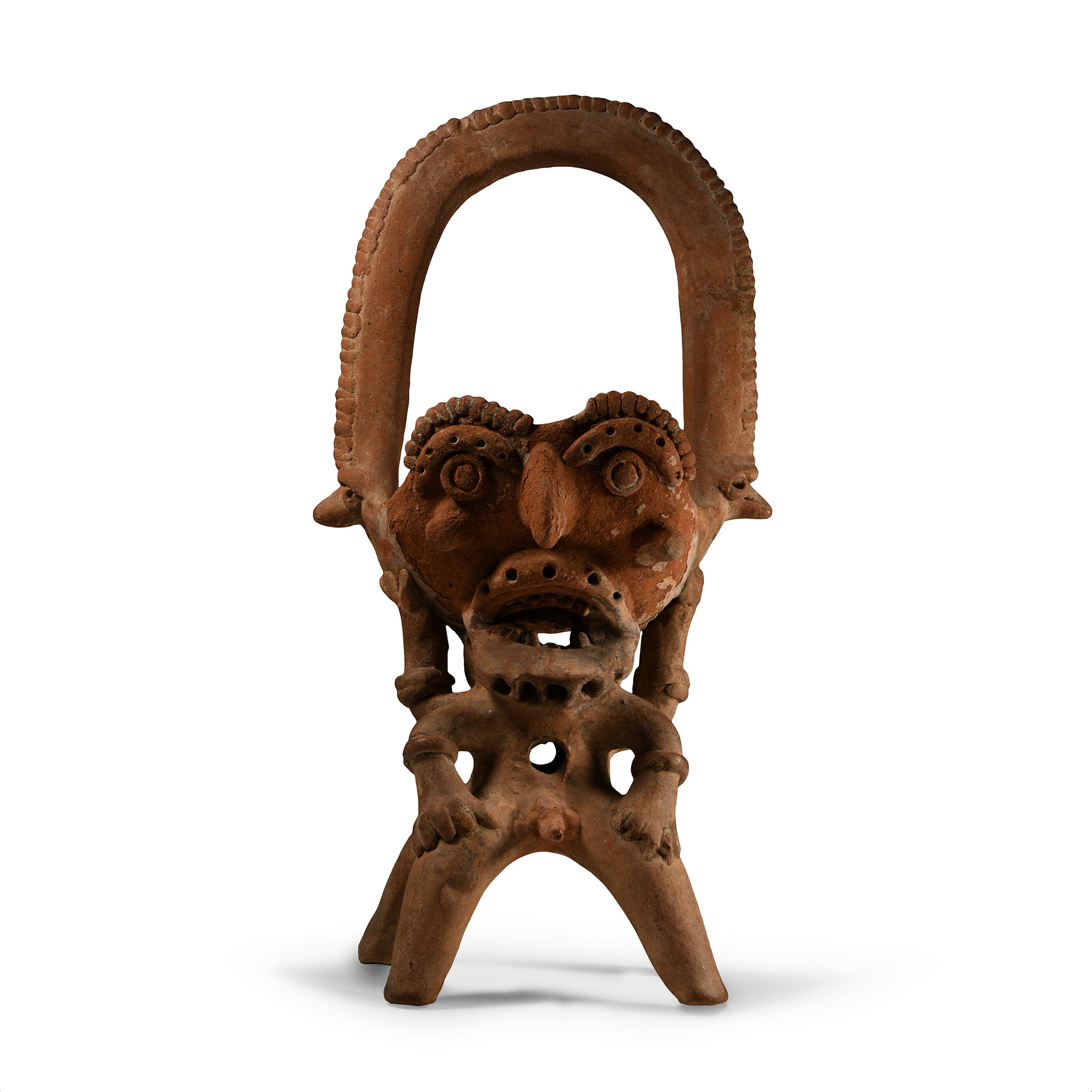
Pre-Columbian Colima Double-Headed Effigy Incense Burner
CIRCA 300 B.C.-300 A.D.
15 1/2 in. (2.37 kg, 39.5 cm).
Terracotta bifacial burner, the bowl formed as a human mask to each broad face with applied grotesque detailing and notched rim; central column below, voided and developing to a pair of straddling legs with male genitals; arched horse-shoe handle above with applied pellets to the outer edge.
ProvenanceAcquired Bonhams, Knightsbridge, London, UK.
Ex London, UK, gallery.
Accompanied by a thermoluminescence analysis report no.C124d53 from Oxford Authentication.
This lot has been checked against the Interpol Database of stolen works of art and is accompanied by a search certificate number no.12158-217338.
See Parsons, L., Pre Columbian Art, The Morton D May and The Saint Louis Art Museum Collections, Harper and Row, New York, 1980, p.90.
FootnotesThese janiform sculptures form an unusual subset of the Colima corpus and are believed to represent the rain god Tlaloc with the handle represented as snakes. This present example is notable for its size with some remaining original pigment remaining. These sculptures are thought to represent rain, earth and fertility.
CONDITIONTimeLine Auctions follows a vetting process to ensure the authenticity and legality of all items, reinforcing our commitment to integrity and responsible trading. Each antiquity, antique, and coin lot undergoes thorough examination by a vetting committee of at least ten external specialists, professional trade association members, scientists, and archaeologists: Our Vetting Process
AUCTIONS:
TimeLine is a leading auction house specialising in antiquities, ancient art, collectables, natural history, coins, medals, and books. Our auctions offer museums, collectors, historians, and enthusiasts the opportunity to acquire unique and historically significant pieces.
LOT 2122
Pre-Columbian Colima Double-Headed Effigy Incense Burner
Sold for (Inc. bp): £2,340
-
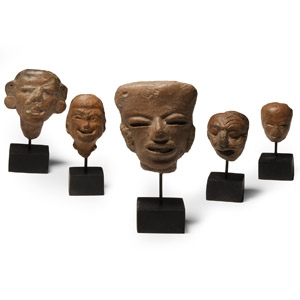
Prehispanic Teotihuacan Terracotta Head Collection
2nd-7th century A.D.Sold for (Inc. bp): £260
Including D-shaped plaque type, rounded type with slit facial features, grotesque lined type and others; each mounted on a custom-made display stand. 208 grams total, 58-92 mm including stand
From the private collection of Zelia Nuttall (1857-1933), American archaeologist and anthropologist; thence by descent to her granddaughter, Christine Mary Frederica Bulmer nee Laughton (1912-2000), via Zelia's daughter Nadine Nuttall Laughton (1882-1967). From the collection of Christine's niece, the late Gillian Bulmer (1935-20-21), Herefordshire, UK. Property of a Gloucestershire, UK, gentleman collector. Accompanied by a copy of a detailed signed statement of provenance. -
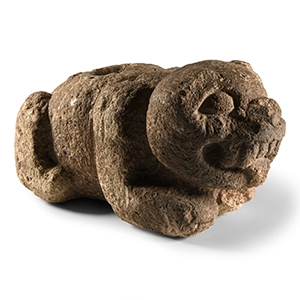
Pre-Columbian Mayan Carved Stone Panther Statue
Circa 550-900 A.D.Sold for (Inc. bp): £468
In crouching pose with teeth bared and tail laid along the spine, recess to the upper face; old collector's tag 'Copan / Honduras / ex Waldinga / CARR'. 2.07 kg, 22 cm
Ex Fishman private collection, USA. From a collection acquired on the UK art market from various auction houses and collections mostly before 2000. From an important Cambridgeshire estate; thence by descent. -
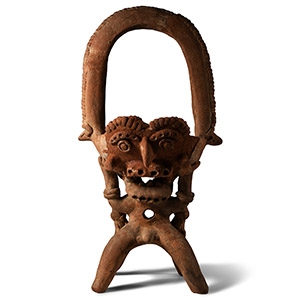
Pre-Columbian Colima Double-Headed Effigy Incense Burner
Circa 300 B.C.-300 A.D.Sold for (Inc. bp): £2,340
Terracotta bifacial burner, the bowl formed as a human mask to each broad face with applied grotesque detailing and notched rim; central column below, voided and developing to a pair of straddling legs with male genitals; arched horse-shoe handle above with applied pellets to the outer edge. 2.37 kg, 39.5 cm
Acquired Bonhams, Knightsbridge, London, UK. Ex London, UK, gallery. Accompanied by a thermoluminescence analysis report no.C124d53 from Oxford Authentication. This lot has been checked against the Interpol Database of stolen works of art and is accompanied by a search certificate number no.12158-217338.
These janiform sculptures form an unusual subset of the Colima corpus and are believed to represent the rain god Tlaloc with the handle represented as snakes. This present example is notable for its size with some remaining original pigment remaining. These sculptures are thought to represent rain, earth and fertility.
