
Loading, please wait...
LOT 2249
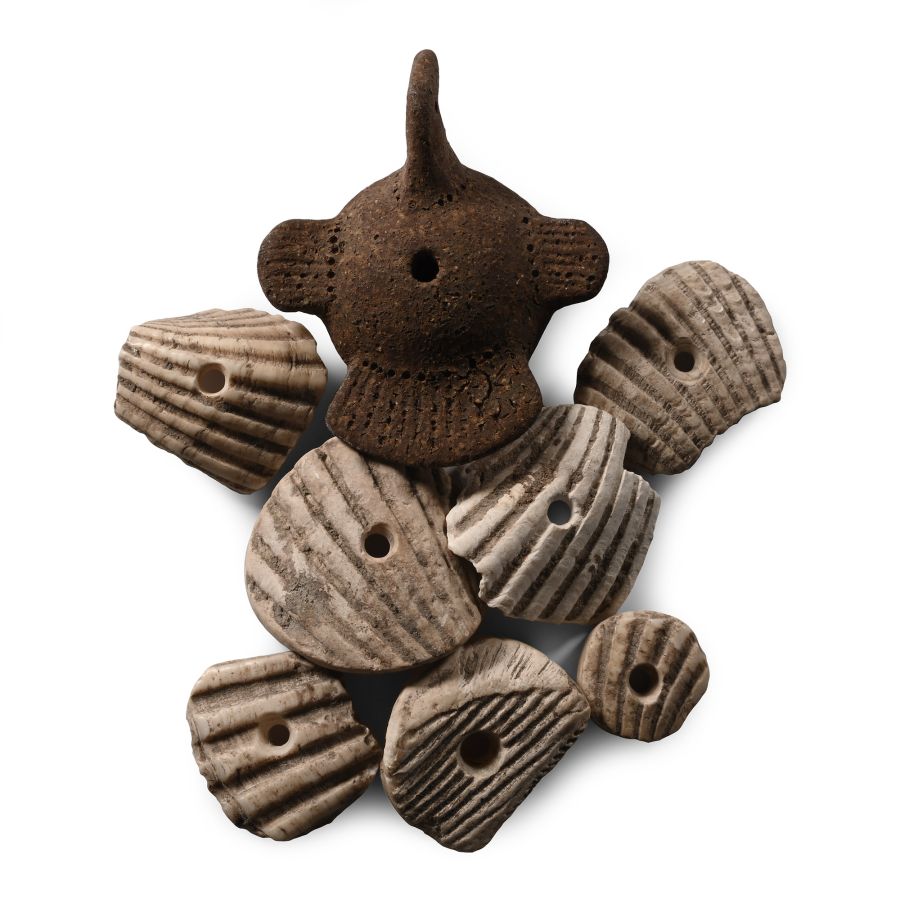
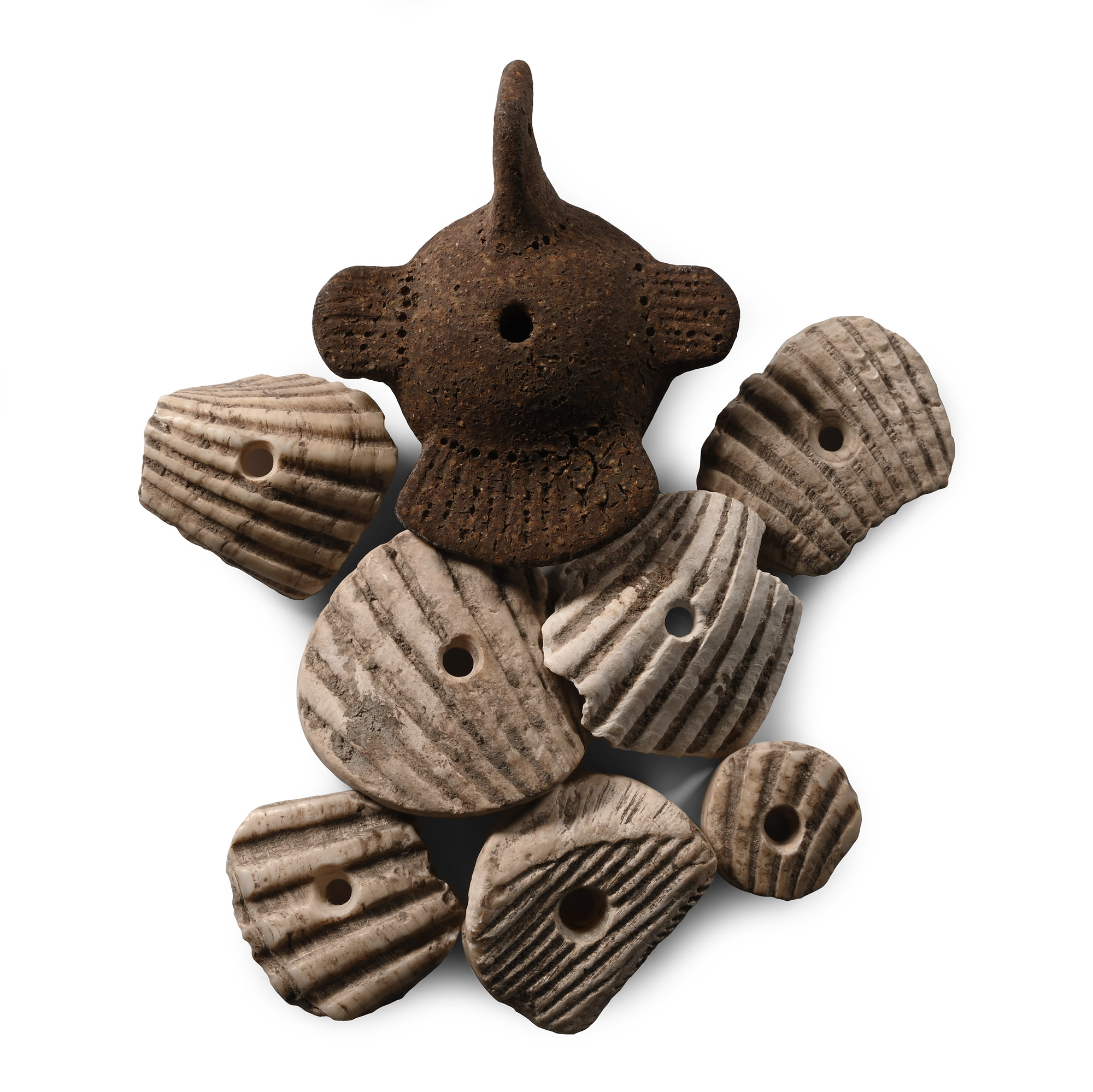
Pre Columbian Ceramic Bird Rattle and Shell Pendant Group
EARLY 20TH CENTURY A.D.
3/4 - 2 1/2 in. (90 grams total, 21-64 mm).
Including scallop shell fragments, a ceramic aviform rattle, and other items. [8, No Reserve]
ProvenanceAcquired from older English collections via the UK art market since the mid 1970s.
From the private collection of Peran Dachinger, thence by descent.
From the family collection of a Maida Vale lady, UK.
This lot is accompanied by an illustrated lot declaration signed by the Head of the Antiquities Department, Dr Raffaele D'Amato.
TimeLine Auctions follows a vetting process to ensure the authenticity and legality of all items, reinforcing our commitment to integrity and responsible trading. Each antiquity, antique, and coin lot undergoes thorough examination by a vetting committee of at least ten external specialists, professional trade association members, scientists, and archaeologists: Our Vetting Process
AUCTIONS:
TimeLine is a leading auction house specialising in antiquities, ancient art, collectables, natural history, coins, medals, and books. Our auctions offer museums, collectors, historians, and enthusiasts the opportunity to acquire unique and historically significant pieces.
LOT 2249
Pre Columbian Ceramic Bird Rattle and Shell Pendant Group
Sold for (Inc. bp): £7
-
.jpg)
Pre Columbian Black Ware Stirrup Jar
Chimu Culture, 12th-15th century A.D.Sold for (Inc. bp): £156
A grey-black burnished ceramic bottle formed as four conjoined gourds and arched stirrup neck; kneeling figure holding spout. 679 grams, 23 cm
From a family collection mostly formed in the 1940s-1950s, thence by descent. This lot is accompanied by an illustrated lot declaration signed by the Head of the Antiquities Department, Dr Raffaele D'Amato. -
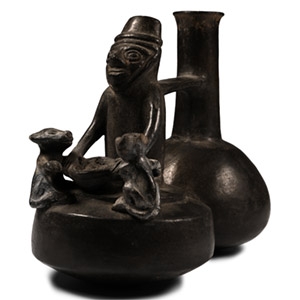
Peruvian Lambayque Painted Pottery Stirrup Jar with Figures
750-1400 A.D.Sold for (Inc. bp): £1,170
Comprising a hollow plano-convex bulb and tall tubular neck with flared rim, connected at base to a drum-shaped hollow chamber with figural scene modelled in the round of a crouching male placing a bowl before two lemurs(?) each with a bear-shaped heads and erect posture; supporting strap to rear of shoulders of the man. 491 grams, 15.5 cm
Franziska Gassner (1907–2005), Ingelheim am Rhein, Germany, assembled between 1945 and 1980. This lot is accompanied by an illustrated lot declaration signed by the Head of the Antiquities Department, Dr Raffaele D'Amato. -
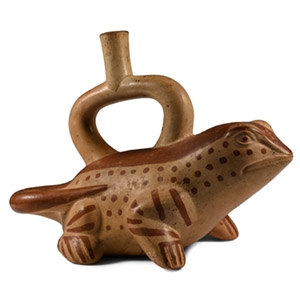
Moche Painted Ceramic Lizard Stirrup Jar
3rd-4th century A.D.Sold for (Inc. bp): £1,820
Stirrup jar formed as an advancing lizard with tail recurved along the body, painted stripe and dot detailing. 570 grams, 23.3 cm
Franziska Gassner (1907-2005), Ingelheim am Rhein, Germany, assembled between 1945 and 1980. This lot has been checked against the Interpol Database of stolen works of art and is accompanied by a search certificate number no.12583-232146. This lot has been cleared against the Art Loss Register database, and is accompanied by an illustrated lot declaration signed by the Head of the Antiquities Department, Dr Raffaele D'Amato.
In the Moche ceramics, lizards and iguanas are sometimes represented anthropomorphized. They are symbols of regeneration since they shed their skin. Some lizards, like our terracotta, have pointed faces with long, thin tails that curve downward.
