
Loading, please wait...
LOT 1849
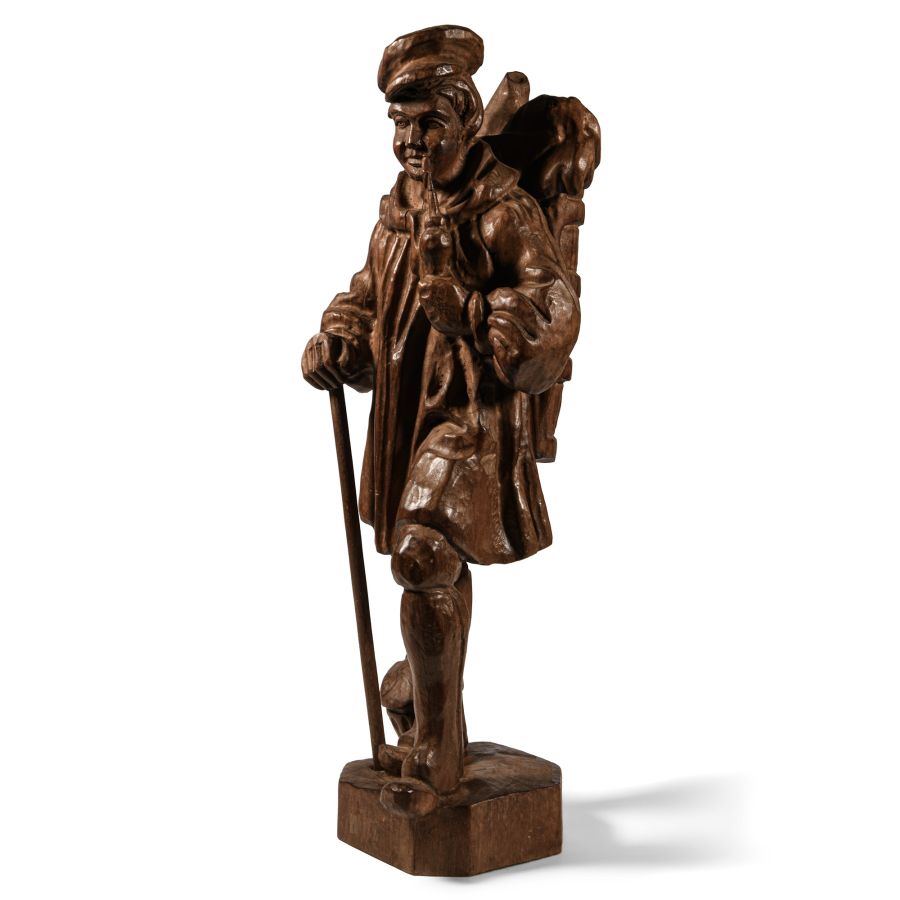
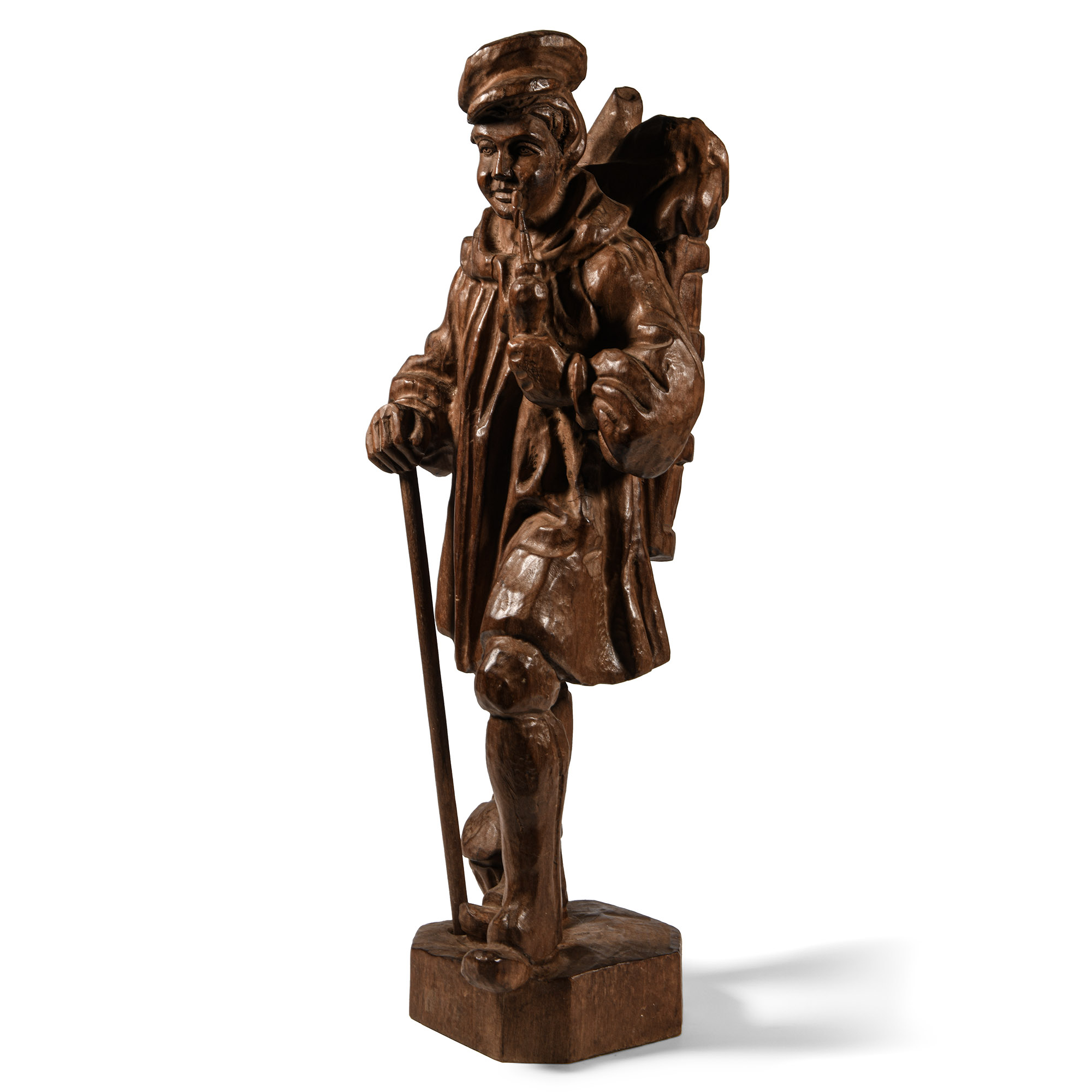
Post Medieval Wooden Carving of a Walking Gentleman
CIRCA 19TH CENTURY A.D.
18 1/2 in. (1.76 kg, 47 cm high).
Dressed in a peaked cap, smock, ankle-length trousers and clogs, standing holding a churchwarden smoking pipe to his mouth with his left hand and with his right hand leaning on a stout walking stick; coopered pannier to his back with contents partly protruding at the top, small basket beside his right foot, octagonal base with recess to the underside; probable Dutch workmanship. [No Reserve]
ProvenanceFrom a collection acquired on the UK art market from various auction houses and collections mostly before 2000.
From an important Cambridgeshire estate; thence by descent.
TimeLine Auctions follows a vetting process to ensure the authenticity and legality of all items, reinforcing our commitment to integrity and responsible trading. Each antiquity, antique, and coin lot undergoes thorough examination by a vetting committee of at least ten external specialists, professional trade association members, scientists, and archaeologists: Our Vetting Process
AUCTIONS:
TimeLine is a leading auction house specialising in antiquities, ancient art, collectables, natural history, coins, medals, and books. Our auctions offer museums, collectors, historians, and enthusiasts the opportunity to acquire unique and historically significant pieces.
-
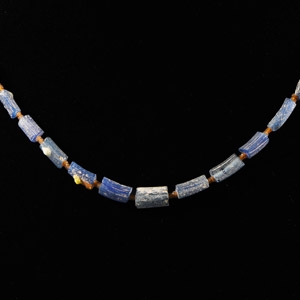
Blue Glass Bead Necklace String
20th century A.D. and earlierSold for (Inc. bp): £13
Comprising recently made facetted blue beads from antique glass, interspersed with umber-coloured seed beads. 10 grams, 68 cm long
UK gallery, early 2000s. -
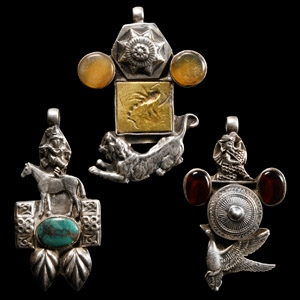
Mixed Pendant Group
20th century A.D.Sold for (Inc. bp): £52
Group of three silver-coloured metal pendants including Ganesha crouching with a drum between two glass cabochons, above a lotiform disc and a goose in flight, and other types. 91 grams total, 75-79 mm
Property of a South West London gentleman. -
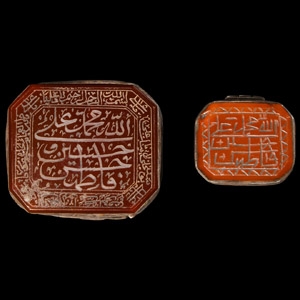
Box Group with Carnelian Calligraphic Inlays
20th century A.D.Sold for (Inc. bp): £78
Group of two octagonal silver-coloured metal containers, each with a hinged lid and inset carnelian panel, one with a dense nastaliq text, the other in an angular (Kufic?) script. 41 grams total, 24-37 mm
Property of a South West London gentleman.
