
Loading, please wait...
LOT 2094
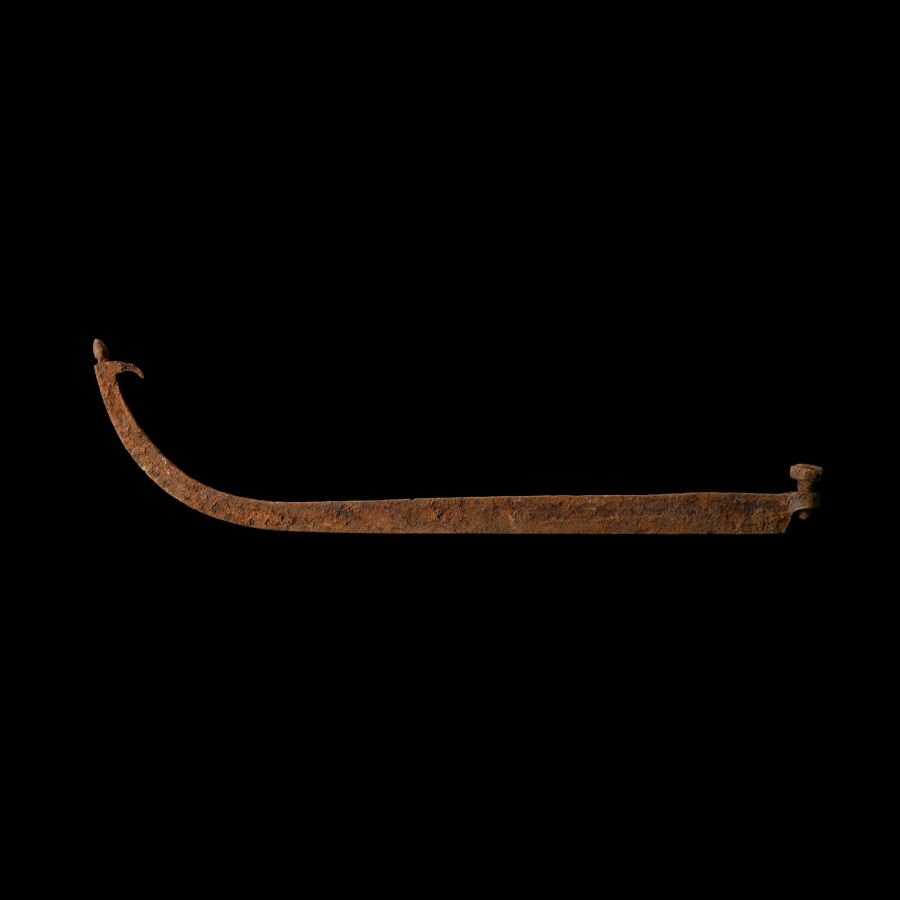
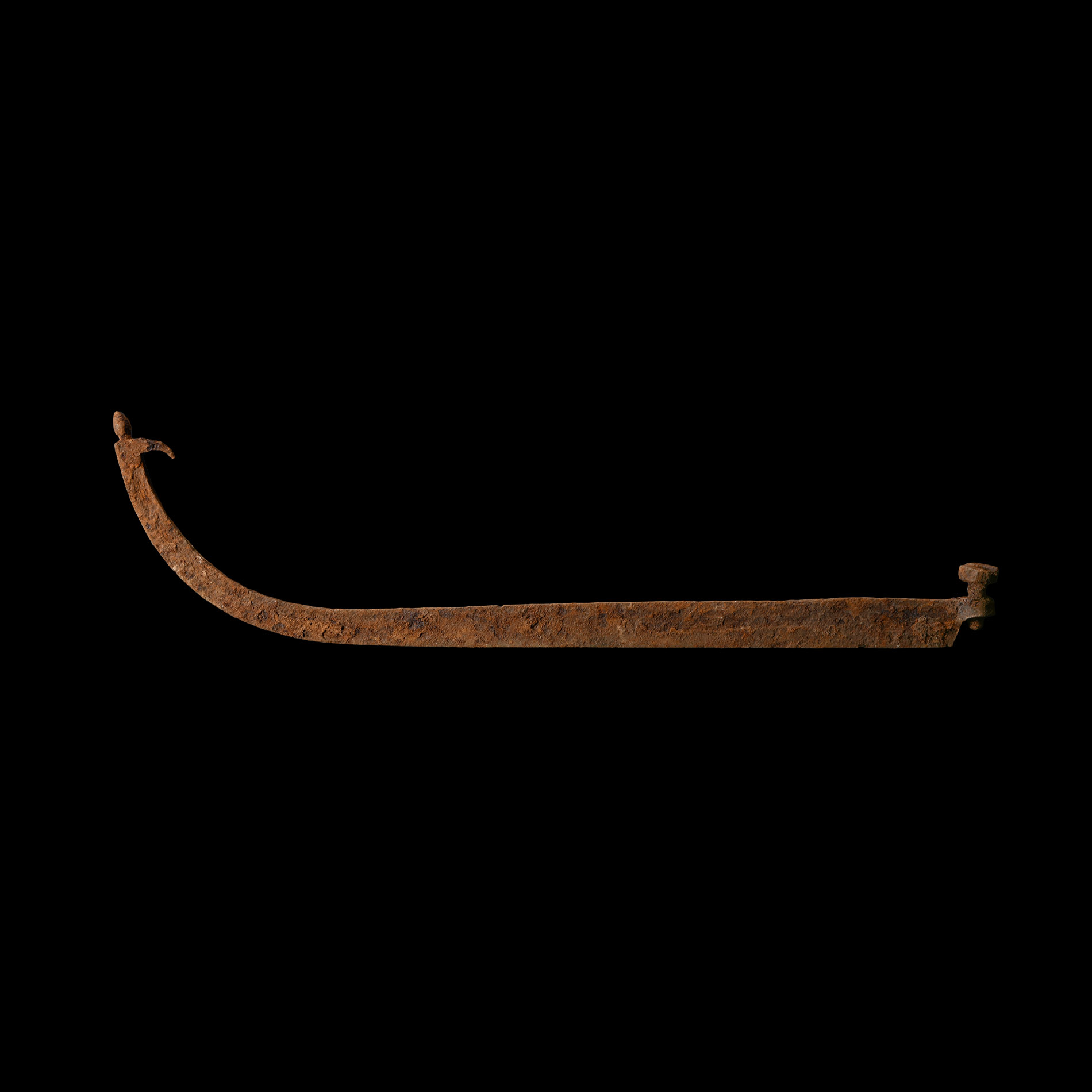
Post Medieval Weather Vane Finial
18TH-19TH CENTURY A.D.
14 1/8 in. (179 grams, 36 cm).
Featuring a recurved terminal and conoid tip, with screw to one end. [No Reserve]
ProvenanceAcquired 1990s-early 2000s.
East Anglian private collection.
TimeLine Auctions follows a vetting process to ensure the authenticity and legality of all items, reinforcing our commitment to integrity and responsible trading. Each antiquity, antique, and coin lot undergoes thorough examination by a vetting committee of at least ten external specialists, professional trade association members, scientists, and archaeologists: Our Vetting Process
AUCTIONS:
TimeLine is a leading auction house specialising in antiquities, ancient art, collectables, natural history, coins, medals, and books. Our auctions offer museums, collectors, historians, and enthusiasts the opportunity to acquire unique and historically significant pieces.
LOT 2094
Post Medieval Weather Vane Finial
Estimate £50 - 70€58 - 81 (for guidance only)$68 - 95 (for guidance only)
-
.jpg)
Gilt Painted Wooden Icon of Saint George
Circa 19th century A.D.Sold for (Inc. bp): £172
Dressed in armour and holding a spear, carrying a shield on his back, quiver of arrows on his hip with bow over arm, and one hand on a sword at his side, against a gilt background; text across left and right field reading 'Свети Георги' (Saint George). 667 grams, 33.2 cm
Ex French gallery, Paris.
Saint George, a Roman soldier of the 4th century, martyred under Diocletian, soon became the emblem of the military saint par excellence, defender of the faith and protector of armies. In the east, his icons and images were often carried into battle or placed on standards of Christian armies; in the West, he became a patron of chivalry. Here he is represented in late Roman armour, according to the style in use in Byzantium between the 14th and 15th centuries. -
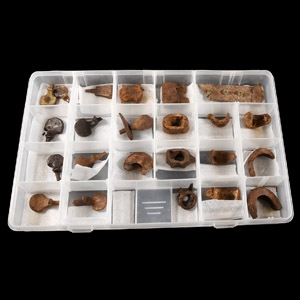
Tudor Period Iron Dagger Guard Group
Circa 16th century A.D.Sold for (Inc. bp): £20
Comprising guards of various types; held in a plastic collector's case. 1.4 kg total, 35.5 x 23.5 cm including box
Acquired 1990s-early 2000s. East Anglian private collection. -
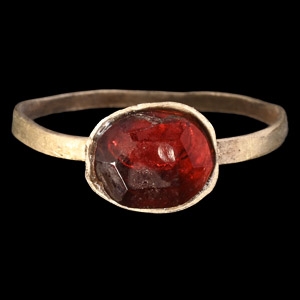
Tudor Period Gold Ring with Gem
Circa 16th century A.D.Sold for (Inc. bp): £312
Flat-section hoop with cup bezel, facetted red glass insert. 1.05 grams, 20.53 mm overall, 16.82 mm internal diameter (approximate size British K, USA 5 1/4, Europe 9.95, Japan 9)
Acquired 1970-2010. Collection of a late Japanese gentleman.
