Loading, please wait...
Post Medieval Walnut Relief Panel Depicting The Victory of Maximilian I and Henry VIII Over the French at The Battle of The Spurs Post Medieval Walnut Relief Panel Depicting The Victory of Maximilian I and Henry VIII Over the French at The Battle of The Spurs Post Medieval Walnut Relief Panel Depicting The Victory of Maximilian I and Henry VIII Over the French at The Battle of The Spurs Post Medieval Walnut Relief Panel Depicting The Victory of Maximilian I and Henry VIII Over the French at The Battle of The Spurs Post Medieval Walnut Relief Panel Depicting The Victory of Maximilian I and Henry VIII Over the French at The Battle of The Spurs Post Medieval Walnut Relief Panel Depicting The Victory of Maximilian I and Henry VIII Over the French at The Battle of The Spurs Post Medieval Walnut Relief Panel Depicting The Victory of Maximilian I and Henry VIII Over the French at The Battle of The Spurs Post Medieval Walnut Relief Panel Depicting The Victory of Maximilian I and Henry VIII Over the French at The Battle of The Spurs Post Medieval Walnut Relief Panel Depicting The Victory of Maximilian I and Henry VIII Over the French at The Battle of The Spurs Post Medieval Walnut Relief Panel Depicting The Victory of Maximilian I and Henry VIII Over the French at The Battle of The Spurs Post Medieval Walnut Relief Panel Depicting The Victory of Maximilian I and Henry VIII Over the French at The Battle of The Spurs Post Medieval Walnut Relief Panel Depicting The Victory of Maximilian I and Henry VIII Over the French at The Battle of The Spurs Post Medieval Walnut Relief Panel Depicting The Victory of Maximilian I and Henry VIII Over the French at The Battle of The Spurs Post Medieval Walnut Relief Panel Depicting The Victory of Maximilian I and Henry VIII Over the French at The Battle of The Spurs Post Medieval Walnut Relief Panel Depicting The Victory of Maximilian I and Henry VIII Over the French at The Battle of The Spurs Post Medieval Walnut Relief Panel Depicting The Victory of Maximilian I and Henry VIII Over the French at The Battle of The Spurs Post Medieval Walnut Relief Panel Depicting The Victory of Maximilian I and Henry VIII Over the French at The Battle of The Spurs Post Medieval Walnut Relief Panel Depicting The Victory of Maximilian I and Henry VIII Over the French at The Battle of The Spurs Post Medieval Walnut Relief Panel Depicting The Victory of Maximilian I and Henry VIII Over the French at The Battle of The Spurs Post Medieval Walnut Relief Panel Depicting The Victory of Maximilian I and Henry VIII Over the French at The Battle of The Spurs Post Medieval Walnut Relief Panel Depicting The Victory of Maximilian I and Henry VIII Over the French at The Battle of The Spurs
Use mousewheel to zoom in and out, click to enlarge
Details

LOT 0433

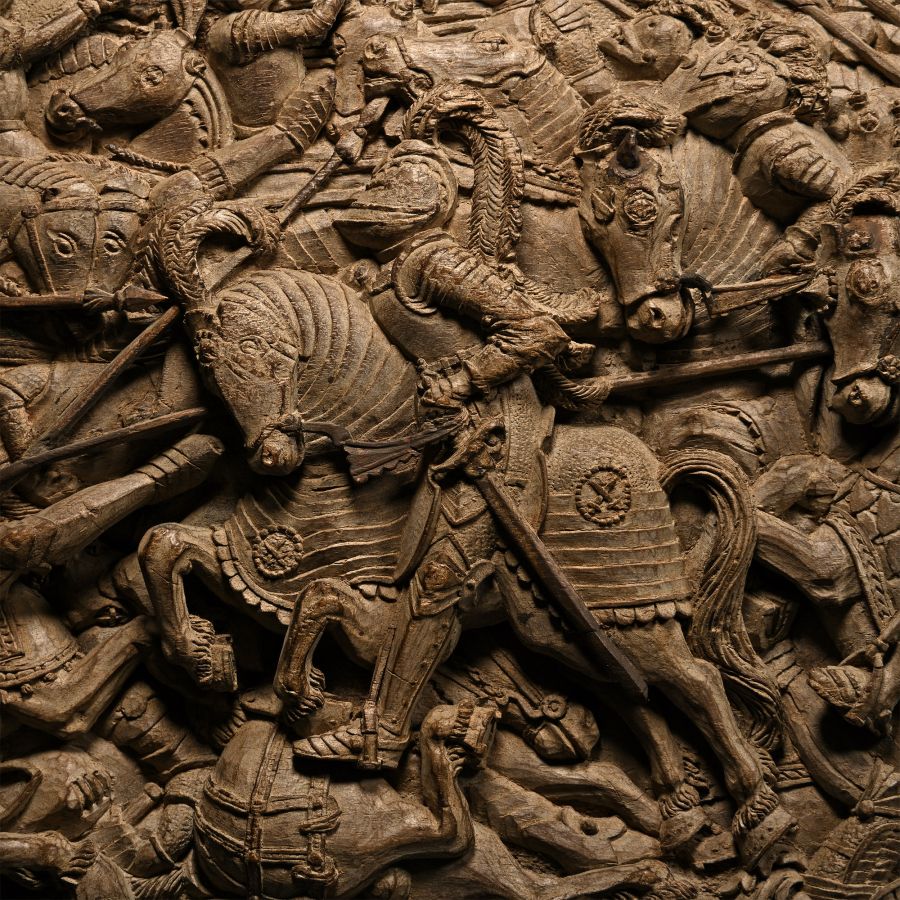
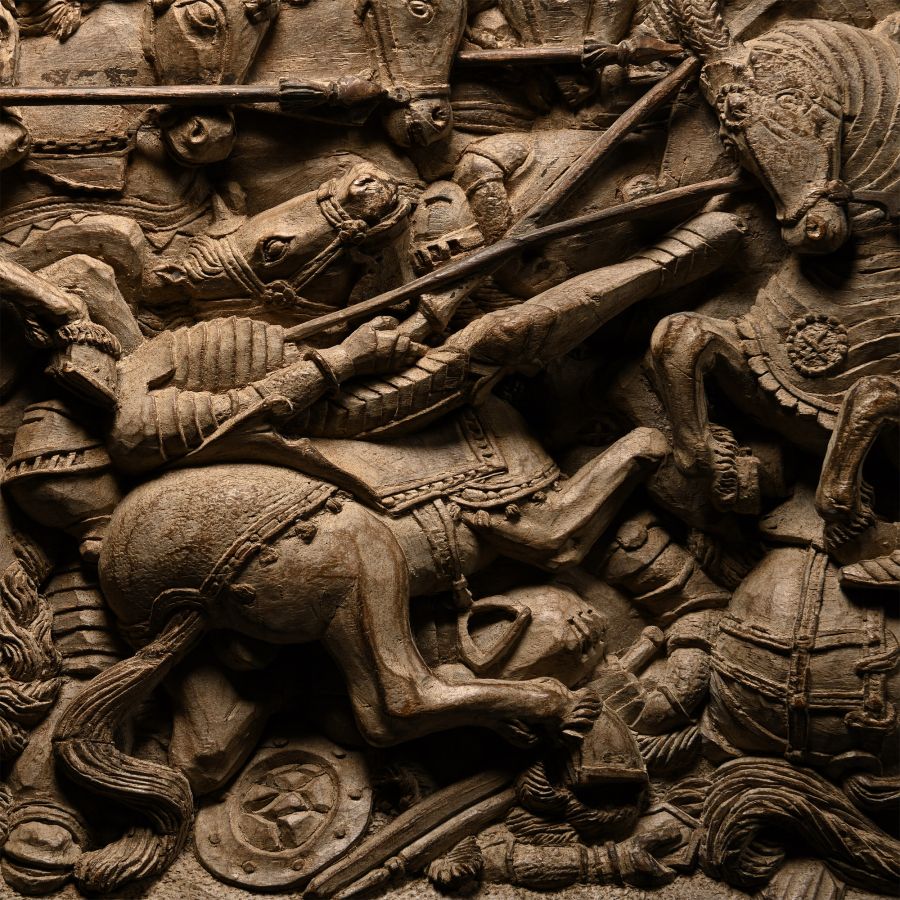
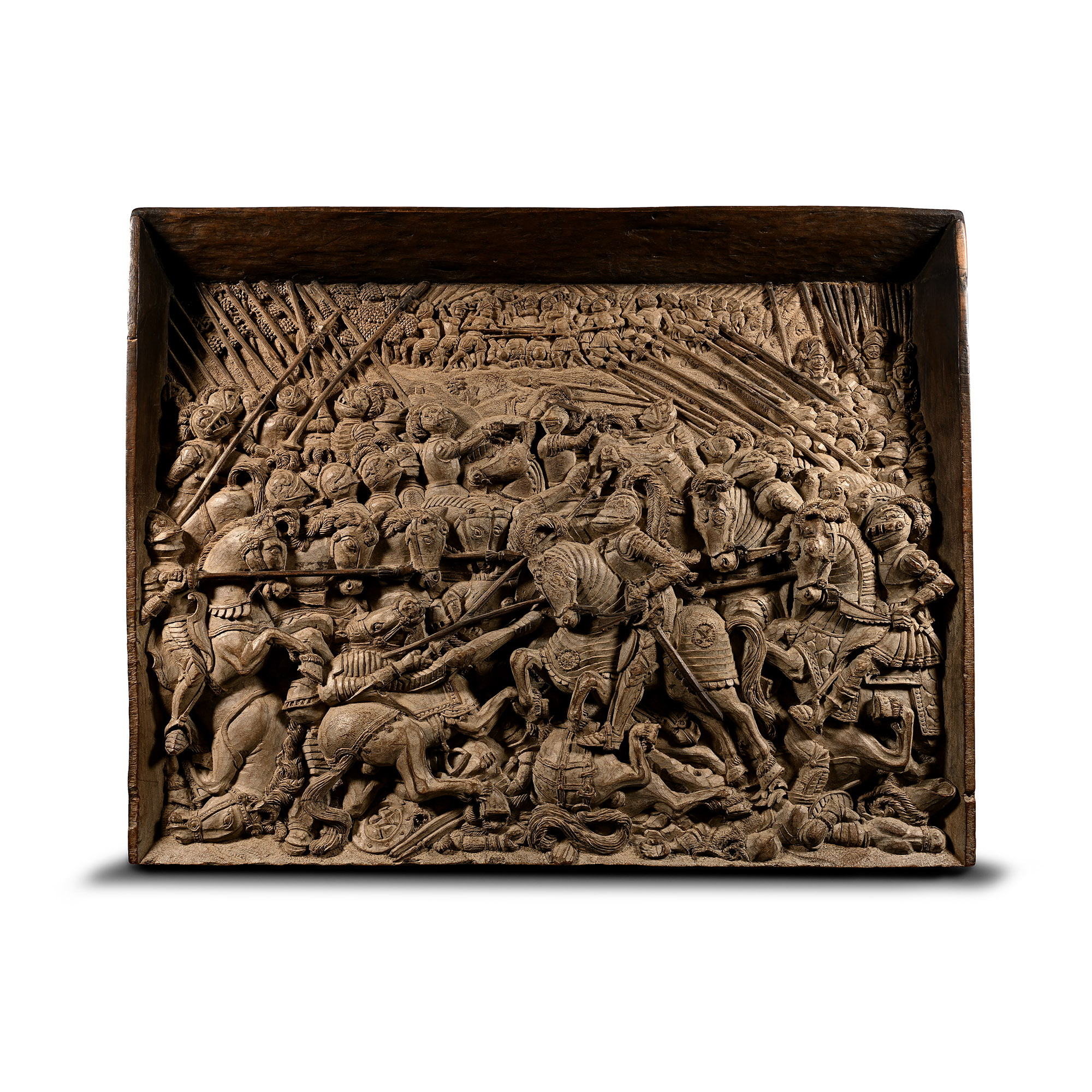
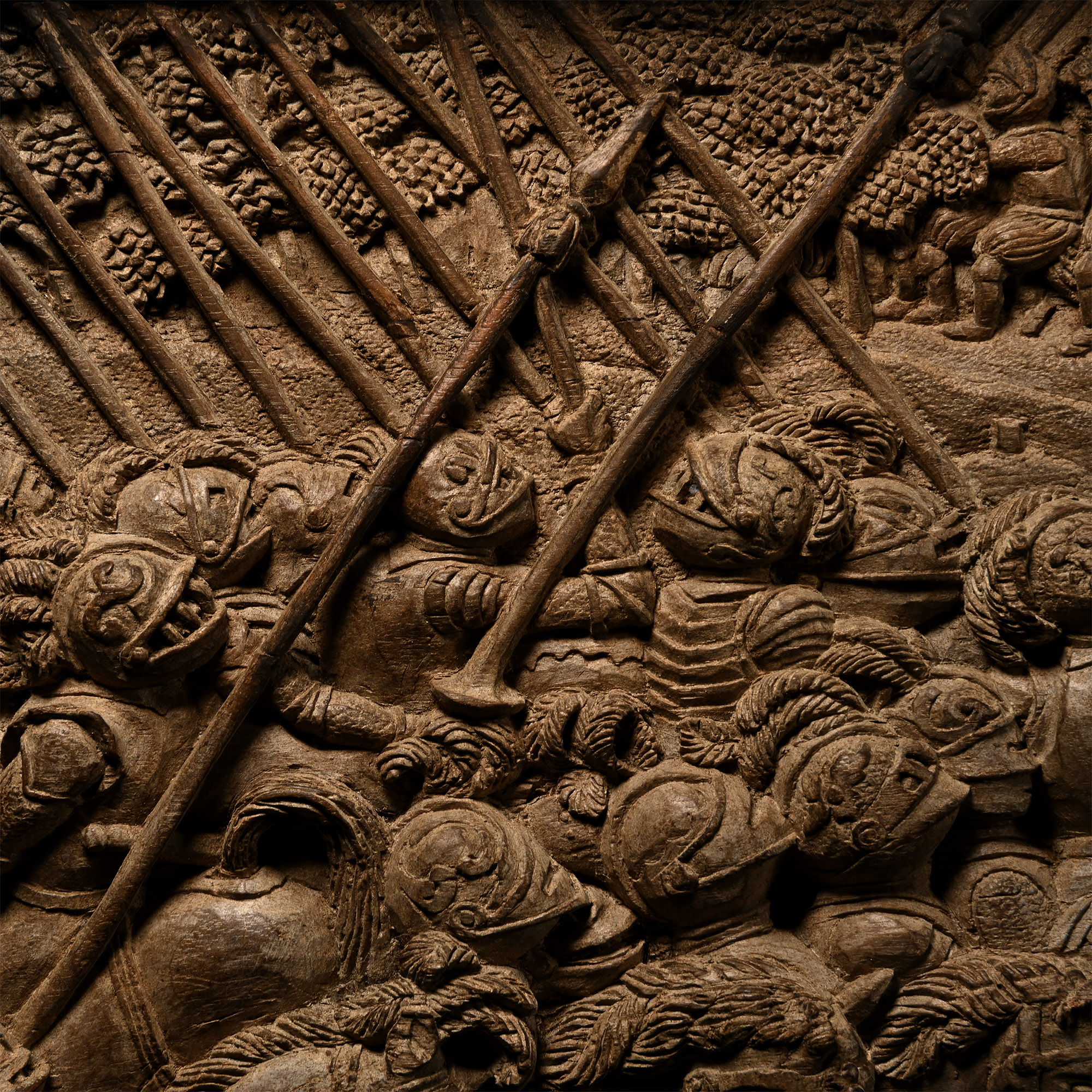
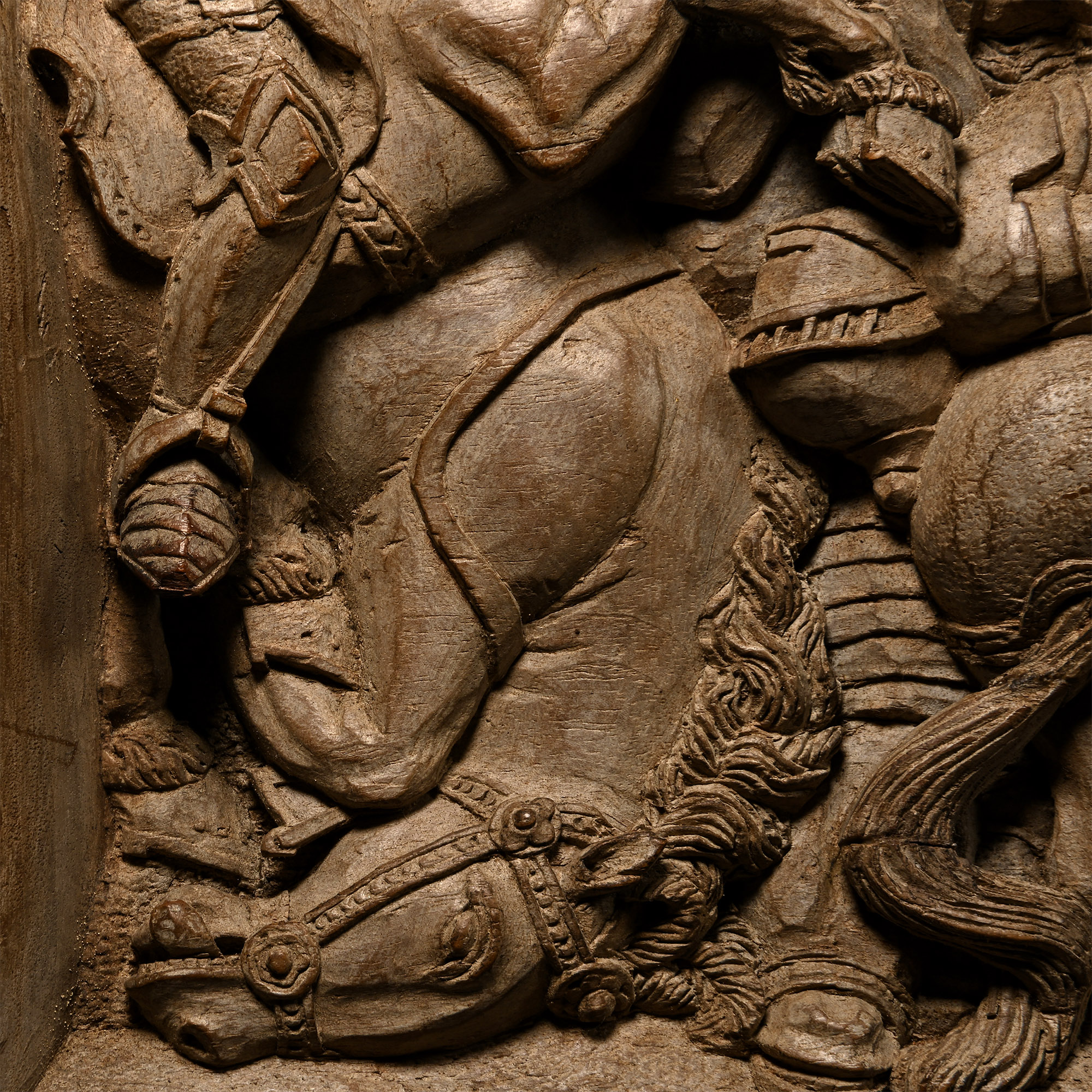
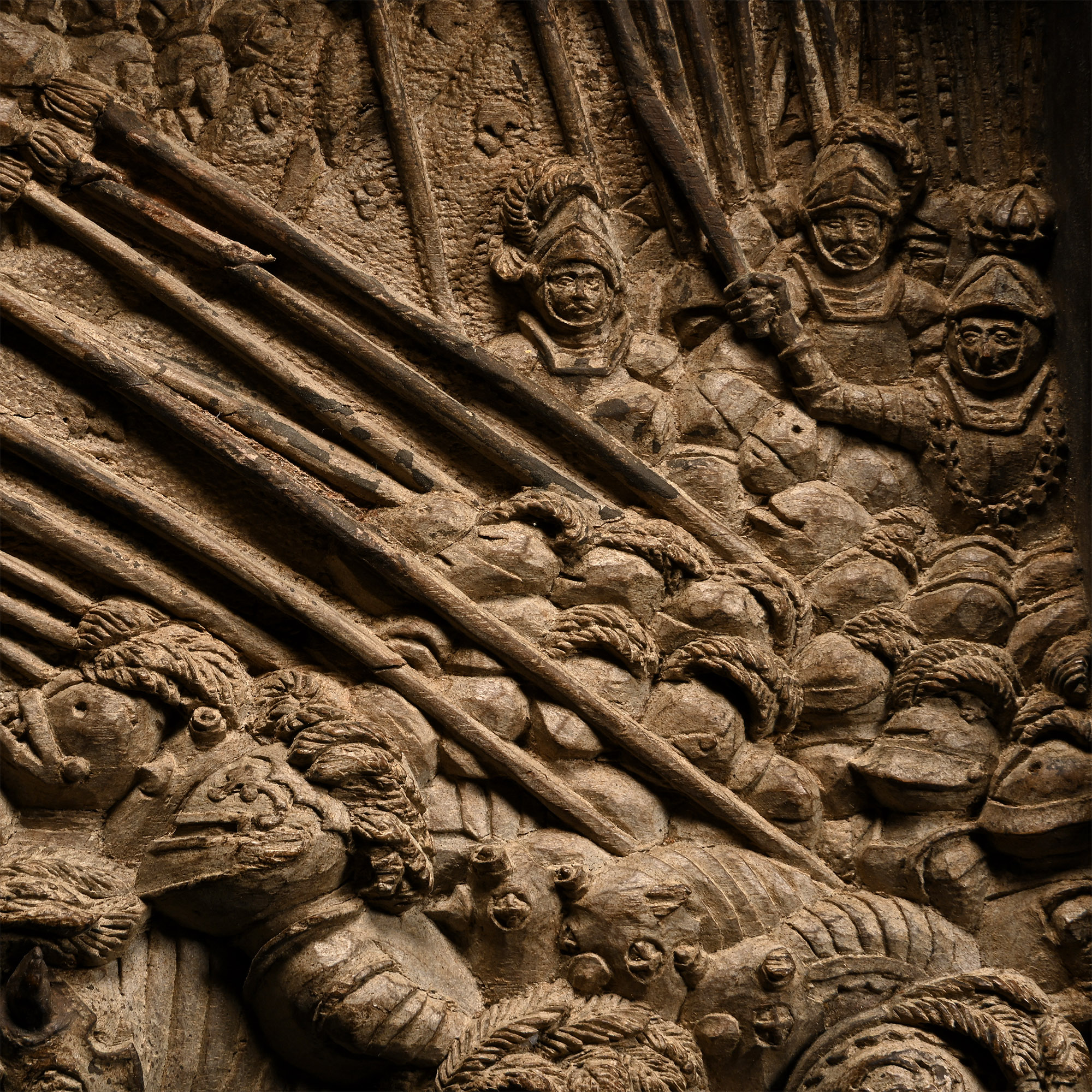
Post Medieval Walnut Relief Panel Depicting The Victory of Maximilian I and Henry VIII Over the French at The Battle of The Spurs

GERMAN OR AUSTRIAN, 19TH CENTURY A.D. OR EARLIER

17 3/4 in. (2.7 kg, 45 cm wide).

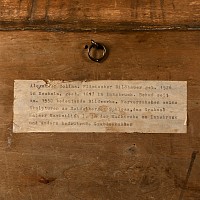
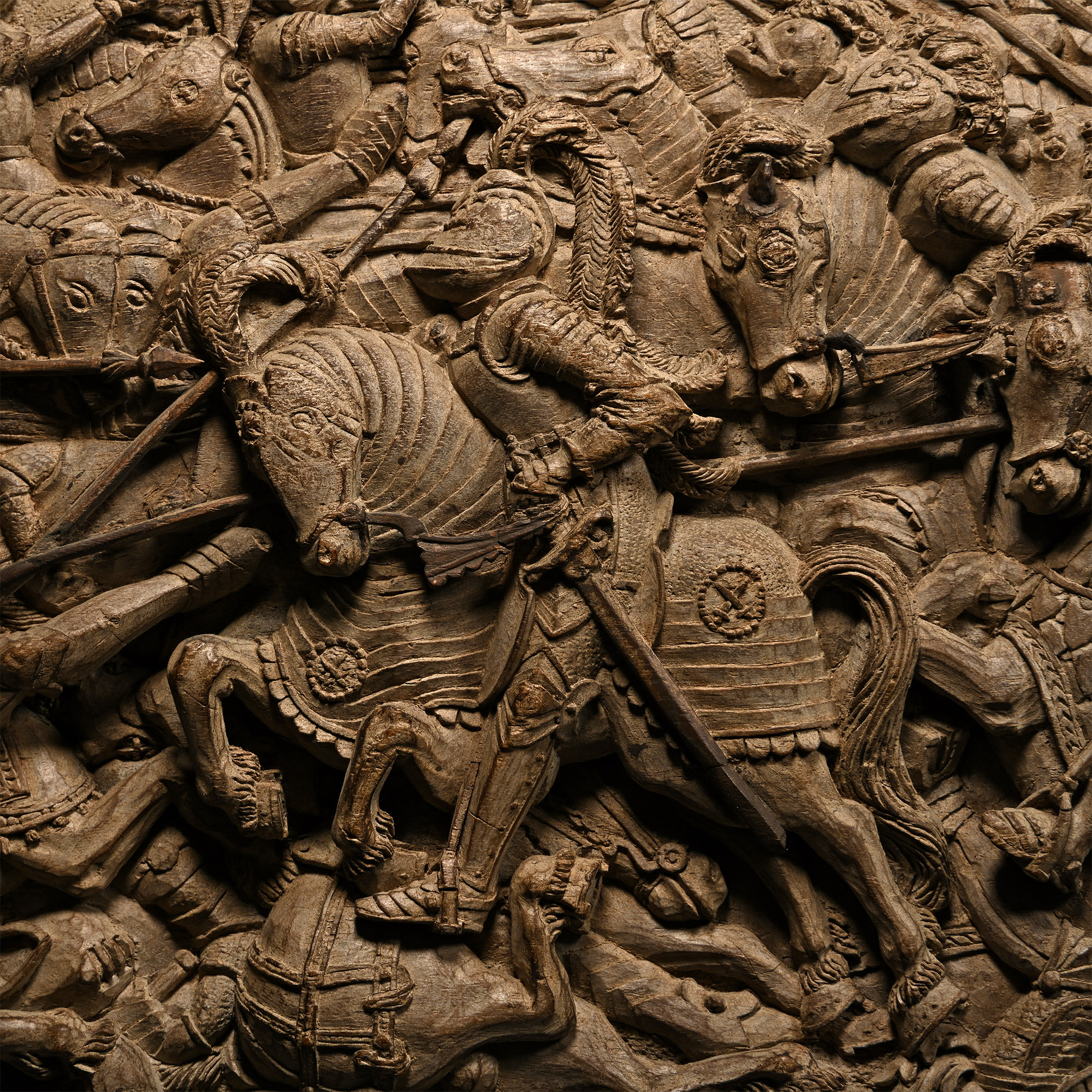
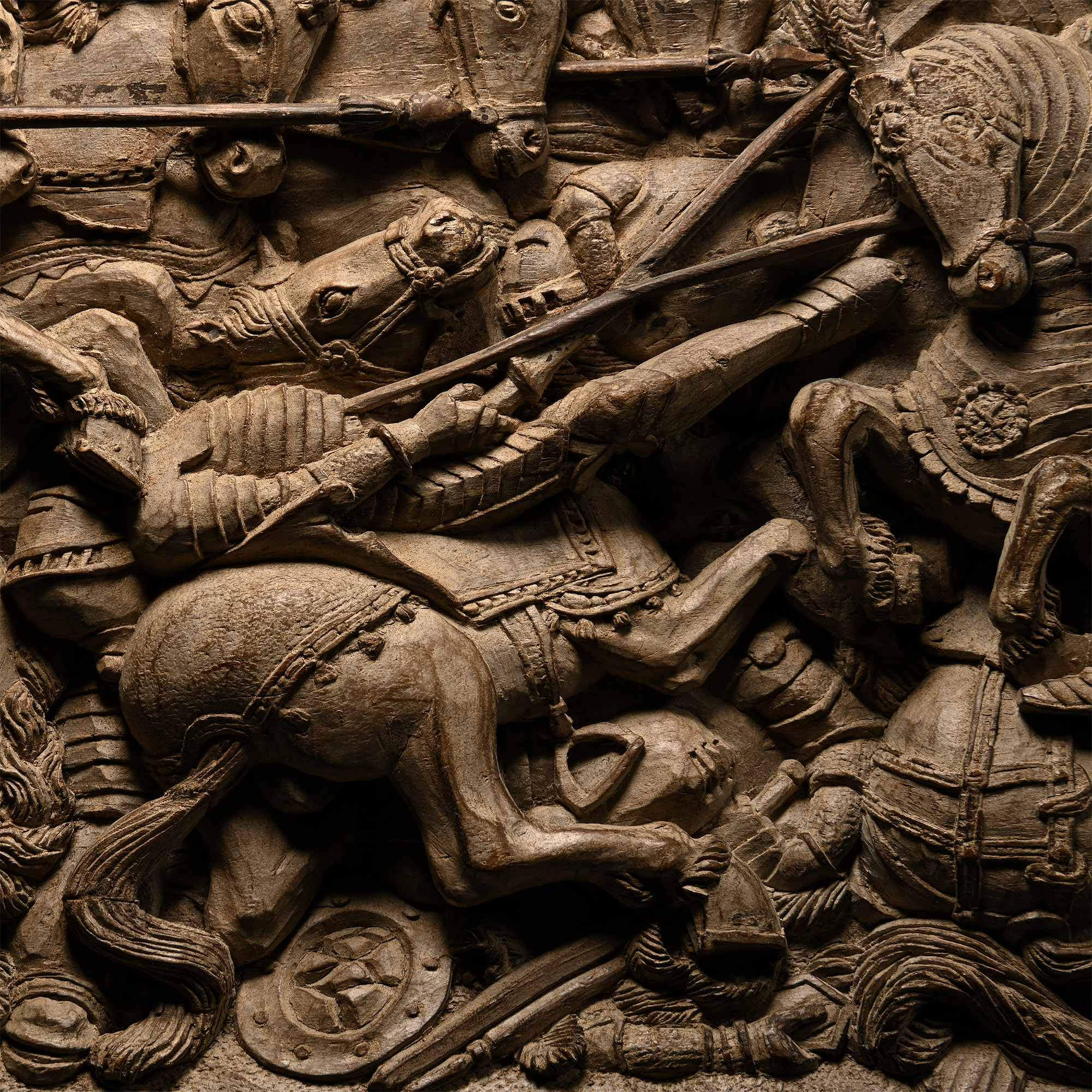
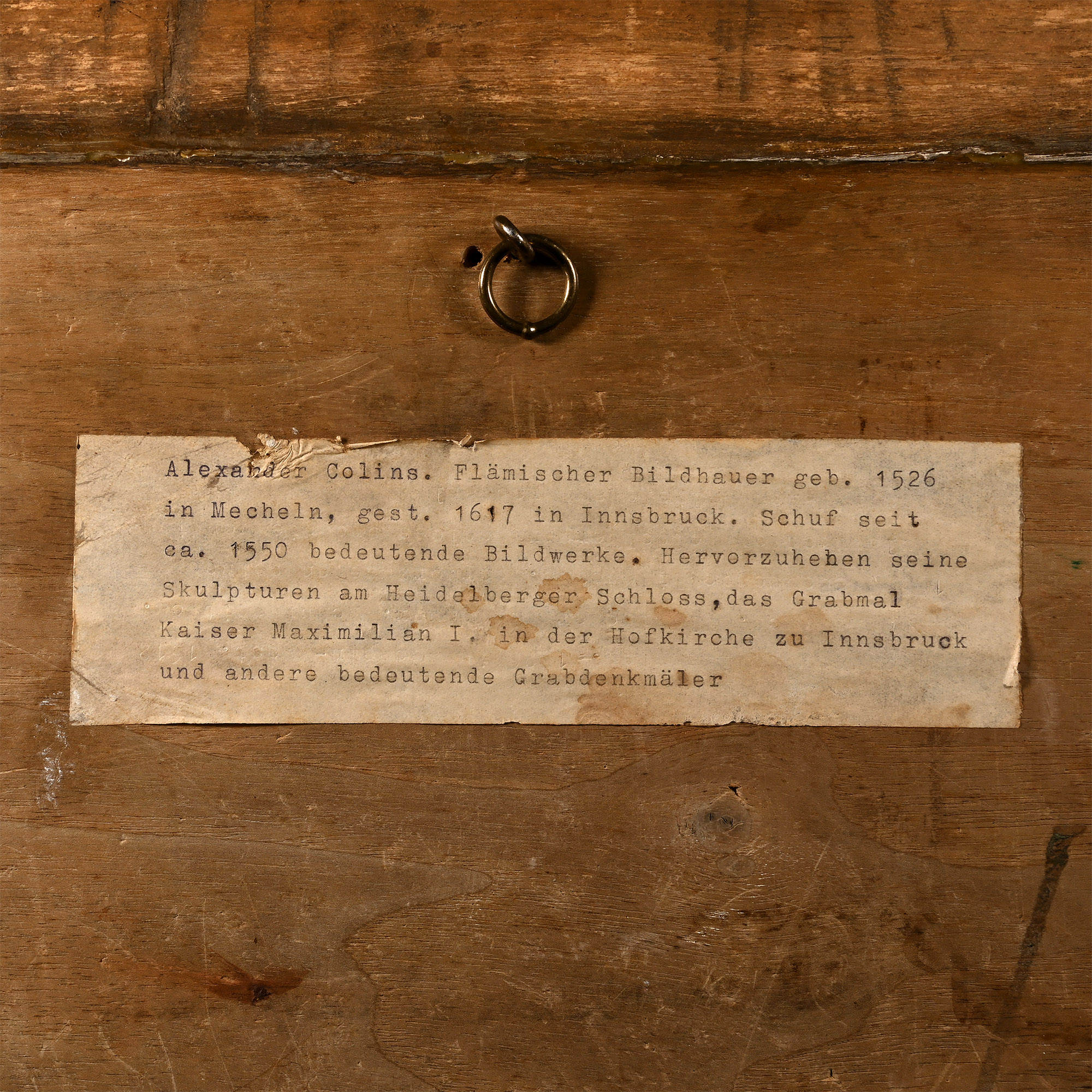
A substantial carved wooden panel with figures in low-relief, representing knights of second half of 16th century A.D. engaged in a deadly battle; the armoured knights depicted facing each other, with the lance couché, trampling over the dead and wounded, while on the background the clash among the infantrymen of the opposed armies can be seen; after the work of Albrecht Dürer and Alexander Colyn, with old typed labels translating to: 'Alexander Colins. Flemish sculptor, born 1526 in Mechelen, died 1617 in Innsbruck. Created important works of art from around 1550 onwards. His sculptures include those at the Heidelberg Castle, the tomb of Emperor Maximilian I in the Court Church in Innsbruck and other important grave monuments.' [No Reserve]

Provenance

Private collection, New York, USA.
Ex central London gallery.

Accompanied by an academic report by Dr Raffaele D’Amato.
This lot has been checked against the Interpol Database of stolen works of art and is accompanied by search certificate no.12180-221703.

Literature

Cf. the original made by Alexander Colyn for the grave of the Emperor Maximilian I, in Lipińska, A., ‘Fit for a Royal Commission? The Marble relief Landscape with King Numa and the Nymph Egeria’ in The Rijksmuseum Bulletin, 63 (1), 2015, pp.66-91, fig.3.

Footnotes

The second battle of Guinegate, or Battle of the Spurs, was an episode of the early 16th century wars (August, 16th 1513), when Henry VIII and the Holy Roman Emperor Maximilian I surprised and routed a body of French knights under Jacques de la Palice. The Flemish artist represented the victory as one of the main scenes for the imperial grave of Emperor Maximilian I, the sketches for which were made by the well known German sculptor, painter and architect Albrecht Dürer.

CONDITION
VETTING:

TimeLine Auctions follows a vetting process to ensure the authenticity and legality of all items, reinforcing our commitment to integrity and responsible trading. Each antiquity, antique, and coin lot undergoes thorough examination by a vetting committee of at least ten external specialists, professional trade association members, scientists, and archaeologists: Our Vetting Process


AUCTIONS:

TimeLine is a leading auction house specialising in antiquities, ancient art, collectables, natural history, coins, medals, and books. Our auctions offer museums, collectors, historians, and enthusiasts the opportunity to acquire unique and historically significant pieces.

LOT 0433

Post Medieval Walnut Relief Panel Depicting The Victory of Maximilian I and Henry VIII Over the French at The Battle of The Spurs

Sold for (Inc. bp): £6,240

Print page

RELATED LOTS
  • Large Post Medieval Bronze Crotal Bell
    Large Post Medieval Bronze Crotal Bell
    19th century A.D. or earlier

    Sold for (Inc. bp): £46

    Spherical crotal, rumbler or 'hame harness' bell with suspension loop and two tone holes to upper half with founder's initials 'Ro / W' for Robert Wells of Aldbourne Foundry, Wiltshire; with the original iron 'pea' inside. 203 grams, 71 mm


    Acquired on the UK art market. From the private collection of Mr G.B., Hampshire, UK.

    Robert Wells made bells in sizes 1 to 32 and this example is near the largest ever produced. These massive bells were usually fitted to a team bell frame, set across the harness collar; Robert Wells was active in the period 1760-1780.

    Lot Details

  • Neoclassical Shell Cameo of a Noble Lady in Gilt Brooch
    Neoclassical Shell Cameo of a Noble Lady in Gilt Brooch
    Late 19th-early 20th century A.D.

    Sold for (Inc. bp): £7

    Lustrous cameo with profile female bust in classical palla and with stephane to the hair; set in a gilt frame with securing pin to reverse. 11.2 grams, 42 mm


    Private collection, England.

    Lot Details

  • Post Medieval Glazed Animal Tile Group
    Post Medieval Glazed Animal Tile Group
    17th-18th century A.D.

    Sold for (Inc. bp): £72

    Group of four green-glazed tiles, each square in plan with raised edges and zoomorphic motif in high relief. 548 grams total, 10.2 x 9.8 - 10.2 x 9.9 cm


    Acquired 1990s-early 2000s. Ex East Anglian private collection.

    Tile production increased in the second half of the 16th century and during the following centuries. The fragments discovered from various localities (pot-tiles, rectangular, triangular and trapezoidal panels, open-work crest tiles) were all produced in regional workshops, from the end of the 15th century or at the beginning of the 16th century. They all had diverse decorative motifs, mainly animals and geometrical or vegetal combinations, almost all of them singular finds for this study area.

    Lot Details

Stay up-to-date with the latest from TimeLine Auctions by joining our mailing list