
Loading, please wait...
LOT 2047
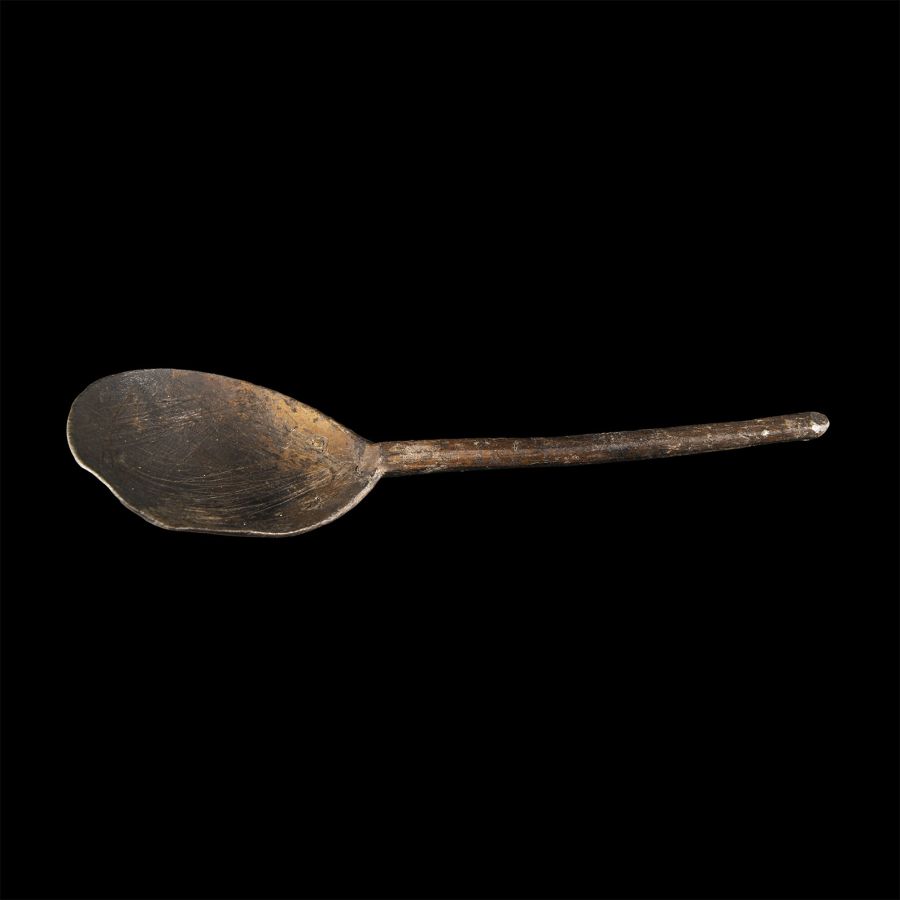
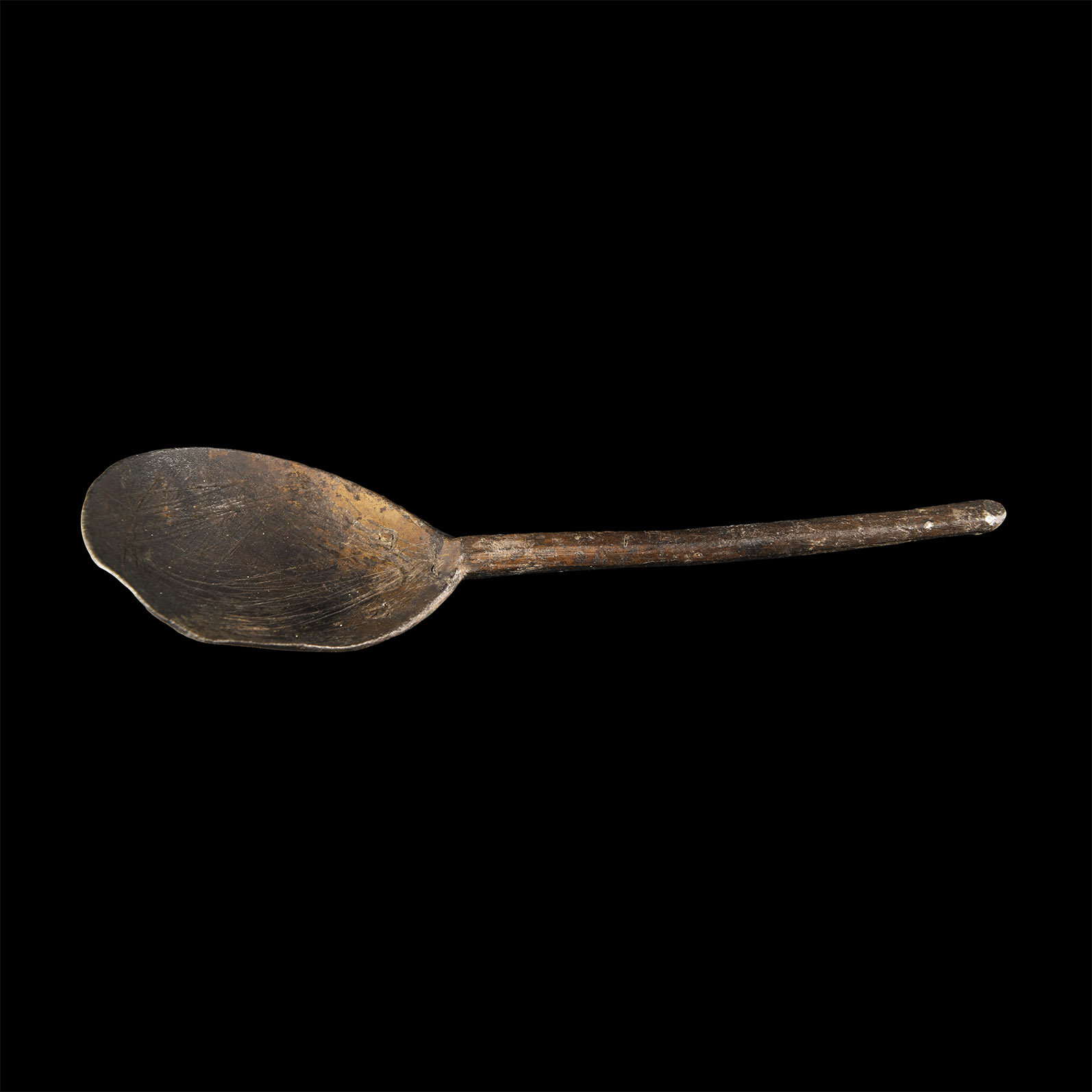
Post Medieval 'Thames' Pewter Slip Top Spoon with M B
CIRCA 17TH CENTURY A.D.
6 3/4 in. (71 grams, 17 cm).
Comprising a shallow ovoid bowl with facetted stem; bowl interior stamped with maker's mark 'M B' and with wriggle work. [No Reserve]
ProvenanceFound Thames foreshore spoil, 1980s.
CONDITIONTimeLine Auctions follows a vetting process to ensure the authenticity and legality of all items, reinforcing our commitment to integrity and responsible trading. Each antiquity, antique, and coin lot undergoes thorough examination by a vetting committee of at least ten external specialists, professional trade association members, scientists, and archaeologists: Our Vetting Process
AUCTIONS:
TimeLine is a leading auction house specialising in antiquities, ancient art, collectables, natural history, coins, medals, and books. Our auctions offer museums, collectors, historians, and enthusiasts the opportunity to acquire unique and historically significant pieces.
-
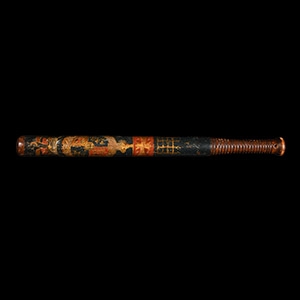
Georgian Painted Wooden Police Truncheon
1820-1830 A.D.Sold for (Inc. bp): £169
The ribbed handle pierced for suspension; gilt G.R initials with IIII above for George IV and crowned royal arms with portcullis below, possibly for Westminster, in polychrome and gilt. 310 grams, 47 cm
Acquired 1990s-early 2000s. East Anglian private collection. -
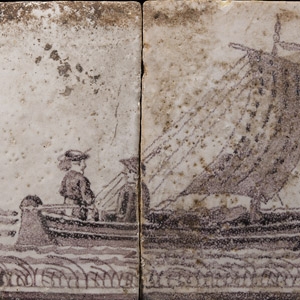
Post Medieval Dutch Ceramic Tiles with Boating Scene
Circa 17th-18th century A.D.Sold for (Inc. bp): £104
Mauve-glazed and depicting a couple in a boat on a lake, a duck in the water. 548 grams total, 13 x 13 cm each
Acquired 1990s-early 2000s. East Anglian private collection. -
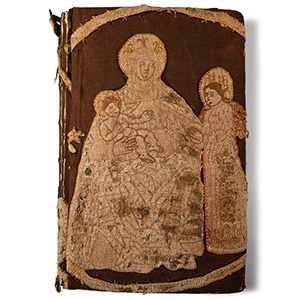
Post Medieval Opus Anglicanum Embroidery
England, 18th century A.D.Sold for (Inc. bp): £442
Preserved as the binding for a 'book of common prayers, and administration of the sacraments', in an embroidered stumpwork binding, the front cover showing Saint Anne, Mary and the Child, the back cover with a large floral design; the folio text with some handwritten amendations, title page printed in red and black. 2.75 kg, 38.7 cm
Emil Offenbacher and Cornelius J. Hauck, with his ex libris beneath an elaborate hand-coloured early armorial bookplate. Ex Cultured Oyster Books, 2007. Ex central London gallery. Accompanied by a previous catalogue page, listed as no.10.
Stumpwork is sometimes called 'raised work' and is an embroidery style in which the stitched figures are raised from the surface creating a three-dimensional effect. Historically, this type of embroidery, here probably made for an ecclesiastical vestment, was employed to decorated a variety of secular household artefacts and reached its greatest popularity by the second half of the 17th century A.D. Embroidered folio bindings are fairly uncommon.
