
Loading, please wait...
LOT 1868
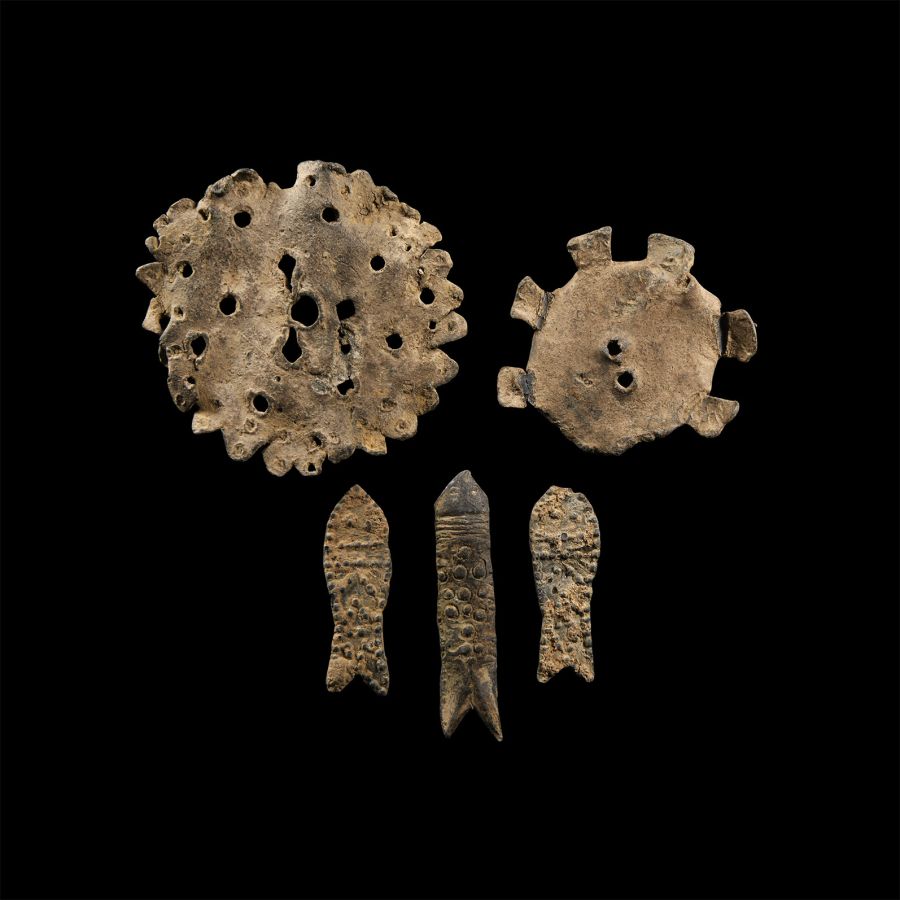
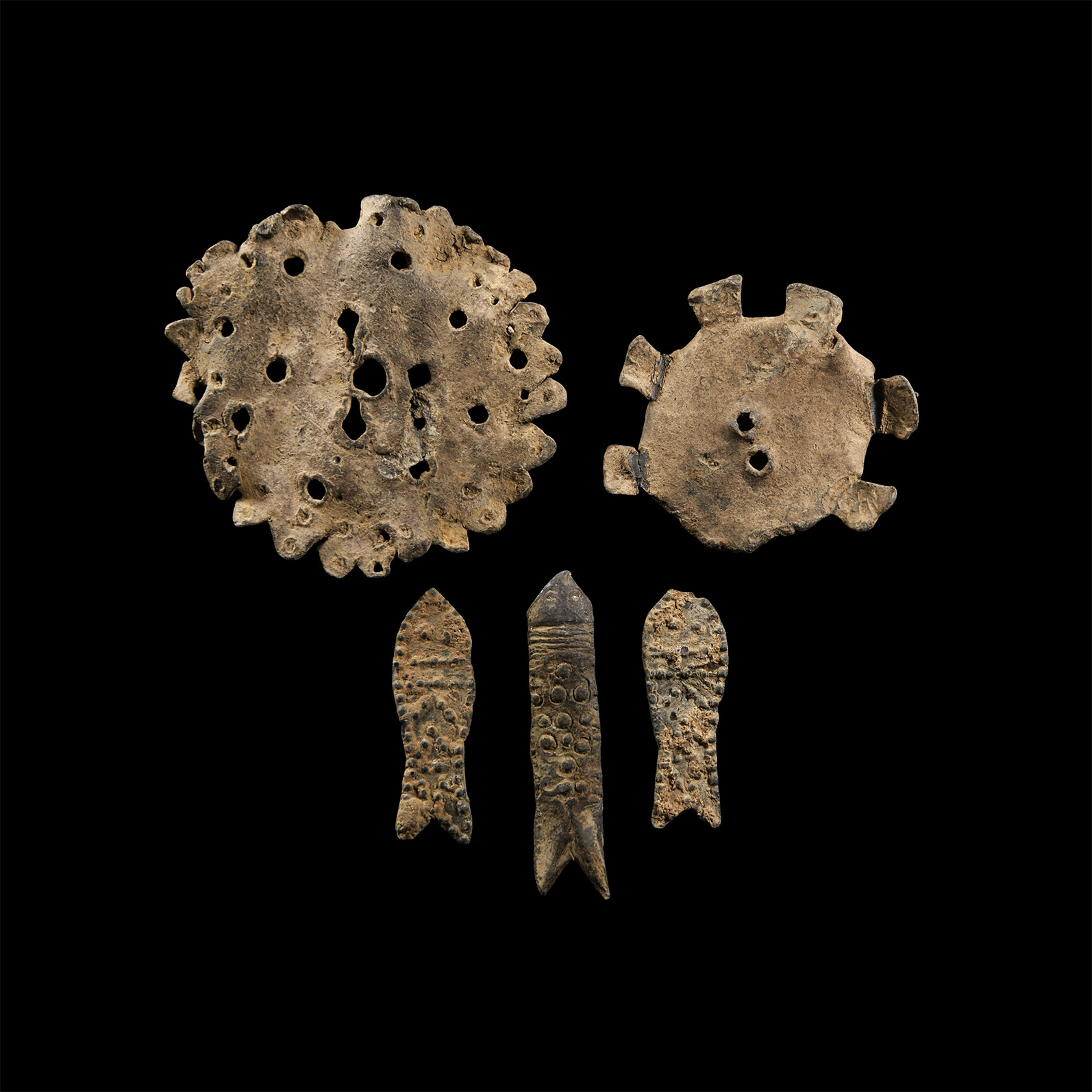
Post Medieval 'Thames' Lead Whirligig and Toy Fish Group
18TH-19TH CENTURY A.D.
1 3/8 - 2 3/8 in. (76 grams total, 36-60 mm).
Comprising whirligigs of different designs and stylised fishes with raised pellet decoration. [5, No Reserve]
ProvenanceFound Thames foreshore spoil, 1980s.
CONDITIONTimeLine Auctions follows a vetting process to ensure the authenticity and legality of all items, reinforcing our commitment to integrity and responsible trading. Each antiquity, antique, and coin lot undergoes thorough examination by a vetting committee of at least ten external specialists, professional trade association members, scientists, and archaeologists: Our Vetting Process
AUCTIONS:
TimeLine is a leading auction house specialising in antiquities, ancient art, collectables, natural history, coins, medals, and books. Our auctions offer museums, collectors, historians, and enthusiasts the opportunity to acquire unique and historically significant pieces.
-
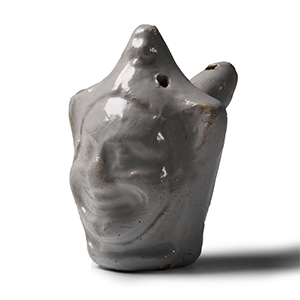
Elizabethan Glazed Ceramic Fool's Head Whistle
Circa 16th century A.D.Estimate: £150 - 200 (+bp*)
Opening Bid: £60
Complete with mouthpiece and sounding hole. 43 grams, 54 mm
Acquired 1960s-1990s. Late Alison Barker collection, a retired London barrister. -
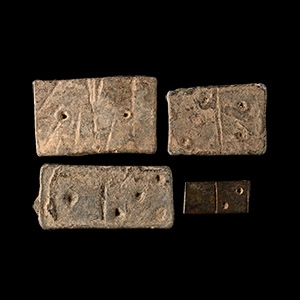
Post Medieval 'Thames' Lead Domino Gaming Piece Group
Circa 18th century A.D.Sold for (Inc. bp): £7
Comprising four differently proportioned rectangular domino tiles displaying dimple numerals: 2:3; 5:1; 1:1; 2:[blank]. 19.8 grams total, 12-27 mm
Found Thames foreshore spoil, 1980s. -
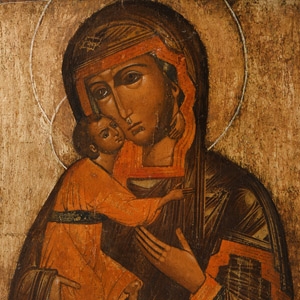
Russian Painted Wooden Icon of Virgin and Child
Circa 1800 A.D.Sold for (Inc. bp): £520
In polychrome within a shallow rectangular recess, framed by a red border; both figures shown nimbate, baby Jesus wearing a red chiton and embracing his mother; loop for suspension to reverse. 1.26 kg, 33.5 cm
The background is exposed so that the chalk ground is visible
Ex French gallery, Paris. Accompanied by an old typed and signed letter from the Icon Museum at Autenried Castle near Günzburg.
The icon shows the Mother of God of Fedorovskaya type, one of the variants of the Hodegetria icons. It is a central Russian work from the first half of 19th century A.D. The Fedorovskaya icon of the Mother of God or Virgin of Kostroma is honoured by the Orthodox church as a miraculous icon of the Virgin Mary. It is kept in the city of Kostroma, in the Cathedral of Epiphany-Anastasia. Legend attributes its creation to Saint Luke the Evangelist. Its iconography is similar to that of Our Lady of Vladimir. She is also revered as one of the icons of the Romanov house linked to the election in 1613 of the founder of the dynasty Michael Romanov who lived his youth in Kostroma.
