
Loading, please wait...
LOT 1933
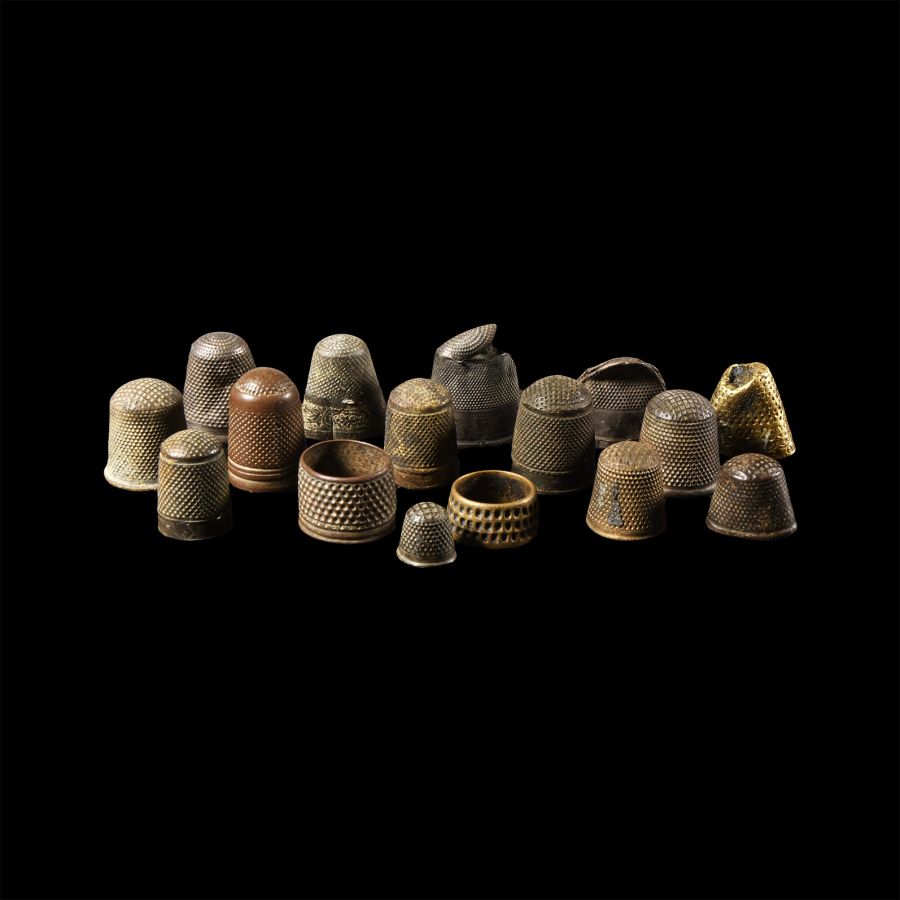
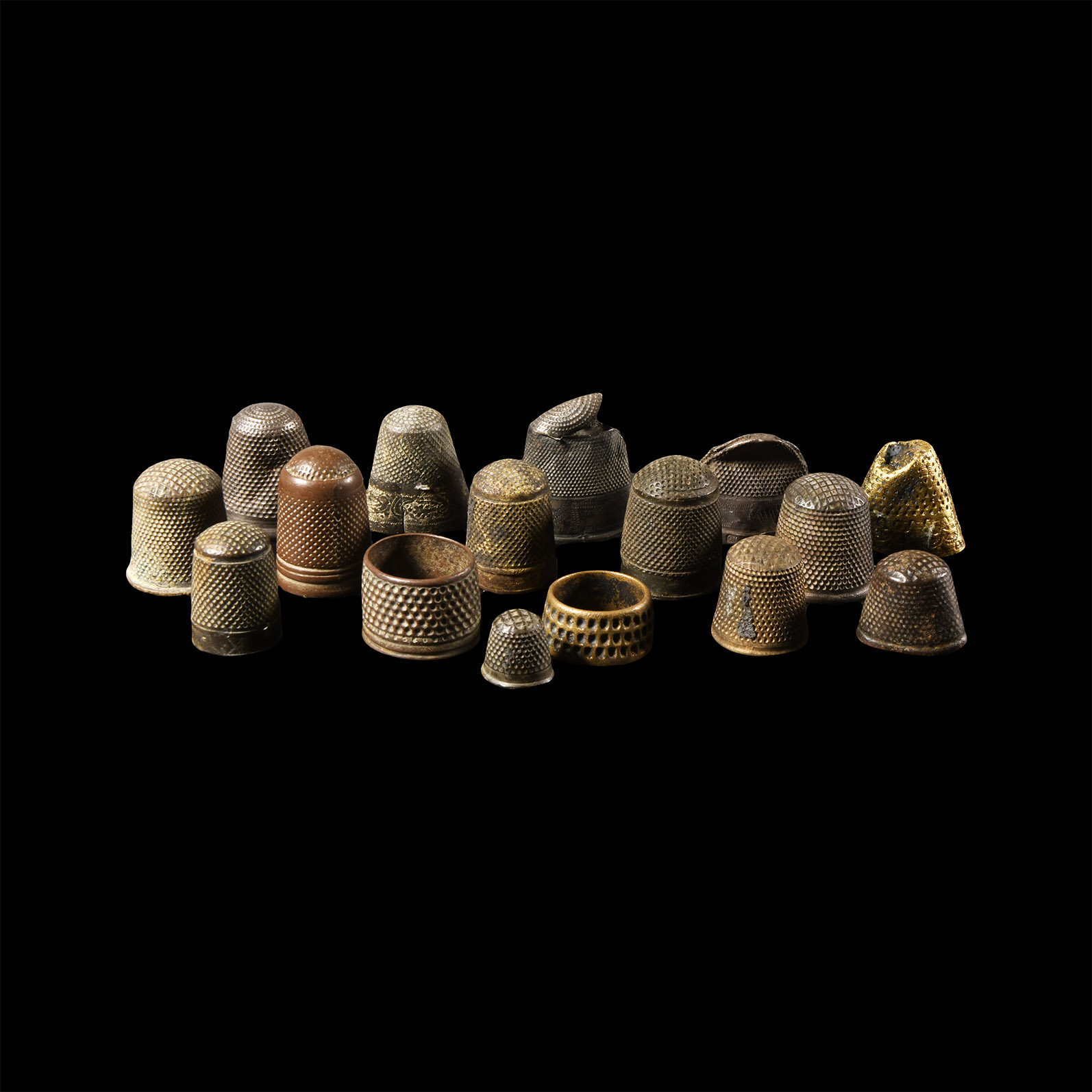
Post Medieval 'Thames' Bronze and Silver Thimble Group
16TH-19TH CENTURY A.D.
3/4 - 1 1/8 in. (73 grams total, 18-28 mm).
Including decorative examples; thimbles with open tops; stamped silver examples and a possible child's thimble. [15, No Reserve]
ProvenanceFound Thames foreshore spoil, 1980s.
CONDITIONTimeLine Auctions follows a vetting process to ensure the authenticity and legality of all items, reinforcing our commitment to integrity and responsible trading. Each antiquity, antique, and coin lot undergoes thorough examination by a vetting committee of at least ten external specialists, professional trade association members, scientists, and archaeologists: Our Vetting Process
AUCTIONS:
TimeLine is a leading auction house specialising in antiquities, ancient art, collectables, natural history, coins, medals, and books. Our auctions offer museums, collectors, historians, and enthusiasts the opportunity to acquire unique and historically significant pieces.
-
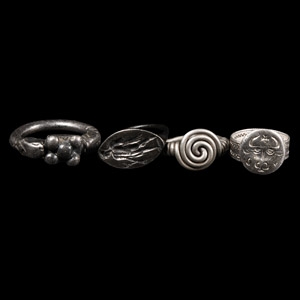
Greek and Other Style Silver Ring Group
20th century A.D. or earlierSold for (Inc. bp): £72
Comprising: one with scaphoid bezel, intaglio figure of Hermes; one wire with spiral bezel; one with serpent heads supporting a rectangular bezel with pellets; one with flat hoop, round bezel with bull mask. 26 grams total, 18-28 mm
Fine condition.
Acquired since the 1970s. Private collection of a gentleman from Vienna, Austria. -
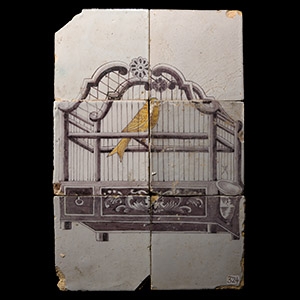
Post Medieval Glazed Ceramic Caged Canary Tile Set
Circa 18th century A.D.Sold for (Inc. bp): £338
Formed using mauve-coloured glaze for the cage and yellow for the bird; chipped. 1.4 kg total, 13 x 13 cm each
Acquired 1990s-early 2000s. East Anglian private collection. -
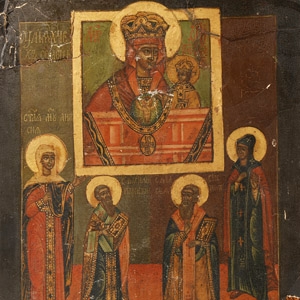
Gilt Painted Wooden Icon Of Virgin and Child
Circa 18th century A.D.Sold for (Inc. bp): £182
Depicted crowned and nimbate in a central panel, the bust of the Virgin encased in a medallion with a cross pendant, with inside the Holy Spirit under shape of dove and with nimbus, four nimbate figures of Saint Anna, Saint Basil the Great, Saint Simeon and another Saint below; text in the fields. 796 grams, 28 cm
The timber shows some old insect flight holes and we are advised that this piece has been recently treated with Permthrin, as a precaution.
Ex French gallery, Paris.
The rare Marian iconographic typology is called ''Mother of God who softens sick hearts', where she carries the Holy Spirit on her breast, represented by a dove emitting rays of light. In particular, it is a variant of the Madonna Odighitria. Both the mother and the child are depicted as the queen and king of the universe: the Virgin wears a crown on her head and holds the Child, who is also blessing with the right hand.
