Loading, please wait...

Post Medieval Stone Mortar with Heads Post Medieval Stone Mortar with Heads Post Medieval Stone Mortar with Heads
Use mousewheel to zoom in and out, click to enlarge
Details

LOT 1958

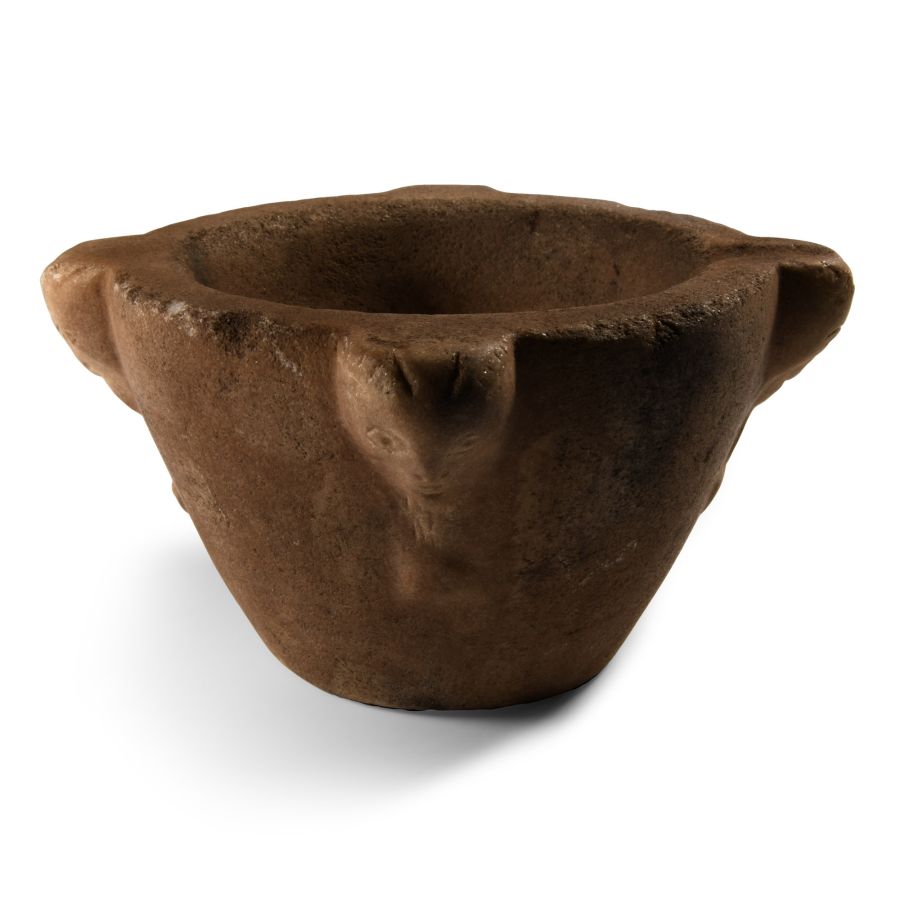
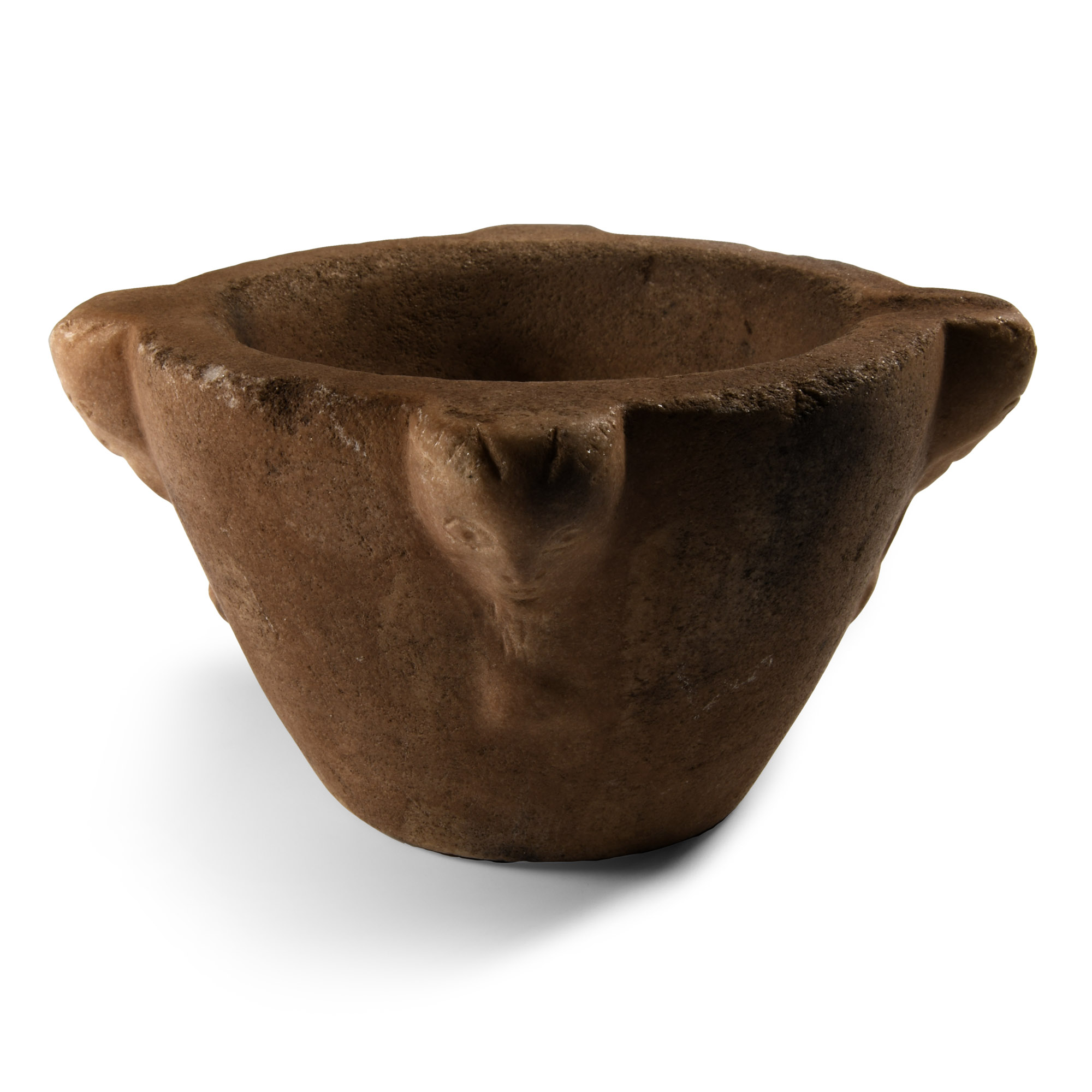
Post Medieval Stone Mortar with Heads

18TH CENTURY A.D.

6 1/8 in. (1.4 kg, 15.6 cm).

Squat in profile with four radiating lugs to the rim with low-relief facial detailing, one with a shallow pouring channel above.

Provenance

Private UK collection.
Acquired in the 1980s.
Property of a Cambridgeshire gentleman.

CONDITION
VETTING:

TimeLine Auctions follows a vetting process to ensure the authenticity and legality of all items, reinforcing our commitment to integrity and responsible trading. Each antiquity, antique, and coin lot undergoes thorough examination by a vetting committee of at least ten external specialists, professional trade association members, scientists, and archaeologists: Our Vetting Process


AUCTIONS:

TimeLine is a leading auction house specialising in antiquities, ancient art, collectables, natural history, coins, medals, and books. Our auctions offer museums, collectors, historians, and enthusiasts the opportunity to acquire unique and historically significant pieces.

LOT 1958

Post Medieval Stone Mortar with Heads

Sold for (Inc. bp): £117

Print page

RELATED LOTS
  • Medieval Style Billy and Charlie Fantasy Pendant
    Medieval Style 'Billy and Charlie' Fantasy Pendant
    19th century A.D.

    Sold for (Inc. bp): £104

    By William Smith and Charles Eaton; obverse: robed figure with keys; reverse: two combatants with swords. 78 grams, 95 mm


    From the collection of the famous author, writer and speaker, Gordon Bailey, Essex, UK; formed since 1968.

    "Billy and Charlies", also known as the Shadwell forgeries, refer to a very extensive series of fake antiquities made in Victorian London by William Smith (Billy) and Charles Eaton (Charley). They were mudlarks who searched the Thames for items of value. William Edwards, a London antique dealer, made Billy's acquaintance around 1845, and he met Charley some years later. He paid them for items of interest that they found. Billy and Charley earned money from this until 1857, when they decided to counterfeit antiquities. They cast objects from lead or pewter, cutting dies into plaster of Paris moulds with nails and knives, and bathing the finished items in acid to simulate aging. Their commonest products were medallions, but others included daggers, statuettes, ampullae and even small shrines; as they were both illiterate the inscriptions on many of the objects are nonsense. They sold their forgeries to very prominent collectors of the time who thought they were genuine. Eventually, due to the large volume of objects that were appearing on the market, they were arrested and tried at court though they could not be found guilty of any crime at the time. They were released and carried on producing fakes but their style of manufacture had become well known and they eventually disappeared from history.

    Lot Details

  • Bronze and Iron Statue Group
    Bronze and Iron Statue Group
    20th century A.D.

    Sold for (Inc. bp): £65

    Including a demon gripping his phallus and other types. 4.3 kg total, 21-31 cm


    From a collection acquired on the UK art market from various auction houses and collections mostly before 2000. From an important Cambridgeshire estate; thence by descent.

    Lot Details

  • Post Medieval Iron Artefact Display
    Post Medieval Iron Artefact Display
    16th-18th century A.D.

    Sold for (Inc. bp): £20

    Comprising: a medieval stone mason's chisel; two post medieval foot pattens (17th-18th century A.D.) for an adult and a child, composed of a ring with extended tongue fitted with iron rivets used to secure the ring to a wooden platform; a 16th-17th century two prong fork with handle replacement; mounted on a backing board. 563 grams total, 15-18.5 cm


    From the collection of the famous author, writer and speaker, Gordon Bailey, Essex, UK; formed since 1968.

    Iron pattens first came into use probably in 17th century A.D., and gained popularity by the first half of this century. The original design of the patten was that of one piece of shaped wood, but this evolved into to a wooden platform attached to the underside of an iron ring. The foot pattens were forerunners of the Wellington boot which came into use in 19th century A.D.

    Lot Details

Stay up-to-date with the latest from TimeLine Auctions by joining our mailing list