
Loading, please wait...
LOT 0282
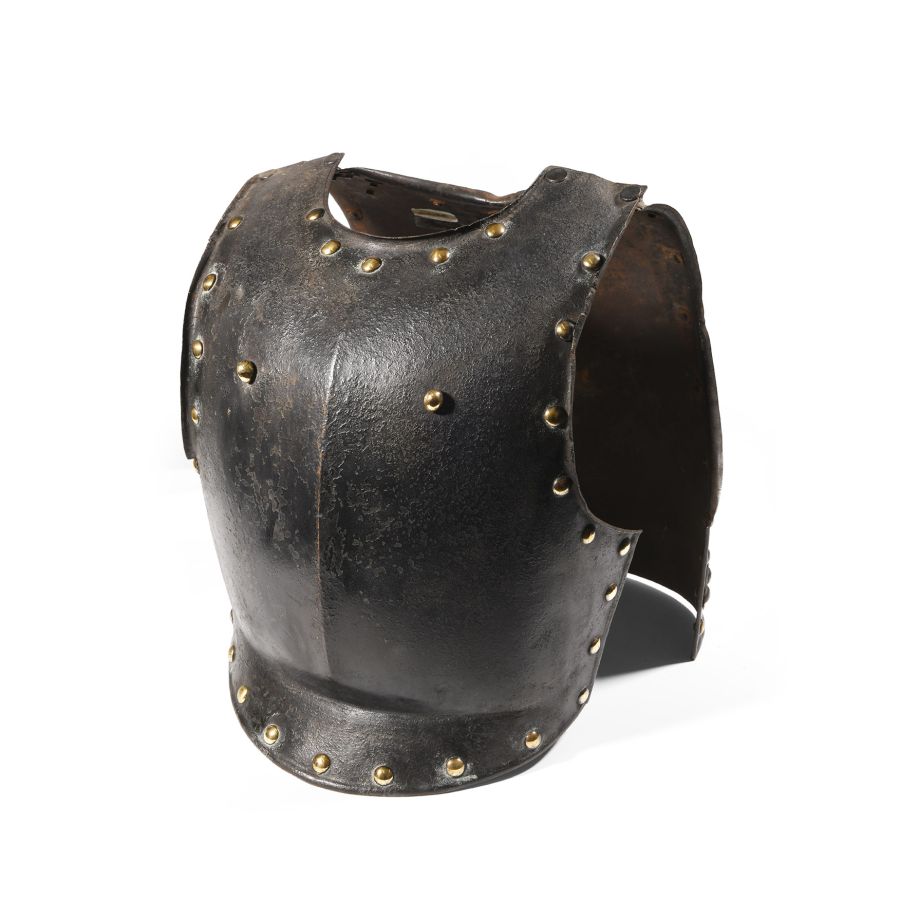
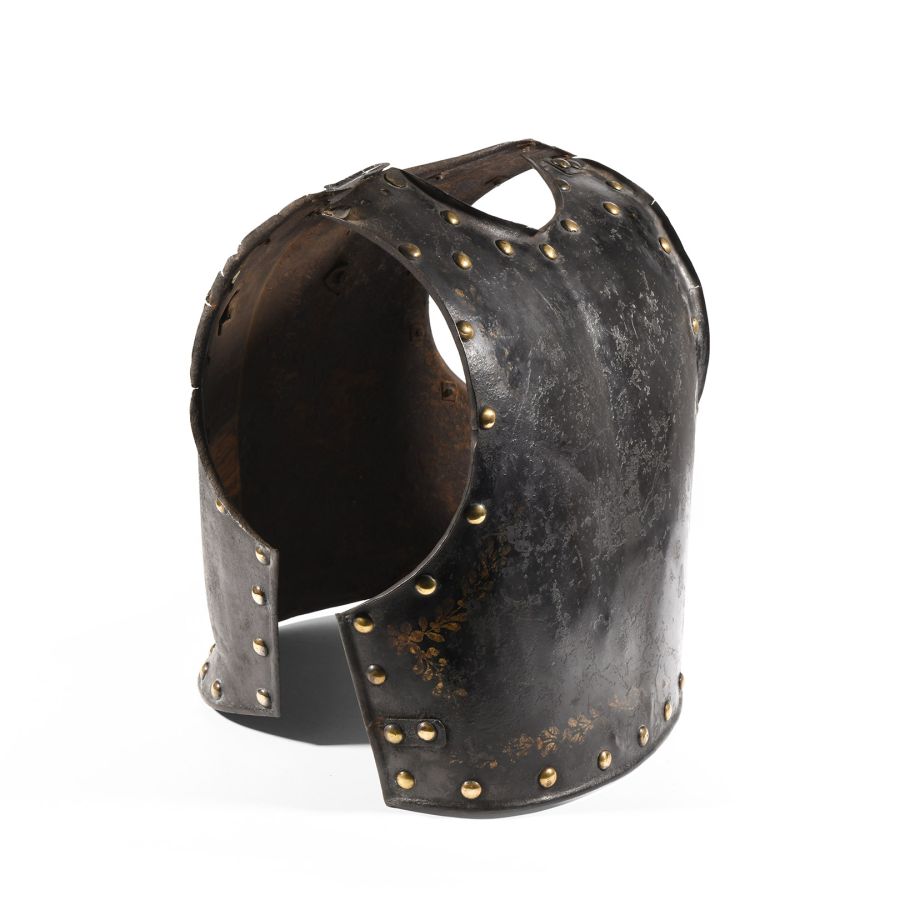
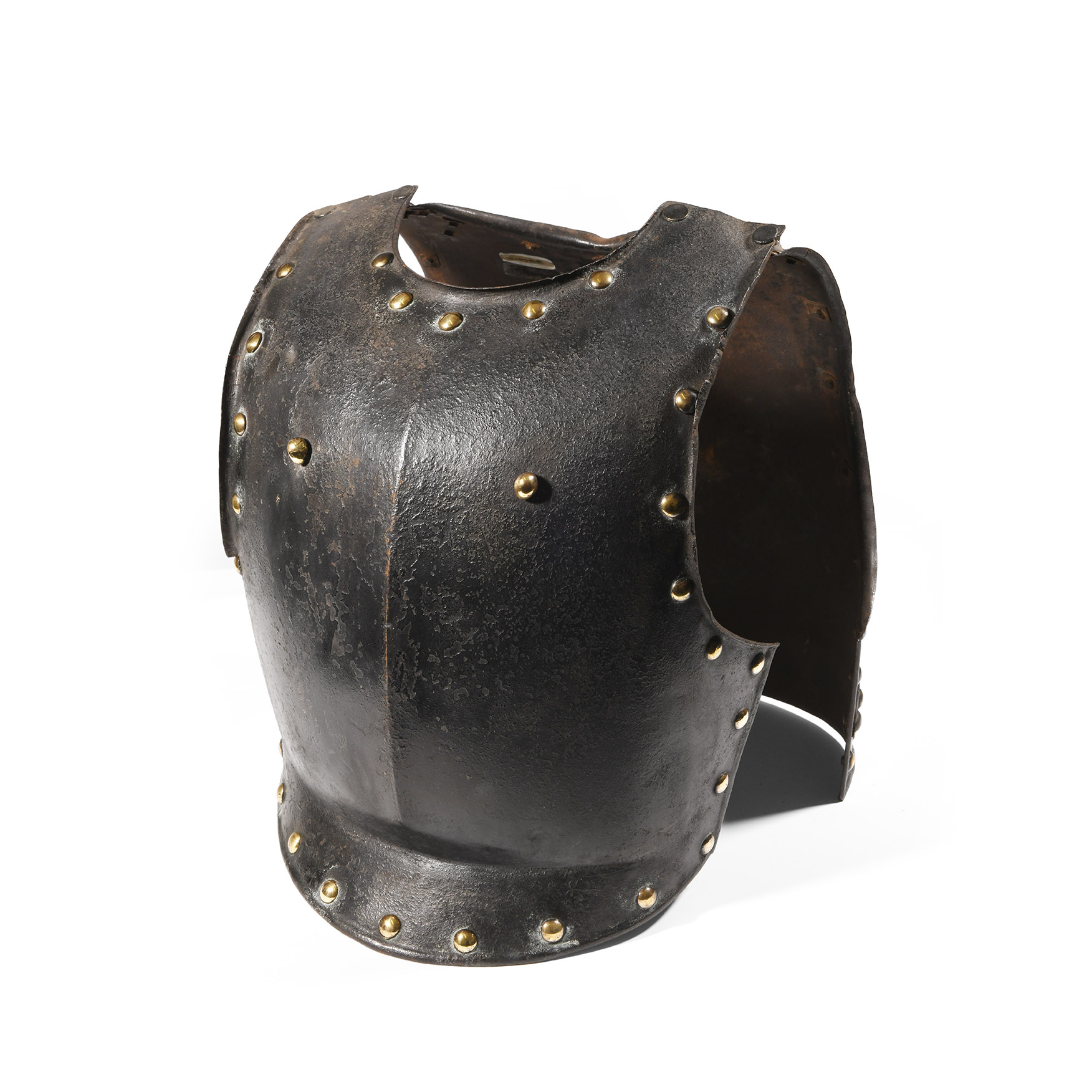
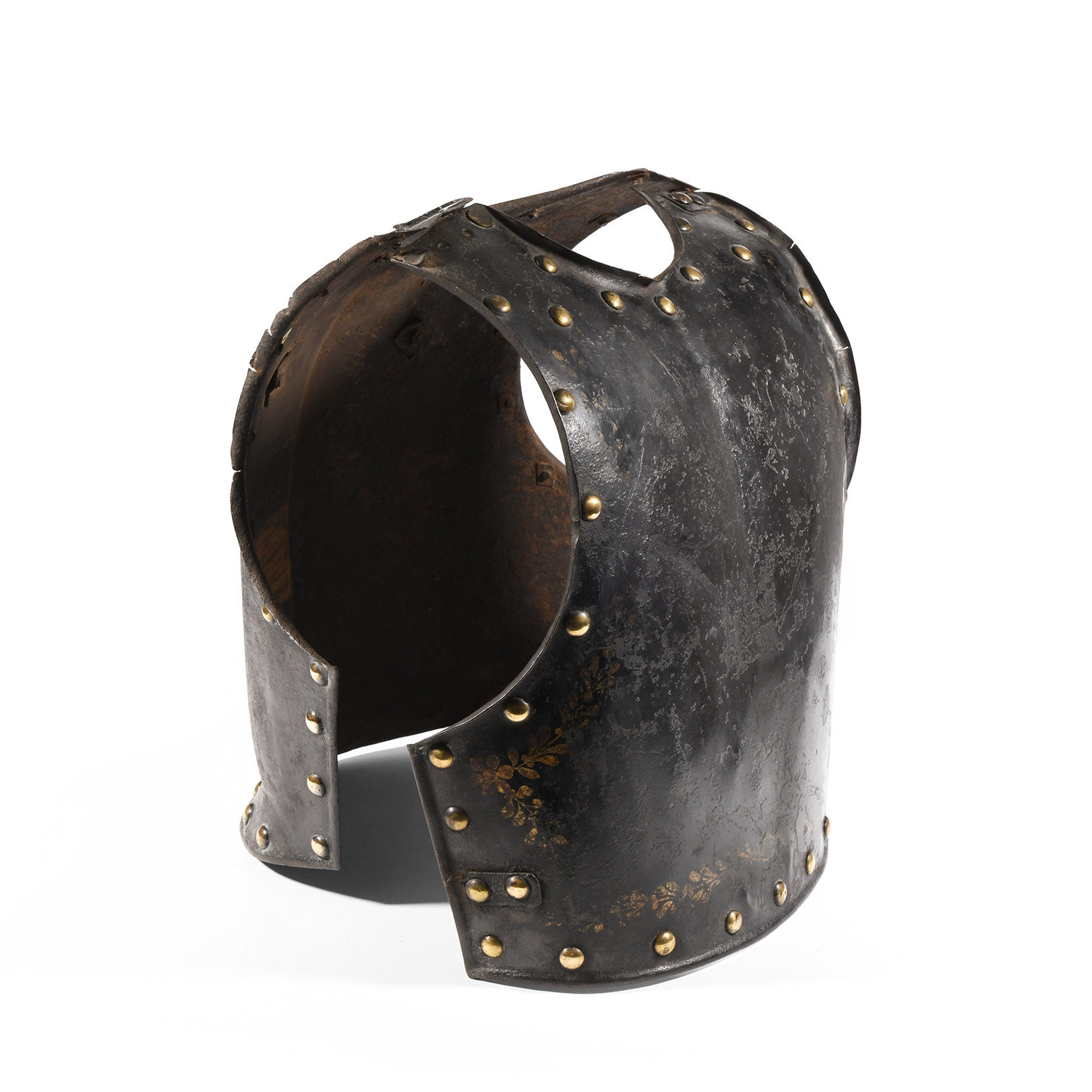
Post Medieval Spanish 'Conquistador' Cuirass Set
17TH CENTURY A.D.
16 3/4 in. (3.3 kg, 42.5 cm high).
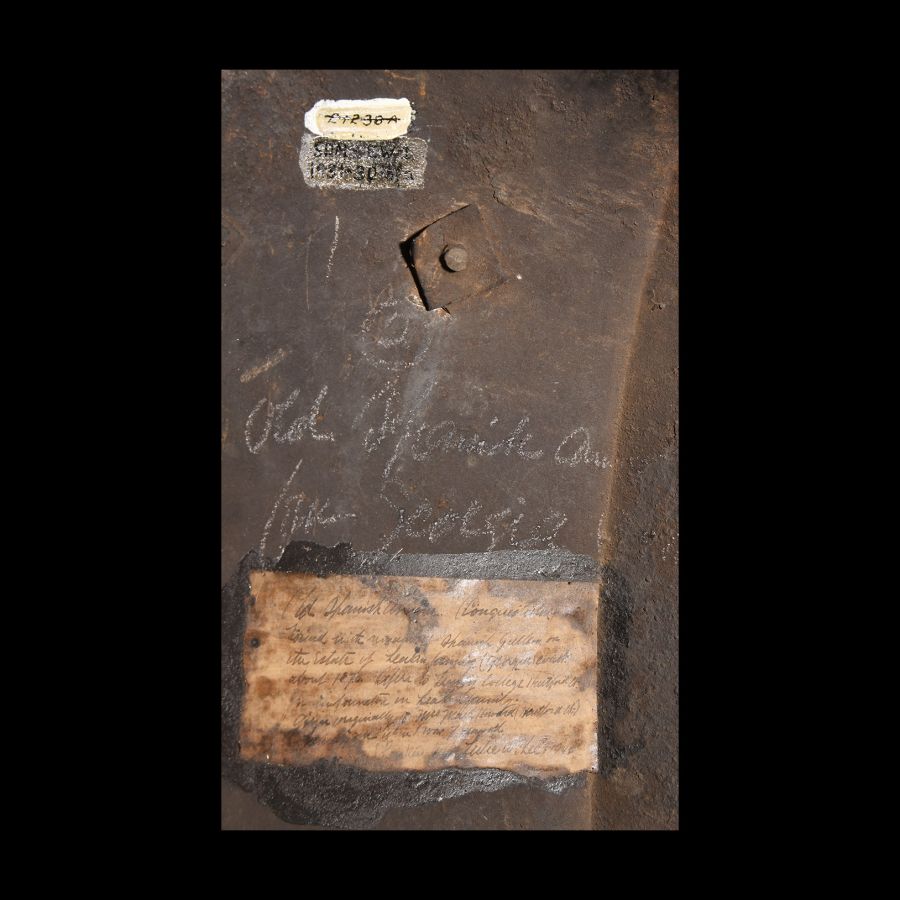
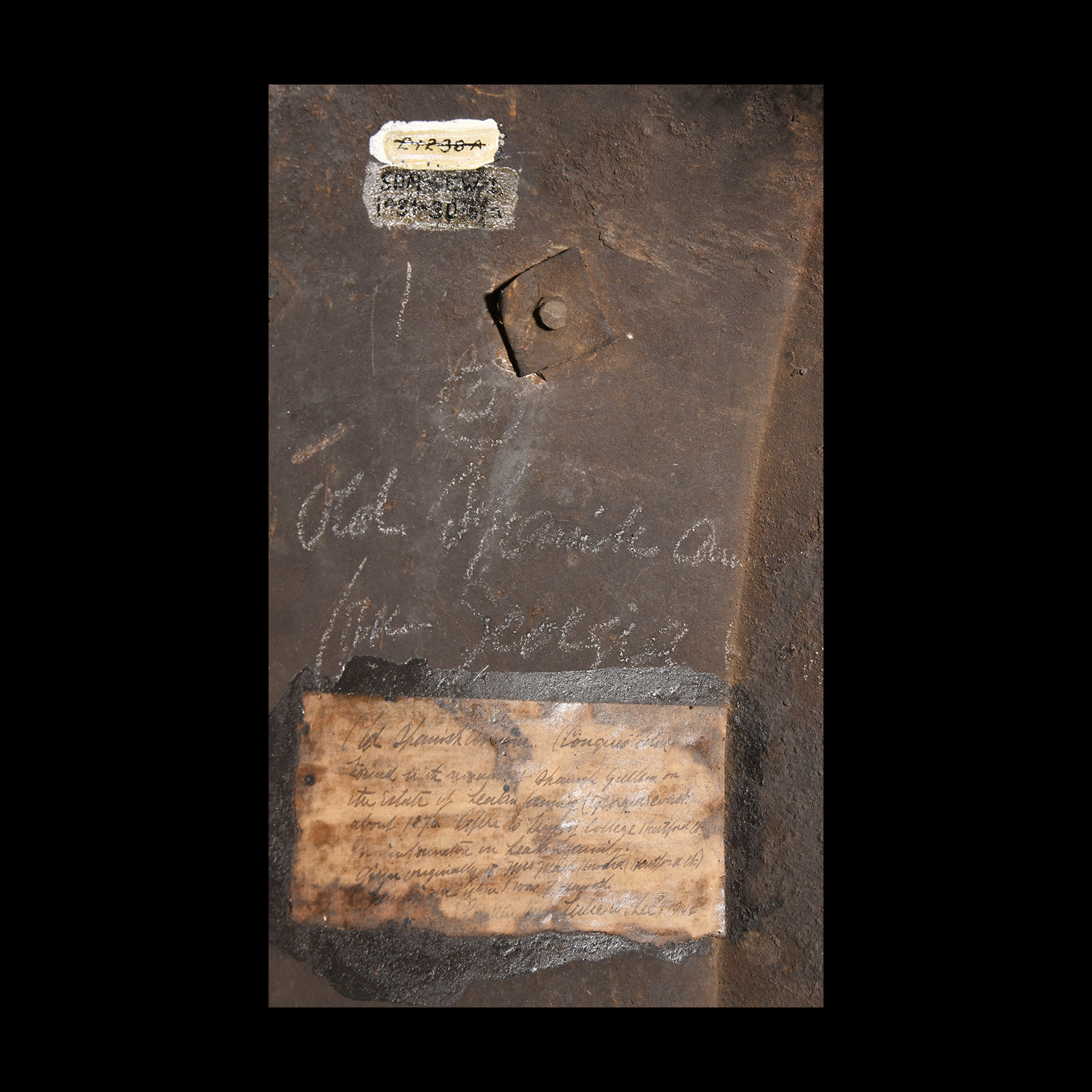
The breastplate with pronounced vertical rib and two rivets to front, roll at neck and splay at base with rivets to full perimeter, with inked accession numbers '21238A' (crossed through) and 'SDM - EW1' above '1931 - 30 - 6, a' and inked handwritten paper label reading 'Old Spanish Armour (Conquistador) / Found with remains of Spanish Galleon on / the estate of Leakin family (Georgia) coast. / about 1870. Refer to Trinity College Hertford Ct. / for information in Leakin family. / Given originally to Mrs Mark Howden (Hartford Ct.) / [ ] when I was 7 years old. / Luke W Lee 1944' in eight lines and also with chalked 'Old Spanish Armour / from Georgia 1944' inscription in two lines; the backplate generally matching but with vertical groove at centre and no splay at base, with inked accession numbers '31238B' (crossed through) and 'SDM - EW1' above '1951 - 30 - 6, b'. [2]
ProvenanceFrom a Southern Californian museum, with accession numbers.
Ex American collector.
Acquired from TimeLine Auctions, UK, 2018, lot 181.
The Kusmirek Collection, UK.
This lot has been checked against the Interpol Database of stolen works of art and is accompanied by search certificate no.204020.
See Calvert, F., Spanish Arms and Armour, Madrid, 1907, for discussion; see also de Hoffmeyer, A., Arms and Armour in Spain, 1982.
FootnotesTrinity College, Hartford was founded in 1823; further research in their archives could provide more information on this cuirass set and the site of the 'Spanish galleon' shipwreck discovered in about 1870.
CONDITIONTimeLine Auctions follows a vetting process to ensure the authenticity and legality of all items, reinforcing our commitment to integrity and responsible trading. Each antiquity, antique, and coin lot undergoes thorough examination by a vetting committee of at least ten external specialists, professional trade association members, scientists, and archaeologists: Our Vetting Process
AUCTIONS:
TimeLine is a leading auction house specialising in antiquities, ancient art, collectables, natural history, coins, medals, and books. Our auctions offer museums, collectors, historians, and enthusiasts the opportunity to acquire unique and historically significant pieces.
-
Western Asiatic Bronze Arrowhead Group
1st millennium B.C.Sold for (Inc. bp): £39
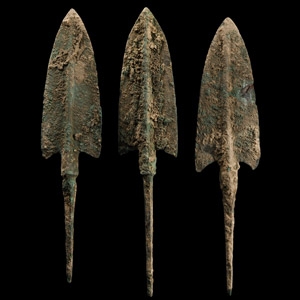
Three tanged arrowheads with broadly leaf-shaped heads with shallow barbs, each with a raised midrib to both faces. 83 grams total, 13.5-14.5 cm
Ex private collection, 1980s. Acquired on the UK art market in the 1990s. -
Byzantine 'Greek Fire' Ceramic Fire Bomb or Hand Grenade
9th-11th century A.D.Sold for (Inc. bp): £98
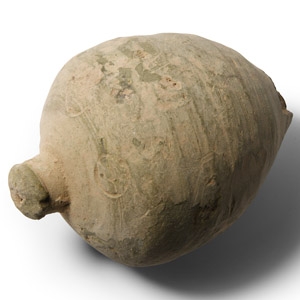
Pear-shaped ceramic vessel with domed filler-hole; intended to be filled with explosive liquid and wick, used as a hand grenade. 640 grams, 13.5 cm
Ex London, UK, collection, 1990s. Accompanied by an academic paper by military specialist Dr Raffaele D'Amato, dated 15 July 2019 and titled 'Eastern Roman Empire - Greek Fire Bomb or Hand Grenade (μεσαίον kακάβιον) 9th-11th century AD'.
Apart from the use of siphons or manual flame-throwers called cheirosiphona, special corps of Roman soldiers employed terracotta grenades, in the form of small jars, abundantly evidenced in archaeological excavations. Such were the γανωτα, vessels (sometimes also of bronze) used for Greek fire. They were called μεσαία kακαβιά or κυτροκακάβια where the former had a bulbous shape and the latter a more cylindrical form. -
German WWII MG34 Anti-Aircraft Gun Sight
1939-1945 A.D.Sold for (Inc. bp): £195
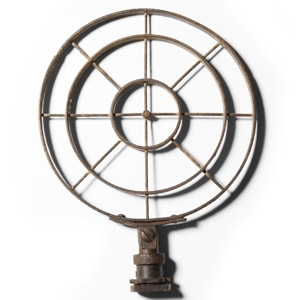
Steel gunsight with three rings and cross-wires and pillar mount to fit the MG34 general purpose machine gun. 80 grams, 14 cm
Acquired from RJ Militaria, UK. The Kusmirek Collection, UK. Accompanied by a copy of the listing and an image.
