
Loading, please wait...
LOT 2011
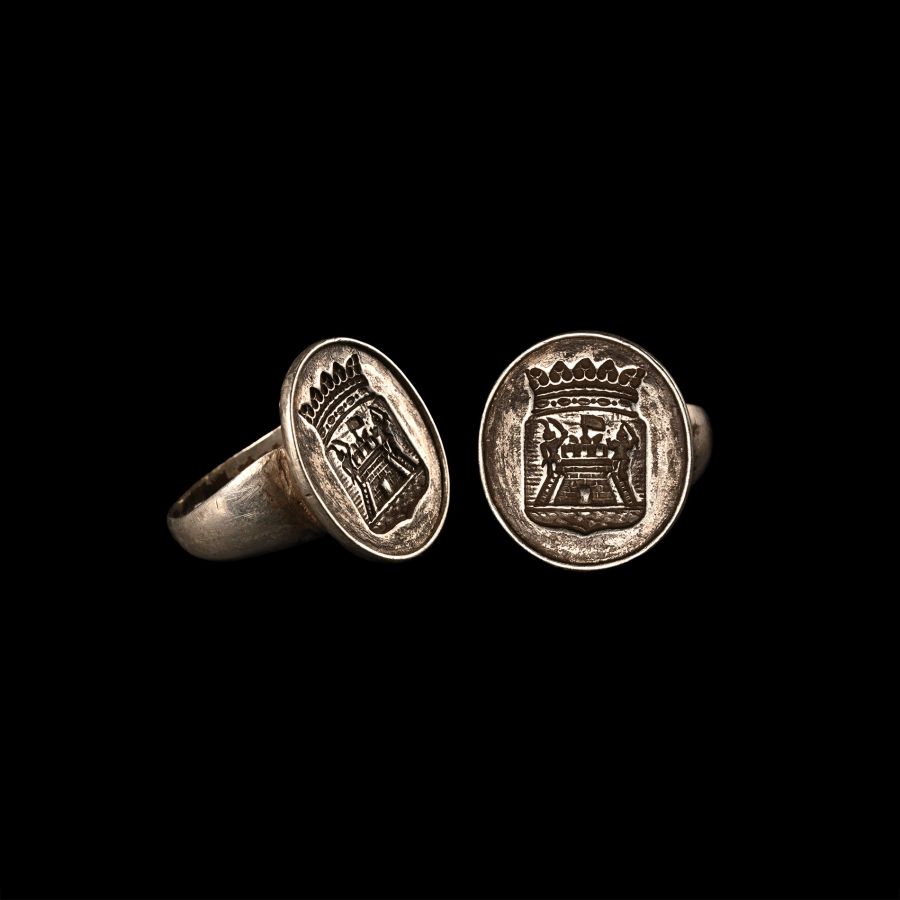
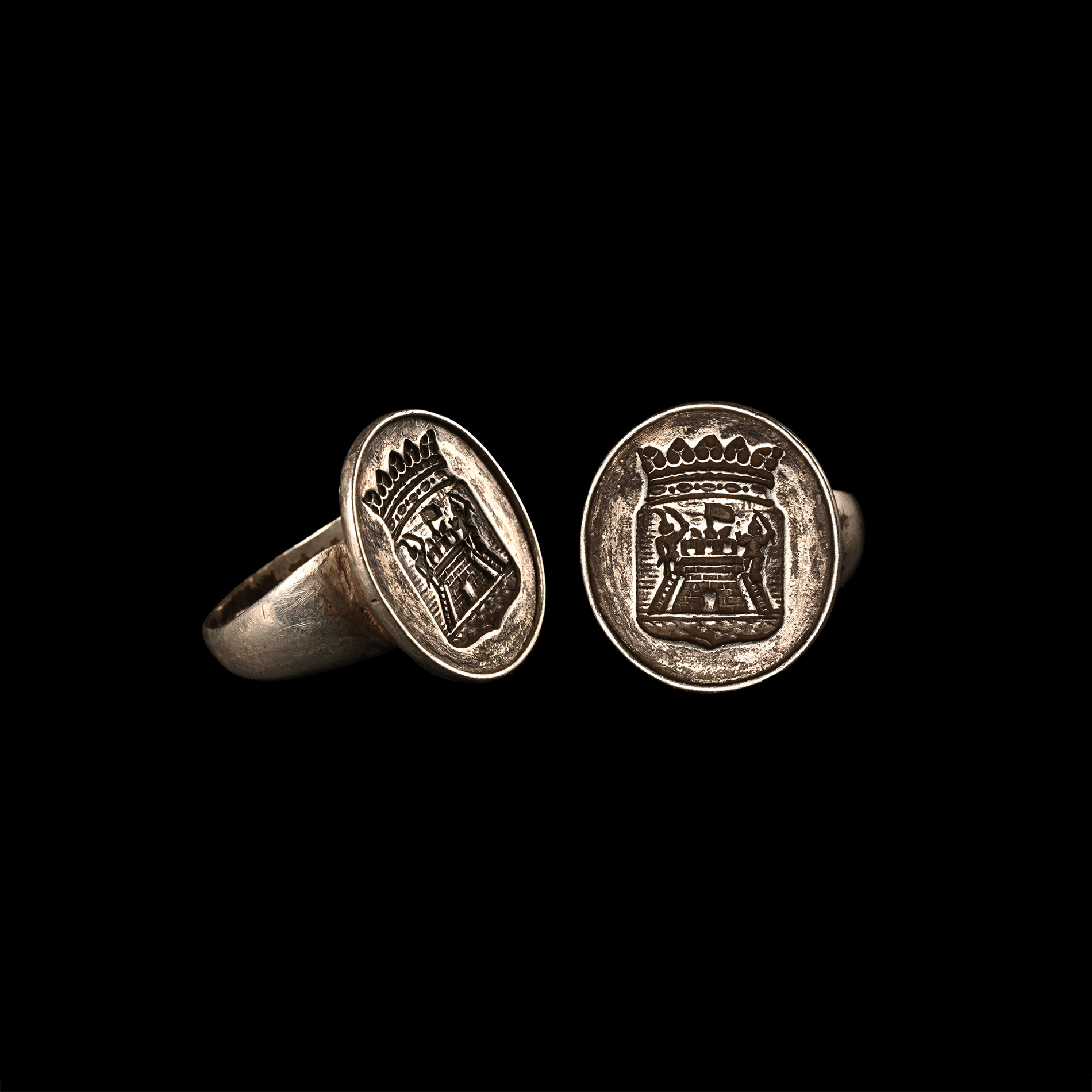
Post Medieval Silver Signet Ring
17TH-18TH CENTURY A.D.
1 in. (14.43 grams, 25.09 mm overall, 19.19 mm internal diameter (approximate size British S, USA 9, Europe 20, Japan 19)).
With slightly plano-convex hoop and ribbed underside to the discoid bezel, face with raised rim and incuse motif of a heater shield surmounted by a crown with ivy-leaves; shield depicting a tower attacked by two assailants on scaling-ladders; possibly German workmanship.
ProvenanceAcquired 1960s-1990s.
Late Alison Barker collection, a retired London barrister.
Cf. Dalton, O.M., The Franks Bequest Catalogue of Finger Rings, London, 1912, plate X, items 619, 566, for type.
CONDITIONTimeLine Auctions follows a vetting process to ensure the authenticity and legality of all items, reinforcing our commitment to integrity and responsible trading. Each antiquity, antique, and coin lot undergoes thorough examination by a vetting committee of at least ten external specialists, professional trade association members, scientists, and archaeologists: Our Vetting Process
AUCTIONS:
TimeLine is a leading auction house specialising in antiquities, ancient art, collectables, natural history, coins, medals, and books. Our auctions offer museums, collectors, historians, and enthusiasts the opportunity to acquire unique and historically significant pieces.
-
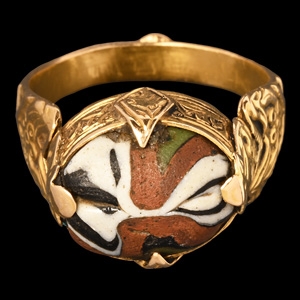
Seljuk Style Gold Ring with Glass Cabochon
20th century A.D.Sold for (Inc. bp): £468
Ellipsoid bezel with claw setting for a polychrome glass bead, lion motif to the underside, stud beneath the hoop; glass cabochon possibly an ancient glass bead made by folding melting glass. 6.63 grams, 30.60 mm overall, 18.57 mm internal diameter (approximate size British Q, USA 8, Europe 17.49, Japan 16)
Acquired by the vendor's father on the UK art market, before 1990. -
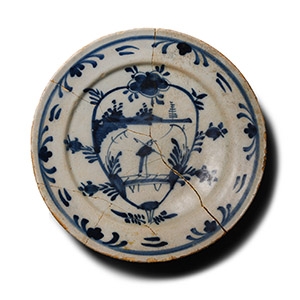
Post Medieval Delft Tin-Glazed Ceramic Plate
17th century A.D.Sold for (Inc. bp): £39
Displaying a figure crossing a bridge within a cartouche, embellished with flowering foliage; repaired. 417 grams, 22.2 cm wide
Acquired 1960s-1990s. Late Alison Barker collection, a retired London barrister. -
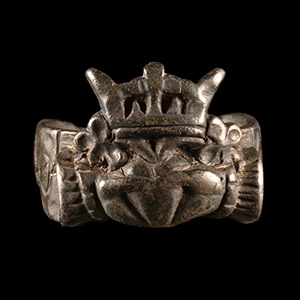
Large Post Medieval Silver Fede Ring
18th century A.D.Sold for (Inc. bp): £234
Composed of a substantial hoop with base formed as clasped hands emerging from sleeve cuffs, bezel formed as hands clasping a crowned and flowering heart. 18.14 grams, 28.88 mm overall, 20.21 mm internal diameter (approximate size British T 1/2, USA 9 3/4, Europe 21.89, Japan 21)
Found Pembroke area, Pembrokeshire, 1980s-2000s. Property of the finder.
